



Pomník Karla IV. Memorial
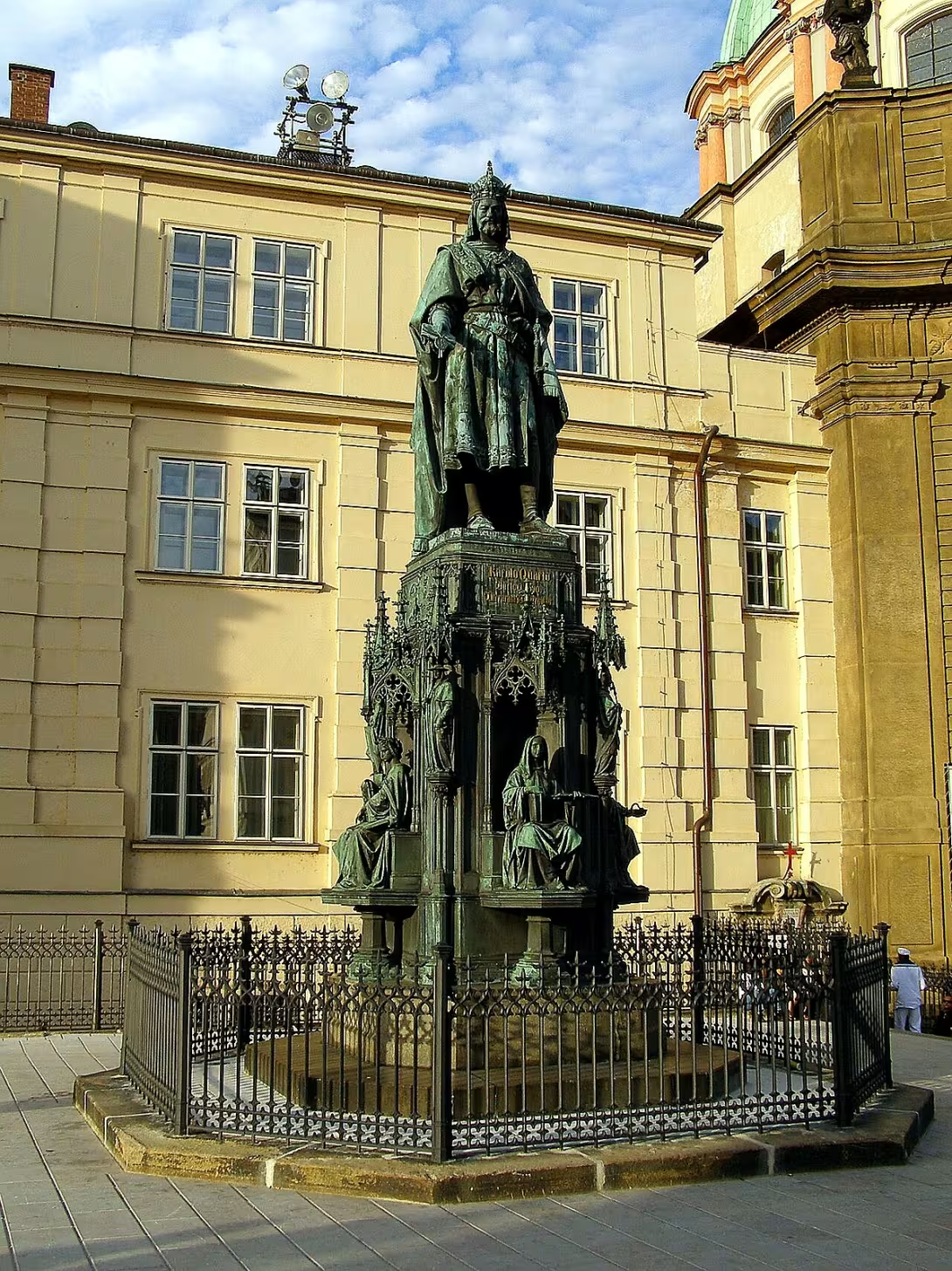
Pomník Karla IV. is a neo-gothic monument commemorating the founder of Charles University. It is located in the heart of the city and is among the most important symbols of Czech national renewal. Its sculpture decoration and historical context make it a valuable document of the nineteenth century.
The memorial was created in connection with the upcoming celebrations of the fifth anniversary of the university's foundation, which were to take place in 1848. The proposal for its establishment dates back to the 1930s, when the equestrian statue of the king was considered supplemented by allegorical figures of the faculty. Originally, the monument was to be placed on the Horsemarket or the cattle market. In 1842 he was awarded to the Dresden sculptor Ernst Julius Hähnel. The formal disclosure was originally planned for 1848, but the revolution didn't take place until 31 January 1851.
Architecturally, the monument is a representative work of a neo-gothic style that was popular at the time for its historic aesthetics. The sculptor Jacob Daniel Burgschmiet implemented Hähnell's proposal, which assumed monumental composition. On the top of the monument is a statue of Charles IV with a foundation of the university in hand, above which is the inscription * Karolo Quarto Auctori Suo Literarum Universitas / Festo saeculari quinto 1848 *. The bases are decorated with allegorical sculptures of four faculties - theological, medical, legal and philosophical. In its corners are smaller sculptures of important figures from the time of Charles IV: builder Matyas of Arras, Archbishops of Arnošt of Pardubice and Jan Oček of Vlashimi and probably the Supreme Chamber Benes of Vartemberk. However, one of the figures in the northeast corner remains unclear - historical sources mention different names, such as Zbyněch Hare from Hazmburk or Beneš from Kolovrat, with the appearance of the statue disagrees with them.
The monument is protected as a cultural heritage and still stands in its original place. It has its value not only in artistic expression but also in its symbolising efforts to restore Czech cultural identity during the national revival. Today it is open to the public and is located close to other important Prague monuments such as the Crožovnik Church or Old Town Square.
Pomník Karla IV. is not only an artistic work but also a living proof of historical efforts to preserve the Czech heritage. His visit makes it possible to understand the importance of university education and the personality of one of the most important Czech rulers. For lovers of history and architecture, it is an interesting example of how monuments become carriers of national identity.
Then and now
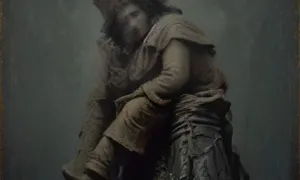
Drag the slider to compare how the landmark may have looked when it was built with the view today.
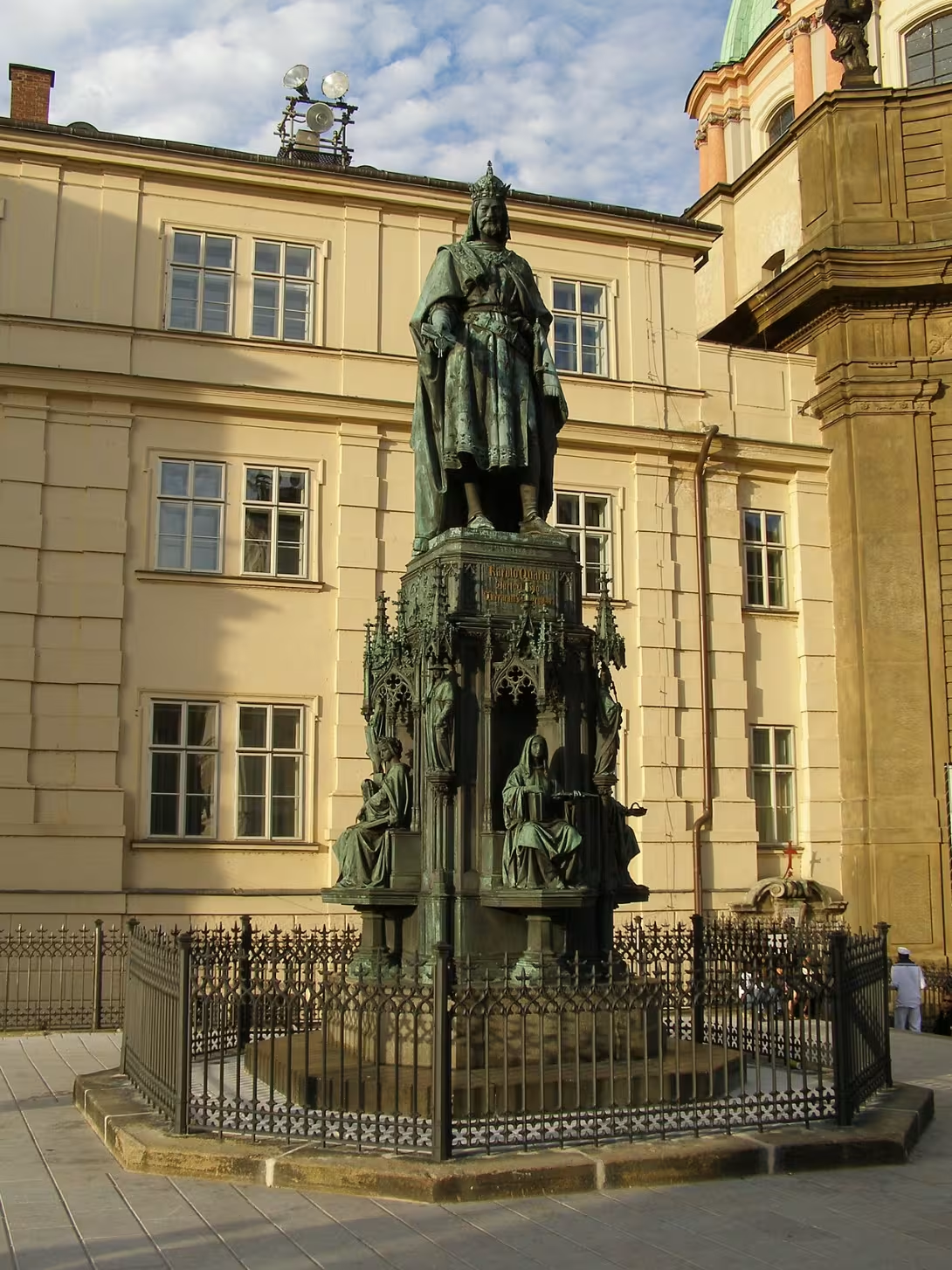
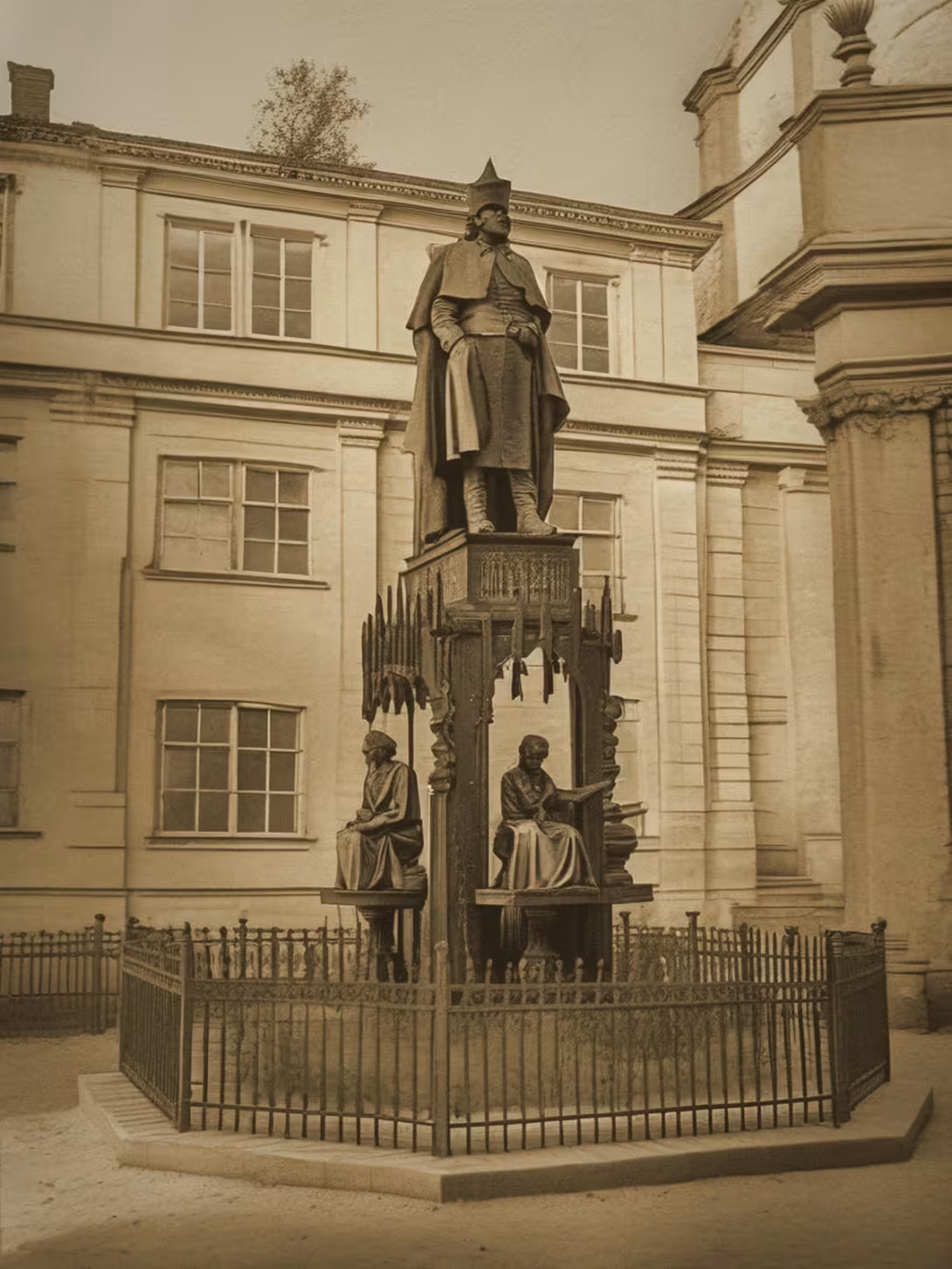
The historical appearance on the left is an AI-generated visualisation and serves as inspiration only.
Historical milestones
- about 1830
- The first designs for the riding statue of Charles IV with the allegories of the Faculty for the celebration of the 500th anniversary of Charles University.
- 1842
- The award of a sculpture project to the artist Ernst Julius Hähnel.
- 1848
- The planned ceremonial unveiling of the monument for the five-hundred anniversary of the founding of the university, canceled because of the revolution.
- 31 january 1851
- Ceremonial unveiling of the memorial of Charles IV at Crožovnik Square.
- 1851- today
- The monument serves as a symbol of Czech national renewal and cultural identity.
Architectural development
The monument was created by Ernst Julius Hähnel and was realized by Jacob Daniel Burgschmiet. It is built of stone and decorated with sculpture decoration in a neo-gothic style. The Charles IV character is located on the top, underneath it allegorical statues of faculties and historical personalities.
Historical events
- 1842
- Entering the work of sculptor Ernst Julius Hähnel by jury from the academic senate and professors.
- 1848
- Planned grand revelation for the 500th anniversary of the founding of Charles University, postponed for revolution.
- 1851
- The ceremonial discovery of the memorial on January 31.
Points of interest
- The memorial was designed in the 1930s as a riding statue of a king with allegorical figures of the faculty.
- Originally it was supposed to be located on the Horse or Conquer market, eventually standing on the Crožovice Square.
- The grand unveiling was postponed from 1848 to January 31, 1851, due to the revolution.
- On the pedestal are allegorical statues of four faculties - theological, medical, legal and philosophical.
- One of the smaller statues in the corner remains unknown, as historical sources give different names that disagree with it.
Guide
Show guide text
This text was created by artificial intelligence and has not been editorially reviewed. It may contain inaccuracies.
Welcome to this massive monument, which stands on Crožovnik Square in the heart of Prague. You are faced with a neo-gothic work that reminds you of one of the most important Czech rulers - Charles IV. His statue, which rises above the other elements, holds in his hand a charter, which is as living proof of the foundation of Charles University. This is precisely the moment when a window opens in front of you in the past, when Czech culture and education began to write in history.
The monument was created when Czechs woke up to their national revival. Originally, it was supposed to be a equestrian statue celebrating the 500 anniversary of the founding of the university. The plans for his status date back to the 1930s, when they began to consider how best to honor the memory of this ruler. However, the revolutionary year of 1848 interrupted all plans and the solemn revelation had to be postponed. Only three years later, on 31 January 1851, the monument was festively revealed and became a symbol of the Czech national uprising and cultural development.
Now pay attention to what you're seeing. On top of the monument is a statue of Charles IV, which is carved in a neo-gothic style which was very popular at the time. He's holding a charter in his hand that shows the foundation of Charles University. The foundation of the monument is decorated with allegorical sculptures of four faculties of this university - these are symbols of science, art, law and medicine. These figures represent a spiritual and intellectual base that was crucial to the university. Below them are smaller sculptures of important personalities from the time of Charles IV, which commemorate its influence on Czech history.
Let's move down a little bit and look at the pedestals in more detail. Here you can see the statues that represent the four major disciplines of the university - theology, law, medicine and philosophy. Each of these statues is depicted as an allegory, which means that they are not just human figures, but symbols of certain ideas and values. For example, a statue of philosophy can be depicted with a book or an idea that symbolizes reason and knowledge. These allegories are important because they remind us that the university is not just a collection of buildings, but a place where ideas are born and new generations are educated.
Now pay attention to the smaller statues under the main base. These figures represent important personalities from the time of Charles IV, such as Matyáš z Arrasu, who was architect of the Charles Bridge, or Arnošt z Pardubic, who was an important spiritual and teacher. These figures recall that Karel IV. was not alone, but that his work was supported by many people who participated in its implementation.
One of the most interesting facts about this monument is that it was originally supposed to be in a different place. It was planned to be built on the Horse or Conquer market, but in the end it decided on the Crožovnik Square. This was due to the fact that this place was more suitable for the location of such an important monument. Plus, the grand revelation had to be postponed due to the 1848 revolution. This means that the original plans to celebrate the fifth anniversary of the founding of the university were interrupted by political events, and only later, in 1851, the monument became a real symbol of the Czech national revival.
Pomník Karla IV. is not only a beautiful work of art, but also an important historical monument. It stands here as a reminder of the importance of education and culture for the development of Czech society. Notice how the ideas of national renewal and intellectual development come together here. This is why this monument became such an important place not only for Prague, but for the whole Czech history.
If you like this monument and want to learn more about the history and importance of Charles University, you can take another tour. There are other important monuments nearby that are associated with this university. For example, Charles University itself is a fascinating place where centuries of history and the present meet. So get carried away by this atmosphere and continue your discovery of Prague and its rich cultural heritage.
Thank you for taking a moment to see this wonderful monument. May your visit bring you not only knowledge, but also the joy of discovering the beauty and meaning that this monument bears. When we meet again in other historic places that await you.
Tips for visitors
The best time to visit the Charles IV memorial is in the spring or autumn season when the weather is pleasant and fewer people on the streets. This time also offers a beautiful atmosphere for a photo with warm colors.
When you visit the monument, take with you sun protection or rain clothes. On-site photo will be best in bright weather when the light is ideal for capturing details of the statue and pedestal.
In the vicinity of the monument there is a Crožovnik church and Old Town Square, which are excellent places to walk. If you have time, visit Vysehrad with its monasteries and churches, which is a beautiful place for families with children for fun items and historical stories.
Frequently asked questions
Can the monument be visited?
This is a structure in a public space that can usually be seen from outside free of charge. We have not verified that this particular one is freely accessible.
Where is the monument?
Location: Praha 1, Hlavní město Praha. The map on this page shows the exact spot.
Why is the monument protected?
It is listed in the Central List of Cultural Monuments of the Czech Republic as a cultural monument (register no. 1000156863).
Businesses nearby
Do you run a restaurant, accommodation, shop, museum, rental, wellness or other visitor service near this monument? Show yourself directly to the people heading to it — this is how they will see you in the app and on the web:
Events nearby

Zdroj akcí: otevřená data měst a obcí ČR (Národní katalog otevřených dat) a kalendář akcí Národního památkového ústavu.
Nearby
V okolí se nachází Křižovnický kostel, Staroměstské náměstí a historické budovy Pražského hradu. Do 5 km je také Vyšehrad s jeho kláštery a kostely.
Accommodation nearby
Trips and activities nearby
Guided tours, tickets and activities nearby from GetYourGuide
Affiliate link: if you buy from the partner, we may receive a commission. The price for you does not change.
Search tours and activities →Themed route
Thematic tour with a visit to the Charles IV Memorial in Prague 1
1.Pomník Karla IV. Type: Sculpture site. He depicts the Czech king and the Roman emperor, standing as a symbol of his influence. It is located in the middle of the Old Town Square, where it meets its historical significance.
2. Cross Church Type: Gothic church. It's only a few hundred yards from the memorial. Its architecture and monastic history are associated with the order of the crossword with the red star that has been working here since the Middle Ages.
3. Prague Castle - immediate surroundings Type: Historical courtyard and castle buildings. Although the castle is a larger complex, focus on the forefront and the Old Hrad courtyard, where the royal palace and chapel of St. George are located. Here you will touch the royal tradition that was crucial to Charles IV.
4. Old Town Square Type: Historical Center. Walk through the square reveals its medieval atmosphere, with the Old Town Hall and astronomical hour. It's where important events took place during the reign of Charles IV.
5. Vyšehrad - monastery and church of St. Peter and Paul Type: Romanes- Gothic complex. Although it is about 5 km away, it is a unique combination of monastery and church, which complements the image of medieval church power. Here are also tombs of important personalities, including some related to the history of the Czech state.
The route connects the main monument with places that are historically and architecturally connected with it.
Seasonal recommendations
Spring The spring on the monument of Charles IV offers soft, sunny light that illuminates his statue with a golden reflection. The surrounding area is green, the trees are blooming and the air smells like rain. The atmosphere is calm, but also alive - families with children, history lovers and cyclists are mixed among visitors. Specific is also that in April and May there are often short but intense rains that give the monument a shiny look. The clothing is suitable in warm colours, but with a light layer for possible cooling. The best time is morning or late afternoon when there are fewer crowds and the sun is not too strong.
Summer In the summer months, bright, sunny light is dominated, which creates significant shadows and contrasts on the monument. The atmosphere is alive, but also hot - the air is dry and the sun is intense, especially in July and August. The surrounding area is green but dry, and there are often groups of tourists, students or families. Specific is that in the main summer season the monument is often surrounded by crowds, especially in the morning. It is recommended light, airy clothes, hat or sunglasses and plenty of water. The best time to visit is early in the morning or late in the afternoon, when fewer people and temperatures are falling.
Autumn Autumn brings the changing colours of leaves that surround the surrounding monument in shades of yellow, orange and red. The light is softer, but even colder, and the atmosphere calmer, with fewer crowds than in summer. Specific is that in October and November there are often cold, windy days that can be pleasant but also unpleasant for those who are not used to autumn weather. Suitable is warmer clothes, but still light to avoid too hot. The best time to visit is in the morning when light is pleasant and crowds less.
Winter Winter Prague around the Charles IV monument offers a calm, freezing atmosphere where ice crystals appear on the stones of the monument and the air is clear and clear. Light is different - short days and low sun create long shadows and a specific silver shine on the statue. The atmosphere is quiet, with fewer crowds, but also with a smaller opening time of monuments. Specific is that in December there are often Christmas markets that attract visitors, but also that in January and February the monument is surrounded by snow. It is recommended warm clothes, suitable for cold weather, and it is advisable to visit the monument on short winter days early in the morning when the light is most pleasant.
Visualizations and artistic views


The visualisations are generated by artificial intelligence and serve as inspiration.
Photos from the area
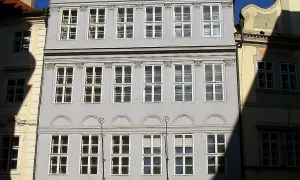
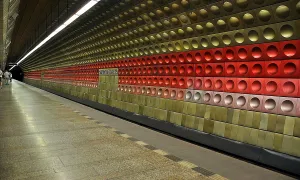
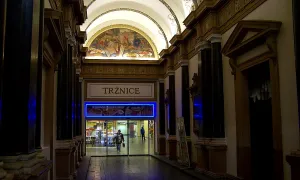
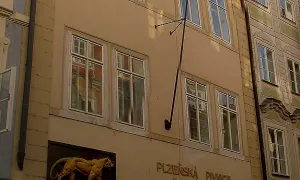
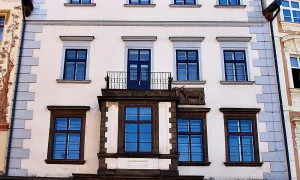
Real photos taken near the monument


Zdroj a licence jsou uvedeny u každého snímku.
Tips from visitors
No tips yet. Be the first!
Log in and add your tip.
Sources and literature
Photos: Michal Kmínek / CC BY-SA 3.0 — Wikimedia Commons. The author and licence also appear when you hover over the image.
Faktickým podkladem tohoto textu byl článek na Wikipedii, jehož autory jsou přispěvatelé Wikipedie. Článek je dostupný pod licencí CC BY-SA 4.0.
Location on the map
Příběhy a pověsti
Legendy, pověsti a příběhy spjaté s touto památkou
Fotografie návštěvníků
Zatím žádné fotografie. Buďte první, kdo přidá fotografii z návštěvy!
Log in a přidejte svou fotografii nebo hodnoťte.
Za ověřenou návštěvu v aplikaci získáte víc bodů — poznáme podle GPS, že jste na místě.
Reviews and comments