

Praha-Bubeneč Inn
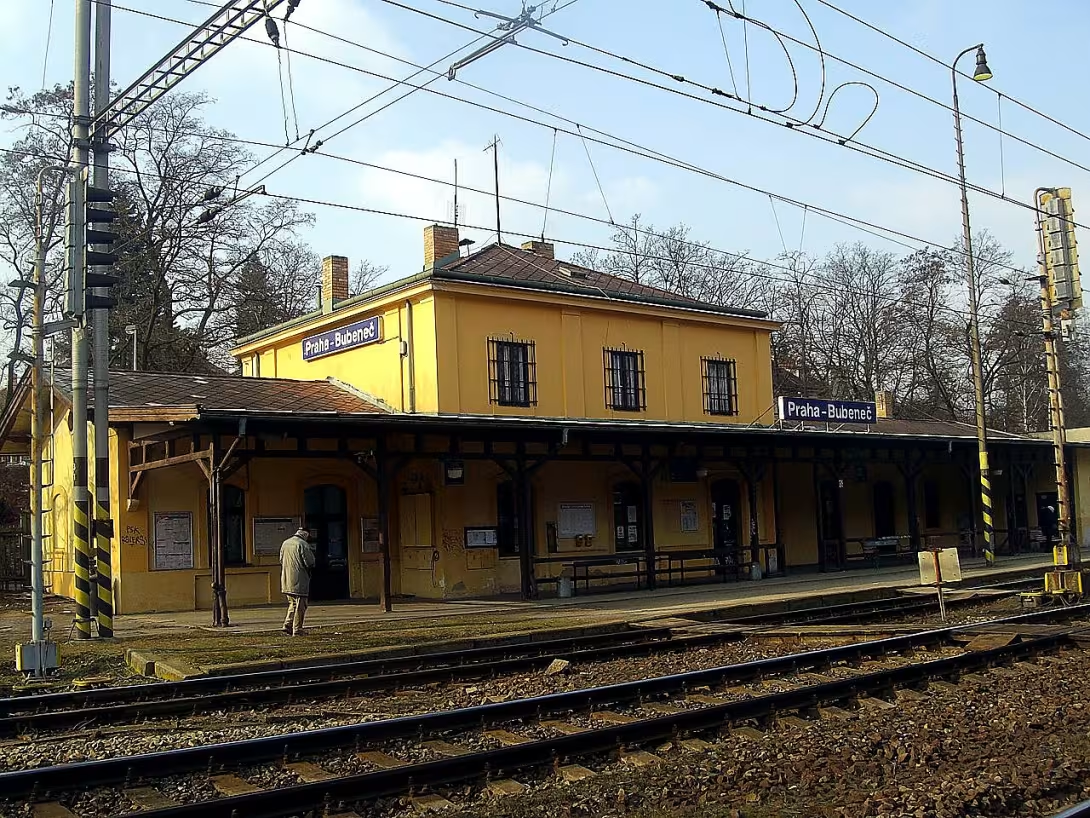
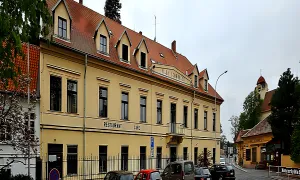
Praha-Bubeneč is a former railway station in Prague 6. It was created in 1850 and today serves as a switch on the Praha- Děčín track. The building is remarkable mainly by its historic building from the middle of the 19th century, which was transformed into the community centre Station 6.
The station was launched in 1854 along with the line of the North State Railway from Prague to Lovosic. It was created in the period of massive development of the railway network in the Austrian Empire, which significantly affected transport and economic growth of Czech countries.
The site is dominated by a single-storey building designed by architect Antonín Jüngling. In front of it, there were four passageways with one partially covered track and two narrow uncovered platforms. The station wasn't equipped with an underpass.
Until August 2018 the building was owned by ČD, then it was taken over for CZK 14.3 million by Prague City Hall 6. The building was declared a cultural monument in 2013. In the past, it was led by the trays to the Juliska and the paper mill at the Empress Mill; the last one was cancelled in 2006.
The key change was 2014, when passenger traffic ended here. The newly built stop Prague-Podbaba took over. The last passenger train stopped here on August 28, 2014. The interesting thing is that in 1959 there was a painter and graphic artist Jiří Bouda, who specialized in railway topics.
Currently, the object serves as a switch for crossing and overtaking trains. Transport is controlled remotely from Praha- Holešovice station. After reconstruction under the leadership of the architects Ondřej Tuček and Jan Binter, the community centre Station 6, which includes gallery, cafe and sports equipment rental, opened here on 28 August 2024.
The object represents an important example of the transformation of industrial heritage into modern public space. If you are interested in the history of the Prague railway in combination with a new community function, we recommend visiting the building.
Then and now
Drag the slider to compare how the landmark may have looked when it was built with the view today.
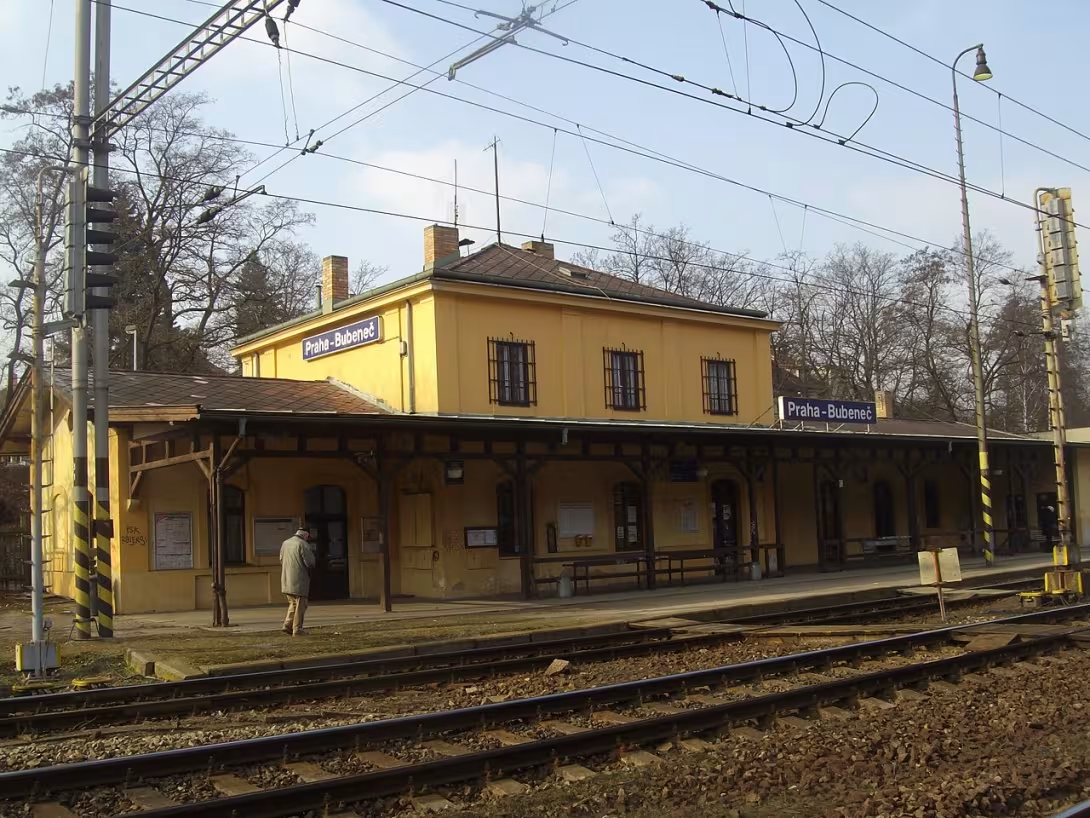
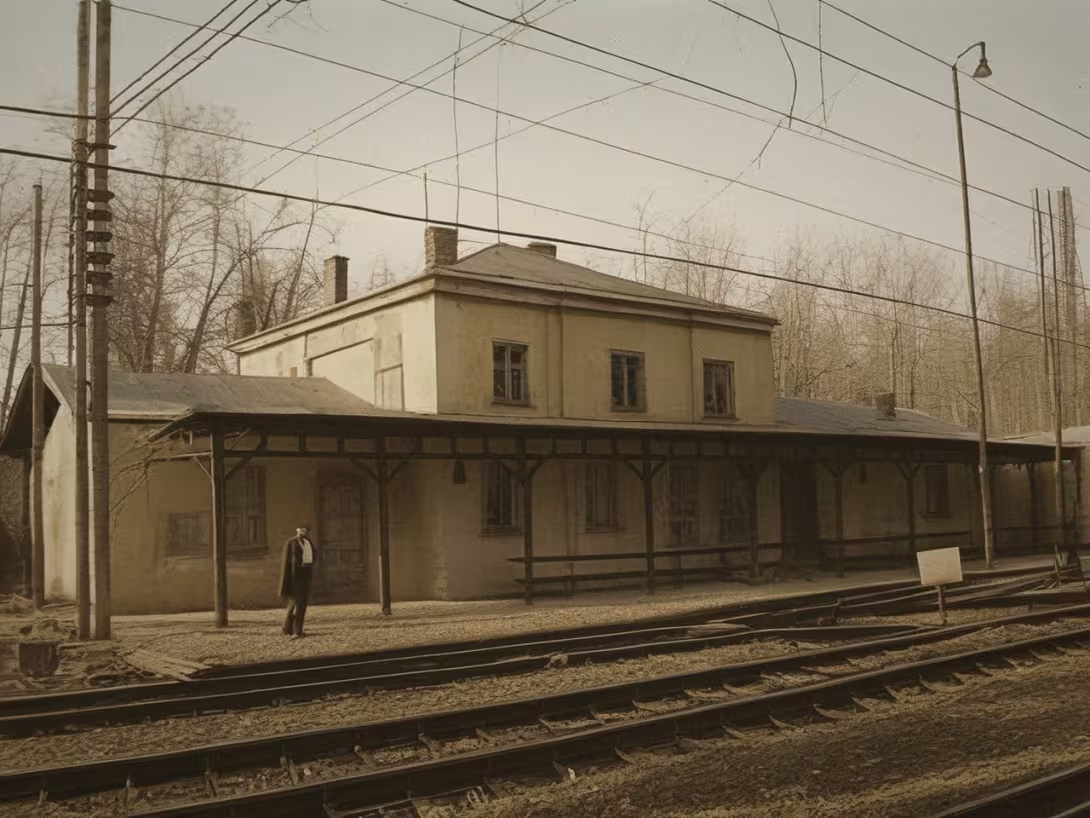
The historical appearance on the left is an AI-generated visualisation and serves as inspiration only.
Historical milestones
- 1854
- Setting up the station together with the line of the North State Railway from Prague to Lovosic.
- 2013
- The building of the former railway station was declared a cultural monument.
- 2014
- Cancellation of the passenger transport function and change of status to switch.
- 2024
- Opening of Station 6 Community Center.
Architectural development
The original single storey building from 1854 was designed by Antonín Jüngling. In 2023, a comprehensive reconstruction under the leadership of the architects Tuček and Binter was launched. The building was converted into a centre with gallery, cafe and sports equipment rental.
Historical events
1854 launch of the station, 2013 publication of the building cultural monument, 28 August 2014 termination of passenger transport in the station, 28 August 2024 opening of the community centre Station 6.
Owners
ČD (until August 2018), Prague 6 (from 2018)
Points of interest
- The former railway station from 1850 today serves as a switch and community centre of Station 6. - A building designed by Antonín Jüngling was declared a cultural monument in 2013. - In 1959 a painter and graphic artist Jiří Bouda worked here as a signalist on the building. - Passenger transport ended here on August 28, 2014. - The centre currently includes a gallery, coffee shop and sports equipment rental.
Guide
This guide is narrated by a synthetic voice generated by artificial intelligence.
Show guide text
This text was created by artificial intelligence and has not been editorially reviewed. It may contain inaccuracies.
Welcome to the Prague part Bubeneč. You're standing in front of a building that carries more than a century of railway history. In front of you is a single-storey object, which, in its appearance, resembles a calmer era of travel. Feel the atmosphere of this place, where today the silent rhythm of the neighboring community meets with the constant noise of passing trains. It is a place that, while no longer welcoming thousands of passengers with suitcases, remains an important point in the city area.
Let us now return in time to the nineteenth century. It's one thousand eight hundred and fifty-four. It was this year that this station was put into operation. It was not just an ordinary stop, but part of a large project, which was the North State Railways leading from Prague to Lovosic. At that time, the railway was a symbol of the highest progress and modernity. Imagine the excitement that people in Drummer felt when they first heard the engine whistle and saw the landscape change through steel tracks. This building was designed to serve as a reliable hub for transport at the time of the rapidly growing metropolis.
Now pay attention to the architecture itself. Look at the front of the building. It's a one-story building, which gives it a certain human dimension and clarity. Note the overall layout and construction that is carried by author Antonín Jüngling. He, along with other creators such as Ondřej Tuček and Jan Binter, helped shape the face of this place. It is fascinating that even though the building went through various stages of its life, its value was officially recognised in the year two thousand and thirteen. At that time it was declared a cultural monument, which means that the state recognized its irreplaceable importance for our history and architecture. Take a look at the line of the roof and the rhythm of the windows, which are typical of the then utilitous buildings, where it had to prevail, but it did not miss a certain amount of dignity.
When you look at these walls, you might only imagine officials and passengers, but this place is also connected by very interesting personalities. Let's stop at one particular story. In the year one thousand nine hundred fifty-nine there was a man named Jiří Bouda. But he wasn't just a railroad employee. Jiří Bouda was a respected painter and graphic artist. Imagine the contrast. While in his soul probably lived the desire for art, colors and creativity, he worked here in daily practice as a signalist of the building. His job was to guard the tracks and ensure safe transport. It's a beautiful example of how deep artistic personalities can hide in ordinary work routines. Perhaps just looking at passing trains and playing light on tracks found inspiration for his later works.
I will now lead you to the part that is crucial to this place from the point of view of the present. Note that even though the building looks like a station, you will no longer see people waiting at the entrance of the Rampa for your departure. In the year two thousand and fourteen, the office for passenger transport ended. That was a turning point. The building stopped being a passenger gate and turned into a so-called exit. This means that even though trains around us are still whizzing and stopping here for the technical needs of the runway, people no longer end their journeys here.
But here comes the most interesting change that has happened in recent years. The building was born again. In the year two thousand twenty-four, a community center called Station Six opened up here. It's a fascinating transformation. A place that once served to transfer people from one city to another is now used to bring people together in one place. The purely technical and transport space has become the heart of the neighbourhood where people meet, share experiences and build relationships. It is a symbol of how historical memory can be preserved while giving it a new, modern sense that benefits everyone.
When you're standing in front of this building, try to realize the incredible time span. From the first whistle of the locomotive in the year one thousand eight hundred and fifty-four, through the silent observation of the world through the eyes of the painter George Bouda, to today's laughter and conversations in the community center. It's a story about transformation. From the transport hub through the cultural monument to the social center.
Imagine how many thousands of people have come through here in all these decades. How many goodbyes and greetings took place here before the passenger door closed in August, two thousand fourteen. Today we are no longer waiting for the train to Lovosic, but we can appreciate the peace and stability this building radiates.
Now let's invite you to explore the space around the building at your own pace. Feel the contrast between the historical walls and the modern life that surrounds them. If you're interested in what the inner life of Station Six is like today, or if you just want to watch the rhythm of the railroad quietly, do it.
Thank you for spending a moment with us at this unique monument in Bubenč. We hope that you felt the spirit of this place and that you were interested in the story of the signalist painter and the transformation of the station into the community centre. We wish you a pleasant further journey through Prague and we will be happy to accompany you to our next historical trail in the future. Goodbye.
Tips for visitors
The best time to visit is spring or autumn, when the trees around the building are less dense and the architecture of the former station building from the middle of the nineteenth century is better seen.
When visiting we recommend taking only light clothes and comfortable shoes to walk around. Since it is a building in operation, it is not necessary to carry any special equipment for internal inspections that are not carried out here.
For photo lovers are the best places around the pavements, where one-story dominance can be captured. The most distinctive light for images is available early in the morning or shortly before sunset, when the facade gets a warm tone.
Within a short walk within 30 minutes you can visit the surrounding part of Prague 6 and Podbaba. It is ideal for families with children to observe from the outside the architecture of the old railway and tell the children stories about the North State Railway.
Frequently asked questions
Can the monument be visited?
The building is in use (offices, a school, shops and the like). The interior is generally accessible only during operating hours and tours are not usually offered; we have not verified the details. You can see the exterior from the street. According to the heritage register restoration is under way, so access may be restricted.
Where is the monument?
Location: Bubeneč. The map on this page shows the exact spot.
Why is the monument protected?
It is listed in the Central List of Cultural Monuments of the Czech Republic as a cultural monument (register no. 1238591097).
Businesses nearby
Do you run a restaurant, accommodation, shop, museum, rental, wellness or other visitor service near this monument? Show yourself directly to the people heading to it — this is how they will see you in the app and on the web:
Events nearby
Zdroj akcí: otevřená data měst a obcí ČR (Národní katalog otevřených dat) a kalendář akcí Národního památkového ústavu.
Nearby
🏰 Historic sites (779)
- Pomník Willimu Brandtovi 0.3 km
- Stará čistírna odpadních vod;Stará čistírna odpadních vod v Bubeneči 0.3 km +420 777 790 219 web
- Arthouse Hejtmánek 0.4 km Goetheho 17/2 +420 734 311 861 web
- Simón Bolívar 0.4 km
- Benito Juárez 0.5 km
- Bernardo O'Higgins 0.5 km
- Alexandr Sergejevič Puškin 0.5 km
- Muzeum literatury 0.6 km Pelléova 44/22 +420 221 343 401 web
- Lavička Jaroslava Foglara 0.7 km
- Entrance Gallery 0.8 km web
- Nikola Tesla 0.8 km
- Památník padlých československých letců v letech 1939-1945 0.8 km
- Mecsérova silnice 0.8 km
- Karel Bendl 0.9 km
- Pelléova vila 0.9 km Pelléova 91/10 +420 224 326 180 web
- Hladina Vltavy při povodních v letech 2002 a 2013 1.0 km
- Kufřík 1.1 km web
- Památník legionářů II. světové války 1.1 km
- Památník parašutistům Československé armády 1.1 km
- Husův kámen 1.1 km
🍽️ Restaurants and dining (5376)
- U Pramene 0.1 km Goetheho 25/105 +420607038536 web
- Ve sklípku 0.4 km web
- Santé! 0.5 km
- V zahradě 0.5 km
- Na Slamníku 0.5 km +420 233 322 594 web
- Hanoi Goodies 0.5 km web
- Restaurace Na Urale 0.6 km Puškinovo náměstí 690/15 web
- Na břehu Rhôny 0.6 km web
- Ristorante Da Emanuel 0.6 km
- Za školou 0.6 km web
- Taverna Kavala 0.6 km
- Kabinet 0.6 km Terronská 619
- Hostinec staré zátiší 0.6 km
- Happy Pops 0.7 km
- Borzoi 0.7 km Zelená 7 +420 607 891 863 web
- U Pětníka 0.7 km Lotyšská 645/8 +420 224 321 276 web
- U Topolů 0.7 km Jugoslávských partyzánů 32 +420 233 338 854 web
- Pivovar Bubeneč 0.7 km Bubenečská 321/33 +420 222 933 511 web
- Na Barikádách 0.7 km
- Estella Café 0.7 km Jugoslávských partyzánů 26 +420736523749 web
🏨 Accommodation (804)
- Hotel Schwaiger 0.5 km Schwaigerova 59/3 +420 222 767 605 web
- Na staré poště 0.5 km Gotthardská 54/2 +420 724 881 227 web
- Bubenečská kolej 0.5 km web
- Vila Lanna 0.6 km V Sadech 1 +420 224 321 278 web
- Appart Hotel 0.6 km
- Hotel Meda of Museum Kampa 0.8 km Národní obrany 825/33 +420603373242 web
- Hotel International 0.8 km Koulova 15 +420 296 537 111 web
- Dakura 0.9 km Národní obrany 544/7 +420 224 323 916 web
- Fontána 0.9 km
- Art Hotel Praha 1.1 km Nad Královskou oborou 53 web
- Hotel DAP 1.1 km Vítězné náměstí 4 +420 973 211 444 web
- Pension Atelier12 1.2 km Na Valech 12
- Sebastián airbnb 1.2 km Na Valech 284/14
- Penzion Paťanka 1.3 km Paťanka 200/4 +420 602 151 558 web
- Vienna House Diplomat Prague 1.4 km Evropská 15 +420 296 559 111 web
- Masarykova kolej 1.5 km Thákurova 1 web
- HG Sport, s.r.o. 1.6 km Vodácká 835/12 web
- Hoffmeister 1.6 km Pod Bruskou 144/7 +420 251 017 111 web
- Vila Edita 1.7 km Glinkova 6
- River Camping Prague 1.7 km +420 607 04 88 00 web
🚲 Rentals and sport (530)
- Stromovka: Železniční most 0.2 km web
- Fitness Kuláťák 0.8 km Národní obrany 35
- Kolovna 0.9 km Povltavská 5/74 +420 778069302 web
- SchoolSport.cz 0.9 km
- Troja - Císařský ostrov 1.0 km
- 4camping 1.0 km Jaselská 21
- HUDYsport 1.0 km Dejvická 665/48 +420 233 341 249 web
- Husky 1.0 km Dejvická 664/46 +420 220 513 301 web
- U Tyrše 1.0 km Jaselská 464/38 +420 224 319 738 web
- Tělocvičná jednota Sokol Praha Dejvice I. 1.0 km +420 224 313 820 web
- Ústav tělesné výchovy a sportu Českého vysokého učení technického 1.0 km
- Moira 1.0 km Dejvická 524/17 +420 773 786 698 web
- Tělocvičná jednota Sokol Bubeneč 1.1 km
- Sportovní hala Královka 1.1 km web
- Sportopia 1.1 km
- Tilak 1.1 km Badeniho 5/29
- Florbal expert 1.2 km
- Darkslide.cz 1.2 km +420 725 378 449 web
- VIBRO 1.3 km Na Valech 32
- Dukla Praha, Juliska 1.3 km
🥾 Hiking and nature (390)
- park Sibiřské náměstí 0.3 km
- park Willyho Brandta 0.3 km
- Generála Lázaro Cárdenase 0.4 km
- park Puškinovo náměstí 0.5 km
- Park Lotyšská 0.7 km
- vyhlídka Alexeje Navalného 0.8 km
- Příroda kolem nás 0.9 km
- Tramvaj T6 0.9 km
- Stromovka - Grill Bod 5 0.9 km
- modelová železnice 0.9 km
- Dětská zoo 0.9 km
- Vodní svět a Opičí ostrovy 1.0 km
- Dětská tramvaj v ZOO Praha 1.0 km
- Vítězné náměstí (čtvrtý kvadrant) 1.0 km
- Ptačí mokřady 1.1 km
- Šabachův park 1.1 km
- Park Bachmačské náměstí 1.1 km
- koně Převalského 1.1 km
- Skalní masiv 1.1 km
- pandy červené 1.2 km
Accommodation nearby
Trips and activities nearby
Guided tours, tickets and activities nearby from GetYourGuide
Affiliate link: if you buy from the partner, we may receive a commission. The price for you does not change.
Search tours and activities →Themed route
Here is the design of the thematic route:
1. Podbaba Station (stop) - Default point of the road. Here begins a walk around the neighborhood.
2. Tram loop Railway station Podbaba (transport node) - Place for observing urban activity. It's an important point for connecting to other parts of the city.
3. Praha-Bubeneč (others) (monument and campus) - Main destination of the visit. The location offers unique architecture and atmosphere of this neighborhood.
4. Prague 6 (urban part) - Final walk in the wider surroundings. This area is famous for its peaceful construction and beautiful streets.
Seasonal recommendations
In spring the surrounding buildings in Bubeneči awaken to life and the first trees and shrubs flourish here. The light is soft and pleasant, which highlights the facade details from SLC. We recommend light spring coats and walks in the morning when the air is the cleanest.
In the summer months, thick crowns of green trees dominate the streets, providing a pleasant shade. The atmosphere is hot and the sun illuminates architecture strongly. It is advisable to choose breathtaking clothes and visit the neighborhood early in the morning or in the evening to avoid the biggest Closing waves of heat.
Autumn brings golden colors to the district with leaves that contradict historic houses beautifully. The light is golden and slightly oblique, which creates a nostalgic mood. For visitors are ideal comfortable shoes for walking and layered clothes adapted to variable weather.
Zimą makes the area quiet and steep, especially if the buildings cover snow. The lighting is short and cold, giving the surroundings a mysterious look. It is necessary to wear warm winter clothes and visit a place in times when public lamps are lit, which adds to the cosy.
Visualizations and artistic views


The visualisations are generated by artificial intelligence and serve as inspiration.
Photos from the area
Real photos taken near the monument


Zdroj a licence jsou uvedeny u každého snímku.
Tips from visitors
No tips yet. Be the first!
Log in and add your tip.
Sources and literature
Photos: Lopatalopez / CC0 — Wikimedia Commons. The author and licence also appear when you hover over the image.
Faktickým podkladem tohoto textu byl článek na Wikipedii, jehož autory jsou přispěvatelé Wikipedie. Článek je dostupný pod licencí CC BY-SA 4.0.
Location on the map


Příběhy a pověsti
Legendy, pověsti a příběhy spjaté s touto památkou
Fotografie návštěvníků
Přidat fotografiiZatím žádné fotografie. Buďte první, kdo přidá fotografii z návštěvy!
Máte k místu vzpomínku nebo zajímavý příběh?
Log in a přidejte svou fotografii nebo hodnoťte.
Za ověřenou návštěvu v aplikaci získáte víc bodů — poznáme podle GPS, že jste na místě.
Reviews and comments