






Pražská brána (Rakovník) Gate
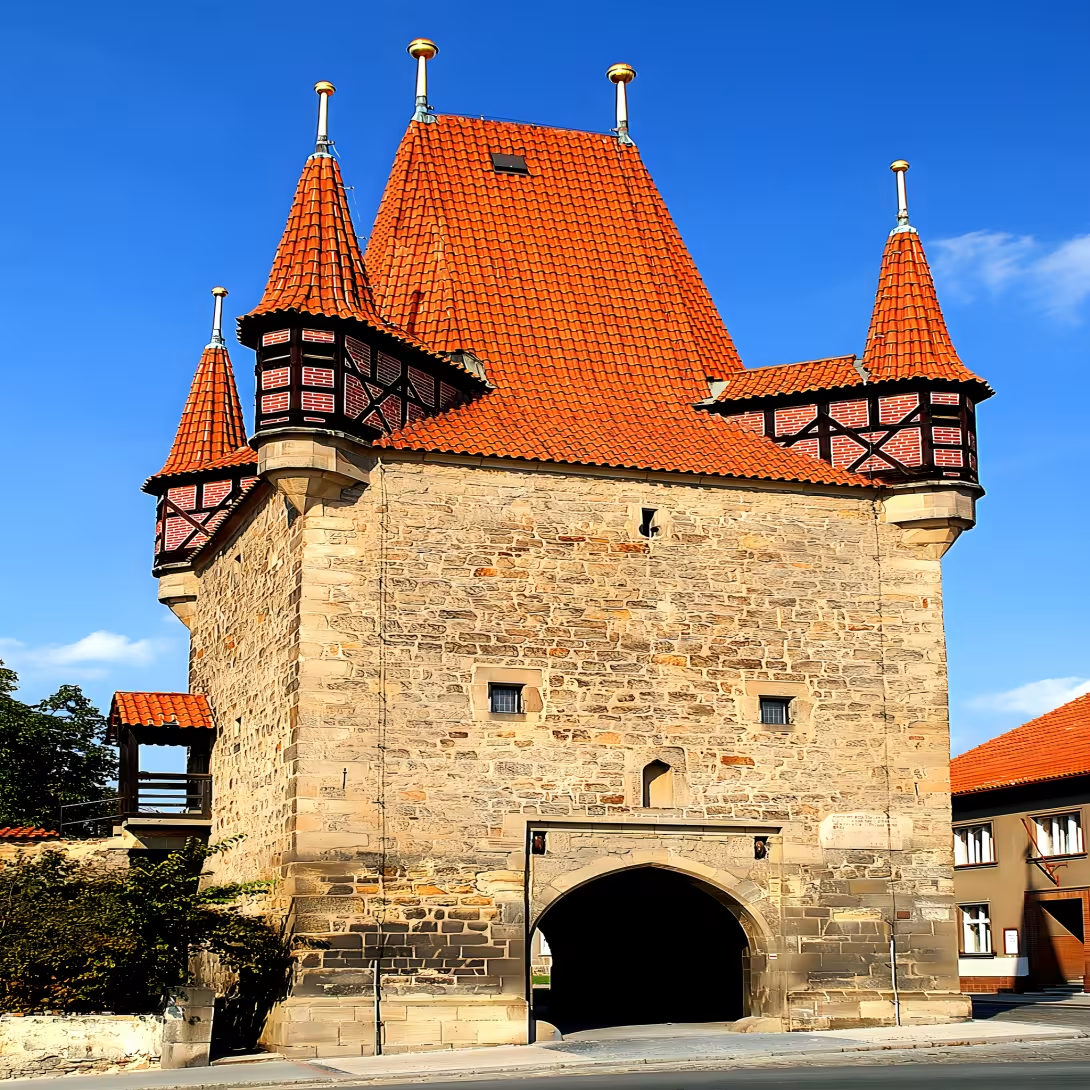
Pražská brána stands as a prominent symbol of Rakovník, located at the eastern edge of the city's historic center. Constructed in 1516 by master mason Jan, this late Gothic gate replaced an older wooden structure and has since become integral to the town’s historical narrative. Pražská brána is notable for its architectural significance and as a testament to the medieval fortifications that once protected Rakovník.
The origins of Pražská brána date back to early 16th-century Bohemia, a period marked by religious upheaval due to the Hussite movement. This context influenced local architecture and symbolism, evident in the chalice emblem associated with the gate. Originally built to replace an older wooden Zákostelská gate, Pražská brána was part of a series of fortifications that included other gates such as Vysoká, Svatojilská, and Lubenská. However, by 1837, urban development led to the demolition of these additional structures.
Architecturally, Pražská brána is distinguished by its late Gothic style, characterized by hewn sandstone blocks and corner turrets. The gate features a tower-like structure with four prominent corner turrets and a high gabled roof, standing 12.3 meters tall on a base measuring 9.8 x 9.47 meters. Its walls are robust, ranging from 1.4 to 1.6 meters in thickness. A significant reconstruction took place in 1903 under the guidance of architect Ludvík Lábler, restoring its historical appearance.
Throughout its history, Pražská brána has witnessed various changes and events that have shaped its legacy. Notably, a chalice symbolizing Hussitism was once displayed above the entrance, reflecting the religious influences of the time. Additionally, an eroded Latin inscription on the plaster called for traders to support the royal chamber, which had relocated due to plague in 1599.
Today, Pražská brána is preserved as a cultural monument and managed by the Muzeum T. G. M. Rakovník. Visitors can access its interior through an entrance from the museum's grounds, where exhibits detail the evolution of the city’s fortifications and the history of the Rakovnických ostrostřelců society. The gate remains a significant historical site, offering insights into the architectural and cultural heritage of Rakovník.
Pražská brána stands as a testament to the rich history and enduring legacy of Rakovník. Its preservation allows visitors to connect with the past, making it an essential stop for those exploring the city's historic core. The gate not only offers a glimpse into medieval architecture but also invites reflection on the cultural narratives that have shaped this region over centuries.
Then and now
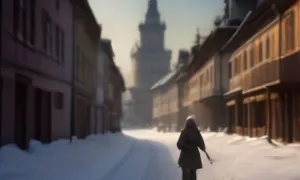
Drag the slider to compare how the landmark may have looked when it was built with the view today.
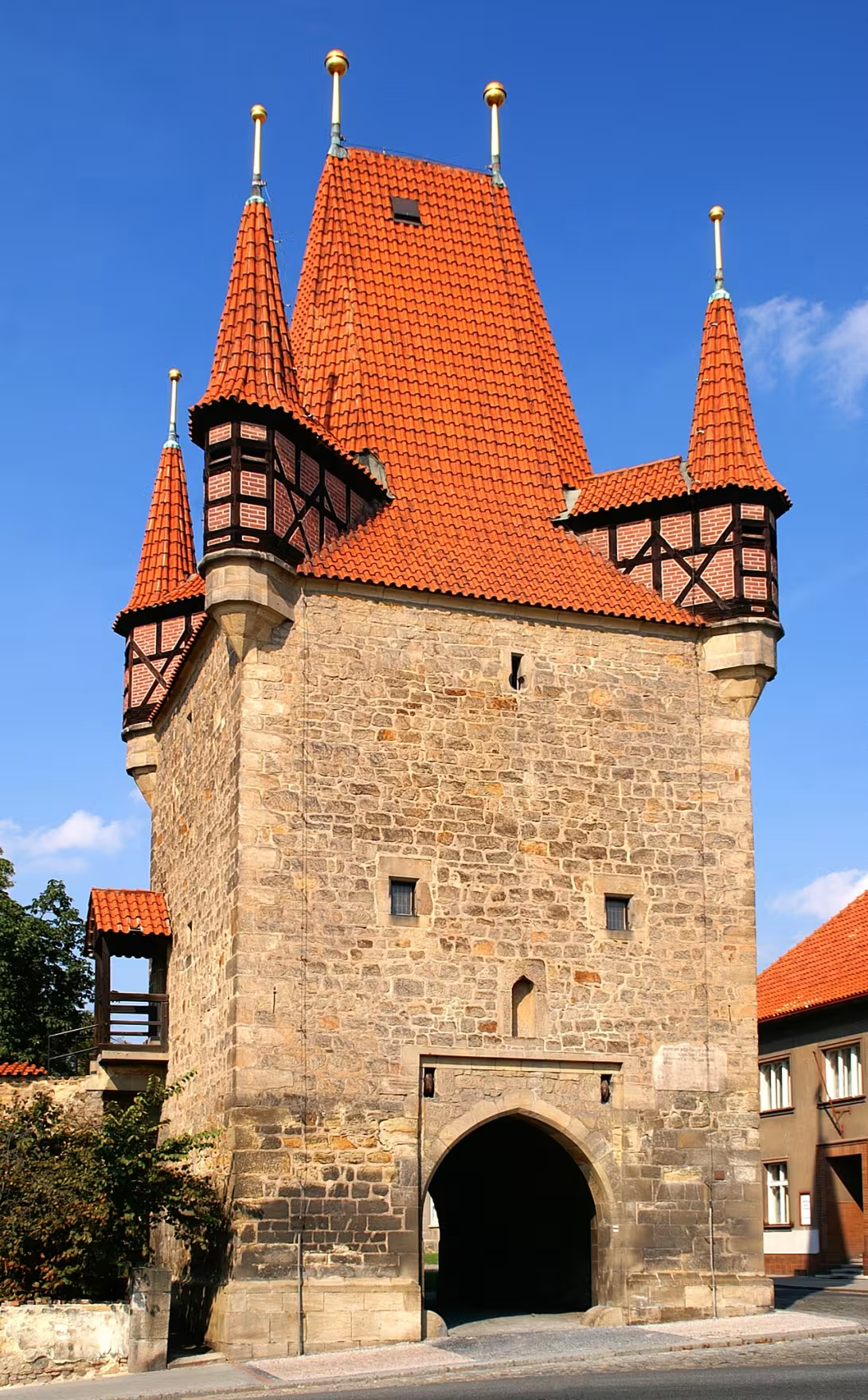

The historical appearance on the left is an AI-generated visualisation and serves as inspiration only.
Historical milestones
- 1516
- Construction of Pražská brána by master mason Jan.
- 1837
- Demolition of other city gates and parts of the town walls.
- 1903
- Reconstruction of Pražská brána by architect Ludvík Lábler.
Architectural development
Pražská brána was originally built in 1516, featuring late Gothic architectural elements such as hewn sandstone blocks and corner turrets. It underwent significant reconstruction in 1903 under the guidance of architect Ludvík Lábler to restore its historical appearance.
Historical events
1516: Construction of Pražská brána to replace an older wooden gate.
1837: Demolition of other city gates and parts of the town walls due to urban development.
1903: Reconstruction of Pražská brána by architect Ludvík Lábler.
Points of interest
- Despite its name, "Pražská brána" does not connect directly to Prague; rather, it symbolizes the historical and cultural ties Rakovník had with the capital during medieval times. - The gate's chalice emblem is a nod to the Hussite movement, which was pivotal in shaping Bohemian religious identity in the 15th century, reflecting local resistance against Catholic orthodoxy. - In 1903, architect Ludvík Lábler undertook significant restoration efforts on Pražská brána, aiming to preserve its late Gothic features while integrating some elements of historicism that were popular at the time. - The Latin inscription calling for traders' support was a response to the royal chamber's relocation due to plague in 1599, highlighting how public health crises historically impacted urban governance and economy. - Visitors can explore an exhibit inside Pražská brána through the Muzeum T. G. M. Rakovník, which provides insights into the Rakovnických ostrostřelců society, a group of historical archers from Rakovník with a long-standing tradition.
Guide
This guide is narrated by a synthetic voice generated by artificial intelligence.
Show guide text
This text was created by artificial intelligence and has not been editorially reviewed. It may contain inaccuracies.
The Prague Gate is one of the symbols of Rakovník. It stands on the eastern edge of the city's historic center and was once part of the medieval fortifications. Together with it, there were three other gates: the northern High Gate, the western Saint Giles Gate, and the southern Lubenská Gate. Today the Prague Gate is a protected cultural monument and is managed by the Rakovník museum.
The gate was built in 1516 by stonemason master Jan. Like the other Rakovník gates, it replaced an older wooden structure. It was called the Church Alley Gate because it stood in Church Alley. This was what the fortified area around the Church of Saint Bartholomew was called, where besides the bell tower there was also the original rectory, the judge's house, and an old school.
The High Gate was noticeably taller and built differently. The other three gates were very similar to each other, only the Saint Giles Gate and Lubenská Gate lacked the typical corner turrets. These two gates were demolished in 1837 along with a larger part of the ramparts. They were dilapidated and were hindering the city's development. The Prague Gate, on the other hand, survived and in 1903 it was reconstructed according to a design by architect Ludvík Lábler.
It is a late Gothic structure in the form of a prism. It is 12.3 meters high and stands on a ground plan of approximately 9.8 by 9.5 meters. Its walls are 1.4 to 1.6 meters thick and on the outside they are made of roughly hewn sandstone blocks. The high gabled roof is complemented by four prominent corner turrets that rest on corbels.
A passage with a barrel vault runs through the ground floor between two simple chamfered portals. It was once closed off from both sides by double doors and on the outer side a drawbridge was also lowered. Above the passage are two stories with flat ceilings connected by a wooden staircase. Light penetrates them from all sides through small windows, five in the first floor and three in the second. On the second floor on the side facing the historic city there is also one keyhole-shaped loophole.
On the same side of the gate there was once a chalice in a niche above the entrance as a symbol of Hussitism. A weathered Latin inscription on the plaster has also partially survived here. It is an appeal from Emperor Rudolf the Second asking merchants coming to the city to supply the royal chamber. In 1599, the royal chamber moved from Prague to Rakovník due to the plague.
On the first floor of the gate, the museum today presents the development of city fortifications and the history of the association of Rakovník sharp shooters.
Frequently asked questions
Can the monument be visited?
This is a structure in a public space that can usually be seen from outside free of charge. We have not verified that this particular one is freely accessible.
Where is the monument?
Location: Rakovník, Středočeský kraj. The map on this page shows the exact spot.
Why is the monument protected?
It is listed in the Central List of Cultural Monuments of the Czech Republic as a cultural monument (register no. 20672/2-2705). It is protected as part of a larger listed ensemble.
Businesses nearby
Do you run a restaurant, accommodation, shop, museum, rental, wellness or other visitor service near this monument? Show yourself directly to the people heading to it — this is how they will see you in the app and on the web:
Nearby
Pražská brána is located at the eastern edge of Rakovník's historic center. The area includes other historical sites such as the Vysoká, Svatojilská, and Lubenská gates, although these have been demolished or altered.
Accommodation nearby
Themed route
Thematic Walking Tour: Historical Gates of Rakovník
1. Pražská Brána (Gate) Start your journey at the iconic Pražská Brána, located on the eastern edge of Rakovník's historic center. This gate stands as a testament to the city's medieval past and offers a glimpse into its historical significance. Visitors are drawn to its well-preserved architecture, which provides insight into the town’s defensive strategies during earlier centuries.
2. Vysoká Brána (Gate) Walk approximately 10 minutes east from Pražská Brána to reach the site of the former Vysoká Brána. Although it has been demolished, this location is significant for understanding the layout and defensive mechanisms of medieval Rakovník. The area around the gate offers a chance to explore remnants and learn about its historical role in protecting the town.
3. Svatojilská Brána (Gate) Continue your exploration by heading southwest towards the site of the former Svatojilská Brána. This area provides an opportunity to delve into the history of Rakovník's urban development and its transformation over time. While the gate itself no longer stands, the surrounding vicinity offers historical insights through preserved structures and local narratives.
4. Lubenská Brána (Gate) Conclude your tour by visiting the site of the former Lubenská Brána, located to the west of Pražská Brána. This location is integral for appreciating Rakovník's historical urban planning and its evolution from a fortified town to a modern city. The area provides context about the gate’s role in connecting different parts of the medieval town.
This thematic tour offers an enriching experience through Rakovník's historic gates, each contributing uniquely to the story of this charming Czech town.
Seasonal recommendations
Spring: Visiting Pražská brána (Rakovník) during spring offers a vibrant display of nature as the surrounding landscapes burst into life with colorful wildflowers and fresh greenery, creating an enchanting atmosphere that enhances the historical charm of this medieval gate. The mild weather makes it a comfortable time for exploring, though visitors should be prepared for occasional rain showers typical of the season. Early mornings or late afternoons are ideal times to visit when the sun is softer, allowing for better photography and fewer crowds.
Summer: Summer at Pražská brána (Rakovník) is marked by long daylight hours that illuminate the structure beautifully, offering a picturesque setting for visitors. The warm weather invites outdoor exploration of nearby trails and parks, making it perfect for those who enjoy combining history with nature walks. However, summer also brings larger crowds, especially during peak tourist season, so arriving early in the day can help avoid the busiest times. Light, breathable clothing is recommended to stay comfortable under the sun.
Autumn: Autumn transforms Pražská brána (Rakovník) into a stunning tapestry of reds, oranges, and yellows as the leaves change color, creating a magical backdrop for photography enthusiasts. The cooler temperatures make it an ideal time for leisurely exploration without the summer heat. As the days begin to shorten, planning your visit during mid-morning can ensure you have ample daylight to enjoy both the historical site and its autumnal surroundings. Layered clothing is advisable as temperatures can vary.
Winter: Winter at Pražská brána (Rakovník) offers a serene and mystical experience with snow-covered landscapes that add an ethereal quality to this historic landmark. The shorter days mean visiting early in the morning or late afternoon when daylight is best for capturing the beauty of the site under winter lighting conditions. Despite fewer crowds, some areas might be less accessible due to snow, so it's wise to plan accordingly.
Visualizations and artistic views


The visualisations are generated by artificial intelligence and serve as inspiration.
Photos from the area
Real photos taken near the monument

Zdroj a licence jsou uvedeny u každého snímku.
Tips from visitors
No tips yet. Be the first!
Log in and add your tip.
Sources and literature
Photos: Stanislav Dusík / CC BY-SA 4.0, rozlišení zvýšeno umělou inteligencí — Wikimedia Commons. The author and licence also appear when you hover over the image.
Faktickým podkladem tohoto textu byl článek na Wikipedii, jehož autory jsou přispěvatelé Wikipedie. Článek je dostupný pod licencí CC BY-SA 4.0.
Location on the map
Příběhy a pověsti
Legendy, pověsti a příběhy spjaté s touto památkou
Fotografie návštěvníků
Zatím žádné fotografie. Buďte první, kdo přidá fotografii z návštěvy!
Log in a přidejte svou fotografii nebo hodnoťte.
Za ověřenou návštěvu v aplikaci získáte víc bodů — poznáme podle GPS, že jste na místě.
Reviews and comments