






Preitenstein Ruin
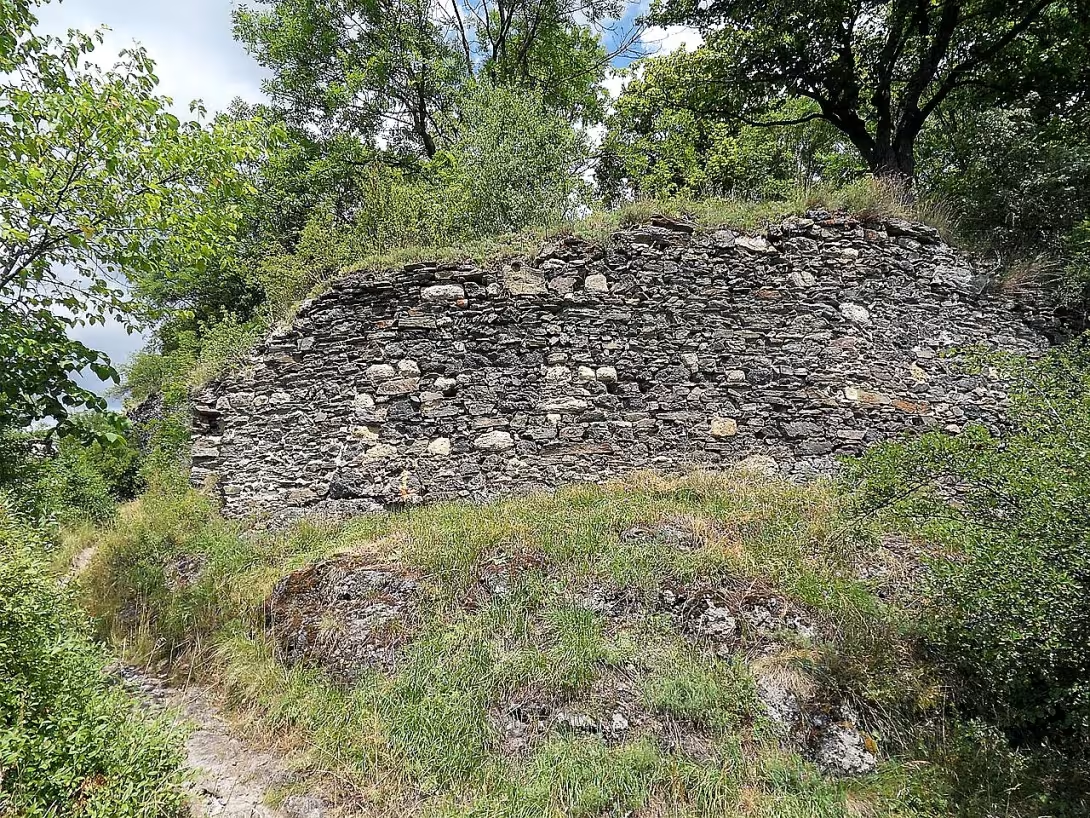
The ruin of Preitenstein - originally called Breitenstein - dominates the landscape of the Plzeň-sever district as a silent memento of medieval power and complex history of Czech noble families. It stands on the hill above the village of Nová Městečko near Nečtin and is protected as a cultural monument of the Czech Republic.
The place where the chateau grew has a rich history. Archaeological findings show a settlement already in the eneolite, where there was a high settlement of the people of Chamese culture. Even later, in the late period of the Hallatians, the hill was occupied, although it is not certain whether there was a fortress or just an unspecified settlement.
He built his own chateau in connection with the acquisition of the Netinese estate by the King Jan Lucemburský after 1330. As soon as it was completed, Oldřich Pluho of Rabštejn, who is evidenced as a pledge holder between 1330 and 1333, stopped it immediately. Under the castle Oldřich Pluh founded later the famous village of Nečtina. Since 1333, he bought it and took over the Car Karel IV., which explicitly included it in the chateaux that were not allowed to be stopped in Majestas Carolina. That's how he should remain in direct royal possession.
Reality was less ideal. Václav IV. stopped it at the end of the 14th century by Petr Frosty from Svoshín. Further exchanges and collateral followed: Oldřich Huler replaced him with Ice Cream for Orlík in 1407-1408. Then he owned it and extended it to Zikmund, who stopped it from Nepra Duc from Varina. The Hollow of the Manor was gestated by Zbyněk z Kočova, who was involved in the fight against the Hussites. When the Hussites were in imminent threat to Pilsen in 1434, Zbynek smuggled food into the malls and helped her survive the siege. After Hussite wars, however, the chateau "borrowed" Petr Brad from Nekměr and destroyed him during the dispute and burned down the neighbouring Nečetiny.
Before 1441 he was acquired by Burian I. z Gutštejna and his family liked him so much that he carried his seat here and began to write by sitting in Nečina. Burian's son received 500 Hungarian gold from King Vladislav II for maintenance. But in 1506, four brothers rebelled against the king, and the chateau went back into the royal hands. Ferdinand I. stopped him in 1511 by Hanusi Pluh of Rabštejn - the House of Ploughs returned to the history of the chateau.
A tragic epicologist comes with Kaspar Pluhoma from Rabštejn, son of Hanušov. In 1547 he participated in the state resistance against the king's power. After the defeat of the rebellion, he fled the country. In absentia he was sentenced to death and confiscation of all property. As a result of this judgment, Preitenstein was burned down - in the middle of the 16th century, the chateau was destroyed, which for more than two centuries created several chapters of Czech history.
Today, a visitor meets a ruin protected by the state. Its ruins are reminiscent of the time when dynasties took turns in Bohemia, when Hussites and Papists fought for the soul of the earth and when the state resistance tried to provoke a power conflict. Preitenstein is not the site of magnificent architectural relics, but rather the key to understanding feudal politics and its undetermined volatility.
Then and now
Drag the slider to compare how the landmark may have looked when it was built with the view today.
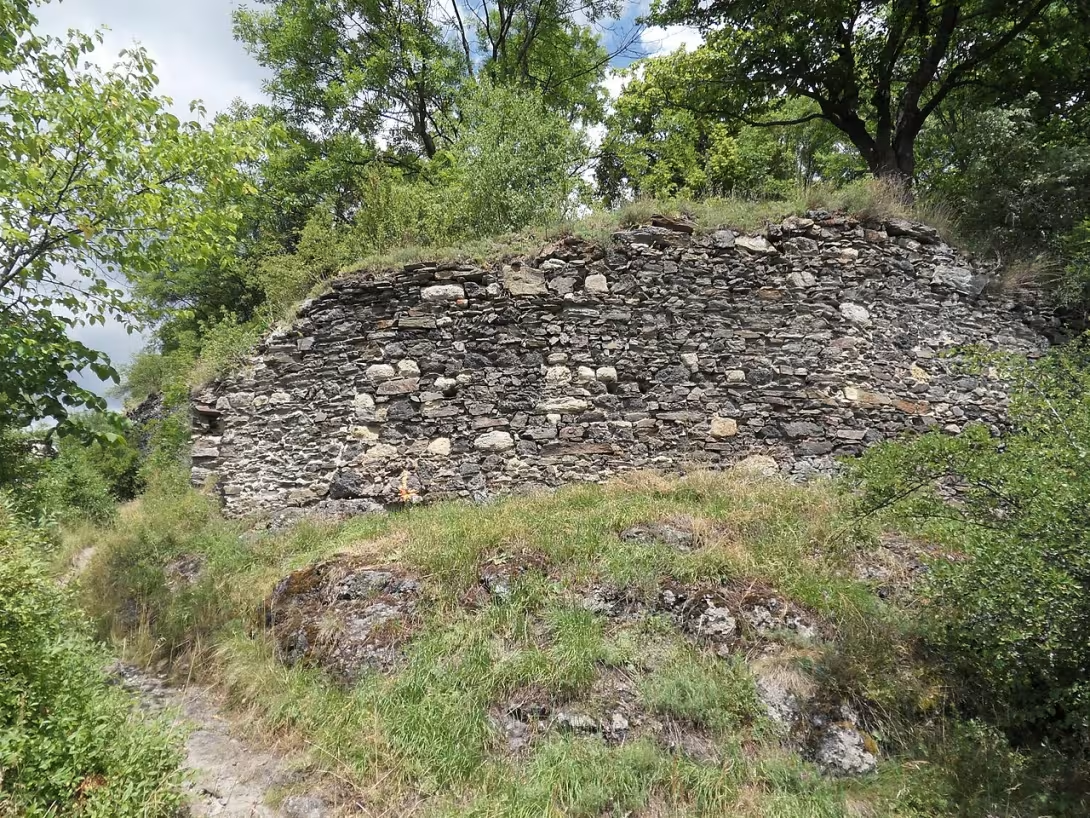
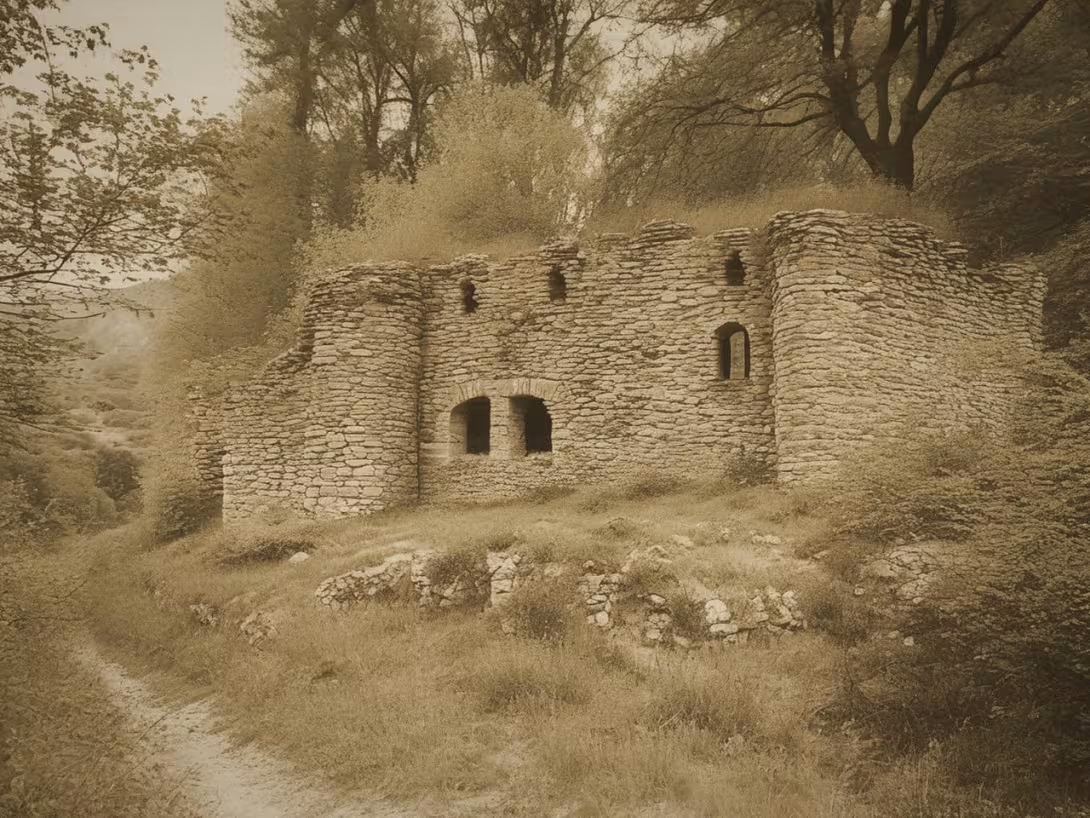
The historical appearance on the left is an AI-generated visualisation and serves as inspiration only.
Historical milestones
- 1330
- The position of the chateau king John of Luxembourg.
- 1549
- Burning down the chateau as punishment for Kaspar Plough's involvement in the uprising.
Architectural development
Chateau Preitenstein, built by King John of Luxembourg, went through several stages of lien and edits. During its existence, the chateau was exposed to various conflicts, leading to its gradual abandonment and ultimately destruction.
Historical events
- 1411
- 1434
- 1547
- 1549
Owners
- 1330
- Jan Lucemburský
- 1333
- Oldřich Pluh z Rabštejna
- po 1333
- Karel IV.
- End 14th Century
- Václav IV.
- 1419-1423
- Zikmund Lucemburský
- po 1441
- Burian I. z Gutštejna
- 1511
- Hanuš Pluh from Rabštejn
- 1549
- Florian Gryspek
Points of interest
- The ruin of Preitenstein - originally called Breitenstein - dominates the landscape of the Plzeň-sever district as a silent memento of medieval power and complex history of Czech noble families. - The place where the chateau grew has a rich history. Archaeological findings show a settlement already in the eneolite, where there was a high settlement of the people of Chamese culture. - King Jan Lucemburský built his own chateau in connection with the acquisition of the Netinese estate after 1330. Under the castle Oldřich Pluh founded later the famous village of Nečtina. - After Hussite wars, however, the chateau "borrowed" Petr Brad from Nekměr and destroyed it during the dispute and burned down the neighbouring Nečetiny. - A tragic epicologist comes with Kaspar Pluh from Rabstejn, who was involved in the state resistance against the king's power in 1547. After the defeat of the uprising he fled the country and the chateau was burned down - in the middle of the 16th century the chateau was destroyed, which for more than two centuries created many chapters of Czech history.
Guide
This guide is narrated by a synthetic voice generated by artificial intelligence.
Show guide text
This text was created by artificial intelligence and has not been editorially reviewed. It may contain inaccuracies.
Welcome to the historic ruins of Preitenstein, also known as the Necca, which awaits you with its silent and yet loud narrative. You are now standing in the middle of a vast terrain where only traces of former power and fame are lifted. You will take a look at how time has turned this chateau complex into a romantic nuisance that is now a witness to the past.
Let's dive into the history of this place. Preitenstein was built by King John of Luxembourg in the first half of the 14th century, namely around 1330. The chateau served as a fortress and symbol of power for Czech nobility when medieval Europe faced political changes and military conflicts. Despite the fact that the architects remained unknown, it is clear that the chateau was designed to excel in its defence and prestige.
Look up and perceive the atmosphere of these ruins. Are we looking for specific details? Although the ruin is now a mere shadow of its former appearance, the elements of fortifications and remnants of chateau walls that tell stories of past periods of struggle and resistance can be seen here. This landscape panoramic view can lead you to the idea of how these structures were once designed for protection.
Key stories and personalities associated with Preitenstein are rich and fascinating. The chateau witnessed Hussite wars, which influenced his fates significantly. In 1549 there was a tragedy when the chateau was burned as punishment for the participation of Kaspar Pluh of Rabstejn in the uprising against the rulers. Other historical personalities associated with this site include Oldřich Pluh z Rabštejna, Zikmund Lucemburský and Burian I. z Gutštejna.
The interesting thing is that the place where the chateau grew has a rich history. Archaeological findings indicate a settlement already in the eneolite, indicating the long-term human interest and use of this strategically crucial place. This historical layer gives the chateau Preitenstein additional depth and attraction.
Now that you have immersed yourself in the history and atmosphere of this place, we will invite you to explore again. Save time to think about the silent sounds of the past and imagine the lives of people who once walked these paths. We hope your visit to Preitenstein was inspiring for you. I wish you a pleasant further journey and remember this page of Czech history.
Tips for visitors
The best time to visit the ruins of Preitenstein is in the spring or autumn season when the weather is pleasantly warm and vegetation at the peak of its beauty. This time of year also offers ideal lighting conditions for shooting ruins where the sun is lower in the sky, allowing interesting shadows and colors.
Check current transport options before visiting.
When planning a visit to the ruins of Preitenstein it is advisable to bring with you shoes suitable for walking on uneven terrain, protective sunglasses and plenty of drinking water. Also remember the camera or camera, because here you will find several photogenic places with impressive views of the surrounding landscape.
For families with children visit Preitensteina is an interesting opportunity to explore history and nature. Children can look forward to walking on ruins, finding cat eyes or other hidden details in the stone. In addition, it is possible to visit the surrounding village of New Town and explore its picturesque surroundings.
Frequently asked questions
Can the monument be visited?
This is a ruin. Such sites are often freely accessible, but some can only be visited with a guide or are closed for safety reasons. We have not verified the current situation – take care and respect any restrictions.
Where is the monument?
Location: Hrad Nečtiny, Plzeňský kraj. The map on this page shows the exact spot.
Why is the monument protected?
It is listed in the Central List of Cultural Monuments of the Czech Republic as a cultural monument (register no. 27315/4-1454).
For kids
Imagine going back 696 years to when Chateau Preitenstein was still young and full of life. King Jan Lucemburský wanted to build his chateau on cliffs above the river Moravka and this is how it happened.
Many people lived here - knights, warriors, women and children. Everyone was proud and brave because they had to face many dangers. The chateau was their refuge where they could hide from attacks and wars.
Businesses nearby
Do you run a restaurant, accommodation, shop, museum, rental, wellness or other visitor service near this monument? Show yourself directly to the people heading to it — this is how they will see you in the app and on the web:
Nearby
The surrounding area of the sights consists of the villages of New Town and Nečina.
Accommodation nearby
Trips and activities nearby
Guided tours, tickets and activities nearby from GetYourGuide
Affiliate link: if you buy from the partner, we may receive a commission. The price for you does not change.
Search tours and activities →Themed route
Thematic cruise route around Preitensteina
1. Preitenstein (ruin) * Type: * Historical ruins * Why is it worth a visit: * Preitenstein is a fascinating witness of the past with a rich history dating back to the 12th century. Despite its crumbling state, it offers a unique view of the area and imagines historical architecture from this era.
Hrad Nečtiny * Type: * Chateau * Why is it worth a visit: * Located near Preitensteina and is known for its history, which dates back to the 13th century. Its strength structures and beautiful gardens provide a view of life digging from this area.
3. Chapel of the Virgin Mary * Type: * Chapel * Why is it worth a visit: * This chapel is a key spiritual place in the region, offering a peaceful atmosphere and beautiful architectural elements. It is an ideal place to relax after exploring historical monuments.
4. Cave Castle Nectin * Type: * Historical park * Why is it worth a visit: * Beautiful gardens and sets in the courtyard of the chateau offer a beautiful opportunity to walk in nature. They are ideal for relaxation and provide views that reflect the historical importance of the site.
This route offers a combination of history and nature, which allows you to understand the region's rich past and enjoy its beautiful space.
Seasonal recommendations
Spring: In the spring period, the visit to the ruins of Preitenstein (Hrad Nečtiny) is enriched by the blooming nature that surrounds historical ruins. When the sun begins to illuminate the landscape, trees and bushes reveal themselves in its most beautiful green, providing an ideal background for photography. The atmosphere is quiet and mild, often accompanied by a sweet spring scent. For a visit it is recommended to come in the early afternoon when the temperature is most suitable for walking and the shadow is sufficient. Clothes should be flexible - mild clothing with the possibility to add a layer in case of a cool windshield.
Summer: In the summer period, the ruins of Preitenstein (Hrad Nečtiny) offer the visitors full energy and service life. The sun lights up the ruins to the highest light, creating dramatic shadows and attracting many tourists looking for an escape from urban heat. This season is often full of crowds, especially on Wednesday week, so it is recommended to visit on Sunday or at the beginning of the week for a calmer experience. Hot clothes and sun protection are essential - you must not forget your hat, sunglasses and plenty of drinking water.
Autumn: Autumn brings a unique atmosphere to the ruins of Preitenstein (Hrad Nečtiny). The colours of leaves are turned into golden, orange and red shades, which provides an exceptional background for photography. The sun is lower in the sky, creating mild sunlight ideal for walking. This time of year is less crowded crowds than the summer season, so you can enjoy a quieter and more intimate experience. Clothes should be adapted to variable weather - from warm layers to hats that protect against a cool wind.
Winter: In winter months, a visit to Preitenstein (Hrad Nečtiny) offers a completely different feeling. The ruins are shaded before dark and the atmosphere is soothing, often accompanied by foggy air or the first snow. Winter light creates soft and quiet shadows, which adds a romantic touch to historical remains. This season is usually the least visited so you can enjoy an almost exclusive tour. Hot clothing with waterproof layers and protective shoes are essential, especially if you plan to visit during cold months.
Visualizations and artistic views


The visualisations are generated by artificial intelligence and serve as inspiration.
Photos from the area
Real photos taken near the monument


Zdroj a licence jsou uvedeny u každého snímku.
Atmosphere of the place
This atmospheric visualisation of the place and period was generated by artificial intelligence. It is not real footage of the location.
Tips from visitors
No tips yet. Be the first!
Log in and add your tip.
Sources and literature
Photos: Jik jik / CC BY-SA 4.0 — Wikimedia Commons. The author and licence also appear when you hover over the image.
Faktickým podkladem tohoto textu byl článek na Wikipedii, jehož autory jsou přispěvatelé Wikipedie. Článek je dostupný pod licencí CC BY-SA 4.0.
Location on the map
More monuments – Hrad Nečtiny
Show all in the municipality

Příběhy a pověsti
Legendy, pověsti a příběhy spjaté s touto památkou
Fotografie návštěvníků
Zatím žádné fotografie. Buďte první, kdo přidá fotografii z návštěvy!
Log in a přidejte svou fotografii nebo hodnoťte.
Za ověřenou návštěvu v aplikaci získáte víc bodů — poznáme podle GPS, že jste na místě.
Reviews and comments