



Puklice Chateau
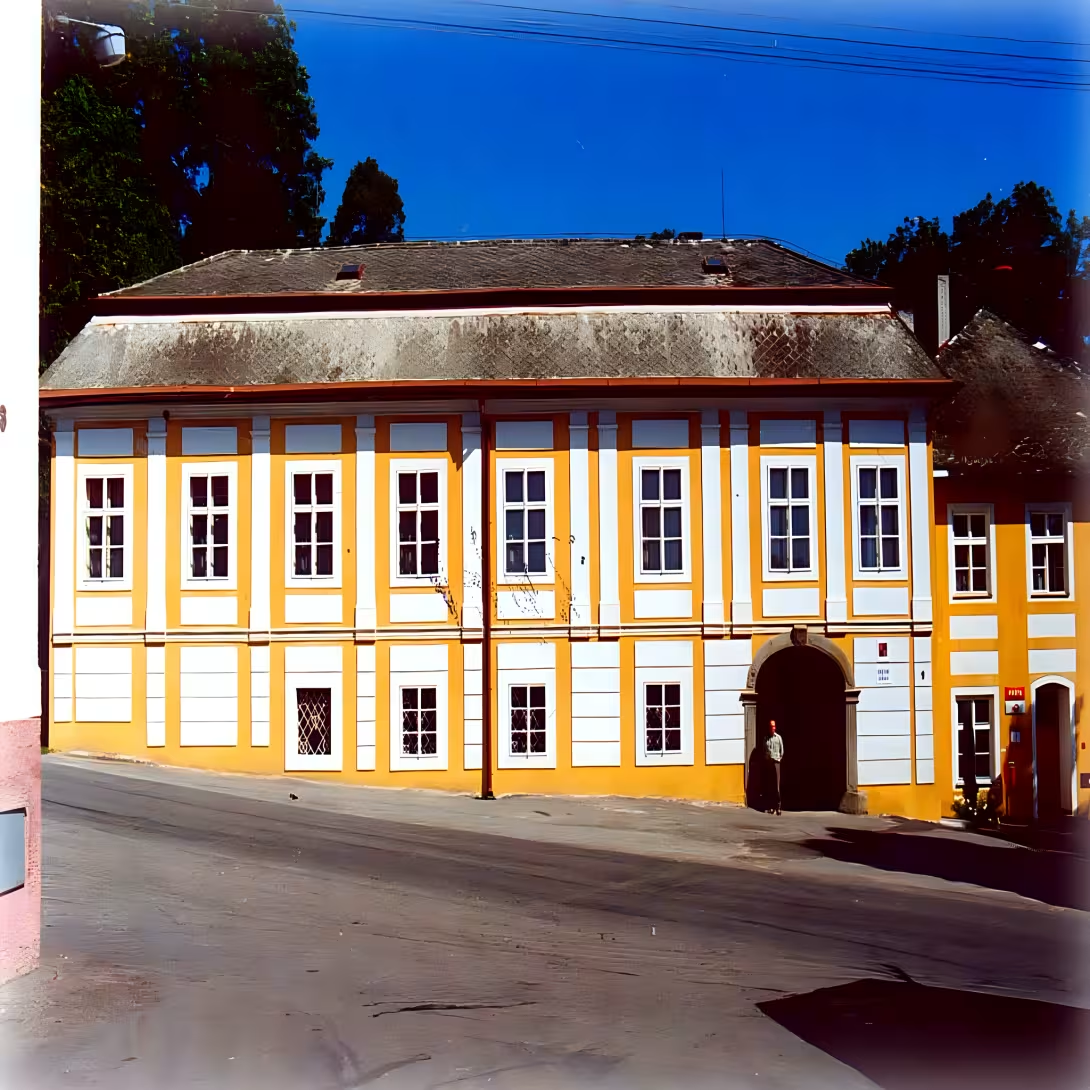
The oldest mention about Puclicy dates back to 1318, when Jan Lucemburský confirms them as collateral. The fort may have been established here at the time, but it is mentioned in writing for the first time up to 1534, when Jan of Lipé is releasing it to the township František Hordar. The Hordar family is gradually established in the area. But two-thirds of the manor disappeared for participating in the state resistance and had to transfer to Catholic faith. Puklice was held until 1666, when perhaps on the site of the old fortress they started building a castle.
The construction grew gradually. The walled year refers to the year 1578, when the Renaissance reconstruction was added to the Gothic fortress. After 1720, western and southern wings grow in Baroque style, but without complete organics. At the beginning of the 19th century, the classicist modifications visible on the facades take place. Four wings of a building on one floor surround a courtyard with an arcade gallery; On the south side, the bay is peeking out on a massive pillar. There was once a pond under the east wing (introduced in the 1960s); Its shape is still read in the field shapes of the surrounding park.
The owners took turns quickly over the centuries. After the Hordars the farm passes through various noble houses to Otto Skrubensky (1807), in 1878 to the count of Blankenstein, in 1892 to the hands of the jihlai factory Miloslav Peshka. In 1905 he sells it to Siegfried Fischer, a member of the puckish Jewish village, and after his death, his son Richard, the last owner of the estate, inherited it in 1917.
Richard Fischmann proved to be an excellent farm. The farm was extended by fruit orchard, greenhouse and gardens; According to land books, the area increased by 40 hectares. But in 1941, tragedy came. The Jewish population of Jihlava, including the Fishmann family, was exported to Třebíč and gradually deported to Lublin, Treblina and Auschwitz. Of the 1350 people dragged into concentration camps, only 32 survived the Nazi rampage; Among the survivors were Fischmann's son, Victory and the daughter of Elishka. The castle was confiscated and Fischmann was designated collaborator. His offspring 'restitution experiments failed.
After the war, the building was divided between post office, library and temporary maternity school until 1977. Today it serves as a management building, while the surrounding buildings of the former estate serve local entrepreneurs, fallopian and carpentry.
Then and now
Drag the slider to compare how the landmark may have looked when it was built with the view today.
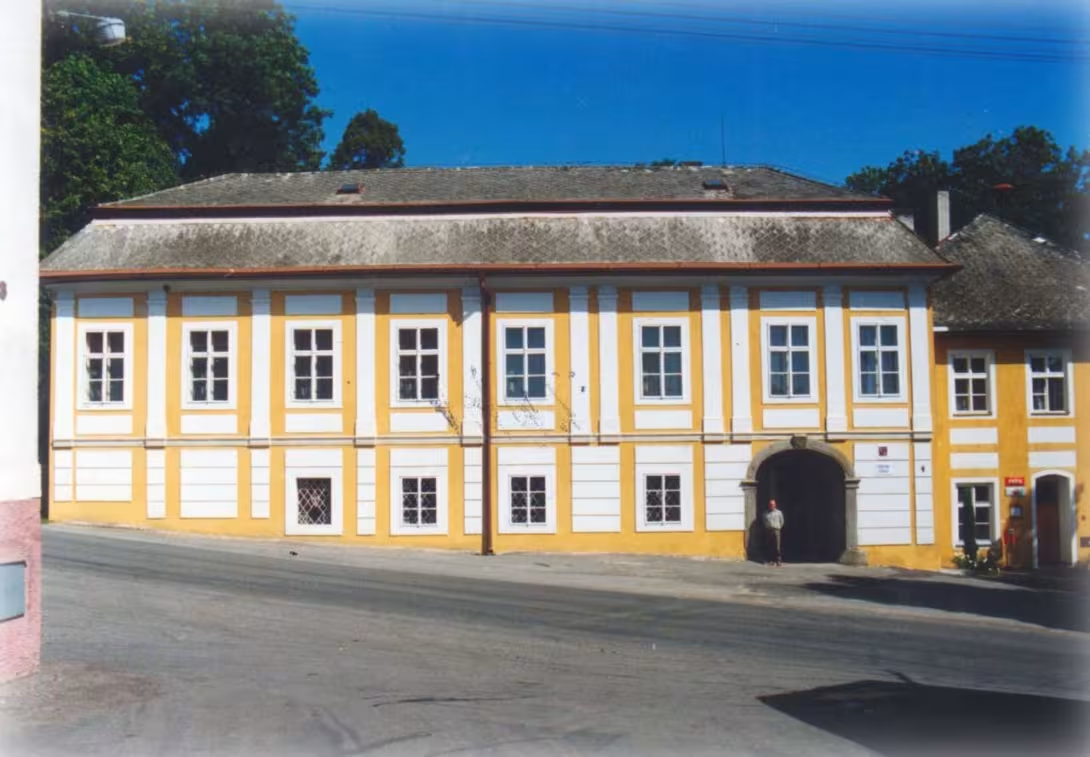

The historical appearance on the left is an AI-generated visualisation and serves as inspiration only.
Historical milestones
- 1578
- Linking the new north wing to the original fortress.
- 1720
- The construction of baroque west and south wings.
Architectural development
The castle experienced several architectural phases: the original Gothic fortress was remodeled, then expanded baroque and eventually received classical modifications in the first half of the 19th century. These changes are visible on the facades and internal arrangement.
Historical events
- 1318
- Jan Lucemburský confirms the arrest of the municipality Puklice Jan from Greece.
- 1534
- The first written mention of the fort in Puklicy.
- 1941
- Evictions of Jewish population from Jihlava, including the family of Fischmann.
Points of interest
- The oldest mention about Pucklic dates back to 1318, when Jan Lucemburský confirms it as collateral.
- The fort is mentioned in writing for the first time in 1534, when Jan of Lipé releases it to František Hordar.
- After participating in the state resistance, the Hordars had to transfer to the Catholic faith and held Puklice until 1666 when they started building the castle.
- The construction grew gradually: in 1578 the Renaissance reconstruction was added, after 1720 the baroque wings were increased and in the beginning of the 19th century the classicist modifications took place.
- Richard Fischmann expanded the farm with fruit orchard, greenhouse and gardens; In 1941 it was exported to concentration camps and after the war the building was divided between post office, library and temporary maternity school.
Guide
This guide is narrated by a synthetic voice generated by artificial intelligence.
Show guide text
This text was created by artificial intelligence and has not been editorially reviewed. It may contain inaccuracies.
The castle in Puklice in the Jihlava district is a small building at the entrance to the village. It stands on the site of an older Gothic fortress that was later rebuilt into a Baroque small castle. It acquired its present Classical appearance in the first half of the 19th century.
It is a four-winged single-storey building. The oldest is the eastern wing, which was created by a Renaissance reconstruction of the Gothic fortress. The western and southern wings are Baroque, and the entire structure is unified by a Classical façade. The inner courtyard is bordered on three sides on the ground floor by an arcade passage. On the southern side of the oldest wing, a bay window projects on a massive pillar. Under the eastern wing there used to be a pond that was filled in during the nineteen sixties. Its shape still reveals the park that was created in its place, and the bend of the road that runs around the park. Opposite the castle stand buildings of the former estate for which the small castle served in its later years as the manager's house.
The village is first mentioned in 1318. The fortress is documented in writing only from 1534, when a Jihlava citizen named František Hordar acquired the village and began to use the surname of Hordar of Puklice. His tombstone can still be seen in the Church of Saints Peter and Paul in nearby Petrovice. Most of the Hordars' estates were confiscated for their participation in the Estates Rebellion, but they retained Puklice until 1666.
According to the date on a bricked-up small portal, a northern wing was added to the fortress in 1578. After 1720, the Baroque western and southern wings were completed, attached to the original building with a noticeable setback. The owners then changed rapidly, among them the Skrbenskys, the Count from Blankenstein, or the Jihlava manufacturer Miloslav Peška.
The last owner from 1917 was Richard Fischmann. He proved to be a good manager, enlarged the estate with an orchard, greenhouse and gardens and increased its area by 40 hectares. However, in 1941, the Jewish population of the Jihlava district, including the Fischmanns, was relocated to a collection centre in Třebíč and from there deported to extermination camps. Of the 1350 people taken away, only 32 survived, among them Fischmann's son Vítězslav and daughter Eliška. The castle had meanwhile been confiscated and Fischmann was marked as a collaborator. Attempts by his descendants to reverse the confiscation were rejected by the authorities.
The building was then divided between a post office, a library, the local national committee, and until 1977 also a temporary kindergarten.
Tips for visitors
The best time to visit the castle Puklice is in the spring or autumn period when vegetation and surrounding landscape painting are in their most beautiful form. Sunny days provide ideal conditions for walking around the castle and viewing its architectural details.
When visiting, bring protective clothing such as hat or parasol, especially if you plan to walk in sunny weather. In addition, we recommend that the sprinkler and insect protection be loaded.
For photography is the best place before the lock where the sun lights the building in different times of the day. The morning light offers softer colours and long shadows that highlight the architectural elements of the castle.
In the vicinity of the castle Puklice there are several picturesque walks. Visit also a nearby village where you can discover local markets or cultural events. A suitable asset for families with children is visiting surrounding forest trails and exploring nature.
Frequently asked questions
Can the monument be visited?
Some buildings of this kind are open for guided tours, others serve another purpose or are privately owned. We have not verified whether and when this monument is open – please ask the operator.
What are the opening hours and admission?
We have not verified the opening hours or admission. Current information is published by the operator.
Where is the monument?
Location: č.p. 1, Puklice, Kraj Vysočina. The map on this page shows the exact spot.
Why is the monument protected?
It is listed in the Central List of Cultural Monuments of the Czech Republic as a cultural monument (register no. 45668/7-5153).
For kids
Imagine going back to the past, until Puklice was a small village with a fortress that was home to lords and nobles. As if time had stopped and these stone walls were still alive.
There were people here who cared about agriculture and pasture. They were housekeepers who took care of the fort and its surroundings. And then there was a handful of people who made a living - smiths, carpenters, weavers... These people were like one big family circle, surrounded by hardness.
Businesses nearby
Do you run a restaurant, accommodation, shop, museum, rental, wellness or other visitor service near this monument? Show yourself directly to the people heading to it — this is how they will see you in the app and on the web:
Nearby
Ambient landscape, other sights
Accommodation nearby
Trips and activities nearby
Guided tours, tickets and activities nearby from GetYourGuide
Affiliate link: if you buy from the partner, we may receive a commission. The price for you does not change.
Search tours and activities →Themed route
Thematic cruise route castle Puklice
1. Castle Puklice * Type: * Historical lock * Why is it worth a visit: * Castle Puklice is a key monument in an area with a rich history that dates back to the 13th century. Its architecture represents various building phases from Gothic to Baroque and is an ideal place for those interested in the history of Czech residences.
2. Park at castle Puklice * Type: * Park * Why is it worth a visit: * The immediate surroundings of the castle form a beautiful park that offers peaceful walks and opportunities to observe wild flora and fauna. The park is an ideal place for relaxing and enjoying the natural environment around the castle.
3. Chapel of the Virgin Mary * Type: * Chapel * Why is it worth visiting: * The Chapel of the Virgin Mary, located near the castle, is a small sacral monument with a rich history. Its simple architecture and quiet atmosphere offer ideal space for quiet meditation or short prayers.
4. Area around the castle * Type: * Cultural-historical area * Why is it worth a visit: * The surrounding area around the castle offers views of the vast field and forests, creating an ideal environment for understanding the historical context of the castle. These places are also suitable for shooting and enjoying views of the landscape.
This route offers travelers the opportunity to familiarize themselves with the history and natural environment surrounding the castle Puklice, making it an ideal place for a day trip.
Seasonal recommendations
Spring: Spring in the castle Puklice brings a renewed atmosphere where green meadows and trees open up their most beautiful autumn color. The sunny days are ideal for walking around the castle, where it is possible to enjoy peace before the beginning of the summer rush of tourists. At this time growing flowering shrubs and trees create an impressive background for photographs. It is recommended to visit the castle in the morning or in the afternoon to avoid the crowd. Wear comfortable shoes and a short shirt because the temperature can be medium heat.
Summer: In summer the Puklice Castle offers the best conditions for visiting. Long sunny days and warm weather create an ideal atmosphere for exploring the castle and its surroundings. Summer is also a time when various cultural events can take place here, which adds to the attractiveness of the visit. However, it is important to visit the castle early in the morning or later in the evening to avoid the largest crowd of tourists. Don't forget the sun protection and enough drinking water.
Autumn: Autumn visit of the castle Puklice offers a unique atmosphere where the trees are painted in golden and red shades. Sunshine days are warm and welcoming, which is the perfect time to walk around historic buildings and discover their beauty in a calmer atmosphere. Autumn season can also be suitable to visit if you are looking for a place without large crowds of tourists. It is recommended to wear warmer clothes and perhaps a blanket for cooler lunch hours.
Winter: In winter the Puklice Castle offers a completely different but equally attractive atmosphere. When the surrounding area is covered with snow and the trees are without leaves, they create a romantic background to visit the castle. Days are shorter and temperatures are colder, so it is important to prepare for snow conditions or frost. The lock opens during this period within a more limited time frame, so check the current information carefully. Hot clothes and suitable shoes are necessary for a comfortable stay at the castle.
Visualizations and artistic views


The visualisations are generated by artificial intelligence and serve as inspiration.
Photos from the area
Real photos taken near the monument


Zdroj a licence jsou uvedeny u každého snímku.
Atmosphere of the place
This atmospheric visualisation of the place and period was generated by artificial intelligence. It is not real footage of the location.
Tips from visitors
No tips yet. Be the first!
Log in and add your tip.
Sources and literature
Photos: Honza78 / CC BY-SA 4.0, rozlišení zvýšeno umělou inteligencí — Wikimedia Commons. The author and licence also appear when you hover over the image.
Faktickým podkladem tohoto textu byl článek na Wikipedii, jehož autory jsou přispěvatelé Wikipedie. Článek je dostupný pod licencí CC BY-SA 4.0.
Location on the map



Příběhy a pověsti
Legendy, pověsti a příběhy spjaté s touto památkou
Fotografie návštěvníků
Zatím žádné fotografie. Buďte první, kdo přidá fotografii z návštěvy!
Log in a přidejte svou fotografii nebo hodnoťte.
Za ověřenou návštěvu v aplikaci získáte víc bodů — poznáme podle GPS, že jste na místě.
Reviews and comments