



Raciberk Hillfort
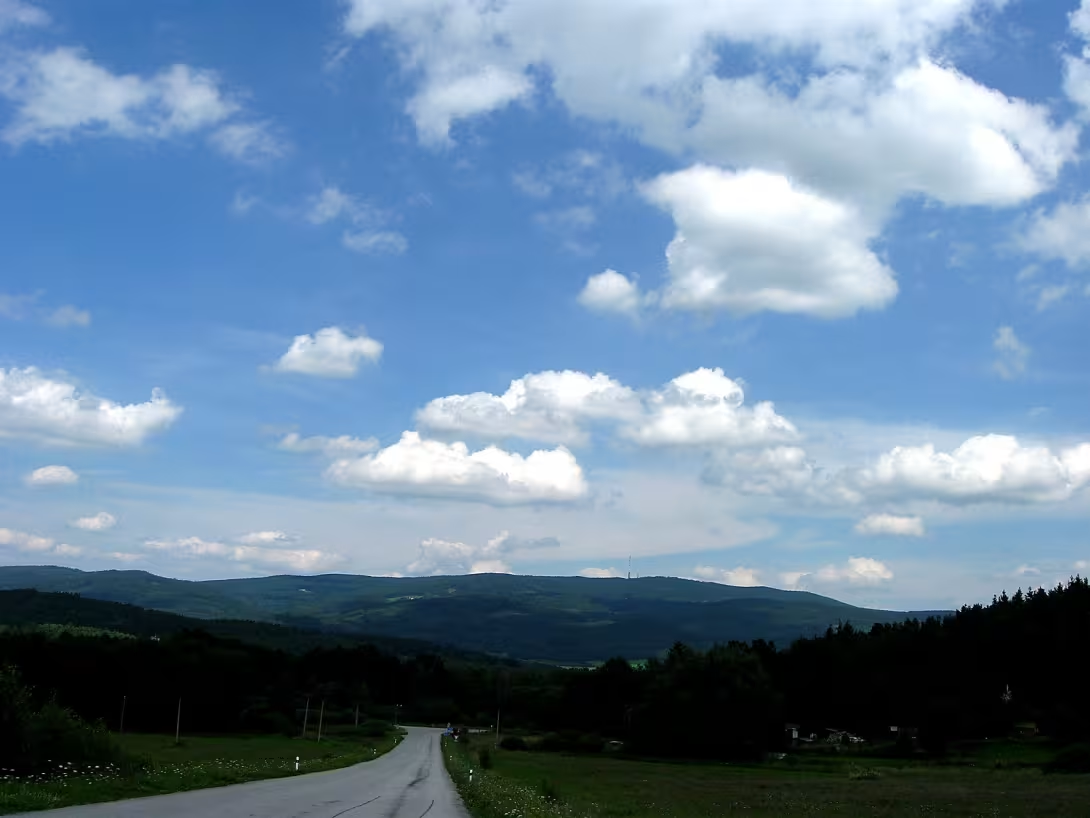
Raciberk, also known as Raziberg or Ratzenberg and originally referred to as Hradec or Na Hradec, is a prehistoric castle located on the top of the same-name hill in the Bohemian foothills. This archaeological site is located southeast of the village Boletice near Kajov in the district of Český Krumlov, South Bohemia region. The castle is protected as a cultural monument and represents an important archeological place with a rich history dating back to the Middle Bronze Age, but the most important findings come from the period of the Halštat and Latín culture.
The history of Raciberk dates back to the middle age of bronze, as evidenced by archaeological discoveries. The largest number of artifacts came from the late period of the Halštat and the early period of the Latin era, while the settlement in this place continued in the late period of the Latin and early Middle Ages. Although the fortifications of the fort were not thoroughly examined, it is assumed that visible remnants of the vala were built in the period of the Hallatians. A smaller archaeological research on the site was conducted by Eva Soudská, which examined the terrain unit considered a mound. No human remains were found inside this structure, suggesting a possible link to the fortification.
The Raciberk architecture is characterized by a single oval plan with dimensions of 110 × 80 metres. The total fortified area measures approximately 0,75 hectares and is protected by a three-metre outer moat and valley system. The best preserved part of the valley is located on the east side of the castle, where probably the entrance to the fortifications was located. Val is at a height of three meters, with a height of approximately one metre on the inside.
The interest of Raciberk is the terrain unit examined as a mound, which has proved to be free of human remains. This structure was considered part of the fortifications, which adds another layer to understanding the historical use of the castle. The eastern part with the best preserved wall probably served as the main entrance gate, suggesting the strategic importance of this location.
Today Raciberk is accessible to visitors and represents a valuable archaeological object. Its history and architecture offer a view of prehistoric times, when cultural exchanges took place in Europe between Halštat and Latin cultures. Visiting this place allows you to gain a better understanding of the settlement processes in Central Europe and appreciate the historical context in which the castle was located.
Raciberk is not only a monument to the past, but also a reminder of the human spirit and ability to adapt to the environment. Its preservation and study allow us to better understand the life of our ancient ancestors and their relationship to the outside world. For those who want to explore the rich heritage of the Czech Republic, a visit to Raciberk is a necessary experience.
Historical milestones
- around 1500 B.C.
- The beginning of the settlement in the Middle Bronze Age.
- around 600 B.C.
- Construction of fortifications and blossoms at the time of the Halštat culture.
- around 300 BC l.
- Continued settlement in the period of Latin culture.
- around 800 n.l.
- The last phase of using the fort in the early Middle Ages.
Architectural development
The fort has a one-piece structure with an oval plan of 110 × 80 metres. The fortification consists of an external moat and a wall, with the best preserved part located on the east side. The visible remnants of the valleys are expected to come from the period of the Hallatites.
Points of interest
- The most significant findings come from the period of the Halštat and the Latin culture. - A field unit examined as it may have been without human remains and may be related to fortification. - The fort has a one-piece oval plan with dimensions of 110 × 80 meters. - The fortified area measures approximately 0,75 hectares and is protected by a three-metre external ditch and wall system. - The best preserved part of the valleys is located on the east side, where probably the entrance to the fortifications was located.
Guide
Show guide text
This text was created by artificial intelligence and has not been editorially reviewed. It may contain inaccuracies.
Welcome to the historical site Raciberk in Boletice! You are standing right in front of a mysterious and fascinating monument that is witnessing the rich heritage of the past. Under your feet, the Bohemian foothills extend with its views of the vast oval hilly terrain, which is home to this primordial castle. Notice how the water in the ditch around the hill swings and how trees may seem like guardians of the secrets that this piece of land hides.
Raciberk was first inhabited in the middle of the Bronze Age around 1500 B.C., making it one of the oldest witnesses of human establishment in the area. Later, around 600 B.C., this place began to blossom as a fortress in the period of the Hallatians culture. At that time the fortifications were built and the fort became the centre of activity, which continued to the Latin period around 300 B.C. Although its last use phase was in the 9th century AD, Raciberk remained an important place for its inhabitants for centuries.
Look up and you will see its oval plan with dimensions 110 × 80 meters. This simple but efficient terrain unit is protected by a trench and wall system, which is still coming out of the country today as evidence of generations past. Note also the size of the fortified area, which measures approximately 0.75 hectares - important enough to keep the community here.
Among the key personalities associated with Raciberk is the archaeologist Eva Soudská. Her work helped to uncover some of the most important findings that came from the Hallatian and Latin cultures. These discoveries provide valuable information about the lifestyle, art and technology of those people who once lived here.
The interesting thing about this place is that the terrain unit examined as it may have turned out to be without human remains. This finding opens up an interesting mystery: was Raciberk only a military fortress, or did it serve other purposes? This is one of many questions that this archaeological object still presents to scientists.
Let's move forward and explore other parts of the castle. Every piece of land can disrupt the surface and reveal new secrets that have lasted for centuries. Pick up your fantasy and let it move between the shadows of earlier generations.
We will strongly invite you here to further explore so that you can discover as many secrets as there are still undiscovered. Whether you explore history, nature or simply enjoy the quiet surroundings, Raciberk has something interesting for everyone. Thank you for your visit and we hope you will return with new questions and interests about this fascinating place.
Tips for visitors
The best times for visiting are spring and autumn months, when lower vegetation better reveals the relief of the castle and surrounding landscape of Šumav foothills.
Due to the terrain of the hill, pack solid footwear suitable for the field, plenty of drinking water and a map of the area.
For the best photos we recommend a visit during the golden hour before sunset, when light best highlights the structure of the castle and surrounding prospects.
With children, a visit is a great opportunity to explore ancient history in nature. You can visit the village Boletice or Kajov nearby.
Frequently asked questions
Can the monument be visited?
This is an archaeological site. Often there is little to see on the ground and the land may be private. We have not verified access.
Where is the monument?
Location: Boletice, Jihočeský kraj. The map on this page shows the exact spot.
Why is the monument protected?
It is listed in the Central List of Cultural Monuments of the Czech Republic as a cultural monument (register no. 1000133684).
Businesses nearby
Do you run a restaurant, accommodation, shop, museum, rental, wellness or other visitor service near this monument? Show yourself directly to the people heading to it — this is how they will see you in the app and on the web:
Nearby
Bohemian foothills, municipality Boletice and Kajov.
Accommodation nearby
Trips and activities nearby
Guided tours, tickets and activities nearby from GetYourGuide
Affiliate link: if you buy from the partner, we may receive a commission. The price for you does not change.
Search tours and activities →Themed route
1. Boletice, village: A suitable place to start wandering around this historic area. 2. Raciberk, archaeological site: The main destination of the trip, which offers a view of the ancient settlement. 3. Kajov, village: Place suitable for further sightseeing. 4. Šumava foothills, the area: The vast landscape, which forms the beautiful scenery of your entire route.
Seasonal recommendations
Spring brings the awakening of nature and the fresh greenery surrounding the site. The atmosphere is full of hope and a gentle breeze, making the walks pleasant. We recommend moisture resistant shoes because the terrain can be muddy after melting snow. An ideal visit in the morning is when the air is the cleanest.
In the summer months the bright sun and rich green landscape dominates, which highlights the contours of the sights. Expect more visitors in the main season, so come first thing in the morning to avoid heat and clumps of people. Remember light clothes, hat and plenty of fluids.
Autumn paints the surroundings into golden and brown tones, creating a nostalgic and calm mood. Fog in the valley gives the place mystery and special depth. Layer clothes for changing weather are suitable. The best time for a walk is late afternoon, when light gently hits the archaeological structures.
Winter offers absolute silence and a minimalist landscape that can be covered with snow. The lighting is shielded and the days are short, which gives the place a strict character. It is necessary to have warm and waterproof clothes. Due to the shorter opening time, we recommend planning a trip around noon to give you enough daylight.
Visualizations and artistic views


The visualisations are generated by artificial intelligence and serve as inspiration.
Photos from the area
Real photos taken near the monument


Zdroj a licence jsou uvedeny u každého snímku.
Tips from visitors
No tips yet. Be the first!
Log in and add your tip.
Sources and literature
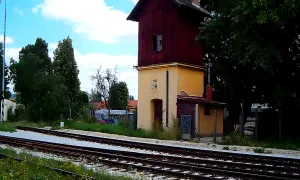
Photos: Czeva / CC BY-SA 4.0 — Wikimedia Commons. The author and licence also appear when you hover over the image.
Faktickým podkladem tohoto textu byl článek na Wikipedii, jehož autory jsou přispěvatelé Wikipedie. Článek je dostupný pod licencí CC BY-SA 4.0.
Location on the map


Příběhy a pověsti
Legendy, pověsti a příběhy spjaté s touto památkou

Fotografie návštěvníků
Zatím žádné fotografie. Buďte první, kdo přidá fotografii z návštěvy!
Log in a přidejte svou fotografii nebo hodnoťte.
Za ověřenou návštěvu v aplikaci získáte víc bodů — poznáme podle GPS, že jste na místě.
Reviews and comments