






Radnice v Hradci Králové Town hall
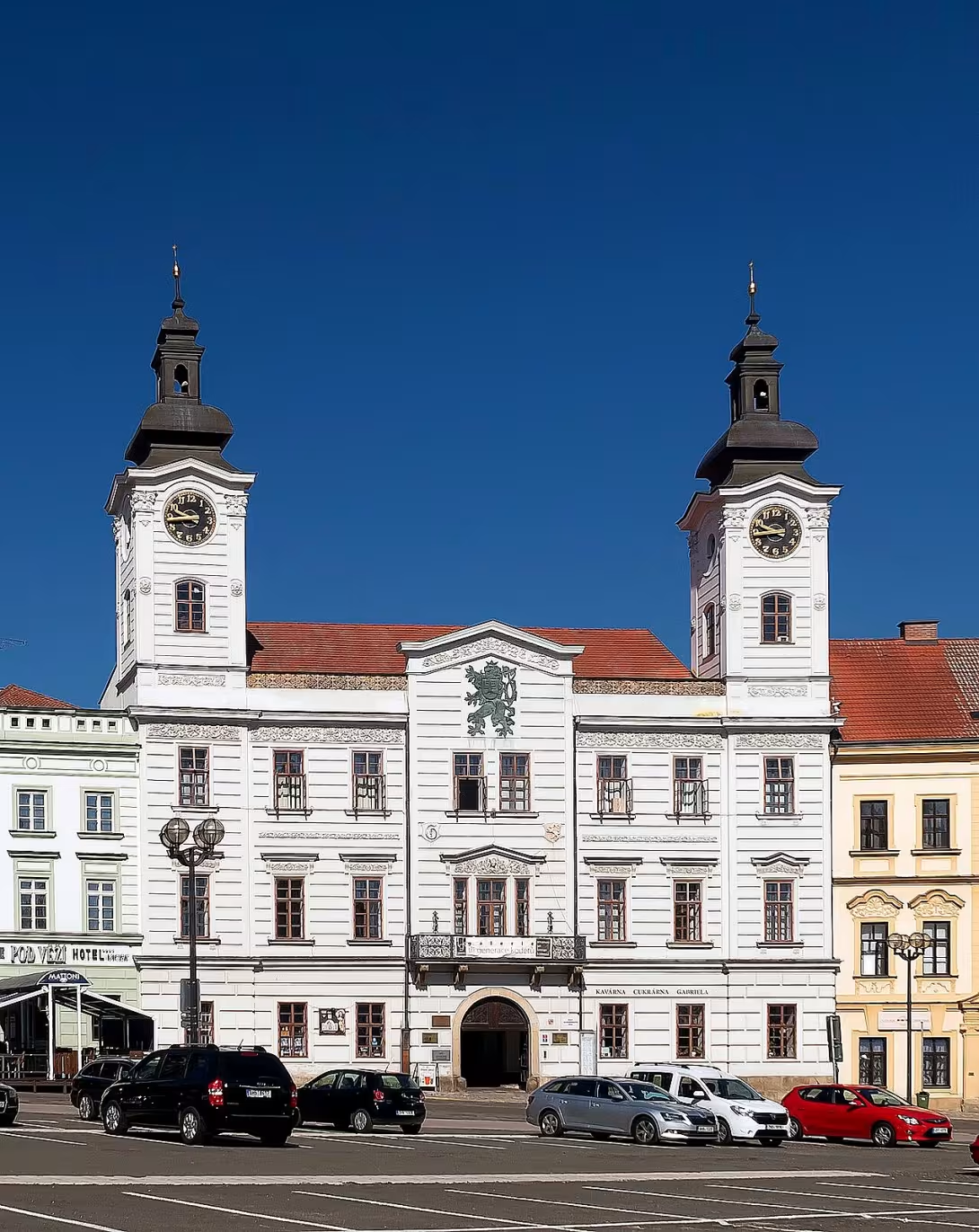
Radnice v Hradci Králové is an architecturally diverse building with a classic facade and two towers that dominates the western part of the Grand Square. The construction was built in the 14th century and has undergone several major reconstructions throughout history. It represents the administrative center of the city and an important monument.
The first written mention of the city hall dates back to 1418, when the damage was described by strong wind and hail. However, the building at this point stood at the latest at the end of the 14th century. In the following centuries, fires were probably hit several times. In the 16th century the town expanded the city by buying neighboring houses, for example in 1540 from the brothers Simon and Martin Bobků. In 1588 the area acquired Renaissance form and the prison was established here. From this year also comes the inscription plate, which is today walled up in the yard and commemorates the second repair of the building in the same year.
The current form of the town hall is the result of layering various building styles. In the basement are preserved remains of Gothic and Renaissance cellars, while the structure of the building remained baroque. The facade is performed in classical style. It is a large four-wing building in a block of urban buildings next to the White Tower, the chapel of St. Kliment and Hanušov's house. The front facing the square is two storey with two towers above the outer axes; These parts form shallow risalite. The more pronounced risalite is located in the center of the facade. The ground floor has a plaster quad and higher floors of shearing. In the middle of the first floor, there is a wide window with a balcony entrance, which is mounted on four volt crackers and has cast iron railing. Above the window is a decked decorative ledge with the relief of the queen's head underneath it. The whole complex ends with an aetika and a Czech character with a two-tail lion is placed in the shield.
In 1786-89 there was a complete Baroque reconstruction in which two characteristic towers were created. In 1790, they were covered with gilded stars. In 1851-52 there was a significant classical reconstruction. The project was processed by Jan Bělský and subsequently redesigned by the builder František Dobrkovský. Unlike the original plan, there was no complete collapse, but the first floor was preserved up to the rear track. The building and the towers were raised by one floor. After this reconstruction, the offices of the county court, the county council and the district attorney's office were located in the building.
In 1696, the first clock tower was built in the town hall, to which the clock was hung from the plundered church of St. Anthony in the Myth suburb. This tower was demolished in 1790 when clock machines were moved to new towers. In 1744, the building was looted by Prussian soldiers. The symbol on the facade changed in times of political change. In 1918, a two-headed eagle was removed and replaced by a two-tail lion. In 1939 he was covered with plaster and re-visible only in 1945. In the 1940s, the police and criminal headquarters and the gendarmerie were located here.
After World War II, the building served for various purposes. She hosted classrooms for hairdressers, photo schools or ambulance stations. Later, she was abandoned due to decadence. Since 1958 or 1964 it has been a protected cultural monument. The last overall reconstruction took place in 1994- 96. Currently, the town hall serves mainly for office purposes and hosts representative premises of the mayor of the city.
The building is a witness to the urban and administrative development of Hradec Králové. Its architecture connecting the Baroque and Classicism makes it one of the most important points of the Great Square. Visiting this place offers insight into the history of the city administration.
Historical milestones
- 1418
- First written mention of City Hall in connection with its damage after strong wind and hail.
- 1588
- The area gained Renaissance form and a prison was set up here.
- 1786
- The beginning of the Baroque reconstruction with the addition of two towers.
- 1851
- The beginning of the classical reconstruction of the project František Dobrkovský.
Architectural development
The building has a baroque and classical facade with two towers. In the basement are preserved remains of Gothic and Renaissance cellars. In the years 1786-89 it underwent a complete Baroque reconstruction in which characteristic towers were created.
Historical events
In 1744, the building was looted by Prussian soldiers. In 1851-52 there was a significant classical reconstruction, during which the building and its towers were increased by one floor.
Owners
city of Hradec Králové
Points of interest
- The first written mention from 1418 describes the damage to the building by strong wind and hail. - In 1588, the area acquired Renaissance form and a prison was established here. - In 1696, the first clock tower with clock was created from the plundered church of St. Anthony. The building was looted in 1744 by Prussian soldiers. - The symbolism on the facade changed, for example, in 1918 the two-tail lion replaced the two-headed eagle.
Guide
Show guide text
This text was created by artificial intelligence and has not been editorially reviewed. It may contain inaccuracies.
Welcome to the heart of Hradec Kralove, a place where the history of the city is bound to its present. Right now, you're standing in front of one of the city's most important buildings, outside city hall. Stop for a second and just look at her. It dominates the western part of the Grand Square and its mighty silhouette immediately tells you that for centuries there has been a seat of power, administration and order of this royal city. Feel its size and the way it fills the space around it. It's a building that didn't come to the world in one single blur, but it is the result of a long process, a layering of different epoch, styles and ambitions of the people who created it.
Let us now go back in time together to understand how this building was created. Although the building you see today seems harmonious, its roots go deep into the past. The first written mention of the town hall dates back to the year four hundred and eighteen, but historians know that at this very place the town hall building had to stand at the end of the fourteenth century. So imagine how the first city councillors moved here in the late Middle Ages, how trade and craft disputes took place here, and how the fate of the inhabitants were decided when Hradec Králové was a strategic point in the landscape. It is fascinating to think that although the face of the building has changed, its functions and location have remained the same for over 600 years.
Now pay attention to the architecture itself. If you look at the overall form of the town hall, you'll notice that it's very complex. This means that you can find traces of several different architectural periods. Over the centuries, the building underwent major reconstructions that reflected the city's period tastes and needs. The first big break occurred in the year of tyre five hundred and eighty-eight, when the area acquired Renaissance form. The Renaissance brought with it a new view of space and aesthetics, which was set to the foundations and layout of the building.
But if you look up and think about the total impact, you'll see the effects of later times. In the eighteenth century came the Baroque period, which fundamentally transformed the city hall. Just in the year seven hundred and eighty six, a complete Baroque reconstruction began, the most significant result of which was the addition of two towers, which give the building its characteristic character and majesty. The Baroque brought dynamism and representativeness into architecture, which was completely natural for the city hall as a symbol of the city's power.
Another big change came in the nineteenth century, namely the year eight hundred fifty and one. That's when the classical reconstruction began. Classicism tried to return to the purity and balance of ancient Rome and Greek, which brought more clarity and moderate elegance to the building. These changes were made by recognized creators. Among the names of architects who left their trail in the form of this building, we will find Jan Bělský, Václav Rejchl younger and especially František Dobrkovsky, whose project was worth the classical form, which we see today in many respects. So look at the facade and see how these different worlds mix from Renaissance to Baroque to Classicism.
But there are also human stories and events associated with each building that give it a soul. City Hall wasn't just a place for administration. In the year five hundred and eighty-eight, when the building acquired its Renaissance form, a prison was also established here. It is both freezing and fascinating to think that while on the upper floors the councilmen agreed on urban decrees, in other parts of the complex were those who broke the law.
The history of the town hall knows even darker moments. In the year seven hundred forty four, the building was looted by Prussian troops. Introduce yourself to the chaos, fear and loss brought about by the raid of an alien army. The performance of the building meant not only the loss of valuable items, but also a profound intervention in the dignity of the city. Yet Hradec Králové managed to turn these wounds around and the city hall became a symbol of stability again.
Now I want to impress you with one interesting thing, which may be inconspicuous at first glance, but it has a beautiful story about recycling and tradition. In the year six hundred and ninety-six, the first hour tower was built at City Hall. What's fascinating about it is the origin of the clock itself. These clocks were not specially made for City Hall, but they came from the plundered church of St. Anthony. It's a beautiful symbol of how in the past things that lost their original place found new uses and continued to serve the community. The clock thus measured time for all the inhabitants of the square and became the rhythm of the whole city.
It's also interesting how City Hall first appeared in written records. As we have already mentioned, the first mention of the year is four hundred and eighteen. But it wasn't because there was a big party or construction at the time. On the contrary, this year's records describe the damage nature caused to the building. The strong wind and hail damaged the city hall so much that it was written in period documents. It is a reminder that even the strongest structures are fragile in confrontation with the elements, and that history is often recorded in moments of crisis.
Today, City Hall is no longer serving as a prison, nor is it threatened by Prussian troops. At present, the building serves primarily for office purposes, where the tradition of city administration continues, albeit in a modern garment. If you look at her for the last time, try to see all these layers. You can see the medieval foundation, the Renaissance expansion, the Baroque towers, the classical balance, you can hear the echoes of Prussian filling and the ticking clock from the former church.
This concludes our short walk at the town hall in Hradec Kralove. I hope that this insight into her history has helped you to better perceive the space you are currently in. Now invited to further explore the Great Square and the surrounding streets, which have their own, equally fascinating stories. We wish you a pleasant rest of the day and joy of discovering the beauty of this city. Goodbye.
Tips for visitors
The best time to visit the town hall is early in the morning during spring and autumn months, when the city is quieter and the light on the Grand Square is soft, which allows comfortable tours and photo shoots.
The city hall is easily accessible by car and public transport; parking is possible in public parking lots in the vicinity or underground parking lots where it is advisable to check the seats in advance.
Take comfortable shoes, water and umbrella for the tour, as part of the exterior can be opened even in the rain. We also recommend that you carry a map of the city or a mobile application with an offline map to help you navigate easily.
For photographers are the most interesting angles from the opposite side of the White Tower and from the foothills of St. Kliment Chapel, where soft afternoon light falls; In the morning it offers long shadows along the main facade of the town hall.
In the nearby area (within 30 min walk) you can visit The White Tower, the Chapel of St. Kliment and Hanuz's historic house - all three monuments are just a few steps from the town hall and form together the atmosphere of the medieval city.
Families with children will appreciate the opportunity to walk around the square, where there are open spaces for free play, while at the same time listening to a short story about the history of the place, which is often prepared within local programs.
Businesses nearby
Do you run a restaurant, accommodation, shop, museum, rental, wellness or other visitor service near this monument? Show yourself directly to the people heading to it — this is how they will see you in the app and on the web:
Nearby
Budova se nachází na Velkém náměstí v bezprostřední blízkosti Bílé věže, kaple sv. Klimenta a Hanušova domu.
Accommodation nearby
Themed route
Thematic cruise route for Hradec Králové
1. Radnice v Hradci Králové (main objective) - Type: Historical building - Why it is worth a visit: This town hall is one of the oldest and most beautiful Gothic councils in Bohemia. It is an iconic symbol of a city that attracts its architecture and history.
2. White Tower - Type: Historical landmark - Why is it worth visiting: The White Tower is the highest Gothic tower in Moravia and Silesia. It offers views of the city and surrounding landscape, which makes it an ideal place to stop after visiting the town hall.
3. St. Kliment Chapel - Type: Historical Chapel - Why is it worth visiting: This chapel is one of the oldest sacral objects in Hradec Kralove, which commemorates the history and spiritual traditions of the city. It is located in the Grand Square next to the Town Hall.
_ - Type: Historical home Hanuz's house is one of the oldest residential buildings in Hradec Kralove. It is known for its history and architecture, which contributes to the atmosphere of the Grand Square.
5. Large Square - Type: Historical Square - Why is it worth a visit: This central square is the heart of the city and offers the opportunity to walk among historic buildings where you can enjoy the atmosphere and perhaps some cultural event or market.
This route will guide you through the Great Square where you can appreciate the historical architecture and spirit of Hradec Kralove.
Seasonal recommendations
Spring: Life wakes up around town hall in the spring. The sun shines gently and the colors in the surroundings are fresh. The atmosphere is full of new energy. I recommend you take several layers of clothing because the weather can be variable. The best time for a tour is in the morning when the air is clean and people aren't so tired.
Summer: The summer season brings strong sun and long days that illuminate city hall beautifully. The city is busy and full of people. Due to high temperatures and large crowds, it is best to come right after opening to enjoy peace. Dress light and don't forget to drink. The evenings are ideal for walking around the building.
Autumn: Autumn offers wonderful golden shades and morning fog, which provide the memory of mysterious beauty. Light is soft and ideal for photography. It's good to have a warmer jacket and comfortable shoes to walk on the pavement. The number of visitors is falling, so you will enjoy the tour in greater comfort, especially in the afternoon.
Winter: Zimą days are short and light is weaker, which creates a calm and cozy atmosphere. If it snows, the town hall looks very picturesque. The necessity is very warm clothes and hats. Due to the shorter time of day, I recommend you watch the opening hours and come before the darkness begins.
Visualizations and artistic views

The visualisations are generated by artificial intelligence and serve as inspiration.
Photos from the area
Real photos taken near the monument


Zdroj a licence jsou uvedeny u každého snímku.
Tips from visitors
No tips yet. Be the first!
Log in and add your tip.
Sources and literature
Photos: Michielverbeek / CC BY-SA 4.0 — Wikimedia Commons. The author and licence also appear when you hover over the image.
Faktickým podkladem tohoto textu byl článek na Wikipedii, jehož autory jsou přispěvatelé Wikipedie. Článek je dostupný pod licencí CC BY-SA 4.0.
Location on the map
More monuments – Hradec Králové
Show all in the municipality
Příběhy a pověsti
Legendy, pověsti a příběhy spjaté s touto památkou
Fotografie návštěvníků
Zatím žádné fotografie. Buďte první, kdo přidá fotografii z návštěvy!
Log in a přidejte svou fotografii nebo hodnoťte.
Za ověřenou návštěvu v aplikaci získáte víc bodů — poznáme podle GPS, že jste na místě.
Reviews and comments