



Radnice (Žatec) Town hall
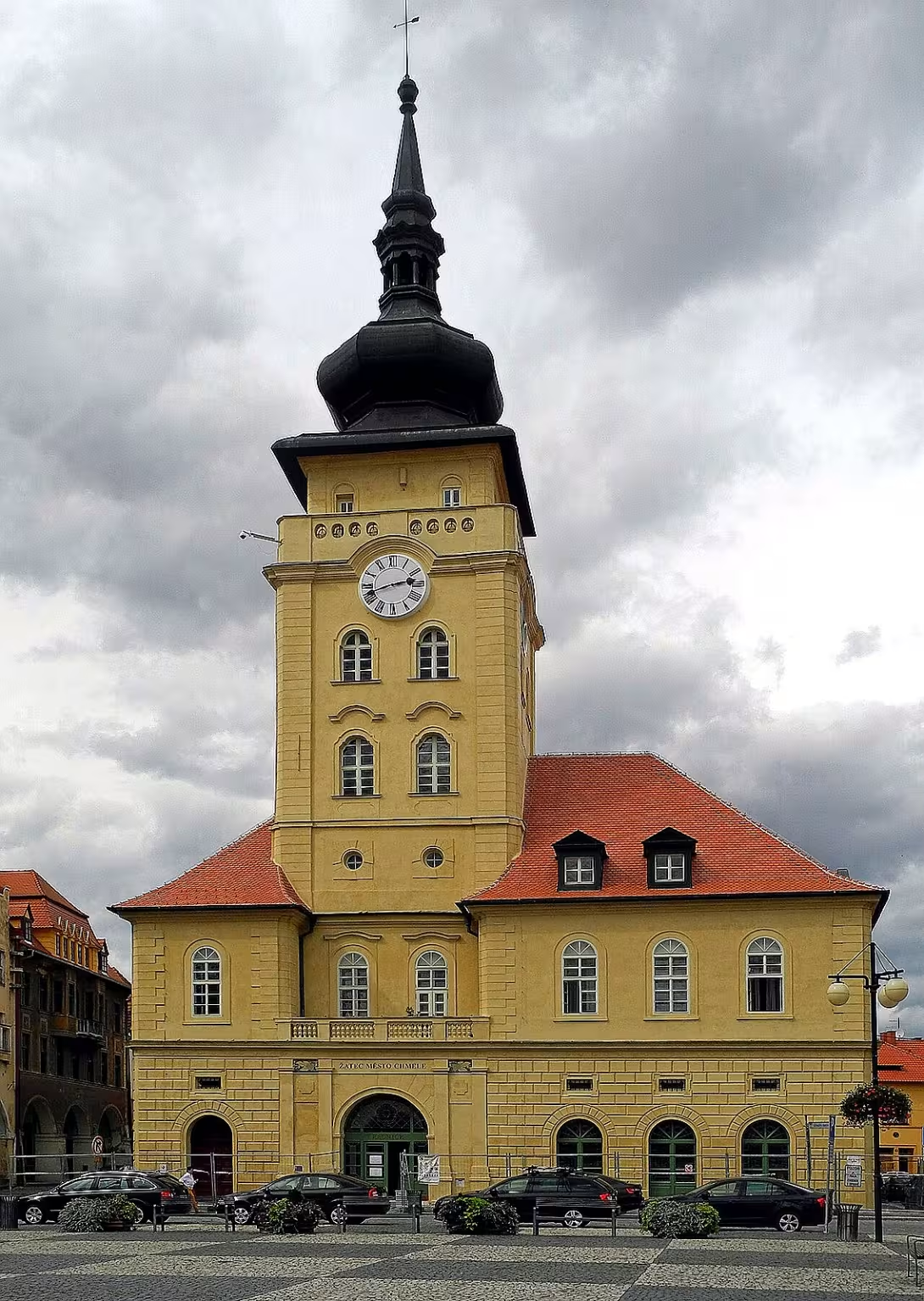
Žatec Town Hall is an important administrative building with a Gothic foundation and a distinctive classical reconstruction. It is located on the Svoboda Square in the center of the town conservation in Žatci. The first written mention of it dates back to 1362; currently serves as the seat of the City Office Žatec.
The building was built in connection with the development of the city administration, which was already in operation in Žatci in 1337. The need for its own town hall arose from a lack of space for the assembly of residents and the elderly. This represented a dispute between the producers and the seller of the skirt, which had to be solved in the refectory of the Minorite monastery. The solution was the establishment of a department store or a market, the construction of which was financed by the district owners. At its own expense, the municipality connected the council premises in the form of a separate tract or floor. The completed building is documented in 1376.
From an architectural point of view, the five-story front tower dominates. At the earliest stage, it was a separate three-story transit structure. The original character of the tower is evidenced by broken arcades from the carved sandstone on the ground floor, from which the northeast preserved almost throughout. The masonry is combined, formed by a stone, sandstone and brick. The upper floors of the tower show a weakening of the masonry and a fragment of sandstone portal was found in its north wall. In 1559, a large Renaissance reconstruction took place under the leadership of Pardubice builder Jiřík Výtětky. Later, in the 1960s and 1970s, the largest reconstruction according to the J. P. Lossky project took place, which gave the building a classical form.
Today's object is a four-wing single-storey building with a valb roof that grips the inner courtyard covered with glass roof. The ground mass is barefoot and the rustics continues in the corners of the floor. The facade is shaped in a classical way, although the original windows with radially divided enchantments have replaced today's non-basement windows. The main entrance consists of a semi-circular portal in the tower, where there is also a balcony. The interior on the ground floor of the tower contains the oldest spaces where the baroque entrance arcade was inserted among the supposed Gothic supporting pillars.
The use of City Hall has been multifunctional over the centuries. In addition to administrative functions and urban voices, bakers, soaps, soups, pharmacies and sheriffs were housed on the ground floor. On the floor there were halls for condoms and older cities. The building was also used as a city hall and prison for the population of the upper classes, and there was also a prison chapel in the building. In the 19th century, the chatlava was converted into offices and archives, while on the ground floor there was a cafe which in 1924 acquired an open porch. In 1938, the building served as the headquarters of the Gestapo.
The urban location of the town hall is interesting. From the point of view of the Prague Gate, the parish church overshadowed, which was probably the city council's intention to separate the secular centre from the spiritual. The tower is located right in the middle of the walls of the surrounding medieval city. After World War II, only the necessary repairs took place; a major reconstruction was carried out only in the first half of the 1990s.
Žatec Town Hall represents a unique layering of architectural styles from Gothic to Renaissance to Classicism. Its visit allows you to see the history of the city's self-governing system and administrative development.
Historical milestones
- 1362
- First written mention of City Hall.
- 1376
- It's a completed building.
- 1559
- Extensive Renaissance reconstruction.
Architectural development
The building was built on the basis of a Gothic base with an original three-storey tower made of sandstone and leaf stone. In 1559 a large Renaissance reconstruction took place and later the construction was significantly classicically modified. The masonry is combined, made of stone and brick.
Points of interest
The first written mention of the building dates back to 1362. - On the ground floor of the town hall in the past there were bakers, soaps, soups, pharmacies and sheriffs. - The building served as a city hall and prison for people of the upper classes, and it had a prison chapel. In 1938, the building served as the headquarters of the Gestapo. - Town Hall tower is located right in the middle of the walls of the surrounding medieval city.
Guide
Show guide text
This text was created by artificial intelligence and has not been editorially reviewed. It may contain inaccuracies.
Welcome to the heart of Zatka. Right now, you're standing in Freedom Square, and there's a building in front of you that's been the center of the city for centuries. It's the Žatec City Hall. When you look at it now, you see a dignified building unit that dominates the surrounding space with its presence. It's a place where the history of city administration connects to the everyday life of the people. Feel the atmosphere of this square, which surrounds the conservation sites, and remember that it was in front of this building that decisions were made, which fundamentally affected the fate of thousands of people in this region.
Now let's go back a little bit in time to understand how this building was created. The first written mention of City Hall dates back to a thousand three hundred sixty-two. So imagine what the world was like back then, when the first foundation fell. The building was founded at the time in the spirit of goth, which was a style that emphasized vertical and spiritual ascension. We have reports of the completion of the construction itself from a thousand three hundred seventy-six. At that time, the town hall was already fully central to the city administration, a place where councillors met, decrees were issued and disputes between citizens were resolved. It was basically the heart of an urban organism without which the city could not function effectively.
Now pay attention to the appearance of the building itself. Even though its roots are deep in gotics, time has left its mark at City Hall. If you look at the facade, you will notice that the building has undergone a significant reconstruction in later times. You are currently seeing a look that is influenced by classicism. This style brought to architecture order, balance and purity of lines, which gives the town hall its present, noble character. In the year of the thousand and five hundred and fifty-nine there was another extensive reconstruction, this time in the spirit of the Renaissance, which added to the building's representativeness. Also look up at the tower, which is an essential part of this object. The tower was not only an ornament, but it served as a prospect and symbol of the city's power and independence. The whole location of the building was chosen deliberately to be at the centre of the event and easily accessible to all citizens.
When we look at these walls, we can ask what happened inside. The history of City Hall is not just about administrative acts and council meetings. It's a place full of contrasts. Let's think about what happened downstairs. Nowadays, only officials reside in the town hall, but in the past the ground floor was a living and noisy place. Imagine the smell of fresh bread from the bakery, the smell of soap soap from the soap shop or the noise of the leaf of the party who sold their fabrics. There was also room for a pharmacy where herbal medicine was being prepared, and let's not forget about the shish, where people could have a glass of beer and discuss the news from the neighborhood. So the town hall was basically a small business center where different social layers were mixed.
However, the building had a darker side. The town hall was not only used for business and administration, but the city hall was also located here. These walls were closed by people who violated the urban order. The interesting thing is that there was a special prison for people from the upper classes. Even in such a narrow space, people found a way to believe, because the building had its own prison chapel where the prisoner could seek comfort and repentance. It is fascinating to think that at the same time there was joy in trading on the ground floor and sadness of imprisonment in other parts of the building.
The history of the city hall will lead us to a much newer and more painful time. In the year one thousand nine hundred thirty eight, the building became the seat of the Gestapo. This is a period which recalls how the functions of one building can change depending on the political regime. From a place of self-government and civic life, the town hall has for time turned into a place of fear and oppression. It is important to talk about these phases, because they make this building a monument not only to architecture, but also to the human fate and history of the entire region.
Things are different now. The building serves its original purpose again and is the seat of the City Office Žatec. It is a place where the future of the city is still being decided, but already in the spirit of democracy and service to the citizens. When you look at the building, try to connect all these layers. From Gothic foundations to Renaissance and Classicist details to tragic moments of the twentieth century. It all together creates the unique character of the Žatec Town Hall.
Notice how harmonically the building fits into the entire Liberty Square. It's a line that connects the past to the present. It's proof that cities aren't just house files, but they're living organisms that grow, change and adapt to new needs. City Hall survived fires, wars, and regime changes, and it's still standing here as guardian of the Žetek identity.
Now that you've learned about secret prisons, old craftsmen and architectural changes, I suggest you go around the building once more. Feel the size of it and think of all the people who have been going through it in the last nearly 700 years. Which one was standing right where you're standing? What were they thinking when they were looking at City Hall Tower?
I hope this short trip to history has helped you better understand the importance of this place. Žatec has many other secrets in store waiting to be revealed. I invite you to continue to explore the city centre and discover other corners of this beautiful monument reservation. We wish you a pleasant walk and a beautiful day in our city. This concludes our City Hall description, you can now remove or turn on the next part of the guide. Goodbye.
Tips for visitors
The best time to visit is late afternoon, when the sun hits the facade of the building and highlights its historical details. The building is located in the city centre, so it is available by car and public transport; Check the current connection in the search engine.
To visit we recommend taking shoes suitable for walking on the historic paving square. Since it is an operated office, we recommend keeping calm and respecting the working environment.
For the best photos, focus your lens on Gothic elements and the overall form of the building from the square space. The ideal light for images is shortly before sunset, when the colors are the most saturated.
In the immediate vicinity, you can visit the parish church, the Prague Gate or take a walk along the Svoboda Square itself.
Families with children appreciate the area of the square in front of the town hall where children have the opportunity to move safely and observe the architecture of the old town.
Frequently asked questions
Can the monument be visited?
The building is in use (offices, a school, shops and the like). The interior is generally accessible only during operating hours and tours are not usually offered; we have not verified the details. You can see the exterior from the street.
Where is the monument?
Location: Žatec. The map on this page shows the exact spot.
Why is the monument protected?
It is listed in the Central List of Cultural Monuments of the Czech Republic as a cultural monument (register no. 1000154490).
Businesses nearby
Do you run a restaurant, accommodation, shop, museum, rental, wellness or other visitor service near this monument? Show yourself directly to the people heading to it — this is how they will see you in the app and on the web:
Events nearby

Zdroj akcí: otevřená data měst a obcí ČR (Národní katalog otevřených dat) a kalendář akcí Národního památkového ústavu.
Nearby
Náměstí Svobody, farní kostel, Pražská brána.
Accommodation nearby
Themed route
Here is the design of the thematic route:
1. Prague Gate (historical building) - The trip begins at this old gate, which served as an entrance to the city. 2. Freedom Square (urban area) - Walk through the city centre where you can admire the surrounding architecture. 3. Radnice (Žatec) (administrative building) - The main destination of the journey, which will take its appearance and importance to the municipality. 4. Parish church (sacral building) - Final stop at an important temple near the town hall.
Seasonal recommendations
In spring, the city wakes up into the world and the surrounding greenery start to emerge clearly against the old walls of the town hall. The light is fine in the morning, which is ideal for observing the facade details. We recommend light but laminated clothing and a visit in the morning when the air is the cleanest.
Summer brings hot air and sharp sun that creates deep shadows in narrow alleys around the building. The atmosphere is full of energy and lives. It is best to leave very early in the morning or at dusk to avoid the greatest heat. Remember the headgear and comfortable shoes for walking around the city.
The surroundings of the town hall are painted in golden and brown shades, which gives the whole place a melancholy touch. The air is colder and often wet, which highlights the colours of old buildings. A waterproof cloak is suitable and the time of the visit is recommended to choose in the afternoon, when the sun is very low above the horizon illuminating architecture.
Zimą rules peace in the streets and the town hall building acts monumentally, especially if it is surrounded by snow or freezing fog. Evening lighting creates a cozy mood typical of the time of anticipation of holidays. Hot shoes, gloves and a fat sweater are essential to make the visit to the outside of the monument pleasant even in the cold.
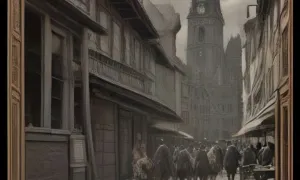
Visualizations and artistic views

The visualisations are generated by artificial intelligence and serve as inspiration.
Photos from the area
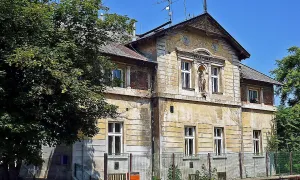
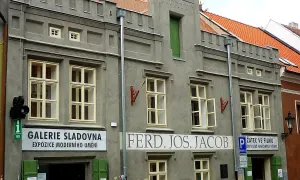
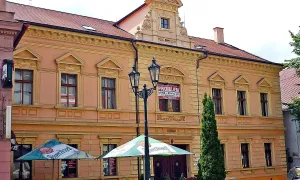
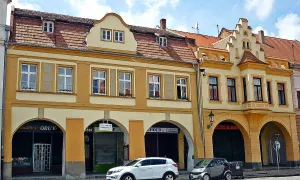
Real photos taken near the monument


Zdroj a licence jsou uvedeny u každého snímku.
Tips from visitors
No tips yet. Be the first!
Log in and add your tip.
Sources and literature
Photos: SchiDD / CC BY-SA 4.0 — Wikimedia Commons. The author and licence also appear when you hover over the image.
Faktickým podkladem tohoto textu byl článek na Wikipedii, jehož autory jsou přispěvatelé Wikipedie. Článek je dostupný pod licencí CC BY-SA 4.0.
Location on the map
Příběhy a pověsti
Legendy, pověsti a příběhy spjaté s touto památkou
Fotografie návštěvníků
Zatím žádné fotografie. Buďte první, kdo přidá fotografii z návštěvy!
Log in a přidejte svou fotografii nebo hodnoťte.
Za ověřenou návštěvu v aplikaci získáte víc bodů — poznáme podle GPS, že jste na místě.
Reviews and comments