



Radyně Castle ruin
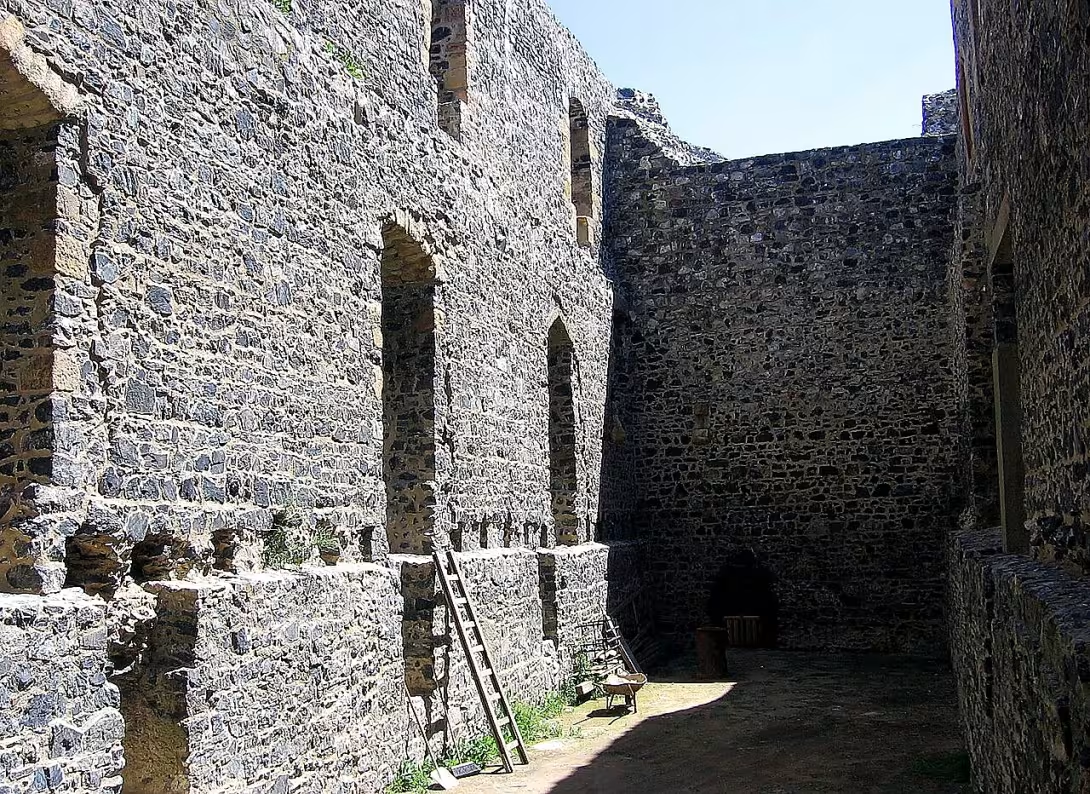
Radyně is the Gothic ruins of the castle on the same-name bulimic hill at an altitude of 567 metres. Located south of Old Plzence in Pilsen region. King Karel IV. founded it before 1361 as a strategic supporting point of royal power and the administrative center of the surrounding property. Today the building is protected as a cultural monument and is accessible to the public.
The need for a new castle arose in the middle of the 14th century, when the old Plzeň mansion ceased to meet the requirements for the accommodation of purkrab and administration of royal property. Karel IV. therefore built a fortress on a rocky hill that originally carried the name Karlskrone. Due to the architectural form with the Šumava castle Kašimík, it is assumed that both objects were founded in 1356, although historian Tomáš Durdík states that Radyně was created after Kašimík. The construction project was probably developed by Michal Parléř, a relative of Peter Parléř, and the construction itself was led by Vít Hedvábný.
The castle was built from a local block stone and its layout included two towers and a palace wing. The original name Karlskrone did not take place in practice. Already in 1370 the castle was referred to as Karlshut and after the founder's death the title Radyně, derived from the name of the hill, prevailed. In the period after 1434, the German name Gugelweit was also used for the seat.
The construction was completed in 1361. Then king Karel IV. published a charter that freed the people of Old Pilsen from robots and salaries; they were to continue to carry 28 kicks of grosses a year to Radynia Purkraby. The first purgrave was Zdislav Chlup. His duties included the provision of safety on the road to Nuremberg and Řezna, the administration of royal property and the jurisdiction over the subjects. The operation of the castle was provided by the Mana system, but it had disappeared before the end of the 14th century.
Since 1400, when King Václav IV. first stopped the castle from Litovice, the meaning of Radyně gradually fell. During the Hussite wars, the fort served as a foothold for Catholic nobility and King Zikmund. A significant figure was the Purcrab Hrdoň z Dubňan, who participated in the defence of Pilsen between 1433 and 1434. In the 15th century, many nobles, such as Dobeš Vrš z Modřejovic, Oldřich from Raková and Petr Kořenský from Terešov, were replaced in the possession of the castle. In 1454 King Ladislav Popobek stopped the castle of Zdeněk from Šternberk, which started the era associated with this family.
At the end of the 15th century, the building was mainly used as a hunting grounds. In 1500 Ladislav from Šternberk gained exclusive right to hunt within a two-mile radius and made interior modifications in the castle, as evidenced by the findings of wood-based tiles with a birth mark. The castle burned down in the first half of the 16th century. It is assumed that the cause was a lightning strike to the round tower, which then destroyed the palace and damaged the square tower. In 1536 Adam acquired the castle from Šternberk into inheritance, but in 1558 the building was already officially declared desolate.
In the following centuries the castle was dilapidated and the masonry was probably used as building material. The ownership has gradually changed; from 1561 it belonged to the Kokořovci of Kokořov and from 1710 to the Černína of Chudenice. The last owner of Černín was Jan Vojtěch, who bequeathed the estate to Count Kristian Vincent of Valdštejn.
Today Radyně is a sought-after ruin that offers a view of medieval building art and the history of the royal administration in Czech countries. Visiting this place allows direct contact with the history of the 14th century and reminds of the important era of the reign of Charles IV in the region.
Then and now
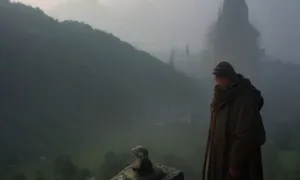
Drag the slider to compare how the landmark may have looked when it was built with the view today.
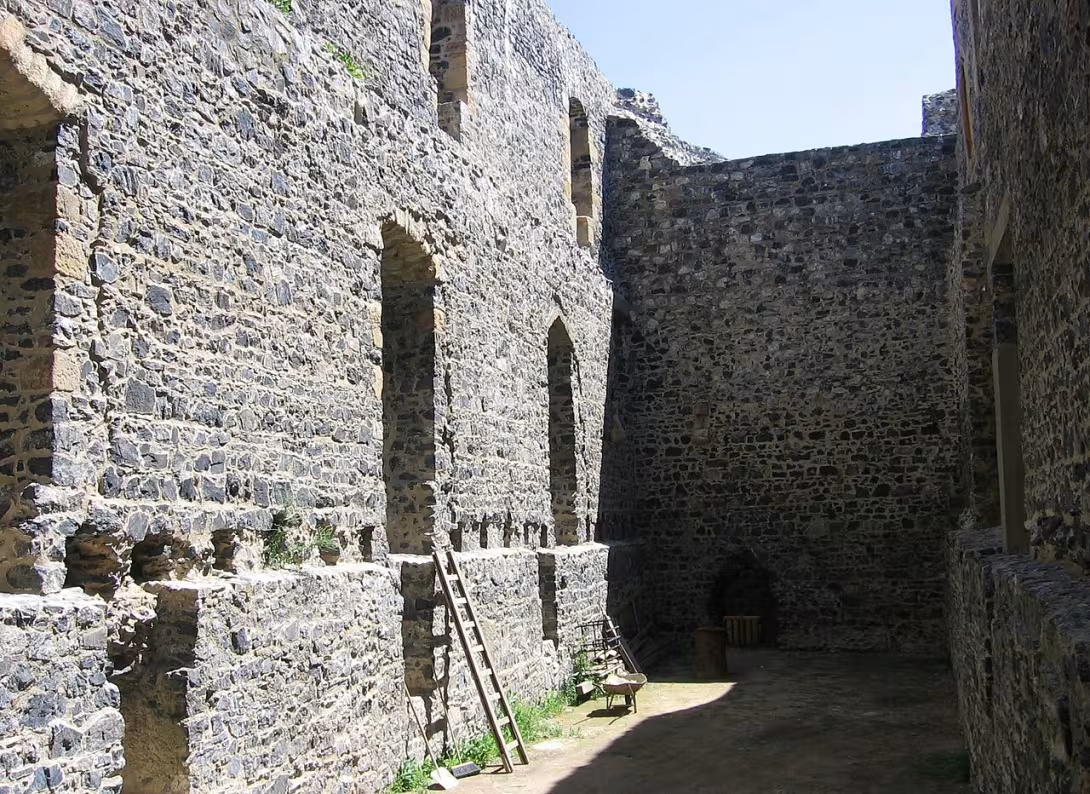

The historical appearance on the left is an AI-generated visualisation and serves as inspiration only.
Historical milestones
- 1361
- Completion of the castle construction and publication of the charter by King Charles IV.
- 1400
- King Václav IV. stopped the castle from the Litovice.
- 1536
- Adam of Šternberk has acquired the castle into inheritance.
- 1558
- The castle was first marked as desolate in writing.
Architectural development
The castle was built as a royal mansion with a layout similar to Kašimík Castle. The main building elements are two towers and a palace wing. The construction was made from a local block stone.
Historical events
In 1361, the building was completed and the King issued a charter freeing the inhabitants of Old Pilsen. During the Hussite wars, the castle served as a support for the Catholic Party of King Zikmund. In 1558 the castle was already mentioned as desolate.
Owners
The Royal Chamber, Zachák of Litovice (since 1400), gentlemen of Šternberk (since 1536).
Points of interest
- The castle was founded by King Karel IV. before 1361 as a strategic support point and administrative center. - The original name of the castle was Karlskrone, later used the names Karlshut, Radyně and in the 15th century also the German name Gugelweit. - The construction was probably designed by Michal Parléř and the construction itself led by Vít Hedvábný. - In the first half of the 16th century the castle burned down, probably causing a lightning strike to the round tower. - Since 1500 Ladislav from Šternberk had the exclusive right to hunt within a two-mile radius and performed interior modifications at the castle.
Guide
Show guide text
This text was created by artificial intelligence and has not been editorially reviewed. It may contain inaccuracies.
Welcome to the ruins of Castle Radyně. Stop for a moment, take a breath, and feel the air flowing through here for centuries. You are standing at the top of the canopy hill in the heart of the Švihov Highlands, in a place that once radiated royal power and intransigence. Look around you at these stone walls, which today humbly resemble their former glory. What you see in front of you is not just a pile of old stones, but a silent witness to the ambition of one of the most important rulers of our countries.
Let's go back more than 600 years together. It is year three hundred and sixty-one and King Charles the Fourth rules us. It is he who has decided that here, at this strategic elevated point, a castle will be created, which will serve as a support point for the royal power and the centre of the administration of the surrounding property. At that time, the castle was called Karlskrone, which in translation means Karl's crown. Imagine how fascinating it must have been at that time to see walls rise on this rocky hill, protecting royal interests and demonstrating the power of the state. Charles the fourth was not only a builder of cities, but also a visionary who knew exactly where to deploy his forts to control the landscape and maintain order.
Now pay attention to the construction itself and how the castle is situated in the landscape. Even if we see only a ruin today, see the brilliant work of those who prepared this project. It is assumed that the construction was designed by the famous Michal Parléř, one of the greatest architectural figures of its time, and the construction itself led by Vít Hedvábný. When you look around, notice how the castle naturally blends with the boilerplate base of the top. This hard rock was not only a foundation, but a natural protection. Look at the rest of the glare, perceive their texture and think about how much effort it took to transfer these materials up to the top. The architects of Parléř and Silk didn't just create a common fortress here, but space that was supposed to be functional, representative and especially uncanny in its strength.
The history of Radyně is, however, full of breaks and changes in the hands that held the castle. After Charles the fourth came his son, King Wenceslas the fourth. In the year of the thousand and four hundred, the castle was stopped by Zachary of Litovice, which shows us that the castle was not only an administrative centre, but also a valuable property that could serve as a guarantee in political and financial transactions. With the advancing time, Radyně has become an important place even in the times of the greatest national unrest. During the Hussite wars the castle was a key supporter of Catholic nobility. Imagine the atmosphere here at that time - the tension, the sound of arms and the constant vigilance of the guards, who were watching the horizon from these walls to see if enemy troops were approaching. Names such as Zdislav Chlup, Hrdoň z Dubňan or Dobeš Vrš z Modřejovic are associated with this period. They were men of their time who made decisions about the fate of the surrounding region in these walls and fought for their ideals and property.
Let's move on to the 16th century. In the year of the thousand and five hundred and thirty-six, Adam of Šternberk won the castle in inheritance. The castle may seem to be entering a new era of stability, but reality was different. The importance of Radyně gradually fell. The world was changing, the way wars were being waged changed with the arrival of firearms, and the old walls that were once invincible began to lose their strategic value. The castle was no longer the dominant place in the time of Charles the Fourth. And then the year came a thousand five hundred fifty-eight. It was this year that the castle was first written as desolate. It is a fascinating and sad moment in the history of every monument - the moment when the place of life, power and violence becomes a quiet ruin that we are visiting today.
You may now be interested in one interesting thing about the identity of this place. The castle has not had only one name over the centuries. It started with the royal Karlskrone, later the name Karlshut was used and eventually the name Radyně settled. But in the 15th century, the German name Gugelweit also appeared. This change of names tells us the story of how the cultural and linguistic environment in this area changed and how the castle was perceived by people from different layers of society and nationalities. It's basically a language map of history that mirrors itself in one single place.
Now that you're standing in the middle of these remains of the famous fortress, try to imagine the contrast. On the one hand, the absolute power of King Charles the Fourth, on the other hand, the peace and tranquility that rules here today. Radyně teaches us that nothing is eternal, but that even what has gone down can have incredible beauty and tell us stories about human ambition, faith and fall.
Now I encourage you to take your own journey between these walls. Go through the castle space at a slow pace. Feel the bulging rock floating beneath your feet and the history surrounding you. Look at the details of wonder, look for traces of ancient modifications, and let yourself be drifted by images of people who once lived here, worked, and perhaps even dreamed. Radyně is no longer a castle in the true sense, it is rather an open book whose pages are made of stone.
Thank you for accompanying me with the first steps in this magical place. Enjoy your stay, soak up the atmosphere of this royal supporting point and be inspired by the spirit of the Middle Ages. I wish you a pleasant and discovering walk through the ruins of castle Radyně. Goodbye.
Tips for visitors
The best time to visit is during the morning or at sunset, when the sun's rays perfectly illuminate the bubbly rocks and the ruin offers breathtaking views of the landscape. Avoid weekend peaks if you want to enjoy the quiet atmosphere of the castle.
The castle can be reached on foot from Old Plzence on marked tourist routes. Check the public transport and current connections to Old Plzence in the online search engine.
Take with you fixed shoes suitable for the terrain and the uneven surface of the ruins. We recommend that you pack plenty of fluids and snacks, because eating may not always be provided in the castle itself. Don't forget the headgear and sunscreen, the top of the hill is open to the sun.
For photographers, the most interesting view from the tower offers a panoramic view of the surrounding Švihovský hill area. The best light for pictures of details of masonry and rock ground is during the so-called gold watch, when shadows extend and highlight the structure of the stone.
For families with children, hiking to Radynia is a great adventure. In the surrounding area you can visit Starý Plzenec, explore the remains of the early medieval castle Stará Plzeň or take a walk along the river Slava, which is an ideal route for easy walking in nature.
Frequently asked questions
Can the monument be visited?
This is a ruin. Such sites are often freely accessible, but some can only be visited with a guide or are closed for safety reasons. We have not verified the current situation – take care and respect any restrictions.
Where is the monument?
Location: Starý Plzenec, Plzeňský kraj. The map on this page shows the exact spot.
Why is the monument protected?
It is listed in the Central List of Cultural Monuments of the Czech Republic as a cultural monument (register no. 1000138513).
Businesses nearby
Do you run a restaurant, accommodation, shop, museum, rental, wellness or other visitor service near this monument? Show yourself directly to the people heading to it — this is how they will see you in the app and on the web:
Events nearby


Zdroj akcí: otevřená data měst a obcí ČR (Národní katalog otevřených dat) a kalendář akcí Národního památkového ústavu.
Nearby
Starý Plzenec, early medieval castle Stará Plzeň, river Úslav.
Accommodation nearby
Trips and activities nearby
Guided tours, tickets and activities nearby from GetYourGuide
Affiliate link: if you buy from the partner, we may receive a commission. The price for you does not change.
Search tours and activities →Themed route
Thematic cruise route around Radyně
1. Radyně (ruin) Type: Historical ruins of the castle Why is it worth a visit: Interesting exploration of early medieval ruins that testify to the rich history of the area. An opportunity to enjoy the view of the surrounding countryside and to think about ancient times.
Starý Plzenec Type: Historical village Why is it worth a visit: Discover ancient architecture with a distinctive rural character. The village offers quiet moments for walking and exploring local culture.
3. Old Pilsen (castle) Type: Early medieval castle Why is it worth a visit: Visit one of the oldest forts in Bohemia, which attracts many visitors with its history and architecture. It's the perfect place to know the history of the region.
4. The River of the Festival Type: Natural water flow Why is it worth a visit: A beautiful view of the river that brings peace and opportunity to relax. The opportunity to explore the surroundings and enjoy its natural beauty.
5. Staré Plzeň Castle Station Type: Historical area with courtyard Why is it worth a visit: Move around the historic courtyard and enjoy the atmosphere of the ancient fortress. It's an ideal place for photography and other discoveries.
This route offers a combination of history, culture and nature, which creates an unforgettable experience revealing the region's rich past.
Seasonal recommendations
Spring In spring, the ruins of Radyně awaken together with nature. The light is fine and scattered, which greatly highlights the fresh green vegetation surrounding the old walls. The atmosphere is fresh and full of expectations. It is advisable for visitors to choose layered clothes because the morning cold can quickly turn into warmer air during the day. The roads can be muddy because of spring rains, so it is recommended that footwear with good grip. In this period, it is much calmer in the memory than in the season.
Summer Summer months bring intense sun and long days to the surroundings of Old Plzence and Radyně. Stone ruins may be very hot in the morning, but the views from the towers are the best thanks to the bright sky. Due to the greatest onslaught of visitors, it is best to arrive immediately after opening to enjoy the monumental state of the ruin in peace. Remember enough drinking water, headgear and sun protection, because there are not many shadows in open spaces.
Autumn Autumn visit offers the most melancholy and romantic atmosphere. The golden and brown colours of leaves in the surrounding forests create a wonderful contrast with grey stones of castle ruins. Low sun creates long shadows that give architecture depth. It is necessary to prepare for windy weather and colder temperatures, therefore a solid jacket is suitable. Watch out for slippery paths covered with wet leaves, especially when walking around the castle top.
Winter In winter, the ruin is very raw and majestic. Without leaves, you can better see the details of stone structures and the silhouette of the castle against the grey sky seems mysterious. The atmosphere is quiet and lonely, which will be appreciated by peace lovers. Due to shorter daily times and lower temperatures it is necessary to arrive early and choose very warm clothes and quality gloves. The roads can be covered with ice or snow, so be careful when moving.
Visualizations and artistic views


The visualisations are generated by artificial intelligence and serve as inspiration.
Photos from the area
Real photos taken near the monument


Zdroj a licence jsou uvedeny u každého snímku.
Tips from visitors
No tips yet. Be the first!
Log in and add your tip.
Sources and literature
Photos: Jik jik / CC BY-SA 3.0 — Wikimedia Commons. The author and licence also appear when you hover over the image.
Faktickým podkladem tohoto textu byl článek na Wikipedii, jehož autory jsou přispěvatelé Wikipedie. Článek je dostupný pod licencí CC BY-SA 4.0.
Location on the map




Příběhy a pověsti
Legendy, pověsti a příběhy spjaté s touto památkou
Fotografie návštěvníků
Zatím žádné fotografie. Buďte první, kdo přidá fotografii z návštěvy!
Log in a přidejte svou fotografii nebo hodnoťte.
Za ověřenou návštěvu v aplikaci získáte víc bodů — poznáme podle GPS, že jste na místě.
Reviews and comments