



Hůrka Castle
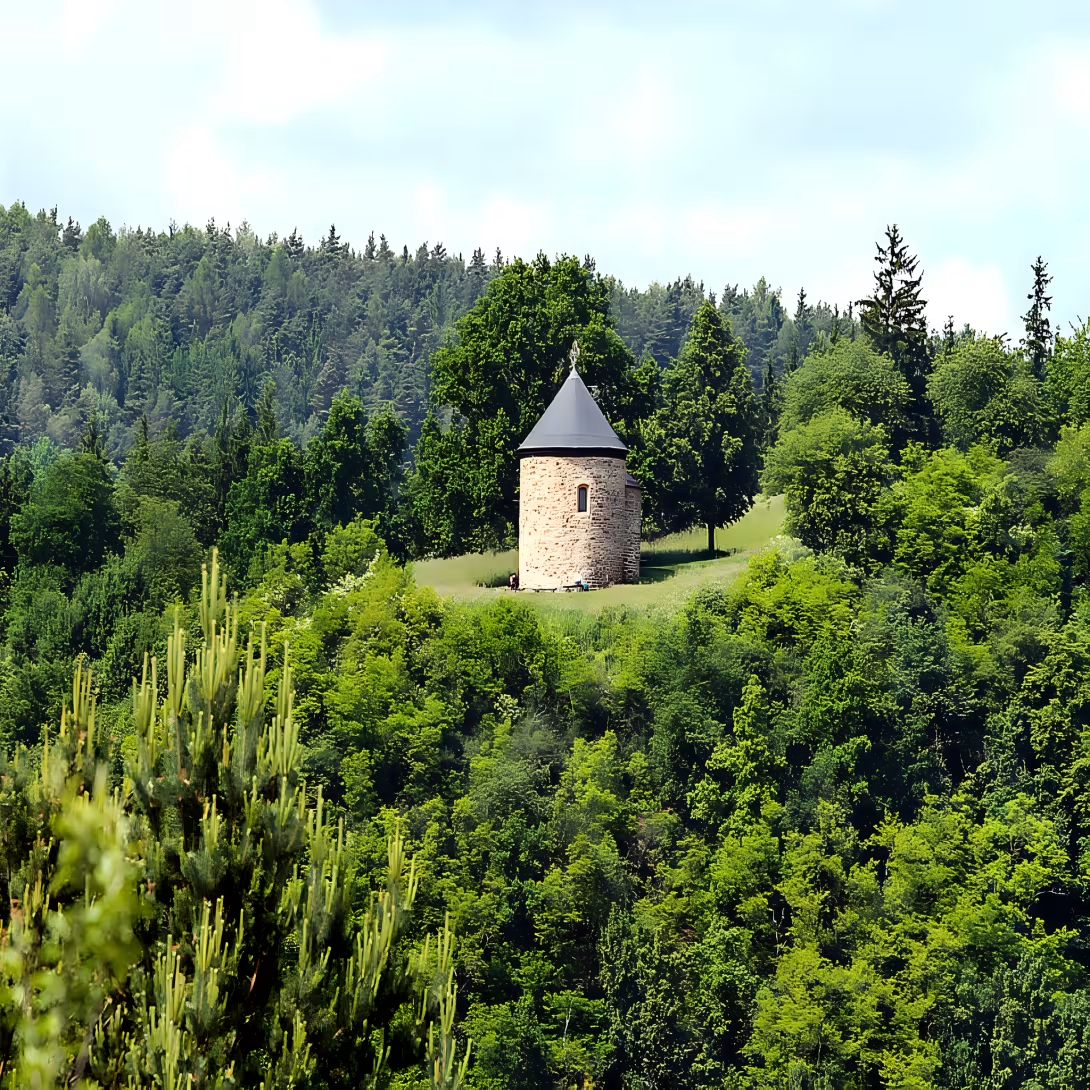
The castle Hůrka is located on the right bank of the river Slava north of Old Plzence in the district of Plzeň-město. This early medieval settlement was established in the tenth century at the latest and became one of the major centers in Western Bohemia. The castle was built here in a strategically very advantageous place, near the forgotten roads connecting Bohemia to the powerful centres of the Holy Roman Empire - Řeznem and Nuremberg. Thanks to his position he became a regular seat of Czech princes and kings and a serious political player of the region.
The oldest written mention of the castle comes from the Thietmar Chronicle of 976, which describes the defeat of the Bavarian army in the Plzeň subdam. This battle was part of the military clashes between Emperor Ota and Czech Prince Byslav II. After the year 1010, there was a mint of its own, in which Prince Jaromíra was briefly minted. In the twelfth and first half of the thirteenth century, the castle flourished. Over time, however, it turned out that the islanders - for their elevated and long location - were not suitable for the development of the highest medieval city. At the end of the 13th century, the fort was replaced by a newly founded city in a lower position, which took its name from its predecessor. The original construction site, called Old Plzeň, was gradually abandoned and disappeared during the fourteenth century.
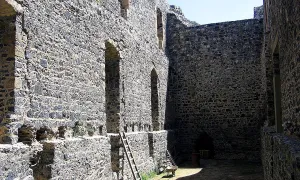
The preserved fortifications define an area of four and a tenth hectares, although the original fortified area was probably larger. The upper plateau stretches from west to east, from where it is accessible to the ground level. On the acropolis there was a church of St. Vavrnice from the second half of the eleventh century; Archaeological work revealed its foundations. The most significant element in the field is the preserved wall of acropolis, which reaches a height of nearly ten meters. This wall was originally made up of a stone front wall with a grate structure, which was poured out by clay. In the lower part the lower front was spread apart from the acropolis by another roll. This place still has the most valuable building relictum of the golden age of the castle - the rotunda of St. Peter and Paul. Its origin traditionally dates back to the tenth century, although there are opinions that it was created a little later. Today the visible form is the result of many modifications and reconstructions. There were five churches in the substation at the shores of the Realm, connected by the Brod; of which the Church of the Birth of Saint John the Baptist and the Church of the Birth of the Virgin Mary are preserved. Inside the acropolis was also the church of the Holy Cross from the twelfth century, the foundations of which were discovered during archaeological exploration.
Hůrka was listed on the list of national cultural monuments in 1978. Today you can return here after a yellow marked tourist route leading from Old Plzence to Ejpovic. Two educational paths lead to their own castle: "Old Pilsen and merchants" directly from the main route and "Old Pilsen" coming from the south. The remains of fortifications and free terrain remain accessible to a curious visitor who can imagine the rich medieval past and political importance of this place.
Then and now
Drag the slider to compare how the landmark may have looked when it was built with the view today.
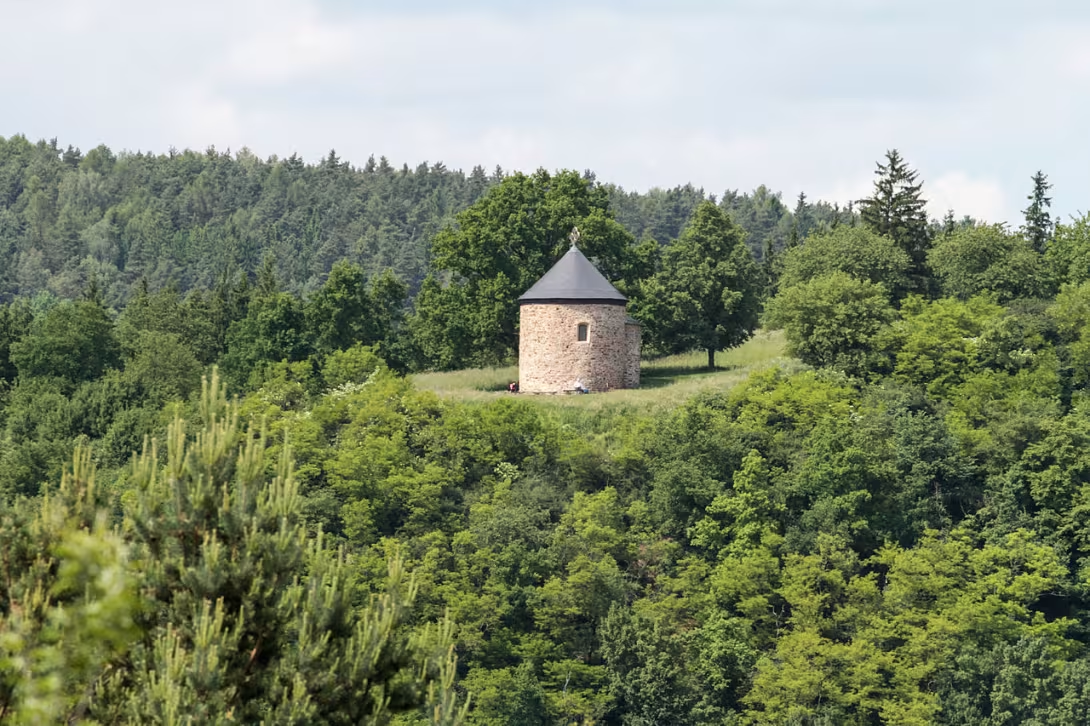

The historical appearance on the left is an AI-generated visualisation and serves as inspiration only.
Historical milestones
- 976
- First written mention in Thietmar's chronicle in connection with the battle.
- 10
- The beginning of Prince Jaromíra's coin stamping.
- 1978
- Declaration of the castle as a national cultural monument.
Architectural development
The original fortifications formed a front stone wall with a grate structure and soil from which a massive wall was preserved. There was an acropolis, a foothold and several churches, of which only St. Peter and Paul's rotunda had been preserved until today. Archaeological surveys revealed the foundations of the Church of the Holy Cross and of St. Lawrence.
Historical events
976: The battle in the substation between the armies of the emperor Ota and Prince Bloslav II. 1010: The firing of the denarii of Prince Jaromíra in the local mint. 1978: Listing to the list of national cultural monuments.
Points of interest
- The fort was established in the tenth century at the latest and thanks to its location at the roads to Řezn and Nuremberg it became the seat of Czech princes and kings. - After the year 1010, there was our own mint, in which Prince Jaromír's coins were struck. - The most significant element in the field is the preserved wall of acropolis, which reaches a height of nearly ten meters. - On the acropolis was the church of St. Lawrence from the second half of the eleventh century and the church of the Holy Cross from the twelfth century, whose foundations were uncovered by archaeologists. - There was a settlement with five churches in the subbase of the river Slava, from which until now the Church of the Born of St. John the Baptist and the Church of the Birth of the Virgin Mary have been preserved.
Guide
This guide is narrated by a synthetic voice generated by artificial intelligence.
Show guide text
This text was created by artificial intelligence and has not been editorially reviewed. It may contain inaccuracies.
Hůrka is an early medieval fortified settlement on the prominent ridge of the hill of the same name. It lies on the right bank of the Úslava River, north of Stará Plzeň. It was originally called Plzeň and was founded no later than the tenth century. Together with the rotunda of Saint Peter and Paul, it has been a national cultural monument since 1978.
The first written mention comes from Thietmar's Chronicle. It describes the defeat of Bavarian forces in the settlement below Plzeň in the year 976, during the battles between Emperor Otto and Czech Prince Boleslav the Second. The location was chosen strategically, near an important route that connected Bohemia with Regensburg and Nuremberg. The castle was a stronghold and occasional residence of princes and kings in western Bohemia. After the year 1010, denarii of Prince Jaromír were briefly minted here in the mint.
The fortified settlement reached its greatest importance in the twelfth and the first half of the thirteenth century. However, the ridge was not suitable for a high medieval town. At the end of the thirteenth century, therefore, a new town was founded in the area of present-day Plzeň and it took the same name. The original fortified settlement then became known as Stará Plzeň and was abandoned in the fourteenth century.
The preserved fortifications enclose an area of over four hectares, though it was presumably larger originally. The hilltop plateau extends from west to east. In the east, where it was accessible over level ground, lay the outer settlement. Its fortifications were not preserved, likely it was protected by a palisade or other light fortification. Archaeologists discovered the foundations of the Church of the Holy Cross from the twelfth century there.
The outer settlement was followed by the acropolis. From the rampart on its eastern side, a mighty embankment nearly ten meters high remained. The rampart was formed by a facing stone wall and a timber framework filled with earth. On the acropolis stood the residence of the castellan or the prince. Only the Church of Saint Lawrence from the second half of the eleventh century is known from the buildings. However, the discovered foundations belong to a later and smaller Gothic building.
West of the acropolis lies the lower outer settlement, separated by an embankment two to three meters high. Standing here is the only preserved building from the time of the settlement's existence, the rotunda of Saint Peter and Paul. It is traditionally dated to the tenth century, though it may have been built somewhat later. Its present-day appearance is the result of many modifications and reconstructions. From the rotunda a path descended to the settlement below and to the western gate on the bank of the Úslava.
The settlement below spread over both banks of the river, connected by a ford. Of five churches, two were preserved, the Church of the Birth of Saint John the Baptist and the Church of the Birth of the Virgin Mary.
Tips for visitors
The ideal time for visiting is spring or autumn, when vegetation is lower and the terrain of the castle is clearer. In the summer months we recommend early morning to avoid direct noon sun on the open field of the island.
Locality is accessible on foot from Old Plzenka. If you are arriving by car, use public parking in the village and proceed to the castle on marked roads. We recommend that public transport be checked in the current search engines for the destination station Starý Plzenec.
Take fixed shoes suitable for the field and plenty of fluids. For photography is the best golden hour at sunrise or sunset, when low light highlights off-road inequalities and remains of fortifications. Panoramic pictures of the valley of the river Sáslava are the most beautiful from the outskirts of the island.
In the surroundings you can visit the Church of the Born of St. John the Baptist and the Church of the Birth of the Virgin Mary, which complement the historical importance of the place. For families with children is ideal educational trail Stará Plzeň and buyers, which offers an interactive stop and easy nature walk along the river Slava.
Frequently asked questions
Is Hůrka open to the public?
Yes, Hůrka is open to the public. The castle area is open daily from 9 a.m. to 16 p.m.
How do I get to the place by car / public transport?
You can get to the place by car or public transport. The parking lot is located before the entrance to the complex.
How much is the entrance fee and is it paid on the spot?
Payment is made directly at the entrance to the premises.
Is the tour suitable for children and seniors?
Yes, a tour of the castle is suitable for all ages. The area has good access routes and there are information boards with description of the history of the castle.
How long does the tour take?
The tour of the castle takes about 1-2 hours, depending on how much time you want to spend in the sharpness and surroundings.
What are the opening times and booking is required?
The castle area is open daily from 9 a.m. to 16 p.m. Reservation is not necessary, but we recommend taking a group of friends or family with us.
What's interesting in the immediate vicinity?
In the immediate surroundings there is Starý Plzenec Castle and St. James Church in Pilsen. If you want to visit other places, we recommend taking a bike or car with you and passing through the surrounding countryside.
For kids
Imagine going back to a time when the castle Hůrka was full of life and movement. Imagine you're a young warrior or a woman who lived in these places. It was like a game where you were a hero and your decision could change the whole settlement.
Businesses nearby
Do you run a restaurant, accommodation, shop, museum, rental, wellness or other visitor service near this monument? Show yourself directly to the people heading to it — this is how they will see you in the app and on the web:
Events nearby



Zdroj akcí: otevřená data měst a obcí ČR (Národní katalog otevřených dat) a kalendář akcí Národního památkového ústavu.
Nearby
The Holy River, the Church of the Birth of St. John the Baptist, the Church of the Birth of the Virgin Mary, the Teaching Path of Stará Plzeň and the Buyers.
Accommodation nearby
Trips and activities nearby
Guided tours, tickets and activities nearby from GetYourGuide
Affiliate link: if you buy from the partner, we may receive a commission. The price for you does not change.
Search tours and activities →Themed route
1. Church Birth of the Virgin Marie Type: Sacral monument Why to visit: This historical object represents an important point in the centre of the village.
2. Church of the Birth of St. John the Baptist Type: Sacral monument Why to visit: The building offers a view of the religious architecture of the local environment.
3. educational trail Stará Plzeň and buyer Type: Educational trail Why to visit: The route will guide you through the history of business trips and ancient settlements.
4.Hůrka Type: Archaeological site Why to visit: This place is the main destination of the trip and offers discovery of traces of ancient history.
5. River Slava Type: Water flow Why to visit: This natural element offers a quiet environment for ending your route.
Seasonal recommendations
Spring: In the spring season Hůrka is strangely attractive to its new life, when nature wakes up and everything is blooming around it. Sun rays illuminate the ruins with softer shadows, adding a romantic touch to the atmosphere. In this period, it is advisable to visit the memory at an early dawn when we are still avoiding crowds and can enjoy a quiet moment at the parade. It is recommended to wear shoes with good irritation for comfortable walks on the lawn that are beginning to bloom.
Summer: In summer Hůrka is a popular destination thanks to warm sun and beautiful nature. The atmosphere is full of life overlooking green landscapes that are ideal for relaxing or picnicking. It is advisable to visit the memory early in the morning or later in the evening to avoid heat and crowds. Don't forget the sun's protective clothing, sunflower and plenty of drinking water.
Autumn: In autumn Hůrka receives melancholic breath with colour palette leaves. The sun illuminates the ruins with finer lights, which is ideal for shooting and enjoying a quiet moment in nature. The best place to visit a memorial at dawn or the evening we avoid crowds. It is recommended to wear warmer clothes and perhaps an umbrella because autumn weather can suddenly be variable.
Winter: In winter Hůrka gains mystical character with ice crown and snow covered with landscape. The sun's rays illuminate the ruins brighter, creating a fascinating view. Visiting her is best on a day when the sun remains long above the horizon, and prepare for a shorter opening period of the sights. It is important to have warm clothes, including fur handkerchiefs and protective shoes to enjoy your visit as much as possible.
Visualizations and artistic views


The visualisations are generated by artificial intelligence and serve as inspiration.
Photos from the area
Real photos taken near the monument

Zdroj a licence jsou uvedeny u každého snímku.
Tips from visitors
No tips yet. Be the first!
Log in and add your tip.
Sources and literature
Photos: Ondřej Kořínek / CC BY-SA 4.0, rozlišení zvýšeno umělou inteligencí — Wikimedia Commons. The author and licence also appear when you hover over the image.
Faktickým podkladem tohoto textu byl článek na Wikipedii, jehož autory jsou přispěvatelé Wikipedie. Článek je dostupný pod licencí CC BY-SA 4.0.
Location on the map



Příběhy a pověsti
Legendy, pověsti a příběhy spjaté s touto památkou

Fotografie návštěvníků
Zatím žádné fotografie. Buďte první, kdo přidá fotografii z návštěvy!
Log in a přidejte svou fotografii nebo hodnoťte.
Za ověřenou návštěvu v aplikaci získáte víc bodů — poznáme podle GPS, že jste na místě.
Reviews and comments