



Rataje Motte
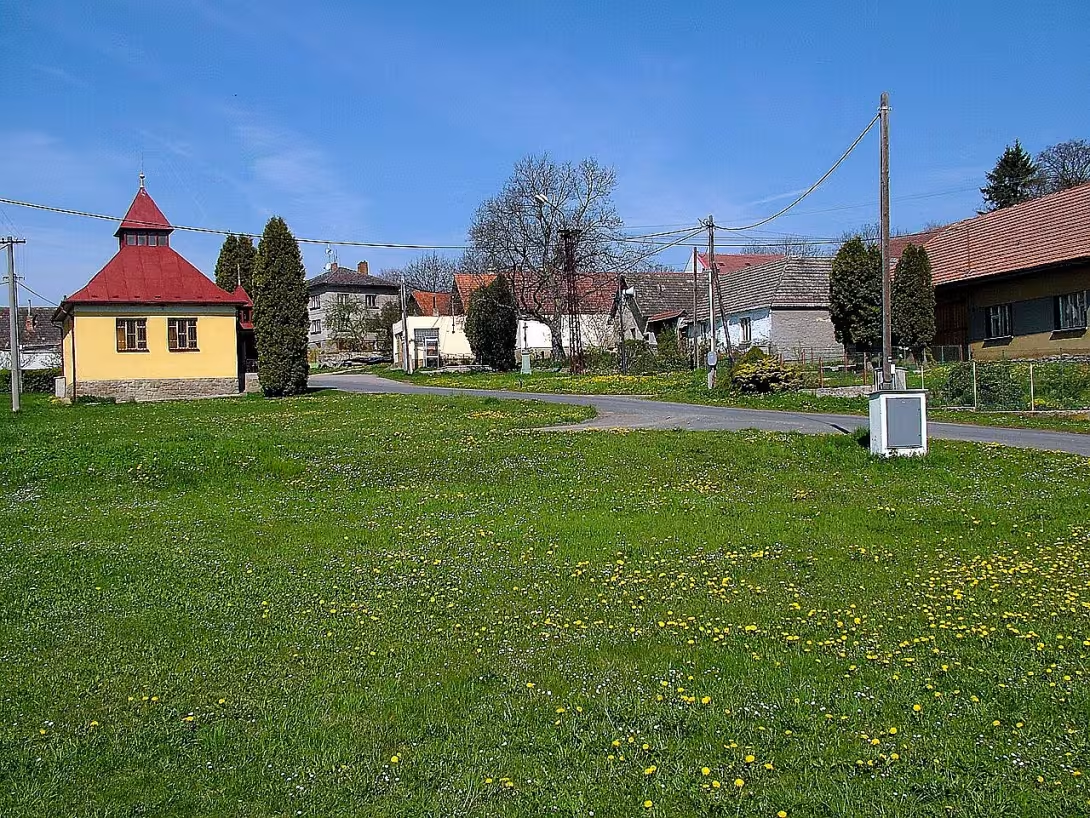
Rataje is an extinct medieval fortress on the northeast edge of the hill at an altitude of 405 meters, near Becýn in the district of Tabor. It is the only preserved example of its kind in this territory, whose existence is confirmed by archaeological findings, but without written records.
The hardness is approximately 50 metres in length and 40 metres in width. It is protected as a cultural monument and serves as a private garden, it is not accessible to the public.
The foundation of the fortress is linked to the 14th century, when it was probably built as a strategic seat on the edge of the populated territory. The eastern foothold of the fortress was settled in the younger times of the castle, which suggests a long tradition of housing the area.
In 1985, archaeological research revealed findings such as ceramics, metal objects and other artifacts, including traces of metal processing. These findings are preserved at the Hussite Museum in Tábor.
The architecture of the fortress is characterized by terrain relics of fortifications. On the eastern edge, a walnut relic was preserved, which is part of a double ditch separated by a boulder. The inner moat reaches a depth of up to two metres and the northeast corner breaks the front of the neck. The outer moat reaches a depth of up to three metres, on the north side probably the material from the adjacent field was introduced. The core of the fort is an irregular oval hill with dimensions 22 to 10 metres.
In the history of the fortress there are only fragmental references. In 1360, the village was divided into three owners. In the 15th century, the fortress was destroyed because its owners preferred their houses in nearby villages.
An interesting feature is the settlement of the eastern prealms from the 12th to 13th century, which shows the long history of this territory. The 1985 archaeological findings, which revealed the processing of metals, prove advanced economic activity in this area. These findings are an important source of knowledge of the region's medieval culture and economy.
Today the fortress is protected as a cultural monument. It serves as a private garden, but is not accessible to the public. Yet it retains importance as a historical site. Rataje presents an interesting example of the medieval fortress, reflecting the strategic meanings and settlement traditions of the region.
Historical milestones
- around the 12th century - 13th century
- The first settlement of the eastern prealms of the fort, associated with the younger forage period
- 1360
- The village was divided between three owners, which is the oldest written mention of the area
- 14th century
- Formation of the fort as a strategic seat on the outskirts of the populated territory
- 15th century
- Termination of the fortress due to the preference of settlements in nearby villages
- 1985
- Archaeological research revealed ceramics, metal objects and traces of metal processing
Architectural development
The fort was built on the edge of the islanders on an altitude of 405 meters. Its dimensions are about 50 × 40 metres, with an irregular oval central hill of 22 × 10 metres. The only preserved fortification is a walky relic on the eastern edge and two ditches separated by a boulder. The outer moat reaches a depth of up to three meters.
Historical events
- 1360
- Rataje were divided between three owners: Petra Stolic from Rataj, Purcard from Rataj and Ješka Svenklu from Vršovice.
- before 1415
- The fort was destroyed because the owners of the village had more comfortable mansions in the Adventures and Podoli.
Owners
Petr Stolika z Rataj (with son Jan), Purkart z Rataj, Ješek Svenkla z Vršovice (1360). Later, the village is divided between the charitable estate and Podoli.
Points of interest
- Rataje is the only preserved medieval fortress in this territory with archaeological evidence of its existence, but without written records.
- The eastern front of the fortress was settled in the younger times of the castle, which shows a long tradition of living.
- The 1985 archaeological research revealed traces of metal processing, which proves advanced economic activity.
- The inner moat reaches a depth of up to two metres, and on the northeast corner is the front of the neck.
- In the 15th century, the fort was destroyed because its owners preferred their houses in nearby villages.
Guide
Show guide text
This text was created by artificial intelligence and has not been editorially reviewed. It may contain inaccuracies.
Welcome to the place where the past touches today! You stand before the remnants of the Ratai fortress - a extinct fortress that guarded the landscape centuries ago. In front of you, there is only the shadow of what once was: the ramparts, perhaps the remnants of the moat or the terrain formations that reveal where this medieval guard stood. Notice the peace of the neighborhood - there is a private garden around you, but underneath your feet lies a story waiting for you to uncover it.
Let's go back to when the walls were still here. The Ratai fortress was probably built sometime in the 14th century, but its roots go much deeper. Archaeologists confirmed that the eastern forefront of this place had already been inhabited in the younger days of the castle - that is, when people were building the first fortified mansions and guarding their territory. That means people were standing here long before written records first got here. The first mention of the village Rataje dates back to the year 13300 when it was divided between three owners. This was the beginning of written history, but the fortress stood here before - as a guardian on the edge of a populated landscape.
Look around you. Even if you see today only the terrain formations and perhaps the remnants of the valleys, imagine that there was a fortress that served as protection for the surrounding villages. It was built at a time when security and power were decided. In the fifteenth century, however, it lost its meaning - people preferred to live in nearby villages, so the fortress died. It only left traces that archaeologists discovered in nineteen hundred and eighty-five. At that time, ceramic containers, metal objects and even traces of metal processing were found - evidence that artisans and ordinary people who inhabited the fort lived here.
Now pay attention to what you're seeing right now. There is not a ruin before you with high walls or towers, but remains that tell a story without words. Take a look at the terrain - you may see a slight surface or moat that once protected the fort from the enemy. Notice how the past is projected into today's landscape. Although there are no memorial records or statues, every stone and every hill speaks of the people who lived here.
And here comes the most interesting part. Rataje is a unique place - the only preserved medieval fortress in this territory, which we only know about thanks to archaeological findings. No written document indicates who built it, who lived in it, or what her fate was. It's like a mystery waiting for its investigator. Imagine how knights could live here, who were guarding the borders, or craftsmen who made weapons or dishes. Whether it stood here for a short time or not, its existence reminds us that history often hides where we do not expect it.
Take another look at this place before you leave. Even if there are no remnants of walls or towers, every step of this land is like time travel. The Ratai fortress reminds us that the past is not only in books or monuments, but also in the terrain we walk. If you're interested in this story, you can learn more in local museums or archaeology experts. However, whatever you decide, one thing is certain: here you are witnessing a place where the past and the present meet.
Thank you for traveling with us in time. Let this visit bring you not only knowledge, but also the feeling that you have touched something that has survived for centuries.
Tips for visitors
The most suitable visit is from May to September, when the weather is pleasant and nature is in full blooming power. In winter the fort is less visited, but the possibility of observing the surroundings in a quiet environment can be interesting. The morning or afternoon after lunch is preferable to avoid overcrowding.
The location is available by car from the main road leading to Bechyni. It is recommended to check the current connection in advance.
Don't forget the comfortable clothes that are suitable for various weather conditions. It is also useful to carry water, sunglasses and a small garbage bag. It is advisable for families with children to bring small toys or books that will be entertained while walking on the ruins.
The best places for photography are the surrounding walls of the fortress, especially its top part and surrounding field. It is advisable to take pictures in the sunlight, especially in the morning or afternoon. Especially interesting are the scenery associated with the river Sad, located near the village.
Bechina, a historic town with a rich cultural tradition. You can explore old town halls, churches and other historical buildings.
A natural landscape with a sad river. Walk around the river offers a quiet environment and the opportunity to observe natural scenery. It is also appropriate to visit local ponds which are part of the region's natural wealth.
It is interesting for children to explore the natural surroundings and find out the history of the fortress through simple interpretations and stories. You can also try simple experiments with water from the Sad River. It is possible to visit the children's playground in the park in Bechyn, which can be more fun for families.
Frequently asked questions
Can the monument be visited?
This is an archaeological site. Often there is little to see on the ground and the land may be private. We have not verified access.
Where is the monument?
Location: Jihočeský kraj. The map on this page shows the exact spot.
Why is the monument protected?
It is listed in the Central List of Cultural Monuments of the Czech Republic as a cultural monument (register no. 1000134422).
Businesses nearby
Do you run a restaurant, accommodation, shop, museum, rental, wellness or other visitor service near this monument? Show yourself directly to the people heading to it — this is how they will see you in the app and on the web:
Nearby
Blízko se nachází Bechyně, historické město s mnoha památkami, a přírodní krajina s říčkou Smutnou.
Accommodation nearby
Themed route
Thematic cruise route with a visit to the fortress in Rataj
1. Fortress in Rataj - castle / castle Main monument with period traces from the 15th-17th century. Here you can walk through the remains of the fortifications and learn about the history of the local estate. Ideal for lovers of medieval architecture and stories about local owners.
2. Becyne - historical center - walking walk Approximately 10 km from Ratami. Here it is worth visiting Bechyn with the Gothic Church of the Assumption of the Virgin Mary and City Hall. The city is also known as the "Castle of the Sad," where important events took place earlier. Walk through narrow streets and visit the square will add a historic atmosphere.
3. Smila River near Bechyna - natural circuit Approximately 5 km from the centre of Bechyn. Natural karst formations and picturesque riverbanks offer a peaceful walk or cycling route. Suitable for relaxation and observation of local flora and fauna.
* The route is designed to combine cultural and natural beauties without turnovers outside the given places. *
Seasonal recommendations
Spring Spring in Ratai is like a turbulent palette of colors - green grass wakes up, trees bloom and the sun illuminates the remains of the fortress so that the stone walls look covered with a fine powder touch. The atmosphere is full of motion: the whirlwind blows dust from historical walls, birds sing between flowering bushes and air smells of moisture and new leaves. Ruina seems to be more alive than at other times, as if history was breathing out of her. It is appropriate to visit it on a sunny but not too hot day - for example in April, when nature is in full bloom, but even less crowds. Dress light but protective clothes against the wind (monuments are often in wind places) and remember the sun cream - the shadows are few, stone walls reflect heat. In the morning is the perfect time to be colder and less tourists.
Summer Summer brings hot, sunny days to Rataje when the ruin turns into an oasis of shadows and heat. The sun shines directly on the remains of the fortress, so the stone blocks glow and reflect the light as if it were covered with a fine gloss. The atmosphere is intense - the air is heavy, nature is lush and sometimes it seems like time has stopped. In the main summer season (red-August) the crowds come here, so you better come early in the morning or in the afternoon when there are fewer people. Dress lightly, but with the main task of protecting yourself from the sun - hat, sunglasses and plenty of water are necessary. Ventilate the room if it is accessible in the ruins or bring a light blanket to sit on the stone steps.
Autumn Autumn in Ratai is magical - the sun shines oblique, so the ruins are lit with golden light that emphasizes its ancient beauty. The leaves in the trees turn into shades of orange, red and brown, which are reflected in stones and form as if the monument had turned into a statue of shiny gold. The atmosphere is calm, but even a bit mysterious - the cool wind drives dust between the remains of the wall and the air smells of fallen leaves. In September and October there are many fewer crowds than in the summer, so you can see the ruins in peace. Dress yourself in a warmer but comfortable dress - temperatures fall, but the sun can still be strong. Prepare a warm drink, as cold autumn days can be refreshing.
Winter Winter in Ratay is like from another world - the ruin is surrounded by white snow, which covers it as if covered with fine powder. The sun shines badly, so the stone walls look like they're covered in fog and the shadows are long and mysterious. The atmosphere is quiet, almost sacred - the cool air blows quietly between the remains of the fortress and the snow falls quietly on the stone surfaces. In December and January the ruins are often closed due to adversity of weather, but if it is open, visit it in the morning when the light is most mild. Dress up in warm, wind-resistant dresses - hat, gloves and sweatpants are essential. Prepare a warm lunch or drink as it is cold outside and the sights do not have indoor spaces. Winter in Ratai is like a return to the Middle Ages, when history seems even closer.
Visualizations and artistic views


The visualisations are generated by artificial intelligence and serve as inspiration.
Photos from the area
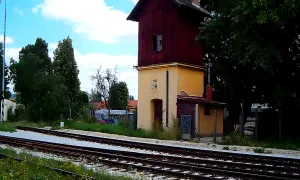
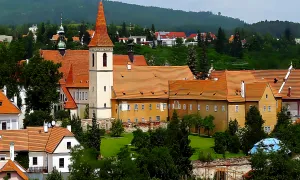
Real photos taken near the monument

Zdroj a licence jsou uvedeny u každého snímku.
Tips from visitors
No tips yet. Be the first!
Log in and add your tip.
Sources and literature
Faktickým podkladem tohoto textu byl článek na Wikipedii, jehož autory jsou přispěvatelé Wikipedie. Článek je dostupný pod licencí CC BY-SA 4.0.
Location on the map

Příběhy a pověsti
Legendy, pověsti a příběhy spjaté s touto památkou
Fotografie návštěvníků
Zatím žádné fotografie. Buďte první, kdo přidá fotografii z návštěvy!
Log in a přidejte svou fotografii nebo hodnoťte.
Za ověřenou návštěvu v aplikaci získáte víc bodů — poznáme podle GPS, že jste na místě.
Reviews and comments