



Rokyten Hillfort
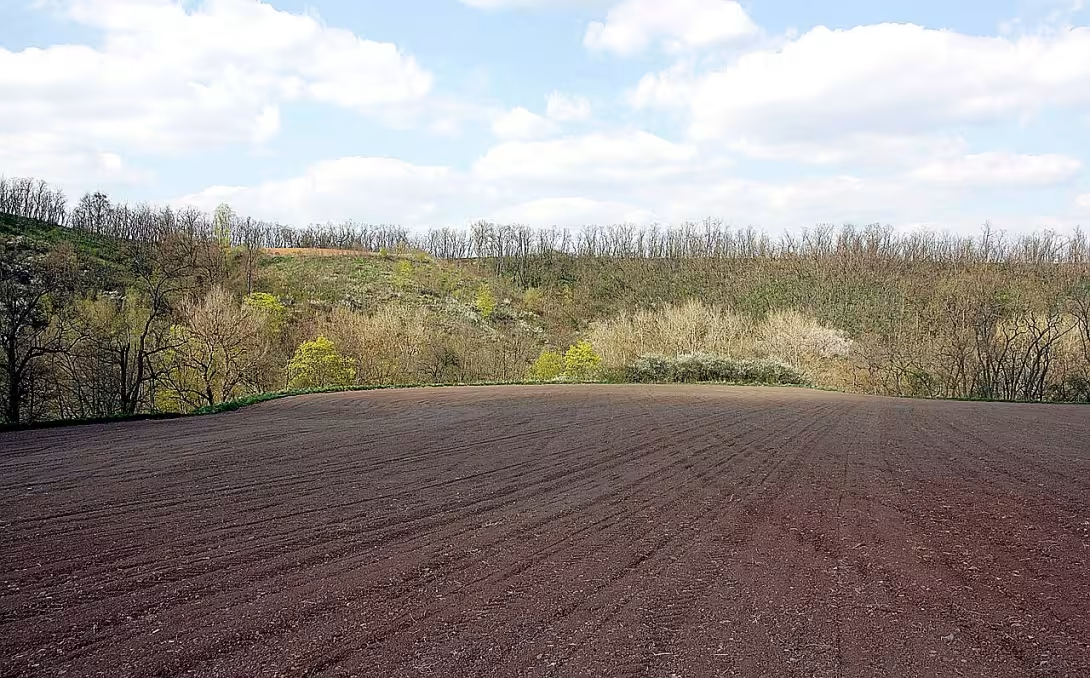
Rokyten is an early Přemyslovský castle situated on the island of the River Rokytná in the village Rokytná. This archeological complex dates back to the first half of the 11th century and represents a major power center from when the government of the Přemyslívov dynasty was consolidated in the country.
The site has a long history of settlement dating back to the Stone, Bronze and Latin era. The Celts lived here from approximately 400 B.C. to the first decades of the Slovak settlement was found from the 8th century and continues without interruption to this day. At the time of the Great Moravian, there was probably a significant settlement or castle. The importance of the site increased in the period of March after 1030 when it became part of the Hrad district.
The building solution of the castle was two parts. The power centre was situated on a field in a place called Great Hradisko and had an area of about 3 hectares. It was protected by a perimeter palliative wall and separated by ditches. The promenade was located at the site of today's village in the line Mala Hrastí and had an area of approximately 8 hectares. Archaeological research carried out in the years 1959-1960 revealed on the Great Hradisk a semi-ground wooden residence arranged along the perimeter of the fortified area attached to the stake pallider. There were also traces of semi-deepened cottages with remains of fires or kilns and burnt remains of large grafted buildings in the northeast part, which could serve as the residence of the former administrator. It is assumed that there was a Romanesque stone building on the castle, namely St. John's Church.
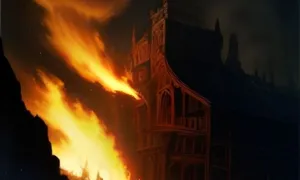
The first written mention of the grad Rokyten dates back to 1046 in the founding letter of the Old Boloslav chapter that owned the castle. The fate of the building was marked by conflicts in the 12th century. In 1146 the castle was fired by Vladislav II. on an expedition against the Moravian Přemyslovovci, which led to the movement of the administrative centre to the Reznovice. Another devastation and probably the final demise of the fort occurred in connection with the battle at the Lodnice in 1185. Archaeological studies document the violent end of life on sharp traces of a major fire.
The name of the place comes from the old Slavic name for the willow, i.e. the year. The castle is currently listed in the list of real cultural monuments. The Great Hradisko is now used as agricultural land.
The archaeological site in Rokytná is an important point for understanding early medieval power centers. It is a place that, through its archaeological footprints, proves the strategic importance of this region.
Historical milestones
- 1046
- The first written mention of the castle in the founding charter of the Old Boloslav chapter.
- 1146
- Burning down the castle of Vladislav II on a quest against the Moravian Přemyslovas.
- 1185
- The demise of the fort in connection with the battle at the Shipyard.
- 1958
- Writing the fort into a list of real cultural monuments.
Architectural development
The power center was protected by a perimeter palliative wall and separated by ditches. There was probably a stone Romanesque church on the castle. Archaeological research revealed wooden land dwellings and grafted buildings.
Historical events
1046: The first written mention of the grad Rokyten in the charter of the Old Bolyslav chapter; 1146: Burning down the castle Vladislav II.; 1185: The destruction of the castle in connection with the battle at Lodnice.
Owners
Old Boloslav chapter (mentioned in 1046)
Points of interest
- The fort dates back to the first half of the 11th century and represents an important centre of power for the period of consolidation of the Prehlysch dynasty. - The place has a long history of settlement dating back to the Stone, Bronze and Latenian era. - The building solution of the castle was two-piece and included Great Hradisko with an area of about 3 hectares and a prepayment of about 8 hectares. - In 1146 the castle was fired by Vladislav II. on an expedition against the Moravian Přemyslovovs. - The name of the place comes from the old Slavic name for the willow, i.e. the year.
Guide
Show guide text
This text was created by artificial intelligence and has not been editorially reviewed. It may contain inaccuracies.
Welcome to Castle Rokyten. Stop for a moment, take a breath and look around you. You're standing in a place that used to beat the heart of power in this part of the country. Take a look at the terrain, this distinctive edge of the Rokytná River, on which you are located. It was this natural location that was the main reason why this place was chosen centuries ago. Feel the atmosphere of the surrounding nature and imagine what this landscape looked like thousands of years ago, when instead of silence, people's voices sounded, metal was beating, and smoke was floating from fires. In front of you is a space that is peaceful today, but which was a strategic point at the time of its glory, from the którego controlled the surrounding area and managed the local area.
Now let's move much further back in time to the first half of the eleventh century. It was at this time that the Rokyten site gained its greatest significance. It was an era when the government of the Přemyslívov dynasty was consolidated and a system of castles and castles was established, which served as both administrative and military centres. Rokyten was not only a common fortified residence, but a major power centre, which was part of the so-called castle district. This means that there were people with certain powers who, on behalf of the prince, managed the surrounding territory, collected taxes and maintained order. The first written proof of the existence of this place accompanies us from the year one thousand forty-six, when the castle is mentioned in the founding certificate of the old-boyslaan chapter. It is fascinating to think that one brief reference in an ancient document today allows us to reconstruct the meaning of this place.
Now pay attention to the very layout of the fort you see before you. Although time and nature deleted many details, the construction solutions were very thoughtful in their time. The fort was designed as a two-part complex. The main element was Great Hradisko, which was the power center itself. This is where the most important buildings and locations of influential personalities were located. The Great Hradisko used the maximum advantage of sharpness to make it as hard as possible for any enemy. This centre was followed by a predam located in the area of today's village. It served as an area for craftsmen, economic buildings and, in the event of a threat, as a refuge for the surrounding population. Notice how space is divided and how naturally it copies the terrain lines. Even if you can't see the high walls today, feel in space the line dividing the fort from the surrounding terrain. It was here in the past that there was a line between safe internal space and an unknown world outside the walls.
But the history of this place is not only a story of stability and power, but also a story of conflict and extinction. Let's stop by one of the most prominent personalities in Rokytne. He was Vladislav's second. In the year one thousand and forty-six, the fort became the target of his attack. Vladislav the second was on a quest against the Moravian Přemyslívovci at that time and Rokyten fired in his military operations. Imagine the contrast. A place that has been a symbol of stability and power for centuries has turned into ash in a short time. The fire, which at that time served as the most effective weapon, destroyed wooden structures and drove the inhabitants out. Although the fort has probably recovered after this attack, its significance has already begun to decline.
The final demise of the fort came a little later, in the year one hundred and eighty-five. It was related to the battle at the Shipyard. This event has definitively closed the chapter of Rokytna as a power center. The battles, political schematics and military clashes left deep clues in the landscape, and Rokyten became one of the victims of these troubled times. Since then, the fort has slowly returned to the arms of nature until archaeologists rediscovered it. In a thousand and nine hundred and fifty-eight, Rokyten was officially included in the list of real cultural monuments, which ensured that this valuable site would not be lost in oblivion and protected for future generations.
When you look around like that, you might find one fascinating thing beyond the time of the Overheads. Rokyten is not just about the eleventh century. Archaeological research revealed that the history of settlement in this place goes much deeper into the past. Underneath the layers of the early medieval castle there are traces of people who lived here in the Stone Age, the Bronze Age and later in the Latin era. This means that this island of the River Rokytná was an attractive place for people thousands of years before the castle was built here. It's incredible when you realize that in the same place that you are standing today, people from the Stone Age were once hunting, Bronze Age blacksmiths and fighting Celtic era warriors. So Rokyten is basically a layered book of history, where each layer of soil tells a different story about human efforts to survive and dominate the landscape.
The mystery remains, what exactly were the daily lives of the people who lived here at the time of their bloom. Who went through all the roads that grew grass today? What were people talking about in the vanguard, while the region's fate was decided on top of the Great Hradisk? These questions remain in many ways, and that is the magic of visiting such a place. It's a space for your own imagination.
Now I invite you to take a slow ride around. Feel the ground beneath your feet that keeps secrets for thousands of years. Go through the border of the castle, look again at the flow of the River Rokytná and try to imagine the strategic advantage this place has given its inhabitants. Let the silence and calm that today rules where the political game was once boiling and the fighting cry sounded.
Thank you for spending some time with us at Castle Rokyten. We hope this short trip to the depths of time helped you better understand the importance of this unique archaeological site. We wish you a pleasant continuation in discovering the beauty of our history and landscape. Goodbye.
Tips for visitors
The best time to visit the archaeological site Rokyten is spring or autumn when vegetation is lower and the relief of the field and possible landscaping are better revealed. There are also fewer insects in these periods and the weather is more pleasant for walking around. In summer it can be hot in the open, while in winter the terrain can be slippery and more difficult to pass.
Transport to the place is provided mainly by a private car because it is a rural location. If you travel by public transport, it is necessary to check the current connections and transfers in advance, as direct lines to the heart of the monument may not exist and a short walk from the nearest stop may be necessary.
Don't forget to wear solid shoes with a good heel in the field, because the way to the castle and the movement around the edge can be difficult on the joints and stability. We recommend taking with us enough drinking water, light snacks and clothes according to the weather, including umbrella or waterproof jacket, because there is no shelter in the open area. Sunglasses and hat will also be practical in the summer months.
For photography is ideal morning or late afternoon light, which beautifully models the terrain and highlights the location of the fort on the edge. The best views on the overall configuration of the site and River Rokytna can be obtained from higher points in the surroundings. Try to respect the archaeological contexts and stick to the marked routes during the photo shoot to avoid endangering sensitive remains.
In the immediate vicinity (within 30 minutes) you can visit the village Rokytná, where the site itself is located, as well as the village Řeznovice. These locations offer a quiet environment for a short walk and the opportunity to get to know the landscape in which the castle was located. It is advisable to check in advance whether there are any information boards or other historical attractions available in these municipalities that could supplement the visit Rokyten.
Frequently asked questions
Can the monument be visited?
This is an archaeological site. Often there is little to see on the ground and the land may be private. We have not verified access.
Where is the monument?
Location: Rokytná, Jihomoravský kraj. The map on this page shows the exact spot.
Why is the monument protected?
It is listed in the Central List of Cultural Monuments of the Czech Republic as a cultural monument (register no. 1000129633).
Businesses nearby
Do you run a restaurant, accommodation, shop, museum, rental, wellness or other visitor service near this monument? Show yourself directly to the people heading to it — this is how they will see you in the app and on the web:
Nearby
River Rokytná, municipality Rokytná, Řeznovice.
Accommodation nearby
Trips and activities nearby
Guided tours, tickets and activities nearby from GetYourGuide
Affiliate link: if you buy from the partner, we may receive a commission. The price for you does not change.
Search tours and activities →Themed route
1. municipality Rokytná (local settlement) - Great place to start your trip and a short tour of the area. 2. River Rokytná (water flow) - It offers a pleasant walk in nature along the shore. 3. Rokyten (archaeological site) - The main destination of the journey where historical clues and archaeological interests can be discovered. 4. Butcher (village settlement) - Suitable place to end the route.
Seasonal recommendations
Spring: At the archaeological site Rokyten you will experience the arrival of spring-awakening nature and freshness of the surrounding vegetation. Soft morning light beautifully highlights the shape of the terrain, which is ideal for observing historical structures. We recommend wearing layered clothes because the morning temperatures may still be low and the road may be muddy due to rain. The best is to arrive early in the morning when the air is the cleanest.
Summer: In the summer months, the surrounding area of Rokytná is gardening with dense greenery and the sun illuminates every part of the complex. The atmosphere is alive and warm, which attracts long walks. Due to higher temperatures and more visitors in the main summer season, we recommend that you arrive early in the morning to avoid the greatest heat and crowds. Don't forget enough drinking water and a protective headgear.
Autumn: Autumn visit brings melancholy beauty thanks to golden shades of leaves and morning fog, which provide the place with mystery. The lighting is lower in this period and the colors are more saturated, creating an unforgettable atmosphere. For comfortable terrain movement, choose fixed shoes with good grip, because moisture and falling leaves can make the path slippery. The ideal time for visiting is afternoon hours when the sun creates long shadows.
Winter: The winter season offers the calm and raw beauty of bare trees and possibly snow sheets, which can highlight historical shapes interesting. The atmosphere is quiet and lonely, allowing deep perception of history without disturbing influences. Due to lower temperatures and shorter time of day it is necessary to take very warm clothes and plan a visit on bright, sunny days. Prepare to see that the accessibility of roads can be limited at this time.
Visualizations and artistic views


The visualisations are generated by artificial intelligence and serve as inspiration.
Photos from the area
Real photos taken near the monument


Zdroj a licence jsou uvedeny u každého snímku.
Tips from visitors
No tips yet. Be the first!
Log in and add your tip.
Sources and literature
Photos: RomanM82 / CC BY-SA 4.0 — Wikimedia Commons. The author and licence also appear when you hover over the image.
Faktickým podkladem tohoto textu byl článek na Wikipedii, jehož autory jsou přispěvatelé Wikipedie. Článek je dostupný pod licencí CC BY-SA 4.0.
Location on the map



Příběhy a pověsti
Legendy, pověsti a příběhy spjaté s touto památkou
Fotografie návštěvníků
Zatím žádné fotografie. Buďte první, kdo přidá fotografii z návštěvy!
Log in a přidejte svou fotografii nebo hodnoťte.
Za ověřenou návštěvu v aplikaci získáte víc bodů — poznáme podle GPS, že jste na místě.
Reviews and comments