






Rubín Hillfort
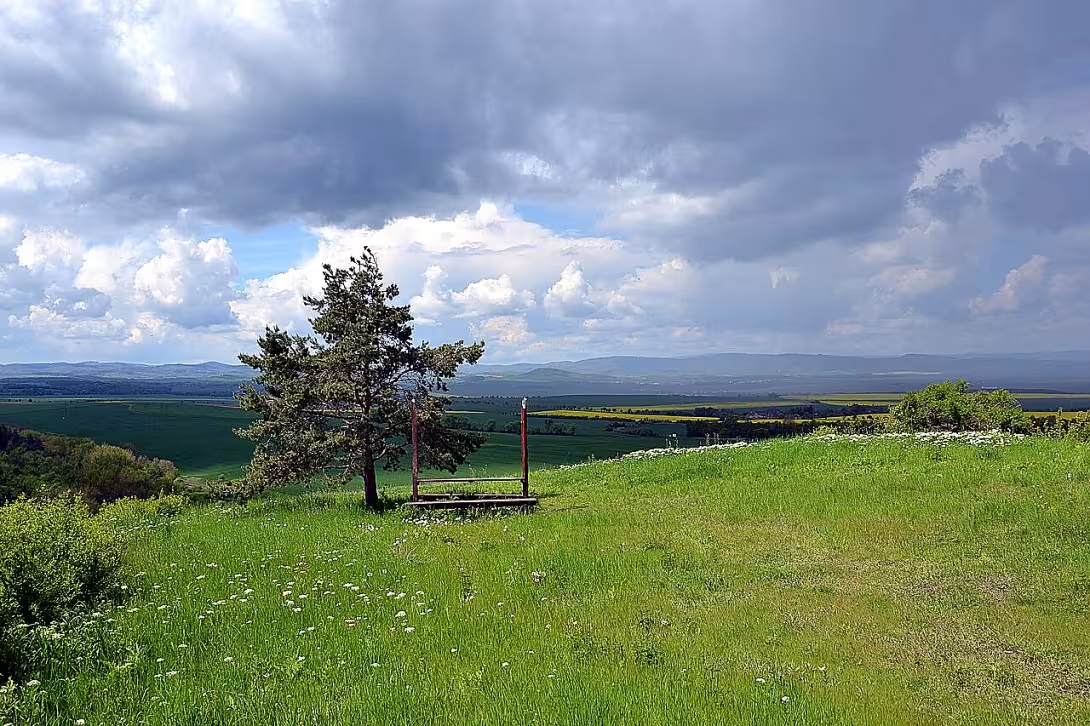
Rubín is an ancient castle with a rich history ranging from neolithic to early Middle Ages. It is located in the region of Ústí, showing the long-term settlements and cultural importance of this site. It is protected as a cultural monument and offers a fascinating view of prehistoric living conditions.
Historical milestones
- 1934-1938
- The first archaeological research of the castle was led by Helmut Preidel.
- 1970
- Václav Kruta did further research on Rubín.
- 1987-1991
- Josef Bubeník participated in archaeological surveys of the castle.
Architectural development
The original fortification of the castle dates back to the Bronze Age and was built by the people of the youngest phase of the Ukrainian culture. At the time of the Halštat and Latenian, a stone wall was built with a width of 100-120 cm, which formed the forehead of the wall. Archaeological findings from this period suggest the existence of stone architecture and the division of acropolis into smaller sites.
Historical events
- 632
- The fort can be identified with Wogastisburg, where according to some sources there was a battle between Slavic tribes of the Sama Empire and the Franc army of King Dagobert I.
- 800-400 B.C. l.
- On Rubín was built a new fortification within the Bylandic culture, which meant an important phase of settlement.
- 9th Century
- On the castle were found the great Moravian jewels, indicating its significance at this time.
Points of interest
- Rubín is an ancient and early medieval castle with continuous settlement from neolithic to early medieval. - The top Rubín was inhabited by representatives of cultures with linear and poked ceramics, Jordanian cultures, groups with poplar cups, rodent culture, culture of spherical amfor and string ceramics. - Proven fortifications of the fort were built by the people of the youngest phase of the Ukrainian culture in the Bronze Age. - At the turn of the period of Halštatian and Latin, between the 8th and 4th centuries B.C., a new fortification with a stone wall 100 to 120 centimeters wide was established. - The importance of Rubín as the centre of Pohří is confirmed by the findings of Etruscan bronze clips.
Guide
Show guide text
This text was created by artificial intelligence and has not been editorially reviewed. It may contain inaccuracies.
Welcome to Rubín. You've just entered a space that is far more than just a natural peak. You're standing in a place where the earth meets an incredible depth of time. Look around you and feel the atmosphere of this place. You are at Došek, just a few kilometers northeast of Podborány, in the southern part of Ústí Region. This peak, which you now admire, is not only part of the landscape, but it is a living witness to events that took place thousands of years before the first modern people appeared here. Feel the serenity of this place, but at the same time remember that beneath your steps lies the fascinating story of mankind.
This hill, which we call Rubín, has served for a huge period as a fortress. It's not just a random hill, but a strategically chosen place that people used to live and protect. The history of this place is incredibly long and continuous. If you look at the surrounding terrain now, you may not see the monumental structures that you would expect at the castles of later times, but pay attention to the very shape of the earth and the remains left behind. Rubín is a fortress that shows signs of continuous settlement. This means that people didn't live here for a short time, but this place was their home in different forms, from neolithic to early Middle Ages. It's a fascinating continuity that goes beyond the millennium.
When you look at the remnants of the castle itself, you can see how people were able to adapt to nature. The architecture of this place is not built of stone and mortar in the sense we are used to, but rather of clay, wood and the very shape of this hill. Feel how the terrain is changing and how its borders are likely to have been shaped by the human hand for defence purposes or for the determination of space for life. Even though we now see primarily natural shapes, you know that every name, every change of inclination and every terrace in this terrain can be the result of the work of people who have sought safety here.
In order to talk about this place today and understand it at all, we must share the stories of the people who have decided to walk here with these clues at the time of archeology. The first major steps to discover the secrets of Rubín were taken by Helmut Preidel. From 1934 to 1938, he led the first conscious archaeological research that gave us the first indication of what really happened here. After years of peace, experts returned to the castle. In 1970, Václav Kruta carried out further thorough research here, which helped to deepen our knowledge of how the use of this peak changed over time. Later, from 1987 to 1991, Josef Bubeník joined the work. Thanks to their patience, precision, and courage to explore the layers of the country that seemed immobile, today we can reconstruct the history of this place. These people were like detectives of the past, who could make a big story out of small fragments and fragments of ceramics.
Now pay attention to what these researchers have found in the depths of the earth. What they tell us most about people on Rubín is not their words, but their ceramics. Every culture that once lived here left its unique signature. Imagine different groups of people taking turns here. There were people with linear and poked pottery who made patterns with incredible patience. There came representatives of the Jordanian culture and a group of pointy cups. Followed by a rodent culture and people who used pottery in the shape of spherical amphor. Let us not forget the culture of string ceramics, whose name directly refers to the style of decoration. Each group brought their own customs, their own ways of making vessels and their own views of the world. Now, when you look at this hill, imagine that you're standing at the crossroads of many different worlds that were gradually changing over time.
There's one big mystery that might interest you in your next tour. How is it that this place has remained so attractive to people for such an incredibly long time? From Neolithic, when people were just starting to settle down, to the early Middle Ages, Rubín never lost its significance. Why did people keep returning their steps here? Was it because of the strategic position, the view of the surrounding landscape, or perhaps because of some spiritual significance of this hill? This question remains open and may be found in the silence that exists here. Every layer of land you see here is like a page in a book waiting to be read again.
I suggest you continue your search and allow yourself to drift through the atmosphere of this archaeological site. Look at the surrounding terrain, see the link between nature and human activity, and try to imagine the thousands of years that have taken place here. Rubín is not just a monument, it is a living proof of our common human history. Thank you for coming and for trying with us this short journey into the past. We will brighten up a pleasant walk and look forward to meeting you again at the next historical monument.
Tips for visitors
The most suitable period for visiting the castle Rubín is the period from spring to autumn when the surrounding landscape is the most colorful and the weather is the most stable.
You can transport to the location by car or use public transport connections; Please check the current timetables and parking options in the transport applications.
Since you are in the field of archaeological sites, we recommend that you bring with you fixed shoes suitable for uneven surfaces, enough drinking water and possibly protection against insects.
For the best photographic results we recommend to use the light during the late afternoon, which will highlight the shape of the terrain at the Dodek and create interesting shadows.
For families with children, exploring this primordial place represents an interesting opportunity to explore history in nature. No other specific places to visit are listed in the immediate vicinity.
Businesses nearby
Do you run a restaurant, accommodation, shop, museum, rental, wellness or other visitor service near this monument? Show yourself directly to the people heading to it — this is how they will see you in the app and on the web:
Events nearby
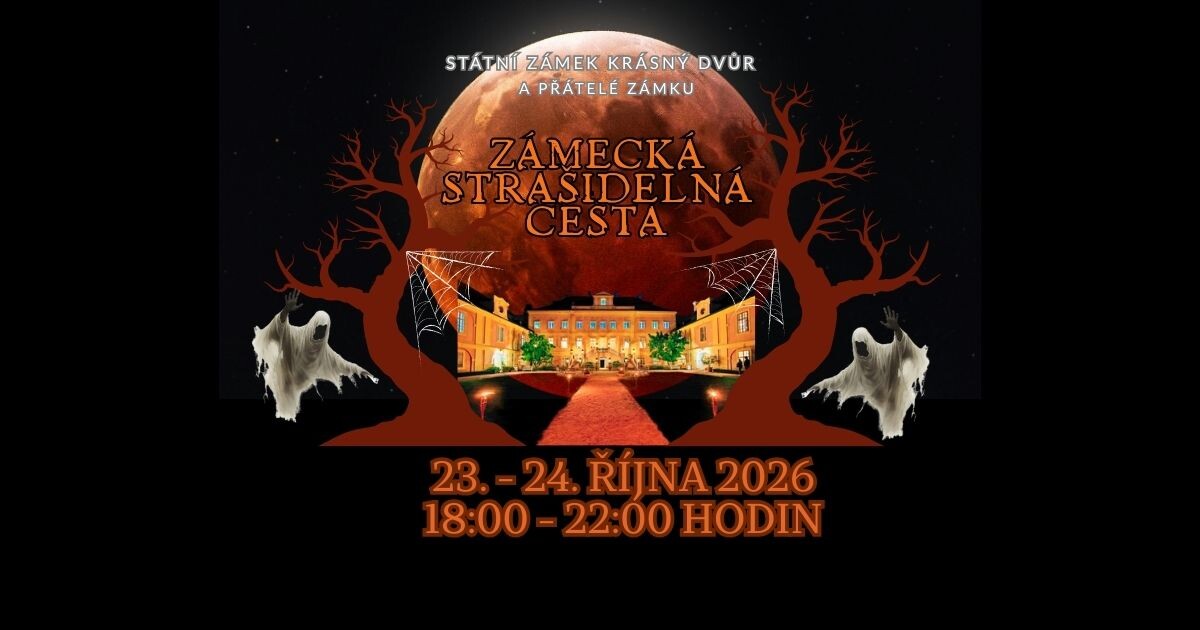
Zdroj akcí: otevřená data měst a obcí ČR (Národní katalog otevřených dat) a kalendář akcí Národního památkového ústavu.
Nearby
🏰 Historic sites (92)
- Hradiště Rubín 0.0 km
- Zřícenina kostela sv. Michaela archanděla 3.1 km
- Nejsvětější Trojice 3.3 km
- Sv. Václav 3.3 km
- Friedrich Schiller 3.7 km
- Ježíš Kristus na Olivetské hoře 3.9 km
- sv. Jan Nepomucký 3.9 km
- sv. Jan Nepomucký 4.1 km
- Kaolin na Podbořansku 4.3 km +420 773 979 972
- tvrz Hlubany 4.3 km
- sv. Jan Nepomucký 4.7 km
- sv. Florián 4.8 km
- Zámek Krásný Dvůr 4.8 km +420 415 210 004 web
- sv. Jan Nepomucký 4.9 km
- Zámek Veliká Ves 4.9 km
- obětem sv. válek 5.3 km
- Galerie Kafka 5.4 km Siřem 7 +420 774 335510
- sv. Jan Nepomucký 5.5 km
- Nejsvětější Trojice 5.7 km
- Gotický templ 5.8 km
🍽️ Restaurants and dining (46)
- Emilio 3.2 km
- Klub u Milady 3.3 km Dukelská 295
- Restaurace Slunce 3.5 km Masarykovo náměstí 32 +420 776 767 604 web
- Hotel a Restaurace U Růže 3.5 km Masarykovo náměstí 33 web
- Restaurace U Růže 3.5 km Masarykovo náměstí 33 +420 773 570 585 web
- Wellness hotel Národní dům 4.2 km Nádražní 261 +420 601 521 523 web
- Amma caffe s.r.o. 4.8 km
- Restaurace pod zámkem 4.9 km
- Hospoda u Mirky 5.0 km
- Myslivecká restaurace 5.1 km
- Usedlost slunečni dvůr-Gut sonnenhof 5.4 km Milčeves 55 +420733467922
- U Daniela 6.8 km
- lucka cafe 7.4 km
- Stop Cafe 9.4 km web
- Burger House 10.2 km Bratří Čapků 2778
- Kulatá 10.3 km
- Barbar 10.4 km
- Chaloupka 10.5 km
- Rock Cafe 10.6 km Volyňských Čechů 1012 733500119
- Hříbek 10.7 km
🏨 Accommodation (9)
- Kemp Piraňa 10.6 km
- U Zajíců ve dvoře 10.8 km 474 392 039
- Penzion u Orloje 11.0 km nám. Prokopa Malého 883
- Hotel Zlatý Lev 11.2 km web
- Hotel Černý Orel Žatec 11.2 km
- Hotel U Hada 11.3 km
- Autokemp Vikletice 11.4 km
- Chalupa U lesa 12.3 km +420 737 163 156
- Penzion Clear-point 13.9 km +420 731 149 010 web
🚲 Rentals and sport (12)
- CykloMolny 3.2 km Kadaňská 301 +420 776 044 015 web
- Kola Mojžíš 3.3 km Dukelská 260 +420 731 344 610 web
- Chevron Nutrition s.r.o. 3.4 km Nerudova 603 +420 775 078 060 web
- 1. Český Golf & Country Club Krásný Dvůr 6.0 km Červená hájenka
- Sportisimo 10.0 km
- Koupaliště 10.1 km
- RMP Freesport 10.3 km
- Sokolovna 10.7 km
- Stadion Mládí 10.8 km
- TJ Sever Žatec 10.9 km Plzeňská 2787
- TJ Sever Žatec 10.9 km
- bazének 12.1 km
🥾 Hiking and nature (71)
- Rubín 0.0 km
- Homole 0.7 km
- Valovský kopec 4.5 km
- Hraběcí studánka 4.9 km
- Goethův pavilon (Lusthaus) 5.2 km
- Hájovna 5.3 km
- poustevna 5.3 km
- místo bývalého hrázděného kostelíku 5.3 km
- torzo bývalé Čertovo lávky 5.4 km
- Hrobka se sarkofágem 5.4 km
- Vodopád 5.7 km
- Kozinec 6.0 km
- Gloriet 6.1 km
- Milberk 6.6 km
- U silnice 6.8 km
- Šibeník 7.0 km
- Skřivánčí 7.3 km
- Dubový vrch 8.2 km
- Velká 8.9 km
- Schillerova rozhledna 9.1 km
Accommodation nearby
Themed route
Entry gate - entrance area. The first contact with the site, here you will find an information board with a map and a brief introduction to Rubín.
Archaeological exposition Rubín - exhibition section. They show the most important artifacts and provide a detailed interpretation of life in the ancient settlement.
Tanks - open space. It allows you to view the layout of the entire site and get an idea of its original size and layout.
Observer tower - lookout tower. It offers a view of the whole site Podbořany and helps to perceive archaeological findings in a wider landscape context.
Seasonal recommendations
Spring - In a period of awakening nature, soft, golden light is spread over the ruins of Rubína, which highlights the stone remains and reveals fine shadows between the broken columns. The first flowers bloom around the premises and the birds fill the air with singing, which gives the visit a calm, almost mystical atmosphere. We recommend arriving early in the morning when there are still few visitors and the sun hits at an angle that underlines the details. Composite clothing is suitable - light jacket or sweater against colder morning clocks and comfortable shoes on uneven terrain.
Summer - In the summer months the sun shines directly and illuminates the stones with bright, white light, which underlines the structure of old walls and reveals details of mosaics and engravings. The surrounding landscape is green, the trees cast a shadow and provide relief from heat, while the smell of grass and wild flowers complements the atmosphere of the historic place. In the main summer season there is expected to be a higher attendance rate, which is why it is convenient to arrive right after opening or late afternoon when the crowds are dispersed. We recommend light, breathable clothes, sun cap, sunscreen and plenty of water; solid shoes with good grip are necessary for slippery stones after rain.
Autumn - Autumn light is warm and slightly orange, which creates a nostalgic touch on the ancient remains of Rubína. Tree leaves turn colors into gold, red, and brown, and falling leaves rustling under their feet, adding a quiet, thoughtful atmosphere. There are fewer tourists in this period, so you can explore the area in peace. We recommend to dress in a layer - warmer sweater or jacket and waterproof layer in case of rain. Comfortable shoes with a good heel are suitable because autumn humidity can cause slippiness of stone parts. The ideal time is the late afternoon when the sun lights up the remains at an angle that highlights the texture.
Winter - In winter, a cool, blue light stretches over the ruins, underlining the rough nature of stone structures and creating contrast with white snow covering the surrounding area. The atmosphere is quiet, only occasionally interrupted by snowing under the footsteps of visitors. The opening time is shorter, therefore it is best to arrive early in the morning so that there is time for a tour even in limited traffic. Dress in warm layers - thermal linen, insulation sweater, waterproof jacket and hat, gloves and scarf. Fixed, anti-slip shoes are necessary to prevent slipping on ice surfaces. There are fewer people in winter, so you can soak up the historic atmosphere and listen to the echoes of the past.
Visualizations and artistic views

The visualisations are generated by artificial intelligence and serve as inspiration.
Photos from the area
Real photos taken near the monument


Zdroj a licence jsou uvedeny u každého snímku.
Tips from visitors
No tips yet. Be the first!
Log in and add your tip.
Sources and literature
Photos: Petr Kinšt / CC BY-SA 4.0 — Wikimedia Commons. The author and licence also appear when you hover over the image.
Faktickým podkladem tohoto textu byl článek na Wikipedii, jehož autory jsou přispěvatelé Wikipedie. Článek je dostupný pod licencí CC BY-SA 4.0.
Location on the map

Příběhy a pověsti
Legendy, pověsti a příběhy spjaté s touto památkou

Fotografie návštěvníků
Zatím žádné fotografie. Buďte první, kdo přidá fotografii z návštěvy!
Log in a přidejte svou fotografii nebo hodnoťte.
Za ověřenou návštěvu v aplikaci získáte víc bodů — poznáme podle GPS, že jste na místě.
Reviews and comments