



Salátovský dům House
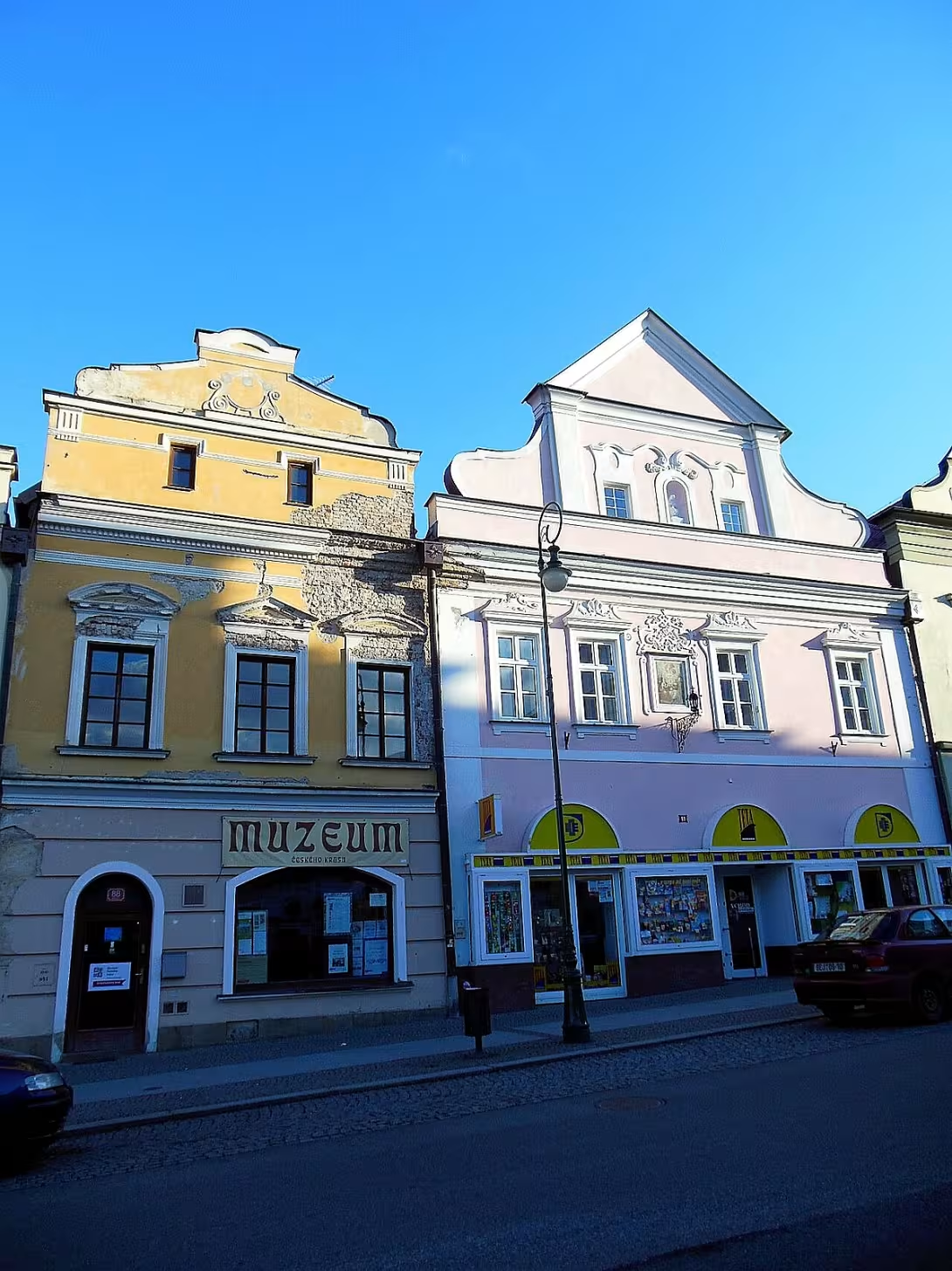
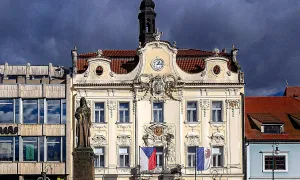
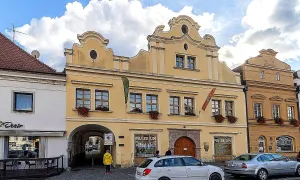
Salátovský dům is a baroque townhouse in the southern front of the houses at Hus Square in Beroun. The building serves as the headquarters of the Museum of the Czech Karst and since 1958 it has been a protected cultural monument. The building is an important example of the development of urban development, which combined the elements of goth, Renaissance and Baroque over the centuries.
The house stands on a narrow Gothic parcel. The most ancient history is evidenced by the Gothic elements preserved in the cellars and walls of the ground floor. In 1643 the Beroun township Elizabeth Salátová purchased the property, which at that time already owned the neighbouring Jenštejn house.
The object underwent some fundamental changes. The Renaissance reconstruction was followed by the baroque destruction of the shield. Another significant change occurred in 1735, when the house was rebuilt in Baroque style after the great fire of the city. One-story house is three-axis. The facade ends with a ledge above which is an aetika and a cut-out shield attachment. The windows of the first floor decorate the suprafenestra with alternating segmental and triangular shields.
In more recent history, the object was hit by a storm in 1967. A part of the shield collapsed, which led to a modification of its original form. At the end of the 1990s, Salátovský dům was connected to the nearby Jenštejn house.
Currently, the building is open to the public because it houses the Museum of Czech Karst. The monument offers an authentic view of the historical urban structure of the centre of Beroun. Visiting the building allows you to study the layering of architectural styles within one townhouse.
Historical milestones
- 1643
- purchase of the house Beroun township Elizabeth Salate
- 1735
- rebuilding the house in baroque style after the city fire
- 1958
- the building is declared a protected cultural monument
- 1967
- the collapse of the shield part in the storm and its subsequent change
Architectural development
The house shows Gothic elements in cellars and from the ground floor. Later, it was rebuilt in Renaissance style and its shield was scarred. At the end of the 1990s, there was a construction link with the nearby Jenštejn house.
Historical events
1735: rebuilding the house after the great fire of the city; 1967: partial blast shield collapse; 1958: declaration of the building a cultural monument.
Owners
Elizabeth Salate (since 1643)
Points of interest
- The building serves as a seat of the Museum of Czech Karst and since 1958 it has been a protected cultural monument. - The house stands on a narrow Gothic parcel and in its cellars and from the ground floor are preserved Gothic elements. - In 1643 the township Elizabeth Salate purchased the property. - After the big fire in 1735, the house was rebuilt in Baroque style. - In 1967, a blizzard hit, causing part of the shield to collapse.
Guide
Show guide text
This text was created by artificial intelligence and has not been editorially reviewed. It may contain inaccuracies.
Welcome to the heart of Beroun, in the middle of Hus Square. You're standing in front of a building with the name Salátovský dům. If you look at it now, you'll see a typical townhouse that forms the south side of this historic space. It is a building that at first sight is cosy and at the same time noble, and currently there is an interesting exhibition of the Museum of Czech Karst. Stop for a moment and perceive the atmosphere of this place where the daily life of the city meets with a deep history that goes far forward into the past.
Let us now look together at how this house was coming into being and how it was coming into being. It's fascinating to realize that the building you see isn't just one building from one period, but it's actually a layered record of history. The whole house is on a narrow plot that dates back to Gothic times. This means that the layout of the house and its narrow shape are given by the medieval city plan. It is this narrow plot that has determined what the house will look like for centuries. If we think about who lived here, we're coming to a thousand six hundred forty-three. It was this year that the Beroun township Elizabeth Salátová purchased the property, from which the house acquired its present name. Imagine Elizabeth as a woman of her time who sought security and stability in this house at a time when the city was developing and changing.
Now pay attention to the architecture itself and look up. Notice the facade of the house, which is triple. This means that in the width of the facade you will find three vertical rows of windows and holes. A very characteristic element you should not overlook is the so-called atics and shield attachment. Attica is the decorative layer above the ledge that optically ends the house and gives it a certain edge. It is this look that is a typical example of how the urban development in Beroun developed over the centuries. It's a journey that began in gotice, continued through the Renaissance until later.
If you look at the walls of the house, you may not see everything, but history tells us that secrets are hidden deeper. Gothic elements are still preserved in the cellars themselves and in the ground floor walls. It's incredible that under the modern layers of plaster and paint still survive rocks from a time when the people of wool coats moved on these streets and the city looked completely different. So this house is like an open book where every floor and every layer of wall tells a different story.
Let us now stop at one of the dramatic points in the history of this building. Life in historic cities has not always been easy and the greatest enemy was fire. In the year one thousand seven hundred thirty-five, a large fire consumed a large part of Beroun. Salátovský dům was not entirely absolved of this disaster, but had to be rebuilt afterwards. It was at this time, in the year one thousand seven hundred thirty-five, that it was reconstructed in the Baroque style. The Baroque brought new dynamism and decoration into architecture, which affected the house in the next decades.
Interestingly, even in the newer times, the house did not escape the effects of nature. If you look at the top of it again, you might notice that it's specific. This is the result of the event of a thousand nine hundred and sixty-seven, when a strong storm has collapsed. This natural disaster subsequently changed the form of a house as we know it today. It is a reminder that even stone buildings are subject to the forces of nature and that their face can change within minutes.
Given how unique this object is, it was officially declared a protected cultural monument in the year one thousand nine hundred fifty-eight. That means the state has acknowledged its immense value to our history and culture. Since then, the house has been carefully guarded, so that future generations can see what townspeople 'houses looked like in various epoch.
Nowadays, Salátovský dům no longer serves as a private housing of townspeople, but performs a much wider social mission. It is the seat of the Museum of Czech Karst. It is very symbolic that in a building that itself is a piece of history, an exhibition dedicated to nature and the geology of the surrounding region is now stored. In this way, the history of human living and the history of the country itself meets in one place.
Now, when you look around, you realize you're standing in front of a building that survived fires, storms, and regime changes. From Elizabeth Salate to baroque craftsmen to today's museum curators, each of them left a trail in this house. It's a place where time stops, but at the same time, time works all the time.
We now invite you to explore the house further. You can go in and get the exhibition of the Museum of the Czech Karst, where you will learn more about the fascinating underground worlds located near Beroun. When entering, try to recall the Gothic elements in the foundations we talked about, and imagine how the house has changed over the last hundred years.
Thank you for spending time with us at the Salat House. We hope that this short trip to history has helped you to better perceive the beauty and importance of this monument. We wish you a pleasant continued tour of Beroun and enjoy everything this beautiful city offers. Goodbye.
Tips for visitors
The best time to visit is the spring or autumn season, when the colors around the city are the most beautiful and calm in the building. You can reach the centre of Beroun by car and public transport; Check the specific connection in the current search engines.
During the tour we recommend that you bring comfortable shoes, which will allow you to easily cross between the inner areas of the museum and the surrounding streets. For photo lovers, the most interesting details of the facade of the house from the outside are especially in the morning or afternoon hours when soft light hits the building.
In the nearby area, within a short walk, you will definitely visit Husovo Square and go to nature in the Czech Karst region. For families with children the trip is interesting thanks to exhibitions about nature in the museum, which children teach about local fauna and flora in a fun way.
Frequently asked questions
Can the monument be visited?
Some buildings of this kind are open for guided tours, others serve another purpose or are privately owned. We have not verified whether and when this monument is open – please ask the operator.
What are the opening hours and admission?
We have not verified the opening hours or admission. Current information is published by the operator.
Where is the monument?
Location: Beroun-Centrum. The map on this page shows the exact spot.
Why is the monument protected?
It is listed in the Central List of Cultural Monuments of the Czech Republic as a cultural monument (register no. 1000138790).
Businesses nearby
Do you run a restaurant, accommodation, shop, museum, rental, wellness or other visitor service near this monument? Show yourself directly to the people heading to it — this is how they will see you in the app and on the web:
Events nearby
Zdroj akcí: otevřená data měst a obcí ČR (Národní katalog otevřených dat) a kalendář akcí Národního památkového ústavu.
Nearby
Husovo náměstí v Berouně, okolí Českého krasu.
Accommodation nearby
Trips and activities nearby
Guided tours, tickets and activities nearby from GetYourGuide
Affiliate link: if you buy from the partner, we may receive a commission. The price for you does not change.
Search tours and activities →Themed route
Here is the design of the thematic route:
1. Hus Square in Beroun (central space) - The trip starts in the heart of the city where you can admire the local architecture and atmosphere. 2. Salátovský dům (museum) - The main destination of the trip, where you will visit exhibitions in the historical building. 3. The surroundings of the Czech Karst (natural area) - The final part of the route offers a walk in beautiful nature near the city.
Seasonal recommendations
In spring the surroundings of the house awaken to life and the young green creates a fresh frame for historical masonry. The sun lights the facade gently in the morning, which is the perfect time for photography. We recommend shoes suitable for humid soil and light coating of clothing so that visitors can handle variable temperatures.
In the summer months, the area is dominated by intense light and hot air, which highlights the atmosphere of the old city. Nature is in full bloom and the shade of leaves provides relief from heat. The best time for arrival is early morning or late afternoon, when the sun is less aggressive. It is advisable to choose light, breathable clothes and take drinking water with you.
Autumn brings golden leaves to Beroun and melancholy mood accompanied by fog. The lighting is softer and more saturated, which gives the building a mysterious look. Wet shoes and a warm sweater are suitable for walking. We recommend a visit in the afternoon when the low sun plays beautifully with the texture of historical materials.
Zimą is surrounded by quiet and freezing air, which together with any layer of snow creates a minimalist image. The atmosphere is calm and cramped, typical of cold months. Hot clothing is essential, including gloves and hats to avoid the visitor getting cold. The best is to choose the time around noon when daylight is longest.
Visualizations and artistic views

The visualisations are generated by artificial intelligence and serve as inspiration.
Photos from the area
Real photos taken near the monument


Zdroj a licence jsou uvedeny u každého snímku.
Tips from visitors
No tips yet. Be the first!
Log in and add your tip.
Sources and literature
Photos: PatrikPaprika / CC BY-SA 3.0 — Wikimedia Commons. The author and licence also appear when you hover over the image.
Faktickým podkladem tohoto textu byl článek na Wikipedii, jehož autory jsou přispěvatelé Wikipedie. Článek je dostupný pod licencí CC BY-SA 4.0.
Location on the map
More monuments – Beroun-Centrum
Show all in the municipality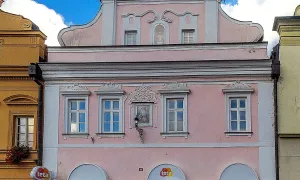

Příběhy a pověsti
Legendy, pověsti a příběhy spjaté s touto památkou
Fotografie návštěvníků
Zatím žádné fotografie. Buďte první, kdo přidá fotografii z návštěvy!
Log in a přidejte svou fotografii nebo hodnoťte.
Za ověřenou návštěvu v aplikaci získáte víc bodů — poznáme podle GPS, že jste na místě.
Reviews and comments