






Sehnoutkův dům Building
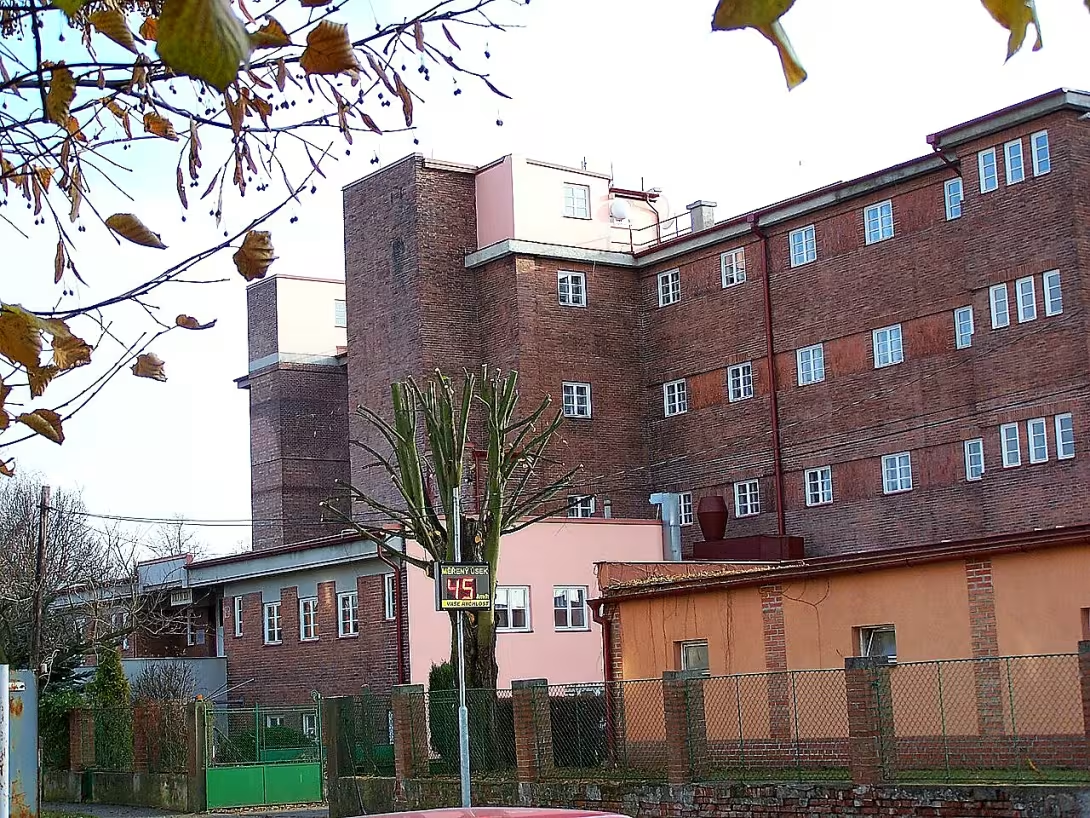
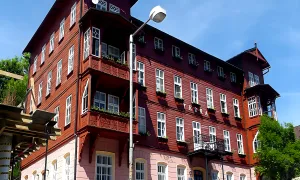
Sehnoutkův dům is a three-story functionalist building designed by Czech architect Otakar Novotný in 1927. Located on Revoluční Street, Černožice district, Hradec Králové region, this cultural monument has been protected by the National Heritage Institute since its construction.
The building was financed by Rudolf Steinský-Sehnoutka and Jaroslava Steinská-Sehnoutková (née Bartoňová) in 1926. Initially named Útulna továrních zaměstnanců, it underwent significant renovations between 1930 and 1935, transforming large halls into dormitories.
In 1936, the building was transferred to the Congregation of Sisters of the Most Holy Sacrament, who managed it until 1948. During World War II, a section of the building housed German youth from 1943 to 1945. After the war, Catholic Charities took over the property before passing it on to the District Authority in Hradec Králové in 1960.
In 2005, the building was acquired by the Královéhradecký kraj, which has since overseen its maintenance and renovation. A new wing with terraces was added in 2011, increasing the facility's capacity for residents and social facilities. In 2017, a comprehensive restoration of the original building took place.
Sehnoutkův dům features a unique functionalist design, characterized by a flat roof and oblong shape with two narrower side wings and a new elevator shaft. The building has been used as an internat and later as a home for the elderly.
Today, Sehnoutkův dům remains an important cultural monument in Černožice district. Visitors can explore its restored interior and appreciate its historical significance.
Historical milestones
- 1927
- Sehnoutkův dům was designed by architect Otakar Novotný and constructed.
- 1930
- Significant renovations took place between 1930 and 1935, transforming large halls into dormitories.
- 1936
- The building was transferred to the Congregation of Sisters of the Most Holy Sacrament.
- 1943
- A section of the building housed German youth during World War II.
- 1960
- Catholic Charities took over the property before passing it on to the District Authority in Hradec Králové.
- 2005
- The Královéhradecký kraj acquired the building and oversaw its maintenance and renovation.
- 2011
- A new wing with terraces was added, increasing the facility's capacity for residents and social facilities.
- 2017
- A comprehensive restoration of the original building took place.
Architectural development
The building is constructed from red bricks and features a flat roof. Its oblong shape has two narrower side wings and a new elevator shaft.
Historical events
1926: The building was financed by the Steinský-Sehnoutka couple
1930: The building was renamed Útulna továrních zaměstnanců
1935: The interior renovations were completed
1948: The building was taken over by Katolická charita
Owners
Manželé Rudolf Steinský-Sehnoutka and Jaroslava Steinská-Sehnoutková rozená Bartoňová (1926-1935), Kongregace sester Nejsvětější Svátosti (1936-1948), Katolická charita (1948-1960), Okresní úřad v Hradci Králové (1960-2005), Královéhradecký kraj (2005-present)
Points of interest
– The building was designed by Czech architect Otakar Novotný in 1927 and features a unique functionalist design.
– The property was initially named Útulna továrních zaměstnanců, but underwent significant renovations between 1930 and 1935.
– During World War II, a section of the building housed German youth from 1943 to 1945.
– In 2011, a new wing with terraces was added to increase the facility's capacity for residents and social facilities.
– A comprehensive restoration of the original building took place in 2017.
Guide
Show guide text
This text was created by artificial intelligence and has not been editorially reviewed. It may contain inaccuracies.
Welcome to this moment of quiet discovery. As you stand here, take a deep breath and allow yourself to truly settle into the atmosphere of this location. You are standing directly in front of Sehnoutkův dům, a structure that may appear as a silent, steady presence in the streetscape, but one that holds within its three stories a profound and complex history. As you look up at the facade, try to see past the modern world around you and imagine the various lives that have unfolded behind these walls over the last century. This building is not merely a collection of stone and mortar; it is a living chronicle of the social, religious, and political shifts that have shaped this region.
To understand why Sehnoutkův dům looks the way it does, we must travel back in time to the year 1927. This was an era of immense transformation, a time when the old ways of the nineteenth century were giving way to the bold, streamlined visions of the twentieth. It was in this spirit of progress that the Czech architect Otakar Novotný designed this building. He was a man of his time, a creator who understood that the architecture of the future should reflect the needs of a modernizing society. When the construction was completed in 1927, the building was not known by the name you use today. Instead, it served a very specific and vital social function under the name Útulna továrních zaměstnanců. It was designed as a shelter for factory workers, providing a sense of stability and order for those who were the backbone of the industrial era.
As you observe the building now, pay close attention to its architectural character. You are looking at a quintessential example of functionalism. In the world of architecture, functionalism is a philosophy that dictates that the design of a building should be based primarily upon its intended purpose. There is no unnecessary ornamentation here, no distracting flourishes or grand, empty gestures. Instead, there is a beautiful, rhythmic clarity. Notice the clean lines and the way the three stories are composed. The building communicates a sense of efficiency and purpose. However, the architecture has not remained static. Between 1930 and 1935, Sehnoutkův dům underwent a significant period of renovation. During these years, the interior was fundamentally reshaped. The large, expansive halls that originally characterized the space were transformed into dormitories. This transition is a fascinating testament to how the building adapted to the changing density and social requirements of the people living within it.
Now, let us move our attention from the physical structure to the human stories that have inhabited it. The history of Sehnoutkův dům is a tapestry of shifting identities. In 1936, the building underwent a profound spiritual transformation. It was transferred to the Congregation of Sisters of the Most Holy Sacrament. Imagine the shift in atmosphere during those years—the transition from a secular worker's shelter to a place of quiet contemplation, prayer, and religious devotion. The halls that once echoed with the footsteps of laborers must have eventually been filled with the hushed tones and disciplined rhythms of religious life.
Yet, as history often reminds us, peace is frequently interrupted by the shadows of conflict. As we move into the era of the Second World War, the building's purpose was once again altered by the tides of global upheaval. In 1943, a section of Sehnoutkův dům was used to house German youth. This period marks a heavy and complicated chapter in the building's timeline, a moment when the local landscape was inextricably tied to the movements of the war. Following the war and the subsequent decades of political change, the building continued to serve various social and administrative roles. In 1960, Catholic Charities took over the property, eventually passing the responsibility to the District Authority in Hradec Králové. Through all these transitions—from religious to secular, from wartime use to administrative function—the building remained a constant, a silent witness to the changing face of the city.
It is truly remarkable to consider how much a single site can endure. In more recent history, the building found a new era of stability and care. In 2005, the Královéhradecký kraj acquired the property, taking on the vital responsibility of its maintenance and renovation. It is thanks to this dedicated oversight that Sehnoutkův dům stands before you today in such excellent condition, recognized and protected as a cultural monument by the National Heritage Institute.
As you stand here, I invite you to ponder a small mystery of this place. Think about the sheer versatility of this design. How can a building designed for factory workers so seamlessly transition into a convent, then into a wartime residence, and finally into a protected piece of architectural heritage? It is as if the functionalist design by Otakar Novotný was so robust, so fundamentally sound, that it allowed the building to wear many different masks without ever losing its core identity. The architecture itself provided the vessel, while the people and the politics of the century provided the changing contents.
As you prepare to continue your walk, take one last look at the facade of Sehnoutkův dům. Notice how the light plays across its surfaces and how its presence anchors this part of the street. Whether you are an admirer of modern architecture or a seeker of historical truths, there is much to be gained from simply standing in the presence of such a resilient structure. Thank you for allowing me to guide you through this brief journey into the past. Please, continue your exploration of the area, and may you find many more stories waiting to be discovered around every corner.
Tips for visitors
The best time to visit Sehnoutkův dům is during the spring and summer months when the weather is mild and sunny, making it ideal for outdoor photography and exploring the surrounding area.
Visitors can park their vehicles nearby or use public transportation. For the most up-to-date information on parking and transport options, we recommend checking the official website of Sehnoutkův dům or a reliable mapping service.
When planning your visit, be sure to bring comfortable walking shoes, as you'll want to take in the stunning views from the surrounding hills. Don't forget your camera and sunscreen for a memorable experience!
For photography enthusiasts, the best spots to capture Sehnoutkův dům's unique architecture are from the north side of the building, where the morning sun casts a beautiful golden light.
If you're traveling with family, consider visiting nearby [name of nearby location], which is approximately a 30-minute walk or drive away. This charming spot offers a variety of activities and attractions for all ages.
Businesses nearby
Do you run a restaurant, accommodation, shop, museum, rental, wellness or other visitor service near this monument? Show yourself directly to the people heading to it — this is how they will see you in the app and on the web:
Events nearby
Zdroj akcí: otevřená data měst a obcí ČR (Národní katalog otevřených dat) a kalendář akcí Národního památkového ústavu.
Accommodation nearby
Themed route
Tour Route
Stop 1: Sehnoutkův dům (budova) Type: Architectural landmark Why visit: This impressive building stands out for its unique architecture and historical significance.
Stop 2: Krátká Street Type: Historic street Why visit: Take a stroll down this charming street lined with historic buildings, offering a glimpse into the past.
Stop 3: Vojenský hřbitov Type: Military cemetery Why visit: Pay respects to the fallen soldiers at this peaceful and well-maintained cemetery.
This tour route takes you through the heart of [Okolí] and offers a mix of history, architecture, and culture.
Seasonal recommendations
Spring is a wonderful time to visit Sehnoutkův dům, as the surrounding nature awakens and fresh greenery frames the excellent condition of the building. The soft, diffused light of the season is ideal for appreciating the architectural details. Visitors should dress in layers to accommodate fluctuating temperatures and consider visiting in the mid-morning to enjoy a peaceful atmosphere.
During the summer, Sehnoutkův dům is bathed in bright, intense sunlight, highlighting the vibrancy of the site. This is the peak tourist period, so it is highly recommended to arrive early in the morning to avoid the largest crowds and the midday heat. Light, breathable clothing and sun protection are essential for a comfortable experience.
Autumn brings a moody and romantic atmosphere to Sehnoutkův dům, with golden leaves providing a stunning contrast to the historical facade. The crisp air and changing light make the late afternoon the best time for photography. Practical footwear and a waterproof jacket are advised to handle the unpredictable weather of the season.
In winter, the site takes on a quiet, serene character, especially when dusted with frost or snow. The contrast between the cold exterior and the preserved interior creates a cozy feeling. Because days are shorter and opening hours may be reduced, plan your visit for the midday. Warm, thermal clothing is a necessity, and visiting during the Advent season adds a special charm to the experience.
Visualizations and artistic views


The visualisations are generated by artificial intelligence and serve as inspiration.
Photos from the area
Real photos taken near the monument


Zdroj a licence jsou uvedeny u každého snímku.
Tips from visitors
No tips yet. Be the first!
Log in and add your tip.
Sources and literature
Fotografie: Kixx / CC BY-SA 3.0 — Wikimedia Commons. The author and licence also appear when you hover over the image.
Faktickým podkladem tohoto textu byl článek na Wikipedii, jehož autory jsou přispěvatelé Wikipedie. Článek je dostupný pod licencí CC BY-SA 4.0.
Location on the map

Příběhy a pověsti
Legendy, pověsti a příběhy spjaté s touto památkou
Fotografie návštěvníků
Zatím žádné fotografie. Buďte první, kdo přidá fotografii z návštěvy!
Přihlaste se a přidejte svou fotografii nebo hodnoťte.
Za ověřenou návštěvu v aplikaci získáte víc bodů — poznáme podle GPS, že jste na místě.
Reviews and comments