



Sellnerovo hradiště Hillfort
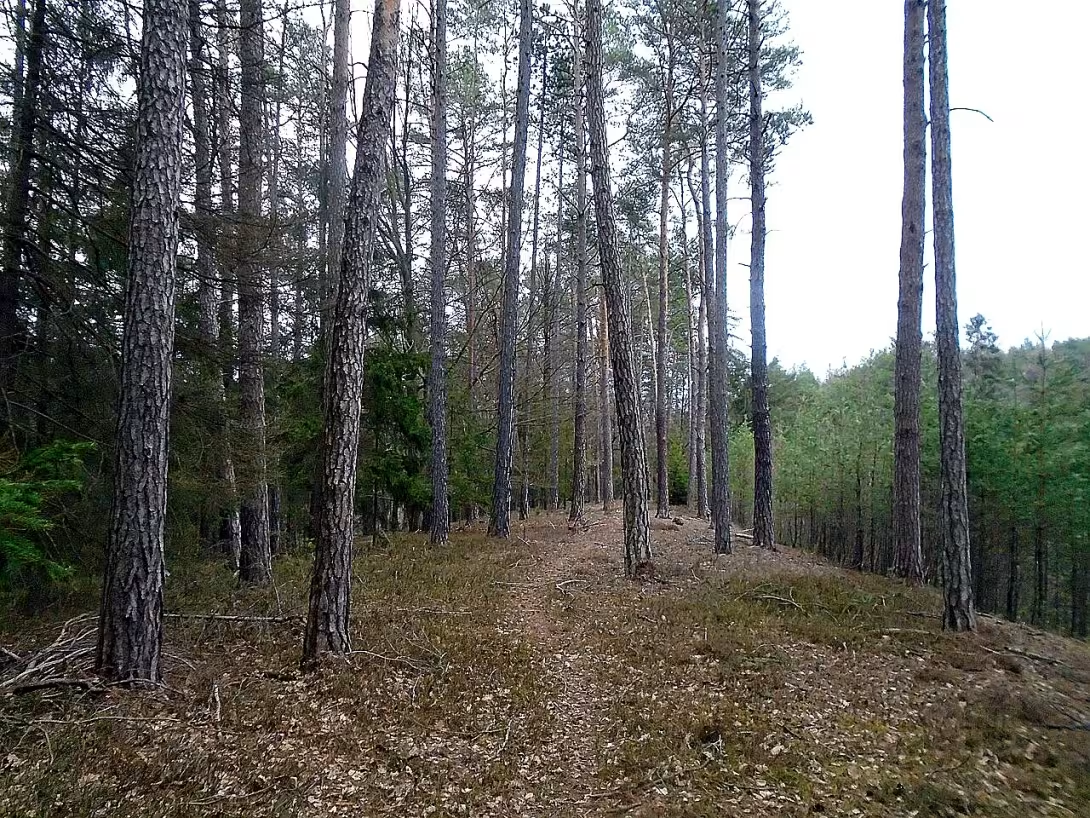
Sellnerovo hradiště is an early medieval archaeological site in the sharpness between the valley of the Strenický creek and the Nosálovské ravine in the cadastral territories of Doubravice and Nosálov. This important medieval resort, also known as the Hradiště or Doubravice / Nosálov, lies on the interface of the districts of Mělík and Mladá Byslav. Since 1958, it has been protected as a cultural monument.
There are few reports of the oldest history of the castle, but archaeological findings confirm its existence in the early Middle Ages. During the surveys, an iron axe dating back to this very period was found. Other findings include ceramic fragments from the period of the Middle Ages.
The building form of the castle corresponds to the position on a long and narrow sharpness, where there are rocky cliffs in some parts above the Strenický creek. The fortified space of 0,6 hectares is 265 metres in length and 75 metres in the widest place. The fortification consists of two transverse walls and moats. The outside wall has a length of 85 metres, a width of 9 metres and a height of up to 2.1 metres. A moat up to 7 metres wide and a depth of 2 metres is associated with it. The inner wall is 16 metres long, 2 metres wide and 0.4 metres high. Its moat is up to 4 metres wide and 1.2 metres deep.
The fort was discovered in 1897 by the teacher and archaeologist Karel Sellner, after which he bears his name, which he later awarded Eduard Štorch. In September 1909 Štorch in the magazine Time informed of the finding of two moats and announced the planned survey for 1910. The current archaeological research consisted of surface collections and small probes.
This archaeological object has its own print in literature. In a historical story by the Mysterious Knight from 1931, written by Karel Sellner, the space of an abandoned castle on the island above the Straenicka creek serves as a temporary refuge for the Knights of Nabočan. The character in the story is in the period of Regency of Ota Branibski.
Sellnerovo hradiště is today a protected cultural monument that offers insight into the history of medieval fortifications. It's a place suitable for people interested in archaeology who want to see the remains of ancient wares right in the field.
Then and now
Drag the slider to compare how the landmark may have looked when it was built with the view today.
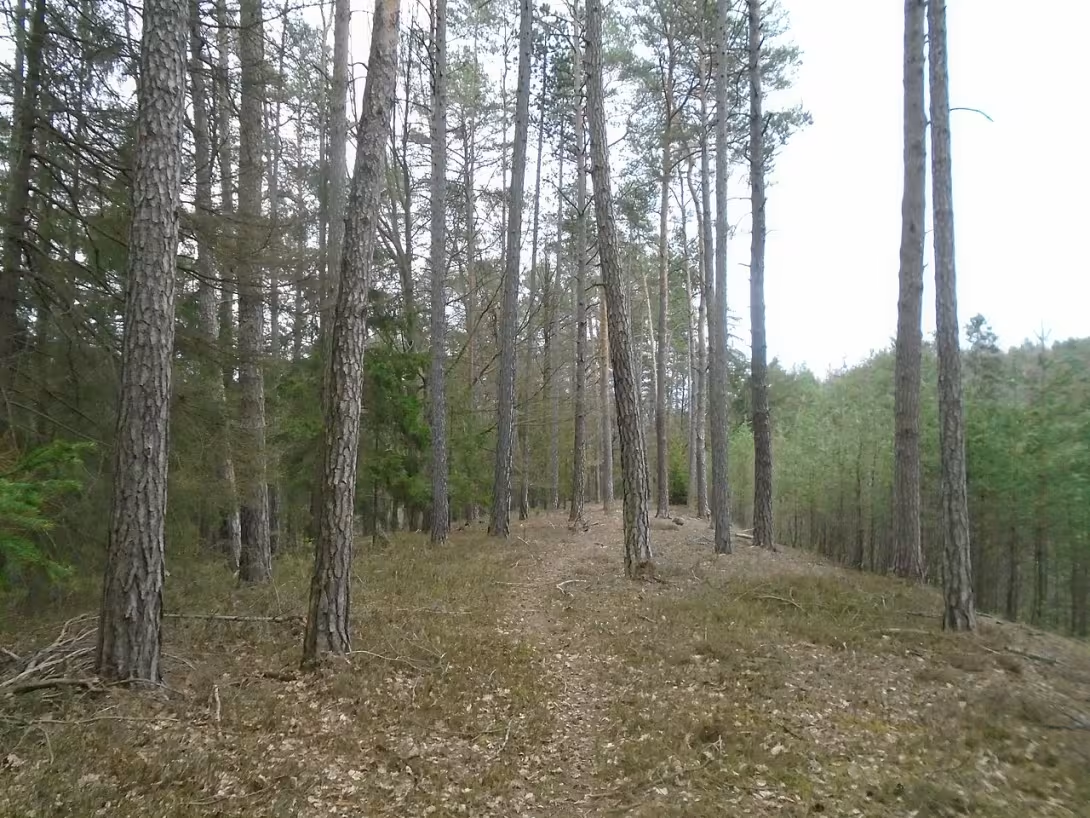

The historical appearance on the left is an AI-generated visualisation and serves as inspiration only.
Historical milestones
- 1897
- The discovery of the castle by Karl Sellner
- 1909
- Publication of the finding of the castle by Eduardo Štorchem
- 1958
- Registration of the castle in the list of cultural monuments
Architectural development
The fortification consists of an outer wall of 85 metres long and an inner wall of 16 metres long. Between the walls and around them there are trenches of different dimensions. The total area of the fortified area is 0.6 hectares.
Historical events
In 1897 the castle was discovered by Karel Sellner. In 1909 Eduard Štorch published information about finding two moats. Since 1958, the building has been protected as a cultural monument.
Points of interest
- The fort was discovered in 1897 by the teacher and archaeologist Karel Sellner. - During the surveys, an iron axe from the early Middle Ages and fragments of ceramics from the high Middle Ages were found. - The fortified space of 0.6 hectares has been protected as a cultural monument since 1958. - In the historical story of the Mysterious Knight of 1931, the castle serves as a refuge for the Knights of Nabočan. The fortification is made up of two transverse walls and moats.
Guide
Show guide text
This text was created by artificial intelligence and has not been editorially reviewed. It may contain inaccuracies.
Welcome to Sellner Castle in Katusice! If you look around you, you can see its peaceful position on the sharp cliff between the valley of the Strenický creek and the Nosálová Rivers. This historical object, which is also a cultural monument, has a unique atmosphere where the past intersects with the present.
Sellnerovo hradiště was discovered in 1897 by a teacher and archaeologist Karl Sellner. This find opened the door to an understanding of the early medieval period of our region, when this fortified fort was a common phenomenon. In 1909 the wider public learned about this discovery thanks to the work of Eduardo Štorch. Since 1958, this site has been protected as a cultural monument, indicating its historical significance.
Take a look at the archaeological clues you'll find here. The fort is situated on an area of 0.6 hectares and is characterized by its two transverse walls and moat. These passable elements can lead you to the idea of the strategic location of the castle that was designed to defend against potential attacks.
Among the key personalities associated with this place is of course Karel Sellner, whose discovery opened a new chapter in understanding our history. Eduard Štorch was an important step in the publication and recognition of this place as a valuable cultural heritage.
The interesting thing is that during archaeological surveys, an iron axe from the early Middle Ages was found along with fragments of ceramics from the high Middle Ages. These findings provide valuable information on the lifestyle and technology of the then inhabitants.
Let's move on to the other aspects of this fascinating place. In historical stories, she often appears as a room for secrets and passed on legends, which only increases her mystical touch.
I hope this guide inspired you to explore Sellner's castle again. If you have further questions or want to learn more about other historical sites, do not hesitate to ask. When we meet again at the next destination, we will explore new secrets and stories. Goodbye!
Tips for visitors
The best time to visit is spring and autumn months, when less dense vegetation better reveals the relief of early medieval fortification and allows better orientation in the field.
Due to the terrain on the sharpness and valleys, we recommend fixed shoes suitable for the field, plenty of drinking water and insect repellent.
For the best photos we recommend to come in so-called golden hours, when low light best highlights the steeple of the Strenický creek valley and the Nosálovské ravine.
With children, the fort can be turned into an archaeological game in the field. In the immediate surroundings we recommend a short walk along the Strenický creek and a survey of the Nosálovské ravine.
Frequently asked questions
Can the monument be visited?
This is an archaeological site. Often there is little to see on the ground and the land may be private. We have not verified access.
Where is the monument?
Location: Katusice, Středočeský kraj. The map on this page shows the exact spot.
Why is the monument protected?
It is listed in the Central List of Cultural Monuments of the Czech Republic as a cultural monument (register no. 1000146044).
Businesses nearby
Do you run a restaurant, accommodation, shop, museum, rental, wellness or other visitor service near this monument? Show yourself directly to the people heading to it — this is how they will see you in the app and on the web:
Nearby
The fort is situated on the island between the valley of the Strenický creek and the Nosálovský Rivers.
Accommodation nearby
Themed route
1. Strenický brook (Valley) - Walk along the creek serves as a pleasant entrance to the area and offers peaceful nature. 2. Sellnerovo hradiště (Archaeological site) - The main point of the program where you can explore the remains of ancient settlements on a strategic island. 3. Nosálovská ravine (Rift) - The natural ending of the road, which forms a natural barrier to the castle and fascinates its groove in the field.
Seasonal recommendations
In the spring the castle comes alive with the first flowers and fresh greenery, which gives the place a feeling of a new beginning. The soft spring light gently highlights the relief of the terrain and the waking nature creates an optimistic atmosphere. We recommend moisture-resistant shoes because the road can be muddy after the snow melts. Ideal is a visit in the morning when the air is purest and the number of people still low.
The summer season brings dense vegetation and intense sunlight, which fills the space with heat. The atmosphere is full of energy, but the terrain can be parched and the sun hot on hot days. Due to the increased number of visitors in the main season, we recommend that you come first thing in the morning to avoid heat and crowds. Don't forget the headgear, sunscreen, and plenty of fluids.
In autumn, the surroundings of Katusic turn into golden and brown tones, while morning fog supplies archeological sites with a mysterious and melancholic touch. It's the best time for quiet contemplation over history in a quiet environment. Due to the variable weather, choose layered clothes and waterproof jacket. At this time there are significantly fewer passengers than in previous months.
In winter, especially in the snow cover, the outlines of the fort are most visible due to the absence of leaves on the trees. There is absolute calm and a frosty, clean atmosphere that underlines the desolation of an ancient place. It is necessary to have warm, warm shoes and gloves. Due to the short days, plan your trip in the morning to use enough daylight.
Visualizations and artistic views


The visualisations are generated by artificial intelligence and serve as inspiration.
Tips from visitors
No tips yet. Be the first!
Log in and add your tip.
Sources and literature
Photos: Gandalf222cz / CC BY-SA 4.0 — Wikimedia Commons. The author and licence also appear when you hover over the image.
Faktickým podkladem tohoto textu byl článek na Wikipedii, jehož autory jsou přispěvatelé Wikipedie. Článek je dostupný pod licencí CC BY-SA 4.0.
Location on the map






Příběhy a pověsti
Legendy, pověsti a příběhy spjaté s touto památkou

Fotografie návštěvníků
Zatím žádné fotografie. Buďte první, kdo přidá fotografii z návštěvy!
Log in a přidejte svou fotografii nebo hodnoťte.
Za ověřenou návštěvu v aplikaci získáte víc bodů — poznáme podle GPS, že jste na místě.
Reviews and comments