



Ševčinský důl Mine
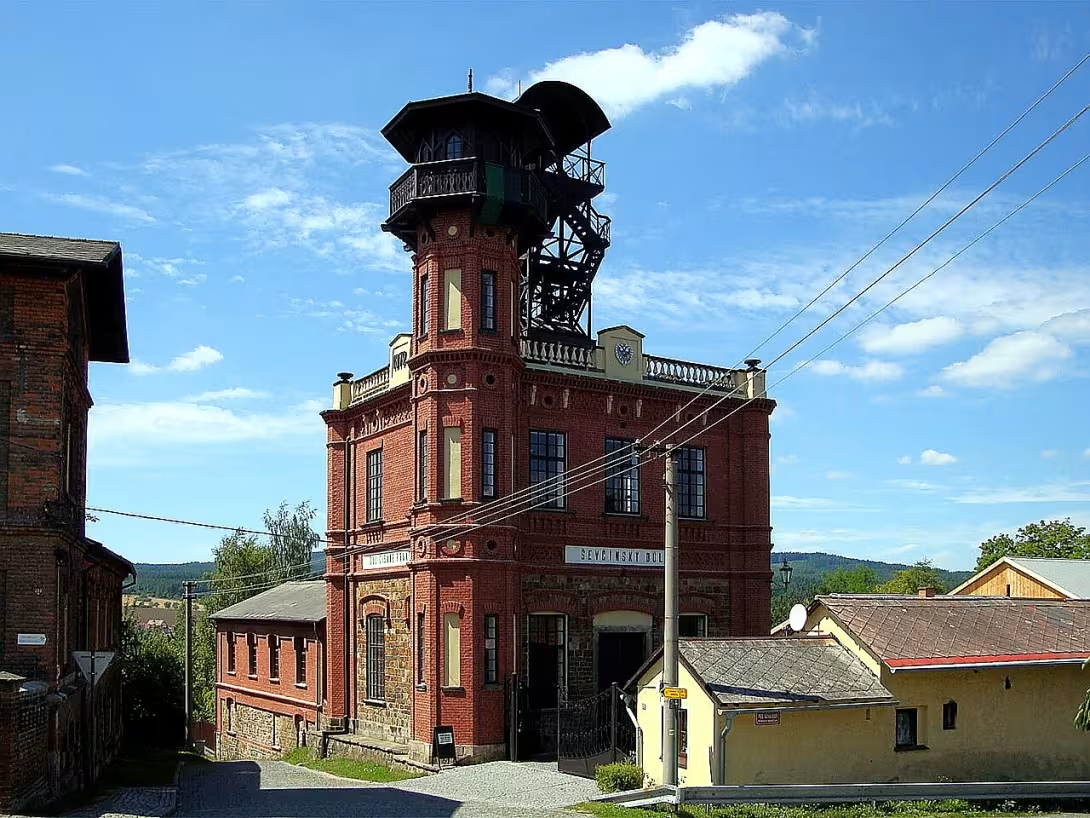
Ševčinský důl is a historic mining site in Příbrami, known for its deep pit and rich past. It is located in the Brno Mountains on the Příbram district in the Central Bohemia region. The mine is remarkable with its depth of 1 108.2 meters, reached in 1914, and its rich history, which dates back to 1813.
Ševčinský důl was based on the impulse of the upper office, which suggested that a new pit should be established on the martyrdom vein. The pump shaft was already dug in around 1600. For this mine, the very positive fact was that the vein led down vertically. So many horizontal corridors might not have been pressed. The Ševčinská stol was also created, which the ore was getting into the theatre.
The mine was first named Emperor Franz Joseph I., then Emperor Franz Joseph I. and from 1918 to 1919 Ševčinský důl. The mining in the Ševčín mine was completed in 1979. The mine has 32 floors and is connected on the 2nd floor with the Hereditary Stole with other mines.
The mine has a 37.5-metre-high mining tower building, one of the most well-preserved and famous. On the courtyard of the mine there is a permanent exhibition of mining trucks and locomotives which have been used both for transporting ore and for transporting miners. In recent years, the route for the mine train has been reconstructed along the surface from the Shevcinsky mine to the mouth of the Shevcinsky shaft.
Today Ševčinský důl belongs to the administration of the Mining Museum Příbram, which is located not far from here. The mine was destroyed in 1989 when it was buried on the stopper at a depth of 47 metres and the deafening was covered with a concrete plate. It is possible to climb up into the tower as part of the tour.
Ševčinský důl is remarkable with its deep pit and rich past. It is remarkable by its architecture, which is typical of the March mining. It is remarkable by its history, which dates back to 1813. On the Ševčín mine there is an exhibition of mining trucks and locomotives and there is also a reconstructed route for the mining train.
Then and now
Drag the slider to compare how the landmark may have looked when it was built with the view today.
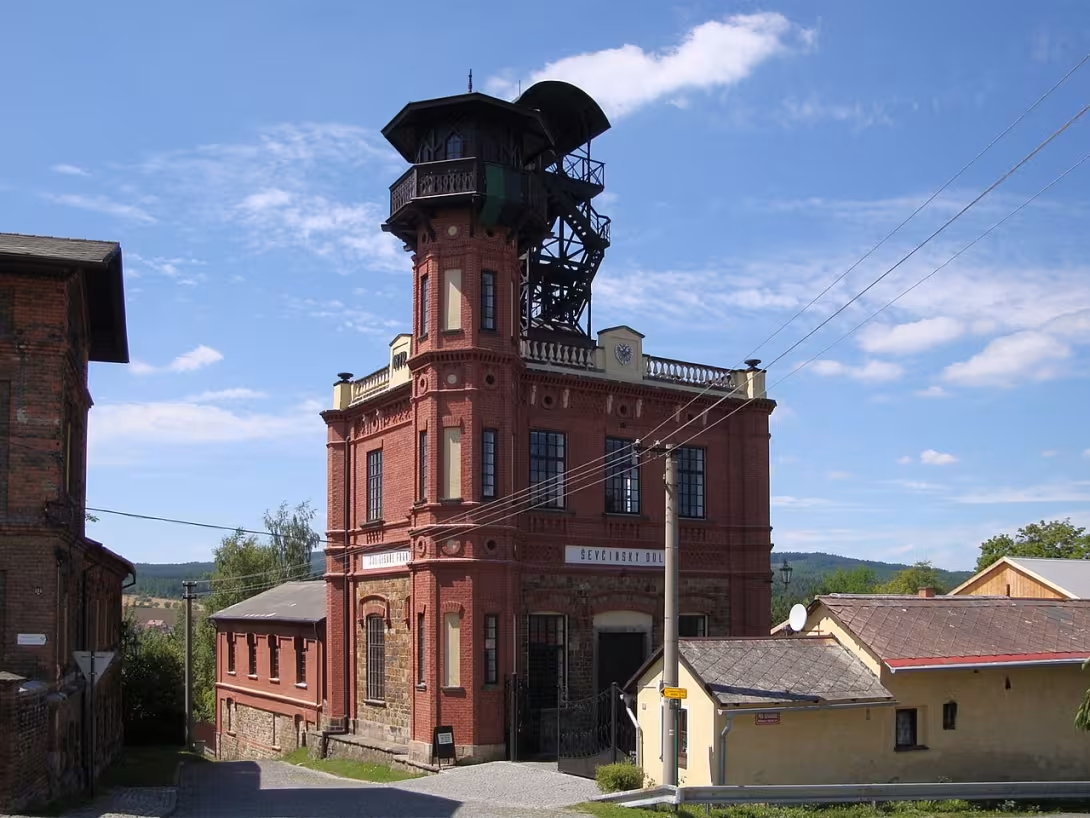
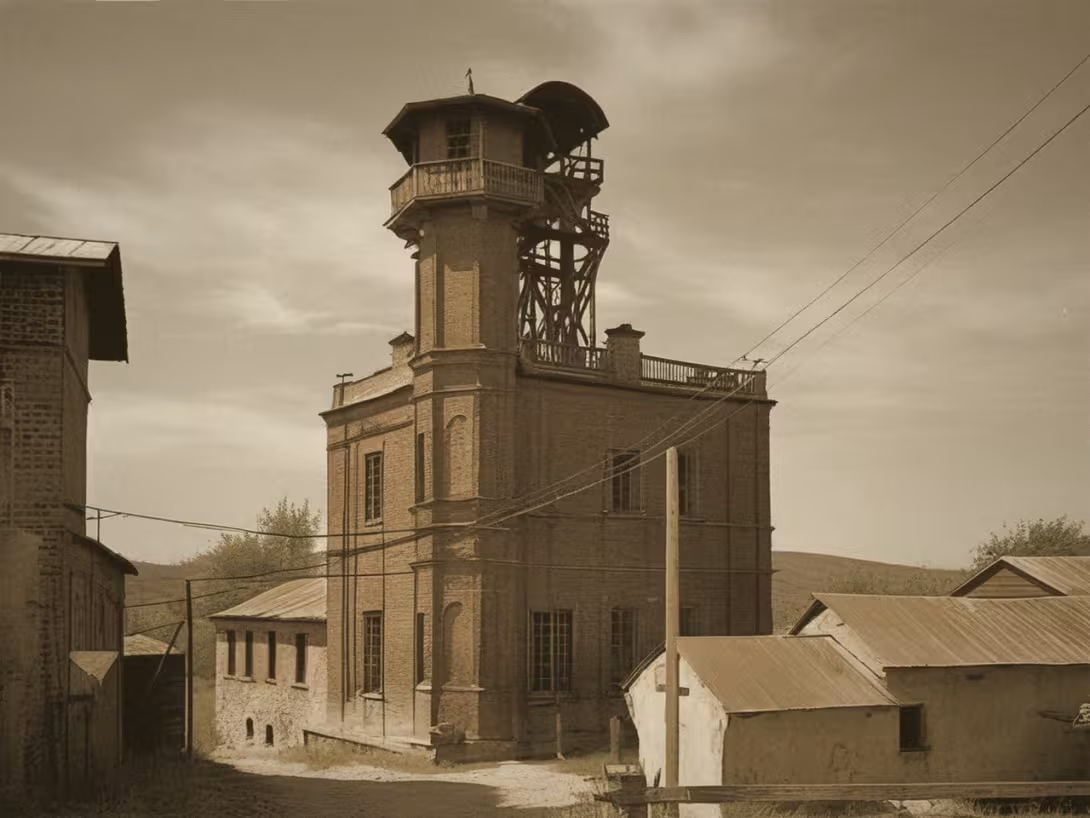
The historical appearance on the left is an AI-generated visualisation and serves as inspiration only.
Historical milestones
- 1914
- Achieving maximum depth of 1 108,2 meters
- 1918
- Change the mine name to Ševčinský důl
- 1979
- Termination of mining at the Ševčín Mine
Architectural development
The mine has 32 floors and, like most of the March mines, the 2nd floor is connected by the Hereditary Stole with other mines.
Historical events
Establishment of the mine in 1813
Achieving maximum depth of 1 108.2 meters in 1914
Owners
Mining Museum Příbram
Points of interest
Ševčinský důl is remarkable for its deep pit and rich past. - The mine has a 37.5-metre-high mining tower building, one of the most well-preserved and famous. - There is a permanent exhibition of mining trucks and locomotives in the courtyard of the mine. - On the Ševčín mine there is an exhibition of mining trucks and locomotives and there is also a reconstructed route for the mining train. - The mine was destroyed in 1989 when it was buried on the stopper at a depth of 47 metres and the deafening was covered with a concrete plate.
Guide
This guide is narrated by a synthetic voice generated by artificial intelligence.
Show guide text
This text was created by artificial intelligence and has not been editorially reviewed. It may contain inaccuracies.
The Ševčinský Mine on Březové Hory in Příbram was used for mining silver and lead ore. Today, no mining takes place there anymore. It is also called the Ševčiny Mine or Ševčínský Mine. Originally it bore the name Emperor Francis the First Mine, later Emperor Francis Joseph the First Mine. In colloquial speech it was called francshachta. It received its current name between 1918 and 1919.
The mine was established in 1813 on the initiative of the chief mining authority. They proposed founding a new shaft on the Mučednická vein. Around 1600, a pump shaft had already been dug at the same location. One favorable circumstance supported the establishment of the mine: the vein ran vertically downward, so there was no need to drive many horizontal passages. The Ševčinská gallery was also created, through which ore was transported to the processing plant.
In 1914, the mine reached its greatest depth of 1108.2 meters. The shaft has a profile of 5.4 by 3 meters. Like most mines on Březové Hory, this one is also connected on the second level to the other mines by the Dědičná gallery.
After the end of the First World War, mining ceased and resumed only after the Second World War ended. It definitively ended in 1979. Ten years later, in 1989, the mine was liquidated. The shaft was filled to a plug at a depth of 47 meters and the pit was covered with a concrete slab.
Today the Ševčinský Mine is managed by the Příbram Mining Museum, which is located nearby. The headframe building is 37.5 meters high and is among the best preserved and most well-known. On the mine yard there is a permanent exhibition of mine cars and locomotives. They served for transporting ore and miners. In recent years, the route for the mine railway was also reconstructed. It runs along the surface from the Ševčinský Mine to the opening of the Ševčinská shaft.
Tips for visitors
The best time to visit is spring and autumn months, when the weather is mild and the surrounding landscape in Břežové Hory looks best. Do not forget to wear solid shoes and warm clothes into the mine areas, because it is much colder in the depth of the shaft in summer than on the surface.
For best photos we recommend focusing on industrial structures and depth of pit, ideally in bright daylight, which will highlight the details of historical arrangements.
With children, you will appreciate the educational nature of tours which explain clearly the history of mining. During the one-day trip you can visit Příbram or explore the surroundings of the Bředové Hor, which are places in the immediate vicinity of the mine.
For the smooth operation of the visit we recommend monitoring the actual notification of the Mining Museum, which manages the entire complex and ensures a safe guide of visitors to the structures of the mine.
Frequently asked questions
Can the monument be visited?
Some buildings of this kind are open for guided tours, others serve another purpose or are privately owned. We have not verified whether and when this monument is open – please ask the operator.
What are the opening hours and admission?
We have not verified the opening hours or admission. Current information is published by the operator. Official website: https://www.muzeum-pribram.cz
Where is the monument?
Location: Třemošenská 292, Příbram VI-Březové Hory, Příbram, Středočeský kraj. The map on this page shows the exact spot.
Why is the monument protected?
It is listed in the Central List of Cultural Monuments of the Czech Republic as a national cultural monument (register no. 21574/2-2845). It is protected as part of a larger listed ensemble.
For kids
More than 213 years ago, when our grandparents were still young and everything around them was new and mysterious as a mystery, adventure began underground. In 1813, people realized that in the depths of the earth lies treasure: silver and lead ore, which they could use to make money and containers. So they decided to build an Ševčinský důl - a mysterious underground cave where people had to enter as a remote world.
Businesses nearby
Do you run a restaurant, accommodation, shop, museum, rental, wellness or other visitor service near this monument? Show yourself directly to the people heading to it — this is how they will see you in the app and on the web:
Events nearby
Zdroj akcí: otevřená data měst a obcí ČR (Národní katalog otevřených dat) a kalendář akcí Národního památkového ústavu.
Nearby
Příbram, March Mountains
Accommodation nearby
Themed route
- Ševčinský důl - type: historic mine. Start here because the monument gives the whole trip a mining framework and represents a specific location associated with the mining past of the Bředové Hor.
- March Hory - type: village. Continue to the village and complete the mine tour by looking at the mining atmosphere and the local context that helps to better understand the history of the mine.
- Příbram - type: city. Complete the route in Příbrami, where you can plant the mine and the Břežové Hora in the wider story of the Trámské mining and historical development of the region.
Seasonal recommendations
Spring: In spring months, the mine is surrounded by awakening nature and temperate temperature, creating a quieter atmosphere suitable for tours. The entrance gate and the surrounding area soon fill fresh green shades while the underground remains cold and moist. It is recommended to bring a light jacket and conductive shoes as the inputs may be wet after rain. It is advisable to avoid crowds earlier in the morning or after noon when tourism is declining.
Summer: In the main summer season the attendance is the highest, so it is advisable to come right at the opening to avoid queues and heat above the ground. Underground spaces offer a pleasant cold, but the surface parts heat strongly. It is recommended to helmet and slightly breathable clothes, with emphasis on sun protection while waiting outside. The afternoon hours are the most intense, therefore the earlier arrival ensures a calmer experience.
Autumn: The light changes in autumn and the landscape receives gold and brown tones, which adds a specific melancholy atmosphere to the walk around the mine. The wind and any fog around the mining site underscore the historical darkness of the site. Due to the rain in October, it is necessary to have a water helmet and durable shoes. Visitors meet with fewer visitors, ideally at the beginning of the week, when space is looser.
Surface roads can be ice or snow, so the shot on the shoes is an advantage. The atmosphere of the mine in the grey sky and fog seems mysterious, especially in advent time, when the surroundings are decorated with Christmas lights. Visiting in the morning helps prevent freezing.
Visualizations and artistic views


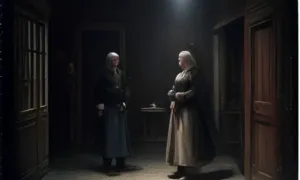
The visualisations are generated by artificial intelligence and serve as inspiration.
Photos from the area
Real photos taken near the monument


Zdroj a licence jsou uvedeny u každého snímku.
Tips from visitors
No tips yet. Be the first!
Log in and add your tip.
Sources and literature
Photos: Václav Bešťák / CC BY-SA 3.0 — Wikimedia Commons. The author and licence also appear when you hover over the image.
Faktickým podkladem tohoto textu byl článek na Wikipedii, jehož autory jsou přispěvatelé Wikipedie. Článek je dostupný pod licencí CC BY-SA 4.0.
Location on the map
More monuments – Příbram VI-Březové Hory
Show all in the municipality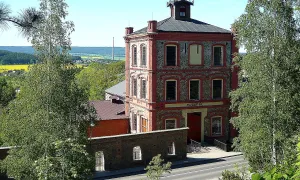




Příběhy a pověsti
Legendy, pověsti a příběhy spjaté s touto památkou
Fotografie návštěvníků
Zatím žádné fotografie. Buďte první, kdo přidá fotografii z návštěvy!
Log in a přidejte svou fotografii nebo hodnoťte.
Za ověřenou návštěvu v aplikaci získáte víc bodů — poznáme podle GPS, že jste na místě.
Reviews and comments