






šibenice Ruin
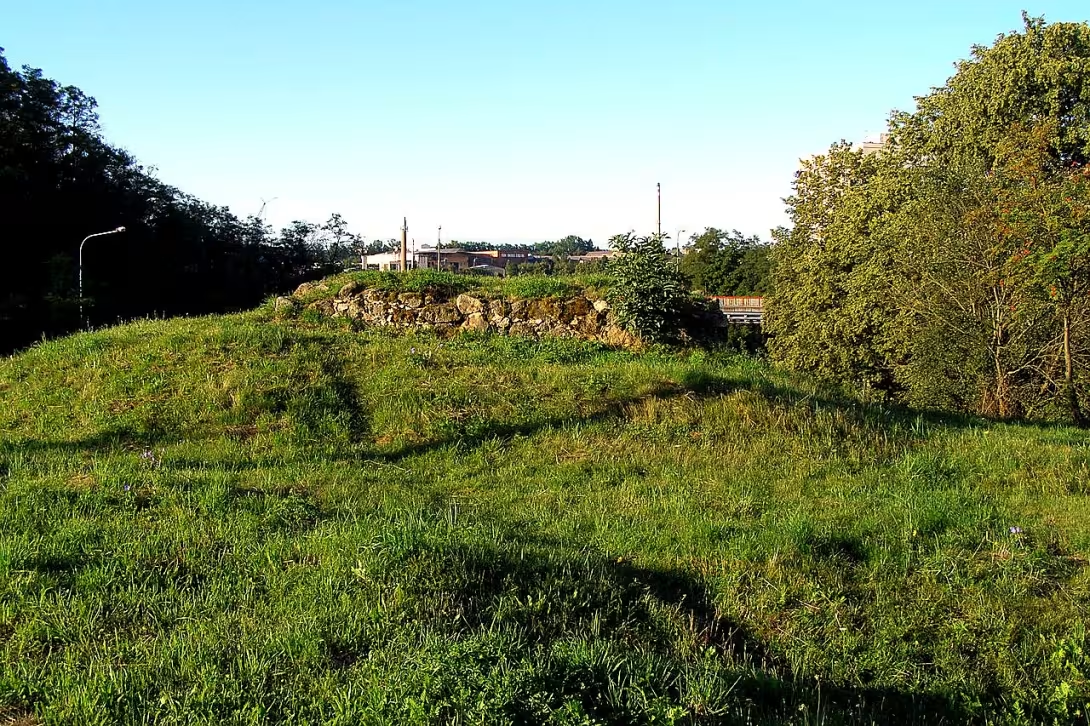
Gibbet in New Town, Třebíč district, Kraj Vysočina, stands as a gloomy relic of medieval justice. Published in 1572, it served as a place for public executions intended to avert crime by fear. Today there is only a grassy and stone platform without wooden structures. This monument reflects the harsh reality of historical punishment.
The origin of gibbet is related to the acquisition of royal city rights in Třebíči in 1335, which included the right to the death penalty. These rights were granted by Markgraf Karel, later Emperor Charles IV. The location was strategically chosen for its visibility from the city and surrounding roads to serve as a public deterrent. Třebíč, despite the lack of its own executioner, borrowed one from Znojmo, who highlighted regional cooperation in judicial matters.
The original construction consisted of a square platform with corner columns approximately 6 metres high. These columns supported wood beams used for hanging. Over time, wood components were dismantled and reconsidered after the abolition of the death penalty. The remaining oblong stone platform is 584 x 572 cm, with walls about 93 cm wide and its highest point 118 cm on the west wall.
The key events associated with this site include the execution of Jan Chrome in 1571. Due to his poor condition, he was executed instead of hanging, which was highlighted in historical records. In 1572, Duchan Kalab and his brother-in-law were executed here; She was stabbed and buried alive. These events underline the gloomy history of the web and various methods of execution.
Today the gibbet is a cultural monument in the middle of urban development on a small hill between Kiev and Rafael in New Town, Třebíči. The absence of original wooden structures leaves only a grassy and stone platform, which offers visitors a riveting reminder of past court procedures. Its historical importance makes it a convincing place for those interested in the development of justice and punishment.
Visiting this monument provides insight into the sharp reality of medieval justice systems and their impact on society. It is proof of the history of the region and it serves as an educational resource which calls for a reflection on how far we have come in our understanding of human rights and legal procedures.
Then and now
Drag the slider to compare how the landmark may have looked when it was built with the view today.
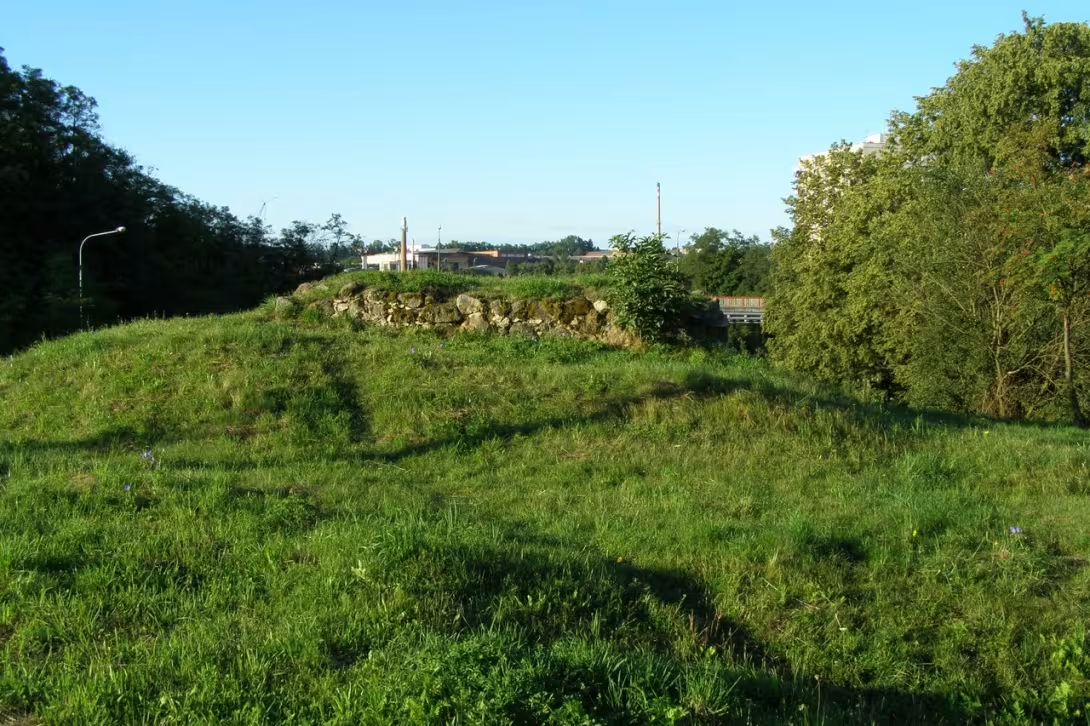

The historical appearance on the left is an AI-generated visualisation and serves as inspiration only.
Historical milestones
- 1571
- John Chromé was executed instead of hanging because of his ill condition.
- 1572
- Duchan Kalab and his sister-in-law were executed; She was stabbed and buried alive.
Architectural development
The original structure consisted of a platform square with corner columns approximately 6 meters high. These columns supported wooden beams used for hanging executions. Over time, wood components were dismantled and reconsidered after the abolition of the death penalty.
Historical events
In 1571, Jan Chromé was sentenced to death by hanging, but was executed because of the poor condition of gibbet, which in that time highlighted his worsening condition.
In 1572, Duchan Kalab and his brother-in-law were executed here; She was stabbed and buried alive.
Points of interest
- Although gibbet was built in 1572, its origin is linked to Třebíč's acquisition of royal city rights in 1335, provided by Markgraf Karel, who later became Emperor Karl IV. This link underlines how medieval legal privileges have often been linked to broader political developments.
- The site had no dedicated executioner and instead borrowed one from Znojmo, which illustrates the unique form of regional cooperation in court matters during this period, which might seem surprising given the severity of the executions.
- Despite its intended purpose as a deterrent, gibbet led in 1571 to an unusual way of executing John Chromé. It was beheaded rather than hanged, which shows how infrastructure restrictions could change standard procedures.
- Different methods of execution in this place, such as impaling and burying alive, reflect diverse and often brutal approaches to the death penalty in the Middle Ages, which offer sharp contrast to modern legal systems.
- After the abolition of the death penalty, the wood parts of the gibbet were dismantled and replaced. This reuse underlines how materials from the structures associated with death can be incorporated into everyday life, which symbolizes the transition from such hard practices.
Guide
This guide is narrated by a synthetic voice generated by artificial intelligence.
Show guide text
This text was created by artificial intelligence and has not been editorially reviewed. It may contain inaccuracies.
Welcome to the historic site of gibbet in New Town, a sharp reminder of medieval judicial practices nestled in the district of Třebíč region Vysočina. As you stand here, imagine the grassy doorknob before you, once part of a more impressive structure that served as a tool for public executions.
Gibbet was built in 1572, its origin deeply rooted in the legal privileges granted by Třebíči, when he obtained royal city rights from Markgraf Karl in 1335. These rights were later confirmed by Emperor Charles IV, who links the existence of this site to the important political development of this time. His aim was to avert crime by making an example of those who opposed the law.
For a while, focus on what's left today - a grassy stump and a stone platform. These remains whisper stories of their past, where once there were wooden structures that had already fallen apart. The absence of these elements adds a layer of festivities that reflects the harsh reality of historical punishment.
This site contains stories of remarkable executions that took place here. In 1571 Jan Chromé was chopped off rather than hanged because of the poor condition of gibbet - which is proof of its initial insufficiency. The following year, in 1572, Duchan Kalab and his brother-in-law faced their gloomy fates; She was stabbed and buried alive, a freezing reminder of the seriousness of justice at that time.
An interesting aspect of this site is how it connects with larger historical stories. Although it was built in 1572, its importance follows the acquisition of royal urban rights in Třebíči and underlines how medieval legal privileges were often linked to political developments. This link underlines the importance of understanding local history in a broader context.
At the end of your visit, I urge you to think about the stories and histories that this site embodies. Let it inspire a deeper examination of the past and its impact on our presence. Thank you for joining me in revealing layers of history in this interesting place.
Tips for visitors
Best time to visit gibbet in New The city is at the end of spring or early autumn when the weather is mild, so it is comfortable for walking around the place. These seasons also offer softer lighting conditions ideal for photography, capturing historical essence without hard shadows. In addition, a visit outside the top tourist season can provide a calmer experience that will allow you to appreciate the festive atmosphere of this medieval relic in peace.
When visiting gibbet, consider bringing comfortable walking shoes as you will probably explore the surrounding urban area on foot. The camera is recommended to capture unique historical architecture and the atmosphere of the site. In addition, carrying water and perhaps light snacks can improve your visit, especially if you plan to spend more time exploring nearby attractions.
Photographing enthusiasts will find several places around gibbets that offer convincing compositions, especially during the golden hour of sunrise or sunset when the light is warm and soft. The small hill on which the gibbet stands provides a view of the capture of the construction itself and its urban surroundings. Keep in mind that you need to respect any signal regarding the limitations of the photograph.
For those interested in further discovery, New The city offers several attractions within a 30-minute walk or a short drive from the gibbet site. Visitors can explore the surrounding streets of Kiev and Raphal for local shops and cafés that offer the taste of culture and history of the area. Although no specific other sites are listed in this guide, these areas provide an opportunity to experience the everyday life of New Town.
Frequently asked questions
Can the monument be visited?
This is a ruin. Such sites are often freely accessible, but some can only be visited with a guide or are closed for safety reasons. We have not verified the current situation – take care and respect any restrictions.
Where is the monument?
Location: Na spravedlnosti, Nové Město, Třebíč, Nové Město (Praha 8), Kraj Vysočina. The map on this page shows the exact spot.
Why is the monument protected?
It is listed in the Central List of Cultural Monuments of the Czech Republic as a cultural monument (register no. 34845/7-3155).
Businesses nearby
Do you run a restaurant, accommodation, shop, museum, rental, wellness or other visitor service near this monument? Show yourself directly to the people heading to it — this is how they will see you in the app and on the web:
Nearby
Located on a small hill between Kiev and Rafael streets in New Town, Třebíči, is surrounded by urban development without significant natural elements in close proximity.
Accommodation nearby
Themed route
Thematic walking tour: Ruins šibenice and surroundings
1. Ruins šibenice * Type: * Historic site This site, located on a small hill between Kiev and Rafael streets in New Town, offers visitors a view of the historical past of the area. These ruins are a pitiful reminder of the judicial practices that once took place here, and provide educational experience for those interested in local history.
2. Kiev Street * Type: * Urban research A walk along Kiev Street provides insight into urban development around the plains. This street is a testament to the modern growth of New Town, which offers contrast between historical and contemporary architecture, which enriches understanding of the city's development.
3. Rafael Street * Type: * Cultural sidewalk To Kiev Street, Rafael Street complements the survey with its own unique charm. As visitors walk through this street, they can appreciate how they connect different parts of New Town, serve as a cultural artery that combines various historical and modern elements within the city.
4. Intersection of the streets of Kiev and Rafael * Type: * Observation point At the crossroads where these two streets meet offer excellent views of the surrounding urban landscape. It provides a panoramic view of the New Town, which allows visitors to think about how the city has grown around its historical monuments such as the šibenice gusts.
5. Local shops and cafés * Type: * Community involvement Scattered along the streets of Kiev and Rafael are local shops and cafés that add life to the tour. These facilities offer the taste of local culture, cuisine and hospitality, giving them ideal places for visitors to relax and join the community after exploring historical monuments.
This walking tour not only highlights the ruins of šibenice, but also attracts visitors to the vibrant urban environment of New Town and offers a comprehensive experience that combines history with modern life.
Seasonal recommendations
Spring: The šibenice Tower in New Town will offer spring for this historic place, where trees count the amount and the time manifested from a lubricating sleep. The sunny rays of the projection were illuminated by the heart of a foggy spirit that gives the ruin a romantic look. At this time, the atmosphere is calm and peaceful, with temperatures usually between 10 ° C and 20 ° C, ideal for ordinary walks. Inventory subjects should not be subjected to inspection in a variety of layers because the morning and evening can be cold. Stop crowds are not too big, it comes to visit early in the afternoon to be used in the sun without promising temperatures.
Summer: The šibenice in New Town is a popular cell for its own sources looking for an escape from urban life. Sunny day and warm weather adjoining large crowds of tourists who advise on winning the vast landscape of Highlands. Due to higher temperatures, the morning or later evening is supplied to prevent strong sun and excessive heat. Wall-mounted units should be included in the calculation in a light, rainbow-like, unlimited frame and supplement of drinking second milk or water. This time of year offers ideal support for photographic and eventual history.
Autumn: In autumn, šibenice in the New Town offers a form of painted leaves that passes the book to the ruins. The atmosphere is calm and quiet with mild temperatures of about 10 ° C to 15 ° C, which makes autumn ideal for high-profile and auxiliary history without the need for large crowds. Intellectual subjects should be included in the present suits with an advanced style because they are designed and can be part of the frontal style. This Decision is intended for use in preparations for the promotion of colour society.
Winter: Winter national value šibenice offers the amount to be reported for significant changes and one-way access to the ruins under the snow rain. The atmosphere is quiet and calm, with temperatures often below 0 ° C, which can transfer an unforgettable experience from the snow-covering historical structure. They should be put into service in warm and insulating clothing, including bones, wide gloves and ochranian shoes. This decision offers a calm and introspective experience for those to be used taking into account that it is a contract to be included in the calculation if necessary.
Visualizations and artistic views


The visualisations are generated by artificial intelligence and serve as inspiration.
Photos from the area
Real photos taken near the monument


Zdroj a licence jsou uvedeny u každého snímku.
Atmosphere of the place
This atmospheric visualisation of the place and period was generated by artificial intelligence. It is not real footage of the location.
Tips from visitors
No tips yet. Be the first!
Log in and add your tip.
Sources and literature
Photos: Nostrifikator / CC BY-SA 3.0 — Wikimedia Commons. The author and licence also appear when you hover over the image.
Faktickým podkladem tohoto textu byl článek na Wikipedii, jehož autory jsou přispěvatelé Wikipedie. Článek je dostupný pod licencí CC BY-SA 4.0.
Location on the map

Příběhy a pověsti
Legendy, pověsti a příběhy spjaté s touto památkou
Fotografie návštěvníků
Zatím žádné fotografie. Buďte první, kdo přidá fotografii z návštěvy!
Log in a přidejte svou fotografii nebo hodnoťte.
Za ověřenou návštěvu v aplikaci získáte víc bodů — poznáme podle GPS, že jste na místě.
Reviews and comments