



Siebertův mlýn Water mill
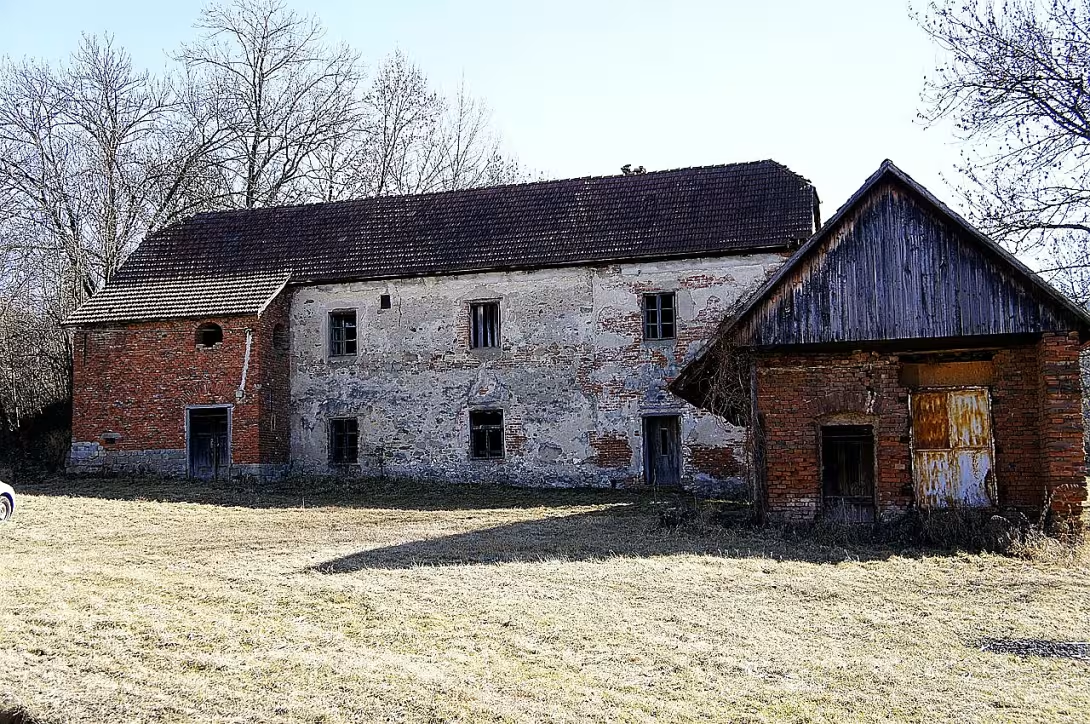
Siebert Water Mill in Roštín is a historic building situated on the Roštín River, whose existence has been documented since 1381. This monument is important for its long historical duration and gradual technological development, which includes reconstruction in the 18th century as well as modernization of electric power in 1936.
The oldest beginnings of the mill were preserved little, but the first historical mention of it dates back to 1381. In the 18th century, the building was rebuilt. In 1930, the mill also mentioned the operation of the saw, but the mill ceased to exist in later years.
It is an architectural building that includes a residential part. The building is covered with a halibut roof with a burnt cover. The mill building was originally adjacent to the economic building on the ground plan L. Today, only part of the brick masonry is preserved from this system, which is covered with a burnt bag and has wooden shields.
From the point of view of technical equipment the mill was previously equipped with a water wheel for the upper water. The water was brought to him by a drive from a wooden lake in Olšinka, which was approximately 300 meters above the mill. A wooden trough of 25 cm from a smaller water tank built northwest of the object led to the mill. This round had a diameter of 422 cm, a width of 82 cm and a power output of 3 kW at a drop of 5.7 meters. One milling stool was preserved from the then milling plant from 1936 for scrapping and the water wheel shaft was preserved.
In 1936 there was a fundamental change in operation when the mill was modernized and rebuilt to electric power. From 1958 to 1987 the building was protected as a real-estate cultural monument of the Czech Republic.
Siebertův mlýn is a valuable witness to the history of water management in this area. For visitors an interesting view of technical history and gradual development from traditional water propulsion to more modern solutions.
Then and now
Drag the slider to compare how the landmark may have looked when it was built with the view today.
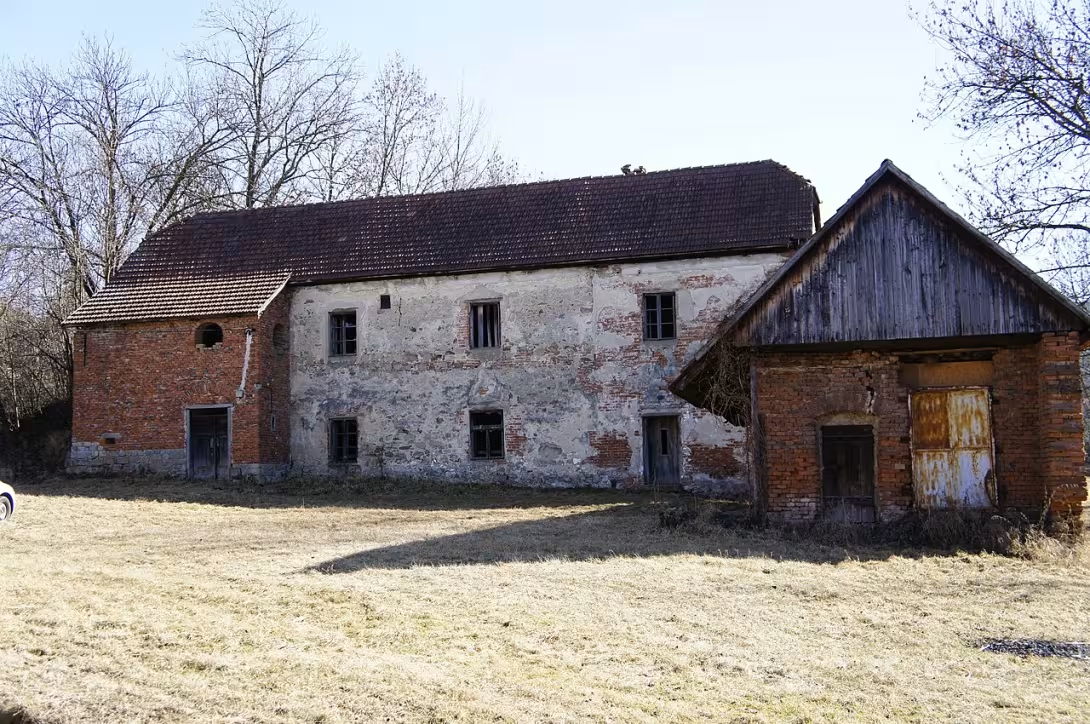
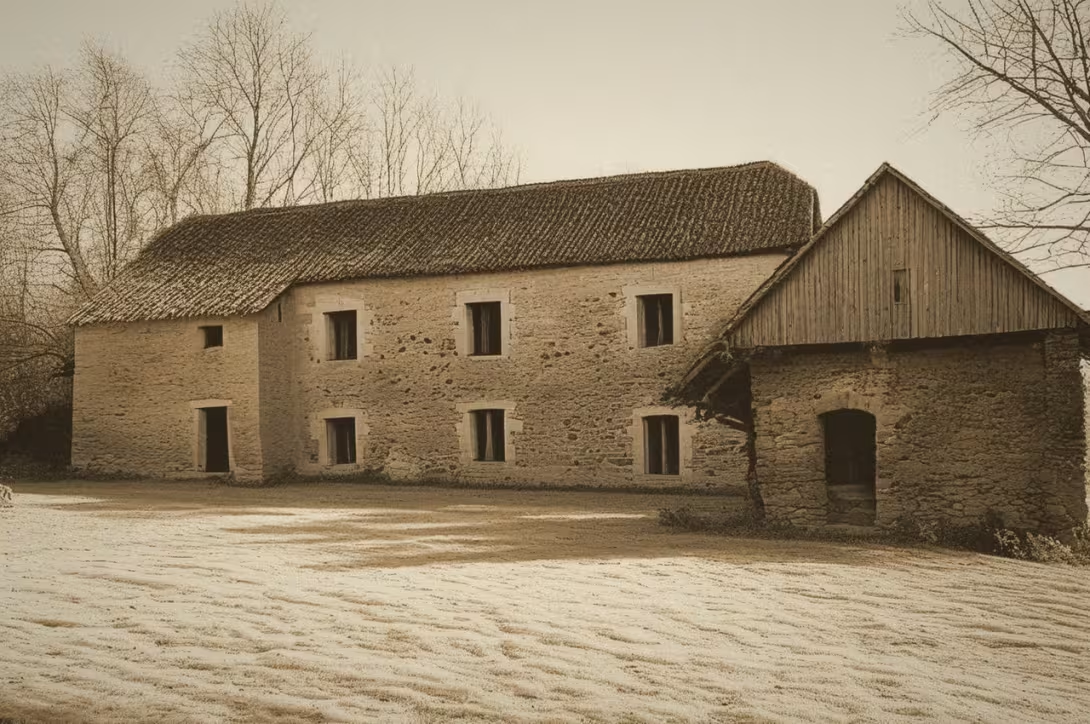
The historical appearance on the left is an AI-generated visualisation and serves as inspiration only.
Historical milestones
- 1381
- first mention of the mill in Rošín
- 1930
- at the mill is indicated saw
- 1936
- electric power modernization and conversion
- 1958
- start of protection as a real cultural monument
- 1987
- termination of protection as a real cultural monument
Architectural development
In the 18th century the mill went through reconstruction. Originally it was attached to the L-shaped economic building, from which only one brick part with wooden shields remained. In 1936, the drive from the water wheel to the electric bicycle was modernised.
Historical events
1381: first mention of the mill in Rošín; 1936: Power-driven modernization and conversion.
Points of interest
- The existence of the mill has been documented since 1381. - In 1936, the mill was modernized and rebuilt to electric power. - In 1930, the mill was mentioned as the operation of the saw, but it ceased to exist in later years. - Architecturally it is a two-storey building, which includes a residential part. - From 1958 to 1987 the building was protected as a real-estate cultural monument of the Czech Republic.
Guide
Show guide text
This text was created by artificial intelligence and has not been editorially reviewed. It may contain inaccuracies.
Welcome to the Siebert Mill in Roshín! You are standing right in front of a historical monument that witnessed many changes and stories from the past century. Take a look at a two-storey building with a distinctive halibut roof covered with a burnt cover. Notice how the natural light penetrates through the windows and increases the atmosphere of this place.
Let's go into history. The first mention of Siebert's mill dates back to 1381, indicating its long-term function and importance to the local population. The mill was an important building element in the infrastructure of that time, providing the necessary services to the community.
Now pay attention to the architecture. Note the residential part of the building that shows that the mill served not only as a workplace but also as a home for its owners and workers. The residual part of the original brick masonry economic building adds to the overall impression of the historical importance of this building.
Over the years, Siebertův mlýn has undergone several key changes. In 1930 the operation of the saw was announced, which represented further development and modernization of this place. The following year, in 1936, there was an important transformation - the mill was converted into electric power, indicating adaptation of technology and changes in industrial production.
In 1958-1987, Siebert's building was protected as a real-estate cultural monument. This period underlines the recognition of its historical and cultural importance, although the specific personalities associated with this place remain unknown.
The interesting thing is that Siebertův mlýn has been documented since 1381. This long history shows its continued importance and adaptability to change over the centuries.
Let's take a closer look at the details. Notice how history and architecture combine into one fascinating whole. Every stone here tells its own story.
Let me invite you to explore this place and its surroundings. I have a lot of interesting information about Siebert's Mill that you would like to see during your visit. I hope this guide has provided an interesting insight into its history and architecture. Thank you for your attention and have a nice tour!
Tips for visitors
For the best experience we recommend a visit during the period when nature is around the mill most lively, for example in spring or summer. In these times the surroundings of the Roštín creek are the most beautiful and offers a pleasant environment for observing historical architecture.
Transportation to the mill is possible by car and on foot. If you plan to use public transport, check the current connection in internet search engines.
When visiting, it is worth taking drinking water and comfortable shoes, which is suitable for movement near the water flow. The best places for photographers are right by the shore where natural light can be used reflecting from water, especially in the morning or late afternoon.
In the area you can enjoy walking near the Roštín creek or visit Olšinec. For families with children, this environment is ideal thanks to the possibility of free movement in nature and water observation.
Frequently asked questions
Can the monument be visited?
This is a technical monument. Some are open as exhibitions, others are out of use or on private land. We have not verified whether this one is accessible.
What are the opening hours and admission?
We have not verified the opening hours or admission. Current information is published by the operator.
Where is the monument?
Location: Zlínský kraj. The map on this page shows the exact spot.
Why is the monument protected?
It is listed in the Central List of Cultural Monuments of the Czech Republic as a cultural monument (register no. 1000160892).
Businesses nearby
Do you run a restaurant, accommodation, shop, museum, rental, wellness or other visitor service near this monument? Show yourself directly to the people heading to it — this is how they will see you in the app and on the web:
Events nearby





Zdroj akcí: otevřená data měst a obcí ČR (Národní katalog otevřených dat) a kalendář akcí Národního památkového ústavu.
Nearby
Rošín creek, Olšinec
Accommodation nearby
Trips and activities nearby
Guided tours, tickets and activities nearby from GetYourGuide
Affiliate link: if you buy from the partner, we may receive a commission. The price for you does not change.
Search tours and activities →Themed route
Siebertův mlýn Type: Historical industrial monument This mill represents the key point of your trip route and shows the traditional way of processing grain in the region. Visitors can see preserved technical equipment and learn about the history of the Siebert family, which has taken care of this water structure for generations.
Roštské potok Type: Natural water flow The stream that was powered by the mill forms an ideal natural framework for walking. Its peaceful flow and surrounding vegetation offer the possibility of relaxing and observing local fauna, which complements the industrial nature of the main goal.
Olšinec Type: Local landscape element This territorial unit around the creek provides a view of the typical rural landscape of the region. Walking through this area allows you to understand the link between water Tokyo, agricultural land and the historical use of hydroenergy.
The route is designed to start at the mill itself, where visitors will learn the history and technical details of the construction. Subsequently, the direction of movement is transferred to the Roštín stream, where it is possible to monitor the power source that the mill powered. The final part of the route leads through Olšinec, which allows you to return to the natural rhythm of the landscape and provides space for relaxation after a tour of the technical monument. The whole circuit is short and suitable for hiking without the need for long movements. Emphasis is placed on the link of human activity with the natural environment, with each point of the route logically linked to the previous. Siebertův mlýn serves as an anchor, a stream as a connecting element and Olšinec as a space for contexting and observing the wider surroundings. This composition ensures a smooth transition from technical history to natural environment without leaving the site.
Seasonal recommendations
Spring brings to the surroundings of Siebert's mill the awakening nature, when the trees around the watercourses are covered with fresh greenery and the air is saturated with moisture. The lighting is soft and diffuse during this period, which creates a calm atmosphere suitable for walking without rush. Practically a spring visit is ideal for those who want to avoid summer crowds, although temperatures can be variable. It is recommended to dress in layers in order to be easily adapted to sudden changes in weather, and to carry a light waterproof jacket. The best time to visit is late afternoon hours when the light is the hottest and the roads are less crowded.
Summer offers the longest days and full sun, which emphasizes architectural details of the mill and surrounding vegetation. The atmosphere is more lively, often accompanied by sounds of birds and noise of water, creating a relaxed environment for family trips. Since this is the main tourist season, it is necessary to proceed to the visit sufficiently in advance. It is recommended to come early in the morning to avoid the greatest tips and heat, and to have enough drinking regime and sun protection. Clothes should be light and ventilated, although evening temperatures may drop, so it's not too bad to have a thinner sweater.
Autumn turns the surroundings of the monument into golden and red shades, creating a picturesque and romantic scene. The lighting is lower and warmer, which gives the historical building a more intimate character. Nature around the mill is in full bloom of colors, which is ideal for photographic images. Practically the autumn season is less crowded than the summer, which allows for a quieter tour. It is recommended to dress in warmer layers because the wounds and evenings are cold, and to carry firm shoes, because wet leaves can be slippery. The best time to visit is in the morning, when the air is fresh and light still clear enough for orientation.
Winter covers Siebertův mlýn with quiet and calm, often with a white snow veil that contrasts with dark facades of buildings. The lighting is short and cold, which creates a dramatic and perhaps a little melancholy atmosphere. Nature is in sleep mode, which allows you to focus purely on the historical value of the monument. Practically the winter visit is less popular, so you can look forward to almost empty spaces. However, it is necessary to prepare for extreme cold, therefore warm clothes, gloves and hats are necessary.
Visualizations and artistic views


The visualisations are generated by artificial intelligence and serve as inspiration.
Photos from the area
Real photos taken near the monument


Zdroj a licence jsou uvedeny u každého snímku.
Tips from visitors
No tips yet. Be the first!
Log in and add your tip.
Sources and literature
Photos: Bjalek Michal / CC BY-SA 3.0 — Wikimedia Commons. The author and licence also appear when you hover over the image.
Faktickým podkladem tohoto textu byl článek na Wikipedii, jehož autory jsou přispěvatelé Wikipedie. Článek je dostupný pod licencí CC BY-SA 4.0.
Location on the map
More monuments – Zlínský kraj
Show all in the region

Příběhy a pověsti
Legendy, pověsti a příběhy spjaté s touto památkou

Fotografie návštěvníků
Zatím žádné fotografie. Buďte první, kdo přidá fotografii z návštěvy!
Log in a přidejte svou fotografii nebo hodnoťte.
Za ověřenou návštěvu v aplikaci získáte víc bodů — poznáme podle GPS, že jste na místě.
Reviews and comments