






Sion Ruin
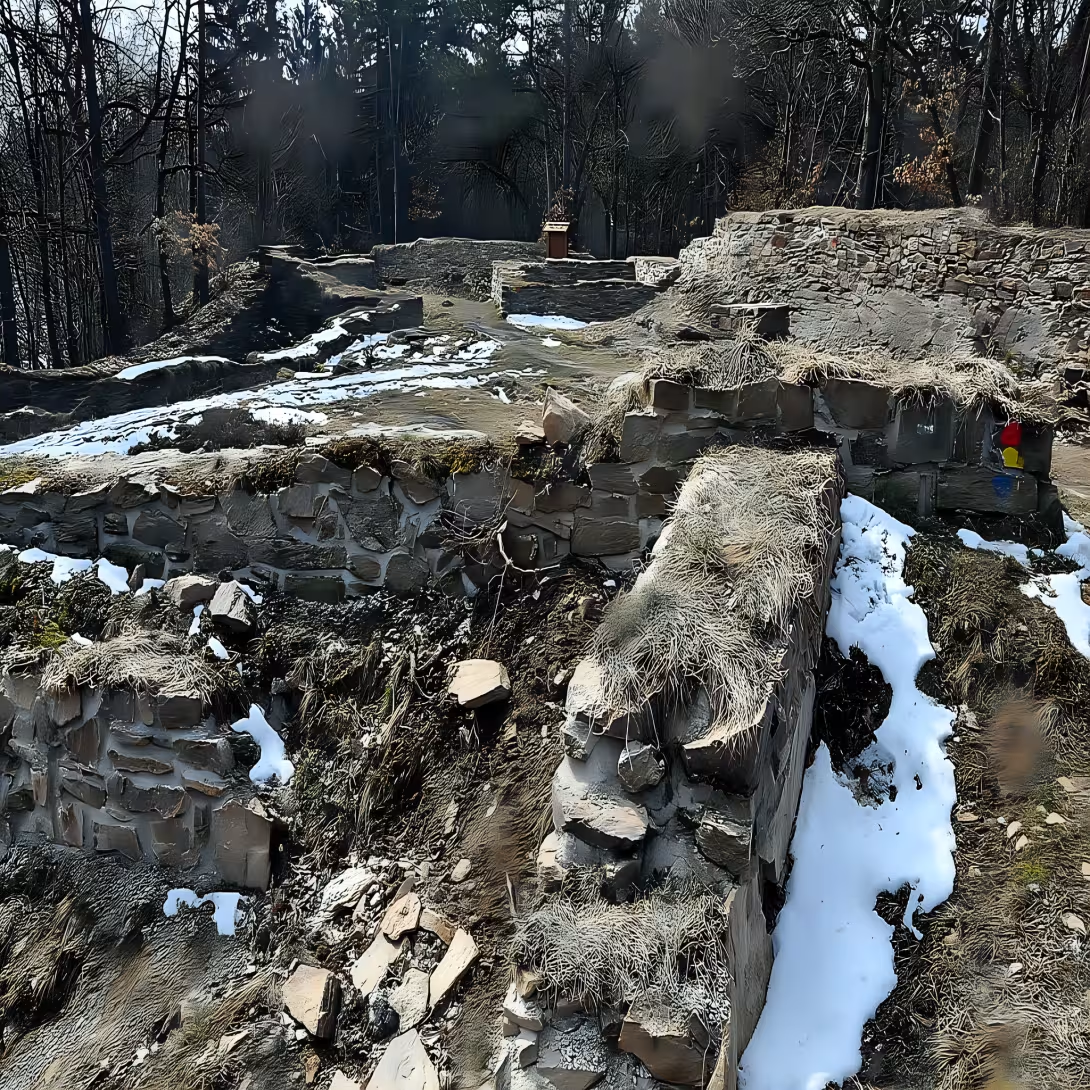
Sion Castle, a 15th-century ruin located in the village of Chlístovice, is a significant historical monument in the Central Bohemian Region of the Czech Republic. Built in the Gothic style between 1424 and 1436, it was established by Jan Roháč of Dubá, a Hussite leader. The castle's strategic location near Kutná Hora made it a crucial stronghold during the Hussite Wars, a period of conflict between the Hussites and the Catholic Church in Bohemia.
The castle's history is marked by its brief existence. In 1437, it was besieged and destroyed by the royal forces led by Hynce Ptáček of Pirkštejn. Archaeological investigations in the 20th century uncovered human remains and artefacts, but the excavations damaged the remains.
The castle's architecture features a complex system of fortifications, including a moat and a wall, built using stone and brick. The layout was designed to surround three sides of the site with access from the east, utilizing the River Vrchlice.
Jan Roháč of Dubá owned the castle, which was used as a private fortress. The castle's capture by the royal forces in 1437 marked a significant event in its history. Its significance lies in its representation of Hussite fortification, which marked the beginning of modern European defensive systems.
Today, only scattered parts of the basement stone walls with some arches and stairs remain of the original castle. The site is located in a rural area, surrounded by fields and forests, and is accessible to visitors. The nearby village of Chlístovice is a small settlement with a few houses and a church. Sion Castle is a testament to the complex history of the region and the development of defensive systems in Europe. Its ruins offer a glimpse into the past, making it a worthwhile visit for those interested in the history of the region.
Then and now
Drag the slider to compare how the landmark may have looked when it was built with the view today.
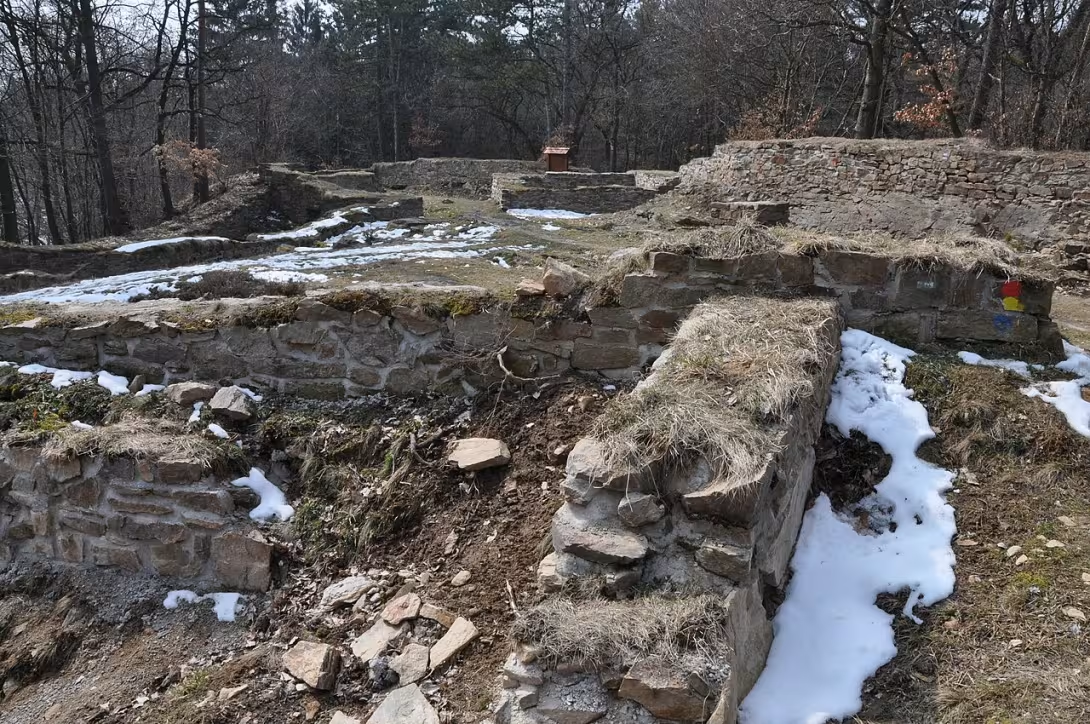

The historical appearance on the left is an AI-generated visualisation and serves as inspiration only.
Historical milestones
- 1424
- Construction of the castle began
- 1426
- Construction of the castle was completed
- 1436
- Construction of the castle was completed
- 1437
- The castle was besieged and destroyed by the royal forces
- 20
- Archaeological investigations uncovered human remains and artefacts
Architectural development
The castle was built in the Gothic style, with a complex system of fortifications, including a moat and a wall. The castle was built using stone and brick. The castle was damaged during the siege in 1437, and its fortifications were breached.
Historical events
The castle was built by Jan Roháč z Dubé in 1426-1427
The castle was captured by the royal forces led by Hynce Ptáček z Pirkštejna in 1437
The castle was used as a private fortress by Jan Roháč z Dubé
Owners
Jan Roháč z Dubé, Zikmund Lucemburský
Points of interest
– The castle's capture by the royal forces in 1437 was a significant event in its history, marking the end of the Hussite era in the region.
– Jan Roháč of Dubá, the castle's original owner, was a prominent Hussite leader who played a key role in the Hussite Wars.
– The castle's strategic location near Kutná Hora made it a crucial stronghold during the Hussite Wars, a period of conflict between the Hussites and the Catholic Church in Bohemia.
– Archaeological investigations in the 20th century uncovered human remains and artefacts, but the excavations damaged the remains of the castle.
– The castle's layout was designed to surround three sides of the site with access from the east, utilizing the River Vrchlice, which adds to its unique architectural features.
Guide
This guide is narrated by a synthetic voice generated by artificial intelligence.
Show guide text
This text was created by artificial intelligence and has not been editorially reviewed. It may contain inaccuracies.
Sion is the ruins of a castle about one kilometer east of the village of Chlístovice, roughly eight kilometers southwest of Kutná Hora. It stands on a rocky promontory above the right bank of the Vrchlice stream. According to traditional interpretation, it was built on the site of a small abandoned fortified settlement.
The castle was probably built in the years 1426 to 1427 by the Hussite commander Jan Roháč z Dubé. However, historian Jaroslav Čechura does not rule out that a feudal stronghold stood there before. It would have been the center of estates belonging to the Prague metropolitan chapter, and Roháč would have simply seized it and improved its fortifications. Initially, Sion was more of a representative residence than a fortress. The owner apparently relied on Kutná Hora and Čáslav, where he served as commander. More extensive fortifications were constructed between 1435 and 1437, when the castle was threatened by Emperor and King Sigismund of Luxembourg.
In the autumn of 1435, Jan Roháč retreated here after his unsuccessful role as a Taborite leader. From here he waged a private war against the ruler. The first written mention of the castle is in a document from February 15, 1437, in which the provincial assembly convened forces against its owner. The garrison consisted of several dozen men, supplemented by refugees from Hradec Králové, whose citizens had agreed with the royal side in March 1437.
An army composed of units from Czech nobility and towns arrived at the castle in the first days of May. This occurred shortly after Roháč's men ambushed a Hungarian convoy and captured a large number of oxen and barrels of wine for the king. The army was commanded by the court master Hynce Ptáček z Pirkštejna, who had captured the castle of Ostromeč two years earlier. Sources describe the four-month siege as a major and difficult operation. However, archaeological surveys from 1962 to 1965 showed that the siege works were much more modest. Historians believe that Ptáček prolonged the siege for political reasons. The garrison, which had no well of its own at the castle, apparently faced no obstacles in obtaining supplies or drawing water from the Vrchlice. Fighting probably occurred only after reinforcements arrived from Hungary, which set out from Prague on September 3.
An Italian humanist and later pope, Enea Silvio Piccolomini, described the assault most thoroughly in his work Historia Bohemica. According to archaeologists, however, the bombardment lasted at most a day or two. About a hundred stone cannonballs struck the castle, damaging mainly the palace and a building at the eastern front wall. No traces of a breach in the wall or of tunneling were found. The defenders capitulated and Jan Roháč was captured. The castle was burned and fell to King Sigismund.
By its fortifications, Sion ranks among the foremost works of Hussite military architecture, standing at the beginning of the development of early modern European fortification systems.
Tips for visitors
The best time to visit the Sion ruin is during the spring and summer months when the weather is mild and sunny, making it ideal for photography.
It's recommended to bring comfortable shoes and clothing, as well as a camera to capture the stunning views and architecture.
The best spots for photography are around the castle walls and towers, where you can capture the surrounding landscape and the ruin's intricate details.
If you're looking for something to do nearby, the village of Chlístovice is a short walk away and features a charming church and a few houses to explore.
Frequently asked questions
Can the monument be visited?
This is a ruin. Such sites are often freely accessible, but some can only be visited with a guide or are closed for safety reasons. We have not verified the current situation – take care and respect any restrictions.
Where is the monument?
Location: Chlístovice, Středočeský kraj. The map on this page shows the exact spot.
Why is the monument protected?
It is listed in the Central List of Cultural Monuments of the Czech Republic as a cultural monument (register no. 30920/2-1004).
Businesses nearby
Do you run a restaurant, accommodation, shop, museum, rental, wellness or other visitor service near this monument? Show yourself directly to the people heading to it — this is how they will see you in the app and on the web:
Nearby
The castle is located in a rural area, surrounded by fields and forests. The nearby village of Chlístovice is a small settlement with a few houses and a church.
Accommodation nearby
Trips and activities nearby
Guided tours, tickets and activities nearby from GetYourGuide
Affiliate link: if you buy from the partner, we may receive a commission. The price for you does not change.
Search tours and activities →Themed route
Route: Sion and Surroundings
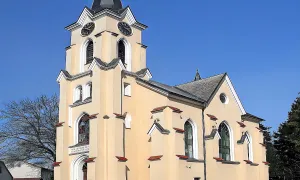
1. Sion (main destination) - the ruins of the castle are worth visiting for their unique architecture and history that dates back to the Middle Ages. 2. Church of Saint Nicholas (Chlístovice) - worth visiting for its distinctive architecture and beautiful bell tower, which dominates the village. 3. Chlístovická lípa (Chlístovice) - worth visiting for its exceptional size and history dating back to the 17th century.
Seasonal recommendations
Jaro: In the spring season, Sion Castle is surrounded by blooming trees and flowers, creating a pleasant atmosphere. It's an ideal time to visit the monument as it is open year-round and there aren't too many visitors. We recommend visiting Sion in the spring season when the weather is sunny and warm so you can enjoy this historical site at its most beautiful.
We suggest visiting Sion early in the morning or late afternoon to avoid crowds. In summer, it's advisable to bring water and snacks as there aren't many options for refreshments nearby.
Podzim: In autumn, Sion Castle is surrounded by beautiful colorful leaves, creating a pleasant atmosphere. It's an ideal time to visit the monument as it is open year-round and there aren't too many visitors. We recommend visiting Sion in the autumn season when the weather is sunny and cool so you can enjoy this historical site at its most beautiful.
Zima: In winter, Sion Castle is closed from January 1st to March 31st, so it's better to visit during another period. If you wish to visit Sion in winter, we recommend bringing warm clothing and boots as there may be snow cover.
Visualizations and artistic views


The visualisations are generated by artificial intelligence and serve as inspiration.
Photos from the area
Real photos taken near the monument


Zdroj a licence jsou uvedeny u každého snímku.
Tips from visitors
No tips yet. Be the first!
Log in and add your tip.
Sources and literature
Photos: Ben Skála, Benfoto / CC BY-SA 3.0, rozlišení zvýšeno umělou inteligencí — Wikimedia Commons. The author and licence also appear when you hover over the image.
Faktickým podkladem tohoto textu byl článek na Wikipedii, jehož autory jsou přispěvatelé Wikipedie. Článek je dostupný pod licencí CC BY-SA 4.0.
Location on the map

Příběhy a pověsti
Legendy, pověsti a příběhy spjaté s touto památkou
Fotografie návštěvníků
Zatím žádné fotografie. Buďte první, kdo přidá fotografii z návštěvy!
Log in a přidejte svou fotografii nebo hodnoťte.
Za ověřenou návštěvu v aplikaci získáte víc bodů — poznáme podle GPS, že jste na místě.
Reviews and comments