






Šítkovská vodárenská věž Water tower
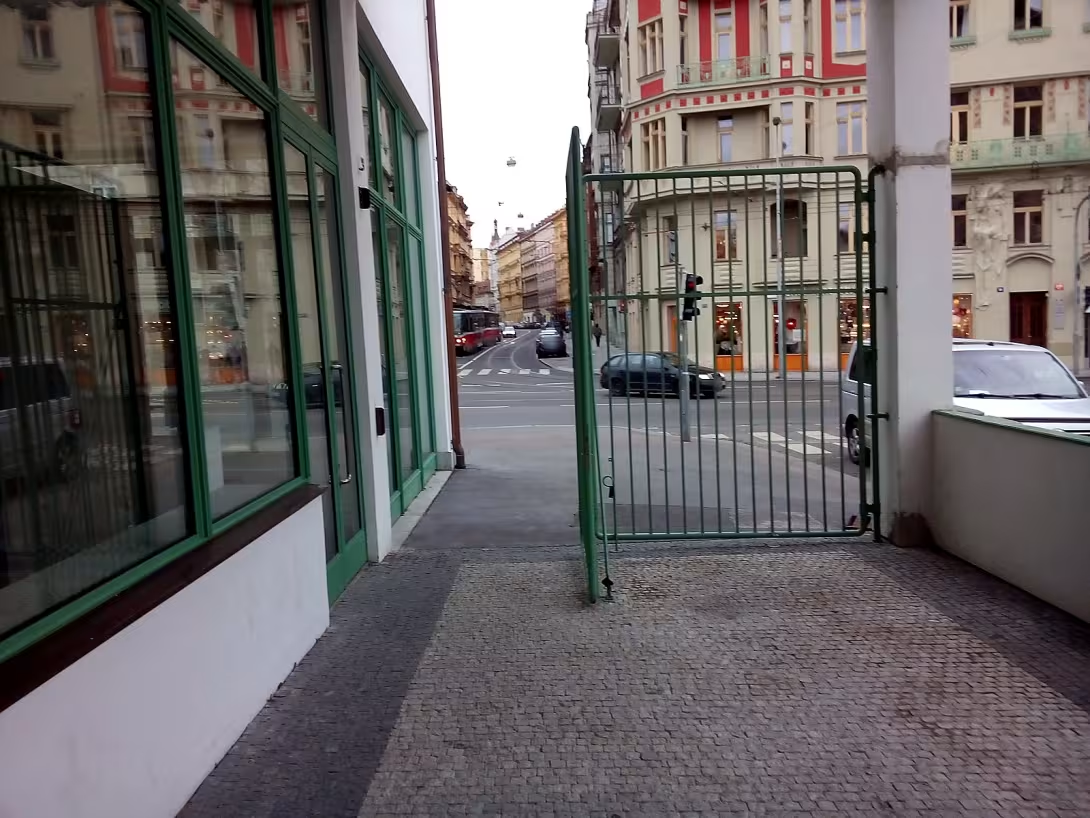
Šítkovská vodárenská věž is a Renaissance technical monument on the right bank of Vltava in Prague 1, in close proximity to the building of the Association of Fine Artists Mánes. The stone building from the end of the 16th century is famous for its tilt by 115 centimetres from the vertical axis, making it the most slant tower in Prague.
The original wooden tower stood at the southern end of Slavic Island, in a place called under Zderazi, since 1495. Her history has been linked to frequent fires since the beginning. It burned completely in 1501 and was destroyed again in 1588, this time along with the nearby Šitkov mills. The stone tower grew in its place between 1588 and 1591. At that time, the Habsburgs, namely Rudolf II, ruled in Czech countries, for which Prague experienced the boom of art and science. Europe was then in a period of late Renaissance and religious tension before the Thirty Years' War.
The building has a square floor plan with a side of 10 meters and reaches a height of 47 meters. The tilt to the southeast caused the establishment on the unstable sand bottom of the Vltava without proper foundation. In 1651, the tower acquired a baroque pit, which was covered by copper sheet metal at the end of the 18th century. The stability of the building was ensured only in 1927 by building a reinforced concrete foundation wreath around the foot. Another reconstruction in the 1980s stopped its further deflection.
The tower served as a key part of the water supply system, which self-managed to distribute Vltava water into cashew and houses in the New and Old Town of Prague. This operation ended in 1847. During the siege of Prague by Swedish troops in 1648, the tower was damaged by artillery fire, which in 1651 required repair. When the water facility was dismantled in 1882, the tower was threatened with demolition. But she was prevented by the intervention of the Art Contest Society.
In modern history, the tower has gained political significance. Between 1977 and 1989, there was a secret State Security Observatory on the top floor. It was used to track the entrance to the house on the nearby Rashín waterfront, where it had an apartment Václav Havel.
Today, Šítkovská vodárenská věž is an important technical monument, which illustrates the historical development of Prague's water supply and transformation of urban architecture. Its unique tilt and moved fates make it a remarkable destination for every interested person in Prague's history. Visit the area around Jiráskov Square and Manes building offers the opportunity to see this building in its authentic environment.
Then and now
Drag the slider to compare how the landmark may have looked when it was built with the view today.
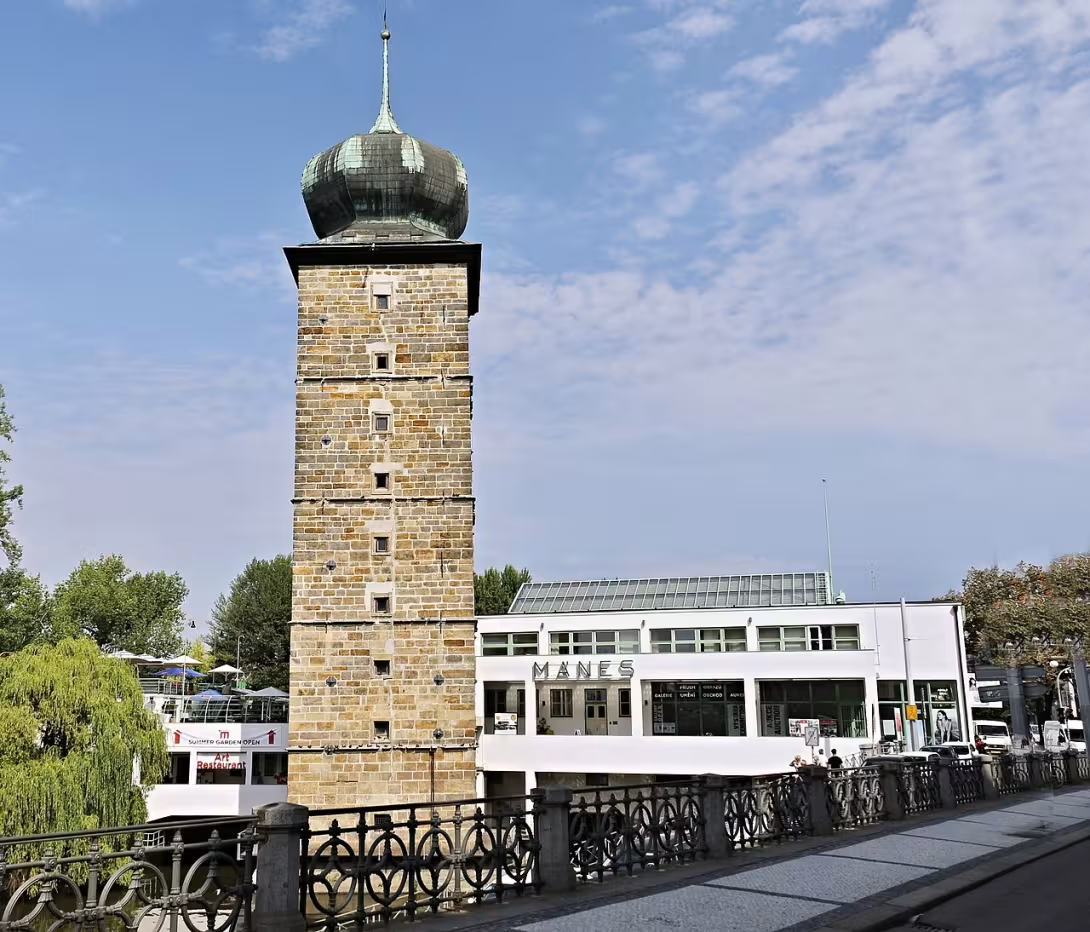
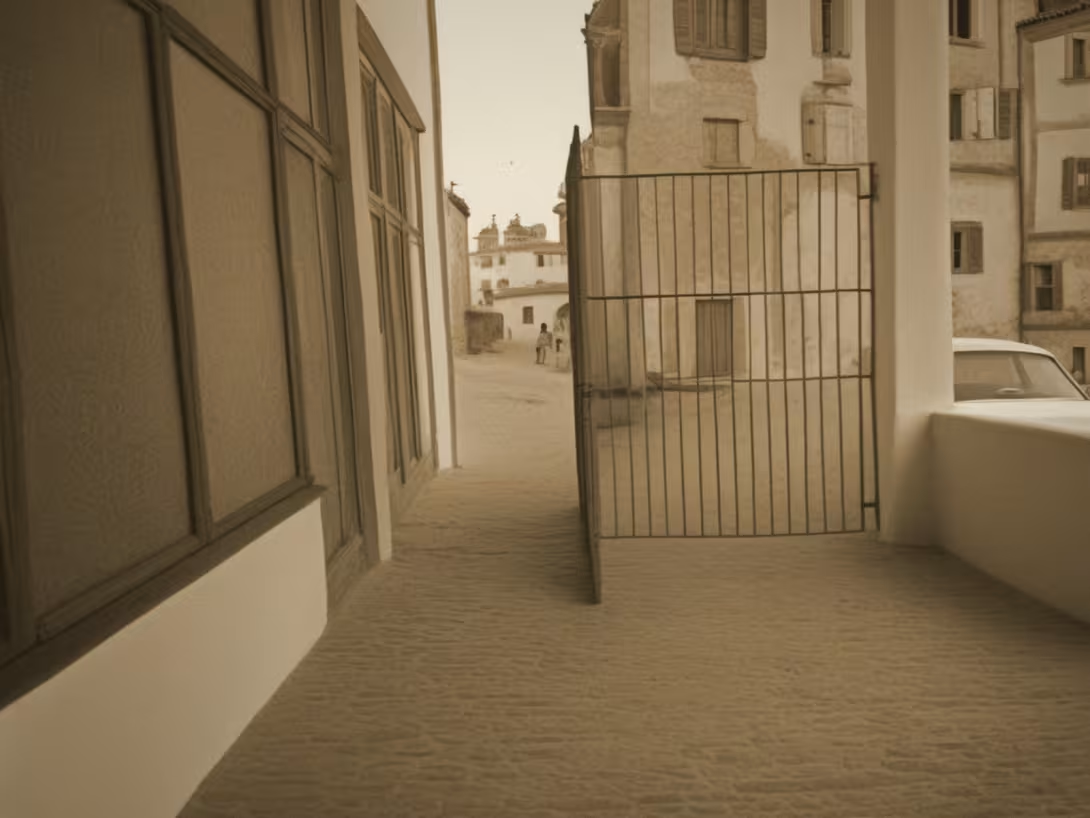
The historical appearance on the left is an AI-generated visualisation and serves as inspiration only.
Historical milestones
- 1495
- The original wooden water tower was built.
- 1588
- Opening of the stone tower after the fire.
- 1651
- Repair of the tower after Swedish siege and installation of baroque gate.
- 1927
- Ensuring the stability of the tower with a reinforced concrete foundation wreath.
Architectural development
The original wooden structure was replaced by a stone tower at the end of the 16th century. In 1651 she received a baroque pit which was later covered with copper sheet. In 1927, the stability of the tower was ensured by the construction of a steel concrete foundation wreath.
Historical events
In 1648, the tower was damaged by Swedish shelling of Prague. In 1882, its use as a water plant was terminated and it was threatened with demolition, which prevented the Artistic Beseda.
Points of interest
- Šítkovská vodárenská věž is the most slant tower in Prague as it tilts 115 centimeters from the vertical axis. This tilt towards the southeast caused the construction to be established on an unstable sand floor without proper foundations. - Between 1977 and 1989, the top floor of the tower served as a secret observer of State Security. They followed the entrance to the house where Václav Havel was staying. - The original wooden tower has been standing at the southern end of the Slovak island since 1495 and fires have been destroyed several times throughout history. The current stone tower was built between 1588 and 1591. - The stability of the tower was ensured only in 1927 by building a reinforced concrete foundation wreath around the foot. Further deflection then stopped reconstruction in the 1980s. - The tower was a key part of the water supply system, which distributed Vltava water to cashew and houses in the New and Old Town of Prague. This operation was completed in 1847.
Guide
Show guide text
This text was created by artificial intelligence and has not been editorially reviewed. It may contain inaccuracies.
Welcome to one of the most interesting and unusual buildings you can see in Prague. You are standing right in front of the Shitkovsky Water Tower, which rises above the right bank of the Vltava and with its presence immediately attracts the attention of every bystander. Look at her properly. At first glance, you may be interested in her unusual appearance, but when you look closer, you realize that this building is not just an ordinary stone object. It is a living witness of centuries, with traces of human effort, technical ingenuity and unexpected natural forces. Feel the atmosphere of a place where history meets the constant flow of the river and where every stone cube seems to tell its own story about survival and adaptation.
To understand why this tower is standing right here and why it has such a special character, we need to go back to the past together. Imagine Prague at the end of the 15th century. The original water tower was built here in 1495, but it was a building completely different from the one you see now. It was wooden. At that time, the water was the most important source of life for the growing city, and this tower served as a key point for the supply of New and Old Town of Prague water directly from Vltava. Unfortunately, wood is material that is prone to damage. The tower was repeatedly lacking in devastating fires, which at that time were a great danger to the city. But these tragic events have led us to what you see today. In order to ensure the sustainability and safety of water supply, the city has decided to take a radical step. The wooden structure was replaced by a solid stone tower between 1588 and 1591. This new building was supposed to be fire-resistant and time-resistant, and in many ways it really did.
Now pay attention to the architecture and details that are right in front of your eyes. Although the names of the particular architects who designed this construction have been lost in history, their work is evident in every detail. Notice the massive stone structure. There's a sense of strength and stability that the builders were trying to create. However, the history of the tower was not only about building, but also about constant repairs. Notice the top of it. In 1651, after the tower was damaged during the Swedish siege, it had to undergo a major repair. It was at this time that her distinctive baroque dome was installed on it, which provides the construction of her present, unmistakable face. If you look at the basic parts of the tower, you might wonder how it's possible that this hard construction still stands. In 1927, engineers had to intervene to ensure its stability, and that is why a steel-concrete foundation wreath was created around it. This modern element was necessary for the tower to continue to exist despite its natural problems.
And here comes the moment that probably fascinates you the most. Notice how the tower is moving away from the plane that you would expect from such a building. Look at her inclination. It is the most slant tower in Prague! From its vertical axis it tilts an incredible ciento 15 centimeters towards the southeast. It's a fascinating sight that makes you feel constantly moving. Why did this happen? The answer is in the very ground on which the tower stands. This whole tilt story is a story about instability. The construction was based on an unstable sand floor which did not have a strong and proper foundation. So nature found its way and the tower began to bend slowly but relentlessly. This tilt is not a mistake in today's sense of the word, but it is a relentless proof of how strongly architecture must conform to the conditions offered by the country.
In addition to technical aspects and natural forces, this tower also carries the shadows of darker history. If you look at her top floor, you can imagine what secrets might have been hidden there. Between 1977 and 1989, in the period that has left a deep mark in our history, the top floor of the tower served as a secret observer of State Security. Imagine that quiet, isolated room high above the city, where everything that was happening in the streets and on the banks of the river was watched in tension. This tower was therefore not only a reservoir of water for the inhabitants, but also a silent, invisible guardian who watched both political and social events. This duality between a useful technical monument and a place of secret supervision gives the Shitkovské water tower its deep and complex character.
In the history of this city and its buildings, the fates of many important figures that shaped our identity are reflected. Although the tower was primarily dedicated to technology, it is part of the same Prague tissue that is connected by events and people like Václav Havel. The spirit of this city, its intransigence and its ability to face unpleasant circumstances, is feeling very strongly in this tower. It is as if the will of the people were written in the stone, so that, despite the tilt, despite the fires and despite the political storms, they would remain firmly anchored in their place.
I hope you were interested in this brief view of the Shitkovsky Water Tower and that it helped you see much more than just a stone object in this building. It is a fascinating witness to history that reminds us of both human ingenuity in solving technical problems and the unpredictability of natural forces and human ambitions. Now that you know about her tilt, her repairs and her secret services, I suggest you continue your walk along the Vltava shore. Let yourself be inspired by the atmosphere of this historic city and pay attention to other sights waiting for you in every alley. Thank you for your attention and read what other attractions Prague travel will offer. Goodbye.
Tips for visitors
The best time to visit is in the morning during the working week, where you can avoid the greatest burden of tourists and you can enjoy the technical details of the tower. The evening clock is ideal for viewing illuminated tower silhouettes above the Vltava surface.
The location is very well accessible by public transport, whose current connection can be verified in the online search engine. Parking in the centre of Prague is limited, so we recommend to use the parking lot on the outskirts of the city and continue to the centre by public transport.
For photography we recommend using the waterfront near the Manes building, where you will get the best composition of the tower with reflection in the water. The best light for images is during the so-called gold watch just before sunset.
In the immediate vicinity of the tower you can visit Slavic Island for relaxation in green, see the functionalist building Manes or take a walk along Jiráskov Square and the Rashín waterfront, which offers beautiful views of the river.
The location is suitable for families with children due to the proximity of the waterfront, where there is enough room for movement. We recommend that you join a visit with a walk on Slavic Island, where you will find a quieter environment outside the main transport arteries.
Businesses nearby
Do you run a restaurant, accommodation, shop, museum, rental, wellness or other visitor service near this monument? Show yourself directly to the people heading to it — this is how they will see you in the app and on the web:
Events nearby

Zdroj akcí: otevřená data měst a obcí ČR (Národní katalog otevřených dat) a kalendář akcí Národního památkového ústavu.
Nearby
Slavic island, Manes building, Jirásek Square, Rashín waterfront.
Accommodation nearby
Trips and activities nearby
Guided tours, tickets and activities nearby from GetYourGuide
Affiliate link: if you buy from the partner, we may receive a commission. The price for you does not change.
Search tours and activities →Themed route
Thematic cruise route around the Hítkovská water tower
1. Šítkovská vodárenská věž (tower) This historical water tower is not only a technological monument, but also a unique architectural work. Built at the end of the 19th century, it served to provide a water pipeline for Prague and is an example of the engineering skills of its time.
2. Manes building (art gallery) The Manes building, which is the home of the National Museum of Art, is located approximately 500 metres from the Šitkov Water Tower. Visit it for your rich collection of modern and contemporary Czech art, which gives you a deeper insight into Prague's cultural heritage.
3. Slavic island (historical location) The Slavic Island, one of the oldest parts of old Prague, is about 700 metres from the Manes building. This historically important area is known for its rich past and beautifully preserved houses, which resemble the first settlement of the city.
4. Jiraskova Square (historical square) Jiráskova Square, named after the famous Czech writer Jaroslav Vrchlický, is approximately 600 metres from the Slovak Island. The square is a beautiful walk with historic buildings and offers a quiet atmosphere in the middle of the representative centre of Prague.
5. Rašín's waterfront (port area) The final point of the route is Rashín's waterfront, located about 800 metres from Jirásek Square. This port area offers beautiful views of Vltava and is an ideal place to relax after a day of exploring historical monuments.
This route will allow you to discover not only the technological heritage of the Shitkovsky Water Tower, but also the cultural and historical wealth of the surrounding centre of Prague.
Seasonal recommendations
Spring: In spring nature awakens around the monument and soft morning light beautifully highlights the historical structure of the tower. The atmosphere is fresh and calm, which is ideal for observing the emerging city. I suggest you wear layered clothes so that morning's cold doesn't surprise you. The best time to visit is in the morning when the crowds are still small and the light is most suitable for photography.
Summer: In the summer months the area is very lively and the sun clearly illuminates the whole surrounding architecture. Due to the high temperatures and large number of visitors in the main summer season, I recommend arriving as early as possible in the morning to avoid the greatest heat and crowds. Dress in light and breathable materials and remember to protect yourself from the sun.
Autumn: Autumn season offers a quiet atmosphere, complemented by golden colours of trees and occasional morning fog. The light is low and very colorful at this time, which creates great conditions for the tour. It is advisable to have a windbreaker or warmer jacket with you, because these months the air is getting colder. Ideal is to visit the tower in the afternoon before sunset.
Winter: Winter makes the tower very impressive in cold and sharp air. In advent time in Prague is a special magical atmosphere, although the days are very short. To visit it is necessary to wear warm winter clothes, including hat and gloves. Plan a visit in clear morning hours to make the best use of limited daylight.
Visualizations and artistic views


The visualisations are generated by artificial intelligence and serve as inspiration.
Photos from the area
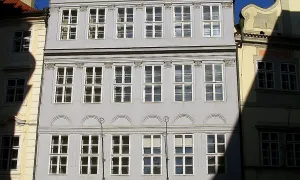
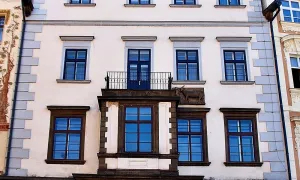
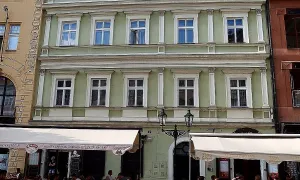
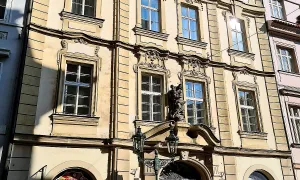
Real photos taken near the monument


Zdroj a licence jsou uvedeny u každého snímku.
Tips from visitors
No tips yet. Be the first!
Log in and add your tip.
Sources and literature
Photos: VitVit / CC BY-SA 4.0 — Wikimedia Commons. The author and licence also appear when you hover over the image.
Faktickým podkladem tohoto textu byl článek na Wikipedii, jehož autory jsou přispěvatelé Wikipedie. Článek je dostupný pod licencí CC BY-SA 4.0.
Location on the map
Příběhy a pověsti
Legendy, pověsti a příběhy spjaté s touto památkou

Fotografie návštěvníků
Zatím žádné fotografie. Buďte první, kdo přidá fotografii z návštěvy!
Log in a přidejte svou fotografii nebo hodnoťte.
Za ověřenou návštěvu v aplikaci získáte víc bodů — poznáme podle GPS, že jste na místě.
Reviews and comments