



Skály (hrad, okres Žďár nad Sázavou) Castle ruin
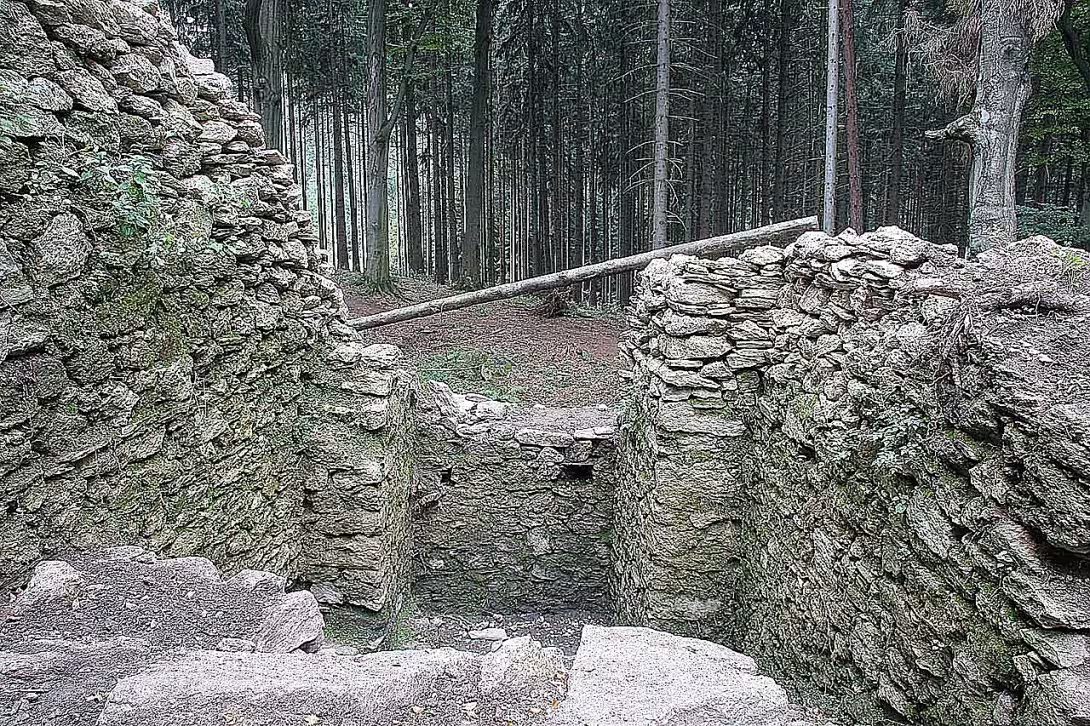
Rocks, also known as Štarkov or Starichovice, are the ruins of the castle located on the top of the hill Štarkov near Nové Jimramov in Zdár nad Sázavou district. This historical monument is remarkable by its extreme location and by connecting with the natural rock formations that shaped its architecture. The castle was probably founded in the 14th century by the bands of Kunštát and underwent some dramatic changes in ownership and destiny before it became part of the cultural heritage.
The castle of the Rock was probably built around the middle of the 14th century, when the gentlemen of Kunštát acquired territory in this area. According to historical sources, the castle was the founder of Archleb of Kunštát around 1380, but some historians consider the more likely founder of his son Erhard. The castle complex was used as a base for corruption and robbery, which led to its gradual abandonment and ultimately destruction.
The Skál architecture is characterized by its integration into natural terrain. The castle core consisted of a small courtyard surrounded by rock formations which were connected by walled walls. On the west side there was a gate under a rock formation with a round tower on top. The border with the courtyard stood two towers: a prism tower with an edge length of 5,5 meters and an oval tower with basic dimensions of 9 × 5.2 meters. These structures have been protected by a pair of towers and a barrier to fortified double moats and walls.
Throughout his history, the castle had several owners. After Archleb of Kunštát, the Rocks became the property of Zofka, the daughter of Erhard, who, after long disputes in 1447, acquired them into her possession. In 1448 the castle was sold by Jan Tovacovský of Cimburk to Pernstein Purkrabi Vaněk, who became a thieving knight and led to the destruction of the castle in 1456. After this event, the Skalský estate belonged to the Jimramovi estate, the owners of which were the Pernstejns, the Katharýns of Kathar and later Dubský of Třebolečice.
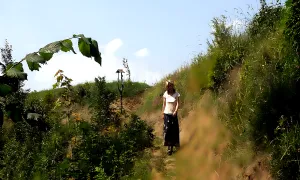
Today there are visible remains of walls, towers and tanks at the site of the Rock Castle. The whole site is protected as a natural monument and the ruins are freely accessible to visitors. Its historical context and unique connection to the natural landscape make the Rocks an important cultural monument worth visiting.
The rocks bear witness not only to the rich history of noble families and their disputes over property, but also to an example of architectural art that took advantage of natural forms of terrain. Visiting this ruin offers a view of the past and highlights the importance of protecting cultural heritage for future generations.
Then and now
Drag the slider to compare how the landmark may have looked when it was built with the view today.
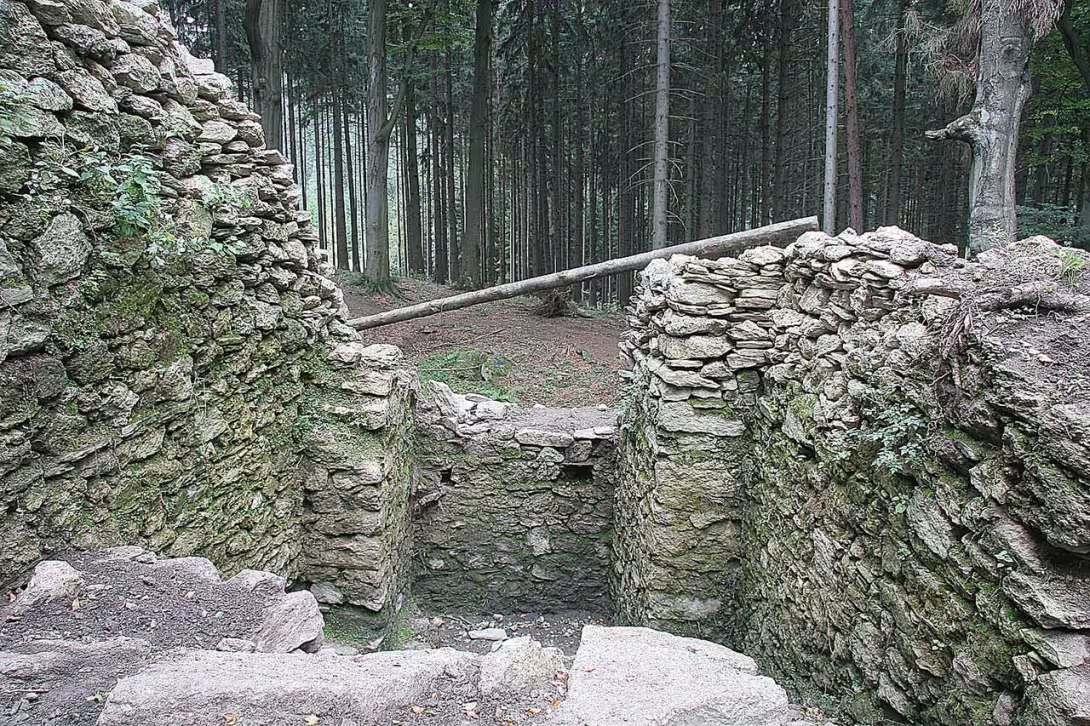
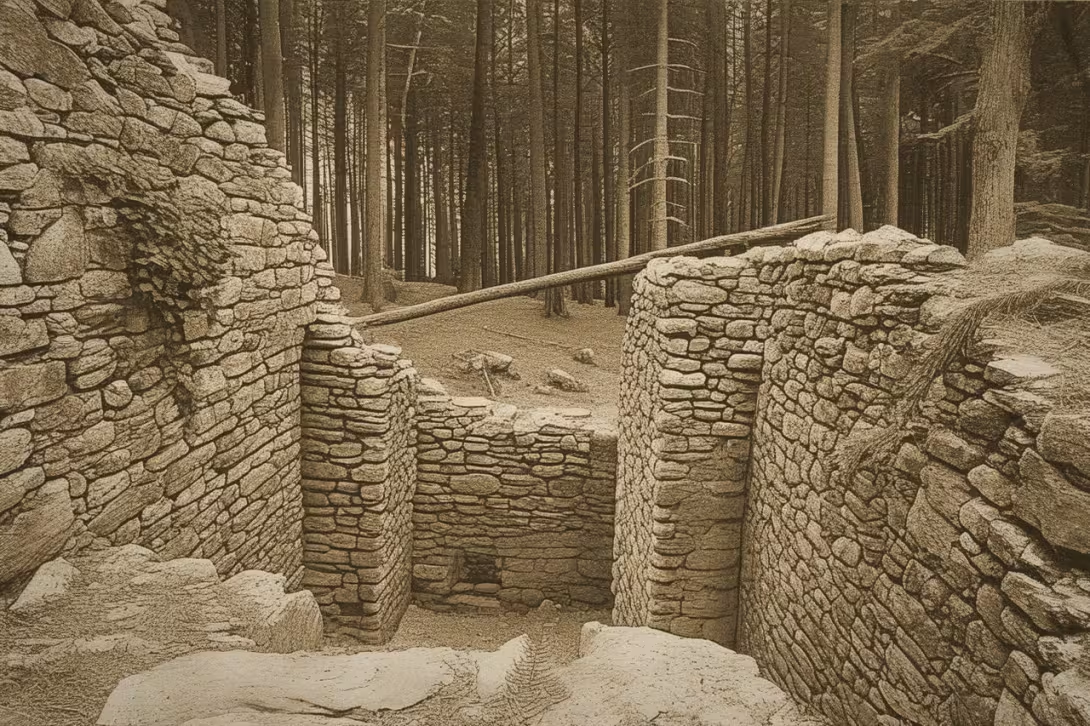
The historical appearance on the left is an AI-generated visualisation and serves as inspiration only.
Historical milestones
- 1380
- Archleb z Kunštátu probably founded the castle
- 1448
- Jan Tovačovský z Cimburka sold the castle to Vanek
- 1456
- The castle was defeated
Architectural development
The castle core was formed by a small courtyard surrounded by rock formations which were connected by walled walls. Part of the building was the palace on the east side and two towers, one of which was prismatic and the other had oval ground plan. The whole architecture was closely integrated into extreme rock terrain.
Historical events
1380: Founder of the castle Archleb of Kunštát, 1448: Sale of the castle Jan Továčovský of Cimburka, 1456: Armor of the castle.
Owners
Lords of Kunštát (around the middle of the 14th century), Žofka (after 1447), Jan Tovačovský z Cimburka (1448), Vanek (Pernštejn purcrabi), Pernštejn, Katharýn from Kathar, Dubský from Třebolovice.
Points of interest
- The rocks are a ruin of the castle located on the top of the hill Štarkov near Nové Jimramov in Ždár nad Sazavou district.
- The castle was probably founded in the 14th century by the bands of Kunštát and underwent some dramatic changes in ownership and destiny before it became part of the cultural heritage.
- The Skál architecture is characterized by its integration into natural terrain. The castle core consisted of a small courtyard surrounded by rock formations which were connected by walled walls.
- During his history, the castle had several owners. After Archleb of Kunštát, the Rocks became the property of Zofka, the daughter of Erhard, who, after long disputes in 1447, acquired them into her possession.
- Today there are visible remains of walls, towers and tanks at the site of the Rock Castle. The whole site is protected as a natural monument and the ruins are freely accessible to visitors.
Guide
Show guide text
This text was created by artificial intelligence and has not been editorially reviewed. It may contain inaccuracies.
Welcome to the top of the hill Štarkov. You're standing right where history meets nature and where every stone you see before you has its own story. At first glance you may be particularly interested in the calm and insight that this place offers you, but if you stop and listen to the silence, you may feel the weight of the centuries that have been experienced here. Before your eyes is the ruins of the Rock Castle. Even though today you see only fragments of something that once was a powerful fortress, these places have an incredible ability to draw attention to their resilience to survive time. Feel the atmosphere, feel the gentle breeze that moves between the rocks here, and try to imagine what this place looked like at the time of its greatest glory.
Let us now go back deep into the past together to understand why it was here, in this strategic place, that decided to build the castle. We have to move to the 14th century. This was the time when power in these countries was built through fixed points in the landscape, through castles that controlled the surrounding territory. Probably just around 1380 here Archleb z Kunštátu laid the first stones of this building. The House of Kunštát was at that time extremely important and their influence was felt throughout the area. The Castle of the Rock was not only built as a residence, but as a symbol of their position and as an instrument of control over the surrounding area. At that time, the existence of such a castle was a sign of stability and nobility, although the fate of the castle later developed quite differently than the founders could have wished.
Now pay attention to what you see right around you. Even though the castle does not exist as a whole today, its structure is still visible in the remains that remain here. Look at these walls. Even though they are now partly broken and partly overgrown, you can still feel the strength of the original structure. These walls were meant to protect and defend. Now, if you look towards the places where the remains of the towers are lifted, imagine how the guards used to watch out for them and how their eyes would balance between safety and danger. The towers were a key element of defense, a point where the entire surrounding area was controlled. Another important element you can see here is the remains of the tank. See this as proof of the technical balance and necessity at the time. At the top of a hill like Starkov, water was the most valuable commodity. Without the ability to keep water in the tank, the castle could not survive a short recovery or siege. This tank was the life of the castle.
But the history of this place is not just a story about stones and water, but especially about people, their ambitions and their mistakes. When you look at these debris, remember the names that were closely linked to this place. Other important members of the family, such as Erhard or the famous Žofka z Kunštátu, worked here alongside the founder of Arbey of Kunštát. They were people who formed a political map of their time. However, in the 15th century the situation around the castle began to change dramatically. In 1448 there was a major reversal in property law when Jan Tovačovský z Cimburka sold the castle to Vanek of Pernštejn. This transfer of ownership was not just a simple commercial transaction, but resulted in a period of constant legal disputes that the castle was subject to constant tension.
And this is where we get to the darkest part of the story, which explains why you're only seeing a ruin today. Instead of serving as protection for order and law, the castle became a place in the hands of its holders that was out of control. Instead of aristocratic dignity, there has been a growing form of robbery. The people who were to defend the castle became those who threatened the surrounding population and disturbed the peace of the region. This illegal way of life was so unsustainable that in 1456 the castle was decidedly taken. It was not an accidental collapse of the building, but a deliberate act to stop this illegal operation and to stop using the castle as a base for crimes. So what you see today is the result of a decision to restore order in this area.
The interesting thing is how the fate of this place turned after it was destroyed. Instead of building something new here, the castle gradually gave in to the power of nature. Today this whole site is protected as a natural monument. It is a fascinating paradox that a place that was once a symbol of human efforts for power, territorial control and military power is now protected precisely because it has become part of wild and undisturbed nature. The rocks now serve as a monument to human fleeting and also as a testament to the power of natural processes that eventually always fight their way back.
Now I beg you to continue your walk and let the atmosphere of this place drift. See the remnants of the walls from different angles, see the texture of the stone, and watch how the wall lines adapt to the gradient of the terrain. Remember, you are standing in a place that once had great weight in the history of this region. Thank you for choosing to visit the Rocks and pay attention to their history. We wish you a pleasant continuation in discovering the beauty of this landscape and we hope that this brief look into the past has helped you better understand what you are seeing in front of you. Goodbye.
Tips for visitors
Best time to visit the ruins of the castle The rocks are in the summer months, especially from May to October. This period offers not only pleasant temperature, but also beautiful lighting conditions for photography. When you visit, you will notice how historical masonry changes in different colours of sunlight.
The local road leads directly to the hill Štarkov, where the ruins are located.
When planning a visit, remember to bring your protective shoes and a suitable suit. The terrain around the hill Štarkov is impenetrable, so good footwear ensures a safe walk along historical ruins.
The best places for photography are at the top of the hill Štarkov. Here you can use morning or evening sunlight to capture dramatic silhouettes of ruins against the sky. Remember that when photographing you must respect the protection of the monument.
In the vicinity of the hill Štarkov there are other interesting places such as the hills Štarkov and Nová Jimramov. These locations offer beautiful views of the surrounding countryside and are suitable for short walks or picnics.
Frequently asked questions
Can the monument be visited?
This is a ruin. Such sites are often freely accessible, but some can only be visited with a guide or are closed for safety reasons. We have not verified the current situation – take care and respect any restrictions.
Where is the monument?
Location: Kraj Vysočina. The map on this page shows the exact spot.
Why is the monument protected?
It is listed in the Central List of Cultural Monuments of the Czech Republic as a cultural monument (register no. 1000140419).
Businesses nearby
Do you run a restaurant, accommodation, shop, museum, rental, wellness or other visitor service near this monument? Show yourself directly to the people heading to it — this is how they will see you in the app and on the web:
Events nearby
Zdroj akcí: otevřená data měst a obcí ČR (Národní katalog otevřených dat) a kalendář akcí Národního památkového ústavu.
Nearby
Hill of Startkov, New Jimramov.
Accommodation nearby
Themed route
Rocks - ruins of the castle Middle of the route, impressive stone ruins overlooking the surrounding forests. You can admire the preserved remains of the tower and the large courtyard where historical exhibitions take place.
Hill Štarkov - natural hill There is a marked trail from the castle about 2 km to the top of the Štarkov Kopcce. A panoramic view of the ruins and the valley of the Sazava river will appear from the top, ideal for photo and relaxation.
New Jimramov - village settlement After your descent from Kopce Štarkov (about 3 km) you will reach the quiet New Jimramov. Here you can soak up the atmosphere of the traditional countryside, walk around the local square and taste regional products in the local cafe.
Seasonal recommendations
In spring, the surrounding rock begins to green and the air smells fresh. The morning fog in the valleys gives the ruin a mystical form. For visiting it is advisable to choose layered clothes because the morning cold can quickly rotate with the heat of the sun. The best time for a tour is in the morning when nature is most alive.
In the summer season, the days are long and the sun clearly illuminates every detail of the stone remains. The main summer season is where the most people are, so I recommend arriving as early as possible in the morning to avoid the biggest crowds and heat. Do not forget drinking mode, protective headgear and comfortable shoes suitable for uneven terrain.
Autumn visit offers unmistakable colours of leaves that contradict the grey walls of the castle. The atmosphere is quiet and nostalgic, which is ideal for lovers of history. Because of the damp surface and the falling leaves, I recommend shoes with good grip. The best light for photos is offered in the afternoon when the sun shines low above the horizon.
In winter, the ruin is very raw and monumental, especially if covered with snow or frost. The day is short, so plan a visit around noon to use the most light. It is necessary to have very warm clothes and solid shoes because stone steps and roads can be very slippery. In this period, there is the greatest calm and loneliness.
Visualizations and artistic views


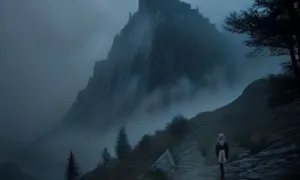
The visualisations are generated by artificial intelligence and serve as inspiration.
Tips from visitors
No tips yet. Be the first!
Log in and add your tip.
Sources and literature
Photos: Prazak / CC BY 2.5 — Wikimedia Commons. The author and licence also appear when you hover over the image.
Faktickým podkladem tohoto textu byl článek na Wikipedii, jehož autory jsou přispěvatelé Wikipedie. Článek je dostupný pod licencí CC BY-SA 4.0.
Location on the map

Příběhy a pověsti
Legendy, pověsti a příběhy spjaté s touto památkou
Fotografie návštěvníků
Zatím žádné fotografie. Buďte první, kdo přidá fotografii z návštěvy!
Log in a přidejte svou fotografii nebo hodnoťte.
Za ověřenou návštěvu v aplikaci získáte víc bodů — poznáme podle GPS, že jste na místě.
Reviews and comments