



Sklárna Klára Glass factory
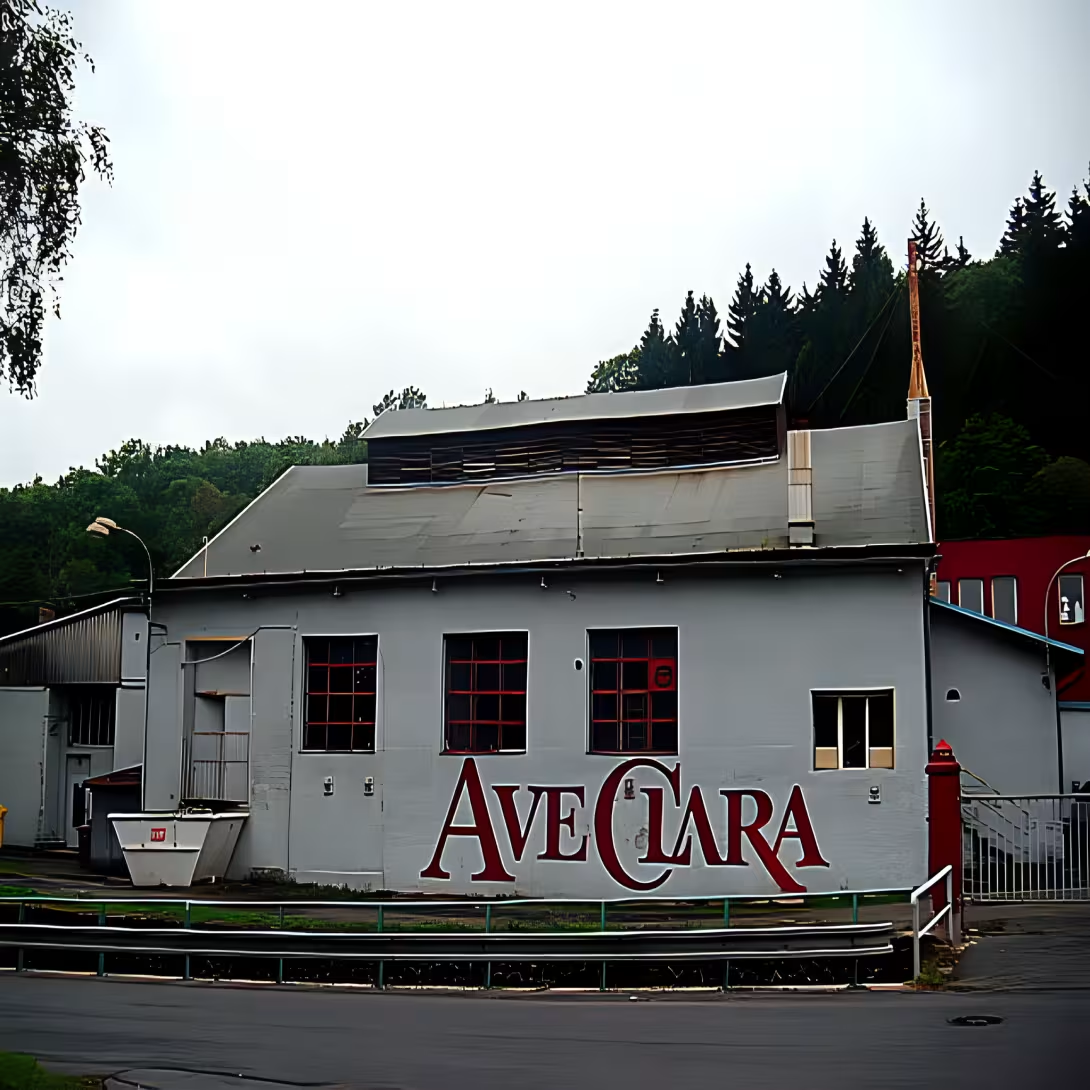
Sklárna Klára is an industrial monument in the village Polevsko in the district of Česká Lípa in the Liberec Region. It has been operating since 1907. The building is registered as a real-estate cultural monument of the Czech Republic and lies in the area of the Protected Landscape Region of Lusatian Mountains. It is important by its long tradition of glass production and the historical contribution to the workers' movement in the region.
Glass production in the region of Lusatian Mountains has been traded since the turn of the 13th and 14th centuries. The village Polevsko was to be founded by glassmakers from Bavaria and Silesia in the 15th century. According to some sources, the Bavarian Oppitz family first settled here, which may also be the origin of the German name of Blattendorf. Polevsko has become a centre of metallurgical production and treatment of glass by cutting, grinding, painting and etching. At the beginning of the 19th century, the expert Bedřich Egermann and important traders Johann Caspar Kittel, Christian Franz Rautenstrauch or members of the Handschke family worked here.
Sklárna Klára was created in 1907. It was built by Karel Mühlbauer on the opposite bank of the river Šporka, just tens of metres from the glass factory Anna, built in 1900 by Rudolf Handschke and Karl Mühlbauer. He named the foundry Karel Mühlbauer after his wife. Originally, there was an eight-pan oven heated by brown coal. In 1928 the Siemens-Siebert pelvic melting furnace was modernised and installed. In a later period, a six-pelvis regenerative hot flame furnace was built in the metal.
The property has changed over the years. After the founder of Karel Mühlbauer, the working team Rudihut rented the operation in 1932. It was founded by unemployed glass workers organized in the Red Union. The leading team was Emanuel Beránek and after World War II P. Vávra. In 1949, the glassworks was incorporated as operation 51 into the national enterprise Borské sklavy. After privatisation in 1991, Klárahuť has been operating here since 1992. Since 2010, Ars Vitraria has been the owner, which later changed its name to Ave Clara.
The key products of the glassworks were church lamps for eternal light from copper ruby glass, vases, kerosene lamps, shades and candlesticks until 1925. The existence of the Rudihuť cooperative, linked to the Communist Party of Czechoslovakia, was an important moment. This is one of the reasons why the object is today registered as a cultural monument presenting the traditions of the workers' movement. In 1964 the building was damaged by fire and in 1968 the manual production of glass ended here because the operation was taken over by the State Research Institute of Glass Prague, later in Hradec Králové.
Currently, the glassworks focuses on the production of luxury table glass, vases and products for Lasvit. The product range is supplemented by the production of flat glass and blocks for artistic and architectural use. Sklárna Klára is a combination of industrial heritage and modern production within a protected landscape area. Visiting this place offers insight into the history of the glass craft and social development of the region.
Historical milestones
- 1907
- the formation of the glassworks Klára
- 1928
- modernization with installation Siemens-Siebert kiln
- 1968
- termination of manual glass production and takeover by the State Research Institute of Glass
Architectural development
Originally built as an eight-pan furnace heated by brown coal. In 1928 the Siemens-Siebert pelvic melting furnace was modernised and installed. Later, a six-pan regenerative hot flame furnace was built in the metal.
Historical events
1932 set up the working team Rudihut, 1949 integration into the national enterprise Borské Sklak, 1964 devastating fire glassworks.
Owners
Karel Mühlbauer (1907), working group Rudihuť (1932- 1938), national enterprise Borské skláhy (since 1949), Klárahuť (since 1992), Ars Vitaria / Ave Clara (since 2010)
Points of interest
- Sklárna Klára in the village Polevsko works since 1907 and is registered as a real cultural monument. - Founder Karel Mühlbauer named the glassworks after his wife. - Until 1925 there were vases, candlesticks, kerosene lamps and church lamps made of copper ruby glass. - The object is significant in its contribution to the workers' movement, which is related to the period during which the working team Rudihut worked here. - In 1964 the building was damaged by fire and in 1968 the manual glass production ended.
Guide
Show guide text
This text was created by artificial intelligence and has not been editorially reviewed. It may contain inaccuracies.
Welcome to the village Polevsko. You are standing in front of a building that carries more than a century of history, craftsmanship and human effort. In front of you is Sklárna Klára, a place that is not just an industrial site but a real cultural monument of our state. Feel the atmosphere of this place where the rigour of production is combined with the fineness of glass art. If you look at the general area, you'll see the space that tells the story of courage, love and technological progress in harmony with the surrounding landscape.
Let us now return in time more than a hundred years back, to the year one thousand nine hundred and seven. It was this year that Mr. Karel Mühlbauer founded his glassworks here. If you have any idea why he chose that name, the answer is very personal and warm. The foundry was named Clara in honor of his wife. It's a beautiful detail that shows us that even behind large industrial businesses, there are often simple human feelings. At that time, the company began to write its history, which gradually became an essential part of the whole region.
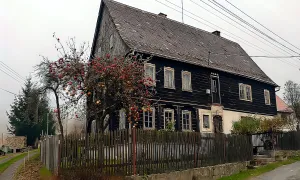
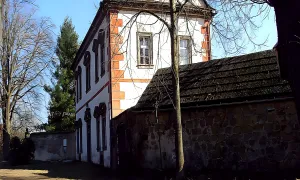
Now pay attention to the appearance of the object itself. Even if we don't know the names of the particular architects who designed the buildings, please note the overall layout of the premises. Look at the facade and see how the space adapted to the production needs at different times. The foundry was not only a static place, but a living organism that was constantly evolving. One of the most important moments of modernization was the year one thousand nine hundred twenty-eight. It was at that time that a new, modern furnace was put into operation, which fundamentally changed the way glass melts and made it possible to increase the quality and quantity of products. Imagine the heat and noise that these walls had to surround at the time.
Speaking of this place, we can't ignore the people who worked here and created it. Sklárna Klára was not only a place of production of objects, but it also became an important point for the workers' movement in this region. This is where people who fought for their rights and better working conditions met, which gives this place a deeper social dimension. In addition to the founder of Karel Mühlbauer, such as Emanuel Beránek or Mr Vávra, the personalities associated with the company's history are those of the company. These men, through their work and leadership, helped shape the glass factory as we know it today.
Now I want to impress you with one interesting thing that may surprise you. If you connect glass with luxury today, then you're in the right mind. Sklárna Klára, in the early years, was involved in the production of objects that we now consider to be real jewels. Up to the year a thousand nine hundred twenty-five were made beautiful vases, candlesticks, kerosene lamps and church lamps. And not from ordinary glass, but from copper ruby glass, which excelled with its rich and deep paint. Imagine those red sparks a second after the product was pulled out of the oven and worked perfectly.
But history has also brought about changes. In a thousand and nine hundred and sixty-eight, there was a major break. The traditional manual glass production has ended and the operation has been taken over by the State Research Institute of Glass. This meant the end of an era, but also the beginning of a new chapter focused on research and modern technology. Today, the glassworks focuses on the production of luxury table glass and special architectural blocks, which are used in modern construction. It is fascinating how this place has transformed from a small family company to a modern business that still retains its identity and historical value.
Look around you again. Everything you see is the result of the endurance of generations of glassmakers who have spent most of their lives in this environment. The industrial monument you face is a bridge between the past and the present. It is proof that craft and industry can be a source of pride throughout the region.
Now I'm letting you take a quiet look around the area and try to imagine what Polevsko looked like a century ago when they first lit the ovens here. Go through the space slowly, perceive the silence of today's times and think of all those people who have made beautiful objects of fragile glass here. I hope you are interested in the visit to Klára Glass and that you are leaving with new knowledge of this unique place. Thank you for your attention, and I wish you a pleasant rest of the day when you discover the beauty of our region.
Tips for visitors
The best time to visit is spring and autumn months, when the landscape in the valley of the Sporka river is green or colorful and temperatures are pleasant for walking. In the summer months, the valley may be hot, while in winter the surrounding area is covered with snow, which creates a calm atmosphere, but may make it difficult to move on saturated roads.
The location is available by public transport, but it is necessary to check the current connection and departure times in the search engine in advance, as the frequency of connections can change. For those who prefer active rest, the area is also suitable for walking trips from surrounding villages.
Don't forget to take enough drinking water in your bag, comfortable shoes with a good heel for uneven terrain and in colder periods layered clothing, because the valley can be colder than on the ridges of the mountain. If you plan to stay longer in nature, it is advisable to have a light snack and possibly an umbrella, as the weather in the Lusatian Mountains can change quickly.
The morning or late afternoon light is ideal for photography, which falls into the valley along the flow of the Sporka stream and creates dramatic shadows on the facades of the glassworks. The best views of the object can be obtained from terrain levels where the contrast between industrial architecture and natural surroundings can be captured. Try to avoid sharp midday sun, which can cause excessive glitter on glass and metal.
The Protected Landscape Area of Lusatian Mountains is located in the area, which offers short walks along the shore of the Sporka stream. Since it is a protected natural zone, it is appropriate to respect local rules and not to abandon the established routes. For families with children the surroundings are suitable for observing nature and collecting leaves or stones, but it is necessary to ensure safety in watercourses and unequal terrain.
Frequently asked questions
Can the monument be visited?
We have not verified whether this monument is accessible. Please ask the owner or operator, or the local municipal office.
Where is the monument?
Location: Polevsko. The map on this page shows the exact spot.
Why is the monument protected?
It is listed in the Central List of Cultural Monuments of the Czech Republic as a cultural monument (register no. 1000139083).
Businesses nearby
Do you run a restaurant, accommodation, shop, museum, rental, wellness or other visitor service near this monument? Show yourself directly to the people heading to it — this is how they will see you in the app and on the web:
Events nearby
Zdroj akcí: otevřená data měst a obcí ČR (Národní katalog otevřených dat) a kalendář akcí Národního památkového ústavu.
Nearby
Sklárna se nachází v údolí potoka Šporky v rámci Chráněné krajinné oblasti Lužické hory.
Accommodation nearby
Themed route
Here is the design of the cruise route:
1.Sklárna Klára (glass factory) - The main destination of the journey where the craft production of glass objects can be monitored. 2. The valley of the river Šporka (natural path) - Walk along the flow of water that offers peace and beauty of the countryside. 3. Protected landscape area Lusatian Mountains (natural area) - The whole area around the village, which is valuable with its intact nature and clean air.
Seasonal recommendations
In the spring the surroundings awaken to life and the landscape around Polevska green. The light is fine, which helps to better sense the details in the exterior. We recommend shoes suitable for wet terrain and light coating of clothing, because the wounds can still be cold.
Summer brings the strongest sunlight and rich colors of nature. The atmosphere is warm and the days are long, which allows you to visit even in the late afternoon. It is advisable to choose breathtaking springs and not forget the sun protection.
In autumn, the surrounding trees turn into golden and red shades, creating a melancholy mood. The light is golden and less sharp than summer. It is ideal to visit the place in the morning and bring a waterproof jacket for more frequent collisions.
Zimą reigns in the landscape calm and freezing air. If the snow attacks, the monument will take a completely different, dreamy form. It is necessary to wear warm winter clothes and high-quality warm footwear to make the movement in the surroundings pleasant even at low temperatures.
Visualizations and artistic views


The visualisations are generated by artificial intelligence and serve as inspiration.
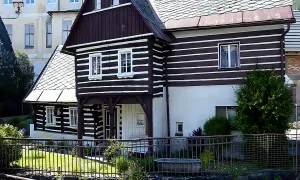
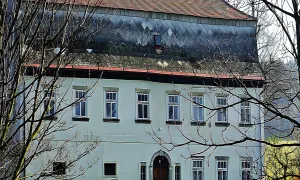
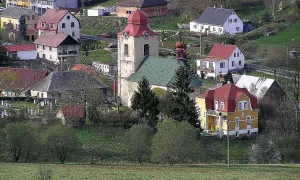
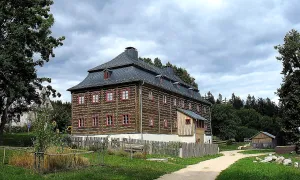
Photos from the area
Real photos taken near the monument


Zdroj a licence jsou uvedeny u každého snímku.
Tips from visitors
No tips yet. Be the first!
Log in and add your tip.
Sources and literature
Photos: Hana Matulová / CC BY-SA 3.0, rozlišení zvýšeno umělou inteligencí — Wikimedia Commons. The author and licence also appear when you hover over the image.
Faktickým podkladem tohoto textu byl článek na Wikipedii, jehož autory jsou přispěvatelé Wikipedie. Článek je dostupný pod licencí CC BY-SA 4.0.
Location on the map
Příběhy a pověsti
Legendy, pověsti a příběhy spjaté s touto památkou

Fotografie návštěvníků
Zatím žádné fotografie. Buďte první, kdo přidá fotografii z návštěvy!
Log in a přidejte svou fotografii nebo hodnoťte.
Za ověřenou návštěvu v aplikaci získáte víc bodů — poznáme podle GPS, že jste na místě.
Reviews and comments