






Smírčí kříž (Bečov nad Teplou) Reconciliation cross
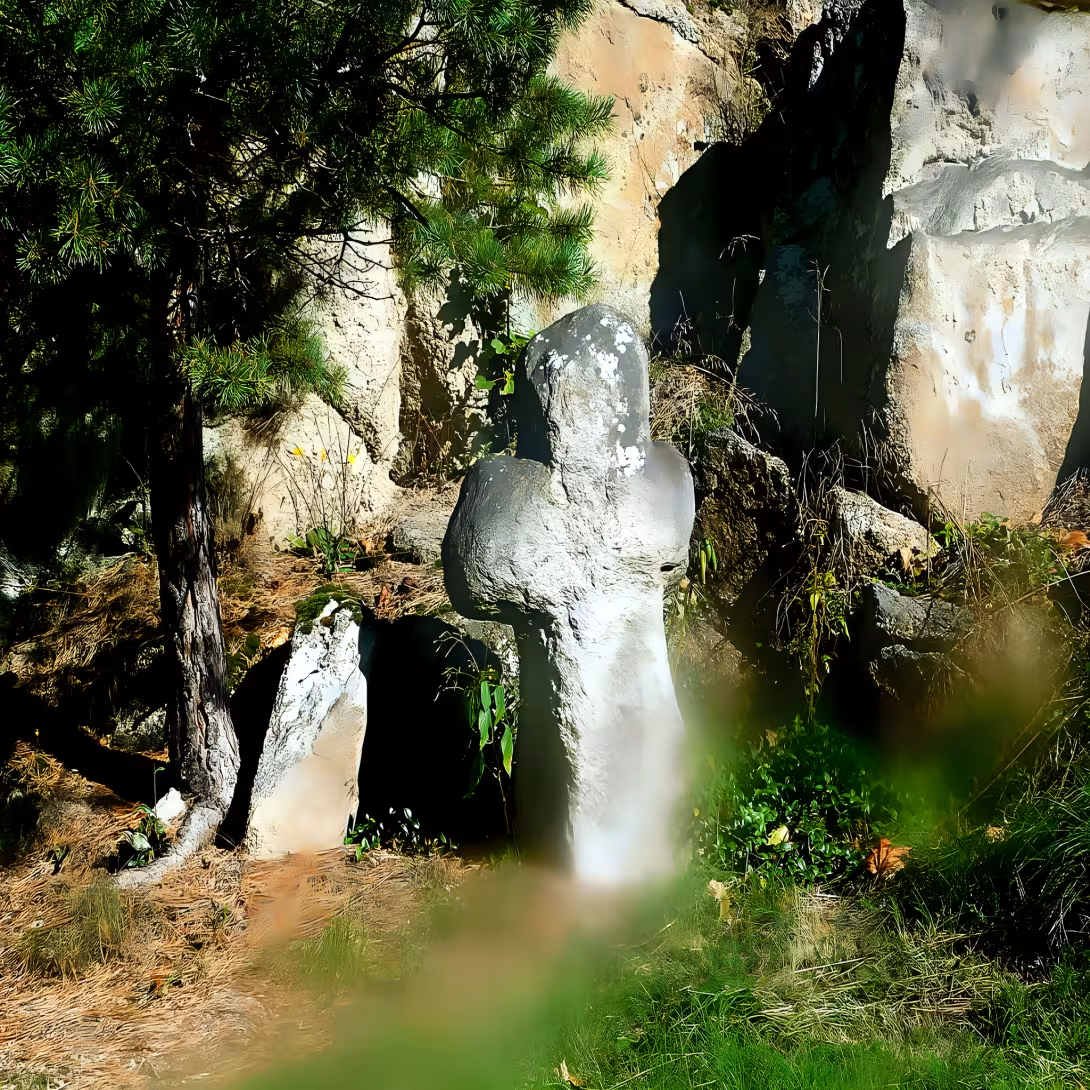
The Smírčí kříž is a medieval granite monument located in Bečov nad Teplou, within the Karlovy Vary district. Declared a cultural monument of the Czech Republic in 1994, it stands as an important piece of local heritage and folk art.
Little is known about its earliest history, and the stone lacks a date. It is classified as a medieval folk artistic design.
The granite monolith takes the form of an asymmetrical Latin cross. Erosion has irregularly rounded the beam ends. The cross bears no inscriptions or visual depictions. Its height ranges from 1.06 to 1.13 meters, with a crossbar measuring between 0.65 and 0.68 meters. The arms are 0.3 meters long, the head is 0.28 meters high, and the stone's thickness varies from 0.24 to 0.26 meters.
Discovered around 1962 by a Bečov nad Teplou forester, it was found north of Útvina near the former road to Šibeniční vrch (also known as Galgenberg or Nad Ovčínem) at an altitude of 660 meters above sea level. The forester relocated the cross to the Tepelská forest lodge at house number 409, placing it by the access road with other collected stone artifacts.
Originally situated near a former Jewish cemetery, its site was officially recognized as a cultural monument in 1994 by the Czech Republic's Ministry of Culture.
Currently, the Smírčí kříž is located near the Tepelská forest lodge. It forms part of a private lapidarium accessible to visitors upon request.
This monument connects us to medieval folk traditions and serves as an intriguing stop for those interested in local history and stone art.
Historical milestones
- c. 14th century
- The creation of the Smírčí Cross as a medieval stone monument.
- 1962
- The discovery of the Smírčí Cross by a forest ranger in Bečov nad Teplou.
- c. 1994
- Official recognition as a cultural heritage site of the Czech Republic.
Architectural development
The monument is a granite monolith with irregular, rounded ends caused by erosion. It is designed as an asymmetrical Latin cross without any carvings or text.
Historical events
In 1962, the cross was discovered by a forester north of the village of Útvina. In 1994, the Ministry of Culture of the Czech Republic declared it a cultural monument.
Points of interest
- The Smírčí kříž is a medieval granite monument located in Bečov nad Teplou and was declared a cultural monument of the Czech Republic in 1994. - It takes the form of an asymmetrical Latin cross with erosion having irregularly rounded the beam ends, and it bears no inscriptions or visual depictions. - Discovered around 1962 by a forester from Bečov nad Teplou, it was originally situated near a former Jewish cemetery before being relocated to the Tepelská forest lodge at house number 409. - The granite monolith's height ranges from 1.06 to 1.13 meters, with specific measurements for its cro
Guide
Show guide text
This text was created by artificial intelligence and has not been editorially reviewed. It may contain inaccuracies.
Welcome to Bečov nad Teplou. As you stand here in this tranquil setting, take a moment to settle into your surroundings and simply breathe in the atmosphere of this historic location. Right in front of you, emerging from the landscape as a silent and enduring presence, is the Smírčí kříž. At first glance, you might notice its rugged and weathered appearance, a stark contrast to the polished monuments you might find in a city center. It is a singular, powerful object that commands a certain kind of quiet respect.
Take a closer look at the form of the monument. You are looking at a granite monolith, a massive piece of stone that has been shaped by human hands and then further sculpted by the relentless passage of time. It takes the form of an asymmetrical Latin cross. Notice how the proportions are not perfectly balanced; the arms of the cross do not meet in a way that feels mathematically precise. This asymmetry gives the monument a very organic, almost living quality. As you observe the surface, please pay close attention to the edges and the ends of the crossbeam. You will see that they are not sharp or straight. Instead, they are irregularly rounded and smoothed. This is the unmistakable work of erosion. For hundreds of years, wind, rain, and the changing seasons have been slowly wearing away at the granite, softening its silhouette and blending it into the natural world around it.
As you contemplate this weathered stone, let us allow our minds to travel back through the centuries. To understand the significance of what you see, we must look toward the 14th century. It was during this medieval period that the Smírčí kříž was first created. It stands as a significant example of medieval folk art, a testament to the craftsmanship of people who lived long before the modern era. Unlike the grand, soaring cathedrals or the intricate marble sculptures commissioned by kings, this is a piece of folk art. It represents the spiritual and cultural life of the local community, created with a simplicity that belies its profound historical weight. It is a piece of the earth itself, transformed into a symbol of faith and remembrance.
The history of this monument is not just one of creation, but also one of survival and rediscovery. For many centuries, the Smírčí kříž may have been lost to the collective memory of the people, perhaps hidden by the growth of the forest or the shifting of the landscape. It remained a silent part of the terrain, largely forgotten by the passing generations. That changed in 1962. It was then that a forest ranger working in the area near Bečov nad Teplou stumbled upon this granite relic. This moment of discovery was crucial; it rescued the monument from potential oblivion and brought it back into the light of human awareness. From that point on, its value as a piece of local cultural heritage began to be truly understood.
This understanding culminated around 1994, when the Smírčí kříž received official recognition as a cultural monument of the Czech Republic. This designation ensures that this small but vital piece of history is protected and preserved for future generations to encounter, just as you are encountering it today. It is no longer just a stone in the woods; it is a recognized treasure of the nation’s heritage.
Now, I invite you to lean in a little closer, if you wish, and examine the surface of the granite once more. You might find yourself searching for a name, a date, or perhaps a prayer carved into the stone. You might look for a symbol or a depiction that explains why this cross was placed here in the first place. But as you look, you will realize something quite profound: there is nothing. The Smírčí kříž bears no inscriptions. There are no visual depictions, no carved stories, and no written records on its surface.
This lack of information creates a fascinating mystery. In an age where we are so used to having every detail documented and every story recorded, this monument offers us only silence. It is a silent witness to a medieval past that remains, in many ways, unspoken. Who placed this stone here in the 14th century? What event or what person was it meant to commemorate? The granite holds these secrets tightly, refusing to yield them to the modern world. This silence is perhaps the most captivating thing about the monument; it forces us to use our own imaginations to fill in the blanks of history. It invites us to wonder about the lives, the struggles, and the faith of the people who walked these same paths seven hundred years ago.
As you stand before this asymmetrical, weathered monolith, try to feel the weight of those centuries. Feel the connection between the medieval hands that shaped it and the modern hands that now protect it. The Smírčí kříž is a bridge across time, a piece of granite that has endured through the rise and fall of eras, remaining steadfast even as its edges were smoothed away by the elements.
Thank you for taking this moment to pause and reflect here with me. The history of Bečov nad Teplou is deep and multifaceted, and this small monument is just one chapter in a much larger story. As you continue your journey through this beautiful area, I encourage you to keep looking closely at the world around you, for even the simplest stones can hold the echoes of the past. Please, continue your exploration of the surroundings, and enjoy the rest of your visit.
Tips for visitors
The best time to visit the Smírčí kříž is during late spring or early autumn when the weather is mild, making it ideal for exploring the surrounding Tepelská forest lodge and nearby areas like Šibeniční vrch. During these seasons, the natural light enhances the monument's rustic charm, providing a serene atmosphere that complements its historical significance.
Parking near Smírčí kříž is convenient as there are designated spots close to the site, making it accessible by car. For those preferring public transport, local buses can take you near Bečov nad Teplou, from where a short walk will lead you to the monument. It's advisable to check current transportation options online before your visit.
When visiting Smírčí kříž, consider bringing comfortable walking shoes and weather-appropriate clothing, as the terrain around the site can be uneven due to its natural setting. A hat or sunscreen is recommended if you're planning a midday visit during warmer months. Additionally, carrying water and snacks will make your exploration more enjoyable.
For photography enthusiasts, capturing Smírčí kříž in the soft light of early morning or late afternoon can yield stunning images that highlight its weathered textures and historical aura. The area around Tepelská forest lodge provides a picturesque backdrop for photos. Remember to respect any guidelines regarding drone usage if you plan on aerial photography.
Families with children will find the site and its surroundings engaging, offering opportunities to explore nature and learn about local history. A visit to the former Jewish cemetery nearby can be educational, providing insights into the area's past. Ensure that young visitors are prepared for a walk through natural landscapes, making it an adventure as well as a learning experience.
Businesses nearby
Do you run a restaurant, accommodation, shop, museum, rental, wellness or other visitor service near this monument? Show yourself directly to the people heading to it — this is how they will see you in the app and on the web:
Events nearby

Zdroj akcí: otevřená data měst a obcí ČR (Národní katalog otevřených dat) a kalendář akcí Národního památkového ústavu.
Nearby
The monument is located near the Tepelská forest lodge, the former Jewish cemetery, and the Šibeniční vrch (Galgenberg) area.
Accommodation nearby
Trips and activities nearby
Guided tours, tickets and activities nearby from GetYourGuide
Affiliate link: if you buy from the partner, we may receive a commission. The price for you does not change.
Search tours and activities →Themed route
1. Smírčí kříž (Bečov nad Teplou) - Monument
Begin your journey at the Smírčí kříž, a poignant monument commemorating the tragic events of World War II in Bečov nad Teplou. This site serves as a powerful reminder and place for reflection on history, making it an essential visit for anyone interested in understanding the past's impact on this region.
2. Tepelská forest lodge - Historical Site
A short walk from the Smírčí kříž, the Tepelská forest lodge offers a glimpse into the area's historical significance as a former meeting place for local dignitaries and travelers. Its rustic charm and connection to the past make it an intriguing stop, providing insights into how people once interacted with nature and each other in this serene setting.
3. Former Jewish Cemetery - Historical Site
Continue your exploration by visiting the former Jewish cemetery, located nearby. This site holds historical importance as a testament to the Jewish community that once thrived in Bečov nad Teplou. Walking through its quiet grounds offers a moment of contemplation and respect for those who lived here, adding depth to your understanding of the region's diverse cultural heritage.
4. Šibeniční vrch (Galgenberg) - Historical Site
Conclude your tour at Šibeniční vrch, known as Galgenberg or "Gallows Hill." This area is steeped in history, once used for executions during turbulent times. The hill's name and its historical context provide a somber yet fascinating insight into the darker aspects of local history, offering a reflective end to your thematic journey through Bečov nad Teplou.
```Seasonal recommendations
Spring: Visiting Smírčí kříž (Bečov nad Teplou) during spring offers the unique charm of nature awakening, with vibrant wildflowers and fresh greenery surrounding the monument. The soft light of longer days enhances the serene atmosphere, making it a perfect time to appreciate the historic site's beauty. As temperatures gradually rise, visitors are advised to wear comfortable layers that can be adjusted throughout the day. While crowds may still be moderate as spring tourism begins, arriving early in the morning ensures a quieter experience and allows for unhurried exploration.
Summer: The summer season at Smírčí kříž is marked by lush landscapes and warm sunshine, creating an inviting environment for outdoor activities. This period often sees increased visitor numbers due to its appeal during the peak tourist season. To avoid larger crowds, it's recommended to visit early in the morning or later in the afternoon. Light, breathable clothing is ideal to stay comfortable under the sun, along with sunscreen and a hat for protection. The longer daylight hours offer ample time to explore the area thoroughly.
Autumn: Autumn brings a spectacular display of colors as leaves turn golden and red around Smírčí kříž, providing a picturesque backdrop that enhances the monument's historic allure. The cooler temperatures make it an ideal time for walking tours without the summer heat. Visitors should dress in layers to accommodate fluctuating weather conditions typical of this season. Although fewer tourists are present compared to summer, planning visits on weekdays can further ensure a more tranquil experience.
Winter: Winter transforms Smírčí kříž into a serene and quiet site, with snow potentially adding a magical touch to the landscape. The colder temperatures necessitate warm clothing, including coats, hats, gloves, and sturdy boots for comfort during exploration. While some facilities might have reduced hours due to the season, the peaceful atmosphere offers a unique opportunity to enjoy the monument without the hustle of peak seasons. If visiting during daylight saving time adjustments, be mindful of potential changes in opening times.
Visualizations and artistic views


The visualisations are generated by artificial intelligence and serve as inspiration.
Photos from the area
Real photos taken near the monument


Zdroj a licence jsou uvedeny u každého snímku.
Tips from visitors
No tips yet. Be the first!
Log in and add your tip.
Sources and literature
Fotografie: Noe / CC0, rozlišení zvýšeno umělou inteligencí — Wikimedia Commons. The author and licence also appear when you hover over the image.
Faktickým podkladem tohoto textu byl článek na Wikipedii, jehož autory jsou přispěvatelé Wikipedie. Článek je dostupný pod licencí CC BY-SA 4.0.
Location on the map
More monuments – Bečov nad Teplou
Show all in the municipality

Příběhy a pověsti
Legendy, pověsti a příběhy spjaté s touto památkou
Fotografie návštěvníků
Zatím žádné fotografie. Buďte první, kdo přidá fotografii z návštěvy!
Přihlaste se a přidejte svou fotografii nebo hodnoťte.
Za ověřenou návštěvu v aplikaci získáte víc bodů — poznáme podle GPS, že jste na místě.
Reviews and comments