






Smírčí kříž (okres Zlín) Reconciliation cross
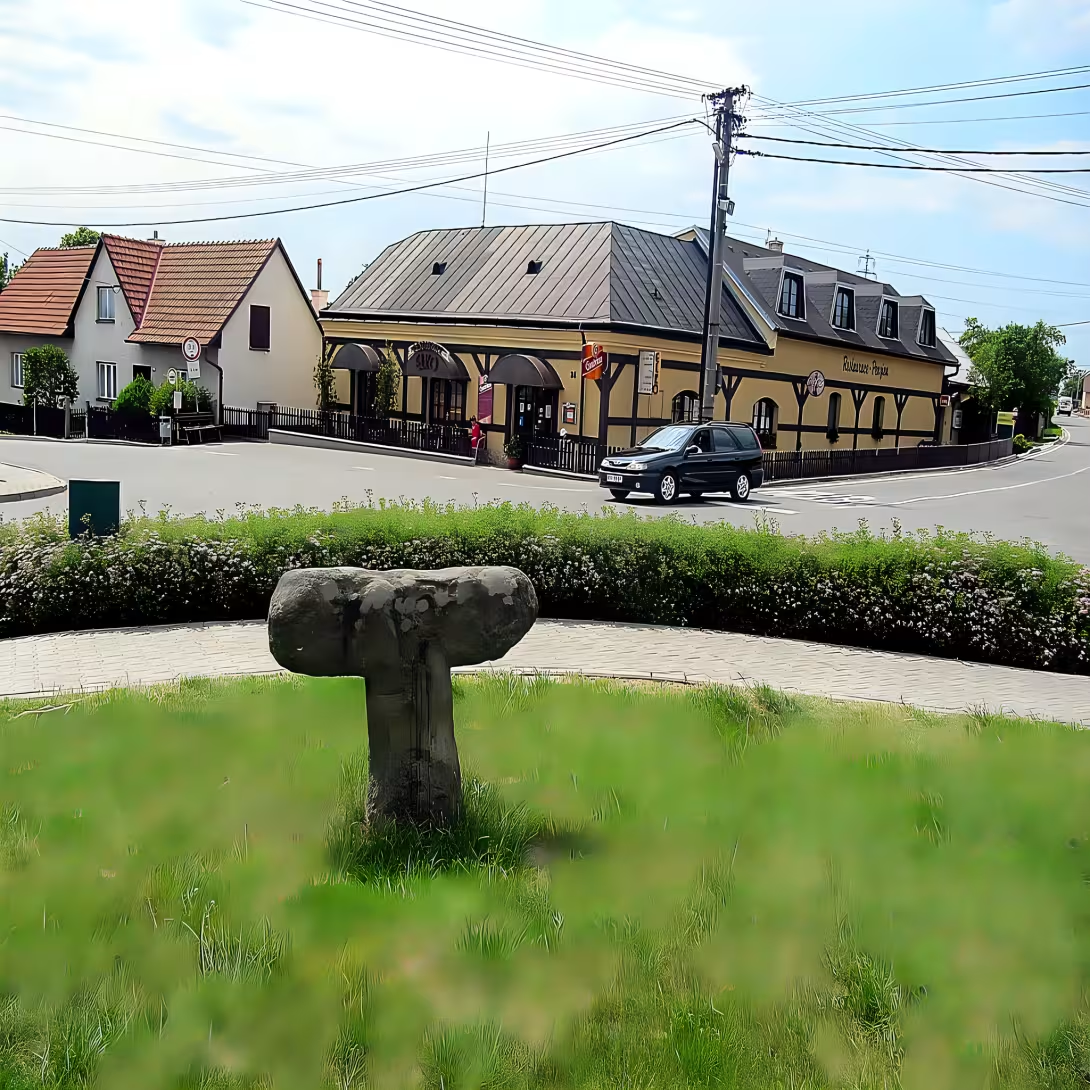
The Smírčí Kříž of Horní Lhota: A 15th-Century Peace Cross in the Czech Republic
In the heart of the Czech Republic, a historical monument stands the test of time - the Smírčí Kříž, a 15th-century peace cross located in front of the Church of St. Diviš in Horní Lhota. This remarkable structure is both a testament to the region's rich history and a symbol of peace.
The Smírčí Kříž originated around the 15th century and was initially situated near a stream within the community of Horní Lhota. In 1855, it was relocated to its current position in front of the Church of St. Diviš. Its original location is believed to have been at Sehrad, a nearby castle.
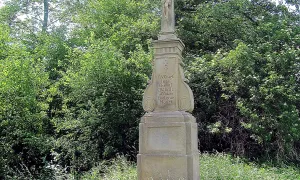
The cross stands freely, carved from a single stone block into the shape of a Latin cross with rounded arms and edges. Partially buried in the ground, it exudes an air of serenity and humility. Measuring approximately 0.9-1 meter in height, 0.8 meters in width, and 0.27-0.30 meters in thickness, this monument embodies simplicity and elegance.
The Smírčí Kříž is not associated with legendary stories or myths but is linked to the Cyril and Methodius tradition, highlighting its importance as a cultural and historical landmark.
Today, visitors can find the Smírčí Kříž standing proudly in front of the Church of St. Diviš, surrounded by a picturesque rural landscape. This monument serves as a reminder of the region's rich history and cultural heritage, making it an essential stop for anyone interested in exploring the Czech Republic's past.
Historical milestones
- 15th century
- Originated around the 15th century
- 1855
- Relocated to its current position in front of the Church of St. Diviš
Historical events
- approximately 15th century
- Originally stood near a stream in Horní Lhota, then moved to its current location in front of the Church of St. Diviš
- 1855
- Moved from its original location
Points of interest
– The Smírčí Kříž is a 15th-century peace cross located in front of the Church of St. Diviš in Horní Lhota.
– The cross was initially situated near a stream within the community of Horní Lhota, but was relocated to its current position in 1855.
– The monument stands freely, carved from a single stone block into the shape of a Latin cross with rounded arms and edges.
– The Smírčí Kříž is linked to the Cyril and Methodius tradition, highlighting its importance as a cultural and historical landmark.
Guide
Show guide text
This text was created by artificial intelligence and has not been editorially reviewed. It may contain inaccuracies.
Welcome. You have arrived at a place where time seems to slow down, a quiet corner of Horní Lhota where the past is not merely remembered, but remains physically present. As you stand here, take a moment to simply breathe and settle into the atmosphere of this surroundings. Before you, resting in the earth, is the Smírčí kříž. It is a modest object in size, perhaps, but it carries a weight of history that is profound. As you look at this stone monument, you are not just looking at an artifact; you are looking at a silent witness to centuries of human life, conflict, and eventual reconciliation.
Take a moment to observe the shape of the monument. The Smírčí kříž is a Latin cross, a form that has been recognized across the world for generations. Notice how it is not a sharp, perfectly geometric structure, but rather a piece of history that has been softened by the elements. It was carved from a single, solid block of stone, a testament to the labor and the singular purpose of its creation. As your eyes follow the lines of the cross, you will see that the arms and the edges are rounded. This smoothness is not merely a design choice; it is the result of hundreds of years of wind, rain, and the slow, inevitable passage of time. The stone has been weathered, its once-sharp edges smoothed into a gentle, organic form that seems to belong to the landscape itself.
Notice also how the monument sits within the ground. It is partially buried, as if the very earth of Horní Lhota is slowly embracing it, pulling it back into the soil from which it was once hewn. This connection to the ground gives the Smírčí kříž a sense of permanence, an idea that it is an inseparable part of this location. It does not stand atop the earth as an intruder, but rather emerges from it, rooted in the history of this specific ground.
To understand why this cross exists, we must travel back in time to the 15th century. This was an era of great complexity and often great hardship. The Smírčí kříž was born in this century, a period when the social and legal structures of the land were vastly different from what we know today. The very name of the monument, a peace cross, tells us much about its origin. In those days, such crosses were often erected as part of a settlement between individuals or families—a way to mark the resolution of a conflict or to provide a site for atonement. While the specific details of the event that led to its creation have been lost to the shadows of time, the purpose remains etched in its very existence: it is a symbol of peace, a physical marker of a moment when a grievance was laid to rest.
As you contemplate the stone, you might find yourself wondering about the hands that shaped it. Who was the mason who took a raw block of stone and, with hammer and chisel, gave it this sacred form? Who were the people who stood where you are standing now, five hundred years ago, perhaps seeking solace or reflection at the foot of this cross? The names of the architects and the individuals involved in its creation are unknown. They have left no signature, no written record, no monument to their own names. This anonymity adds a layer of mystery to the Smírčí kříž. It is not a monument to a specific person or a specific hero, but a monument to a human experience—the universal need for peace and the desire to make amends.
The history of this monument is not one of static existence, though it may seem so. It has traveled through the centuries, moving through the landscape of this community. Originally, the Smírčí kříž was not located here in front of the church. Instead, it was situated near a stream within the community of Horní Lhota. Imagine it there, perhaps surrounded by the sound of running water and the rustle of trees, serving as a quiet landmark for those passing by the water’s edge.
A significant change occurred in the year 1855. During this time, the cross was relocated to its current position, standing here in front of the Church of St. Diviš. This move was a transition from a natural, perhaps more secluded setting, to a more central, spiritual heart of the community. By placing the Smírčí kříž here, it was brought into the daily rhythm of the village, standing as a constant companion to those attending services and those walking the paths near the church. This relocation ensured that the cross would remain a focal point for the people of Horní Lhota, bridging the gap between the natural world of the stream and the spiritual world of the church.
As you continue to look at the stone, I invite you to consider the sheer endurance of this object. It has survived the 15th century, the transition of the 19th century, and the rapid changes of the modern era. It has watched the world transform around it, while it remained, largely unchanged, a simple, rounded Latin cross of stone. There is a certain mystery in that endurance—a question of how such a simple object can hold so much meaning across so many different lifetimes.
There is no grand inscription to read, no complex carvings to decipher, and yet, the Smírčí kříž speaks volumes through its very presence. It asks us to reflect on the nature of conflict and the importance of finding peace. It reminds us that even the most difficult moments in human history can eventually be transformed into symbols of reconciliation.
As you finish your time here in front of this remarkable piece of history, I encourage you to take that sense of quiet reflection with you. Whether you continue your walk through the beautiful landscapes of Horní Lhota or move toward the Church of St. Diviš, carry with you the image of this weathered stone, standing firm and peaceful against the passage of time. Thank you for joining us on this brief journey through the past. Please, continue your exploration and enjoy the rest of your visit.
Tips for visitors
The best time to visit Smírčí kříž is during the spring and summer months when the rural landscape surrounding it is lush and green. This allows for great photography opportunities with plenty of natural light.
Parking is available near the Church of St. Diviš in Horní Lhota, from where you can walk to the peace cross. Alternatively, you can take a short taxi ride or use public transportation.
When visiting Smírčí kříž, be sure to bring comfortable walking shoes and clothing suitable for the outdoors. A camera is also recommended to capture the unique beauty of this historic landmark.
For photography enthusiasts, the best spots to capture the peace cross are from the surrounding fields and hills, where you can get a clear view of the monument. The morning and late afternoon sun provide the most flattering light.
If you're looking for more things to see nearby, consider visiting the Church of St. Diviš in Horní Lhota, which is located just across from the peace cross. This beautiful church dates back to the 18th century and offers stunning views of the surrounding countryside.
Businesses nearby
Do you run a restaurant, accommodation, shop, museum, rental, wellness or other visitor service near this monument? Show yourself directly to the people heading to it — this is how they will see you in the app and on the web:
Nearby
Located in front of the Church of St. Diviš in Horní Lhota, surrounded by a rural landscape
Accommodation nearby
Themed route
Thematic Tour Route
The main goal of this tour is to explore the Smírčí kříž (Smirchy Cross) in Horní Lhota, surrounded by a picturesque rural landscape.
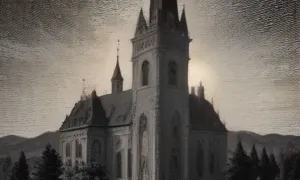
Stop 1: Church of St. Diviš Horní Lhota's iconic Church of St. Diviš stands tall, its stunning architecture and rich history making it a must-visit attraction. Take a moment to admire the church's unique design and learn about its significance in the local community.
Stop 2: Smírčí kříž Smírčí kříž, located in front of the Church of St. Diviš, is an intriguing landmark that offers breathtaking views of the surrounding countryside. This historic cross has been a symbol of peace and reconciliation for centuries, making it an essential stop on this tour.
Stop 3: Rural Landscape Take a stroll through the rolling hills and lush greenery of Horní Lhota's rural landscape. With its serene atmosphere and picturesque scenery, this area is perfect for relaxation and contemplation.
Seasonal recommendations
Spring
As you visit Smírčí kříž in the spring, you'll be greeted by a lush green environment and mild temperatures. The natural surroundings are particularly beautiful during this time of year, with blooming flowers and trees regaining their vibrancy after winter. In terms of practical advice, consider arriving early to avoid crowds and wear comfortable shoes for exploring the area. The best time to visit is from late March to early May.
Summer
During the summer months, Smírčí kříž takes on a warm and sunny atmosphere. The days are long, with plenty of daylight hours to enjoy the scenic views and historical significance of the monument. Be prepared for larger crowds during peak season (June to August) and consider arriving earlier in the day to beat the heat. Wear light-colored clothing and don't forget your sunscreen.
Autumn
As autumn arrives, Smírčí kříž is surrounded by a picturesque landscape of changing leaves and harvest hues. The air is crisp and cool, making it an ideal time for outdoor exploration. Visit during the shoulder season (September to November) to avoid the peak tourist crowds and enjoy more peaceful surroundings. Wear layers for the cooler temperatures and consider bringing a light jacket.
Winter
In the winter months, Smírčí kříž takes on a serene and quiet atmosphere, with snow-covered trees and a blanket of white covering the surrounding landscape. The best time to visit is during the weekdays, when crowds are smaller and the atmosphere is more peaceful. Wear warm clothing and consider bringing hot beverages to keep you cozy. The monument's opening hours may be shorter due to winter weather conditions, so check ahead of time for any specific restrictions or closures.
Visualizations and artistic views

The visualisations are generated by artificial intelligence and serve as inspiration.
Photos from the area
Real photos taken near the monument

Zdroj a licence jsou uvedeny u každého snímku.
Tips from visitors
No tips yet. Be the first!
Log in and add your tip.
Sources and literature
Faktickým podkladem tohoto textu byl článek na Wikipedii, jehož autory jsou přispěvatelé Wikipedie. Článek je dostupný pod licencí CC BY-SA 4.0.
Location on the map

Příběhy a pověsti
Legendy, pověsti a příběhy spjaté s touto památkou
Fotografie návštěvníků
Zatím žádné fotografie. Buďte první, kdo přidá fotografii z návštěvy!
Přihlaste se a přidejte svou fotografii nebo hodnoťte.
Za ověřenou návštěvu v aplikaci získáte víc bodů — poznáme podle GPS, že jste na místě.
Reviews and comments