






socha svaté Máří Magdaleny Statue
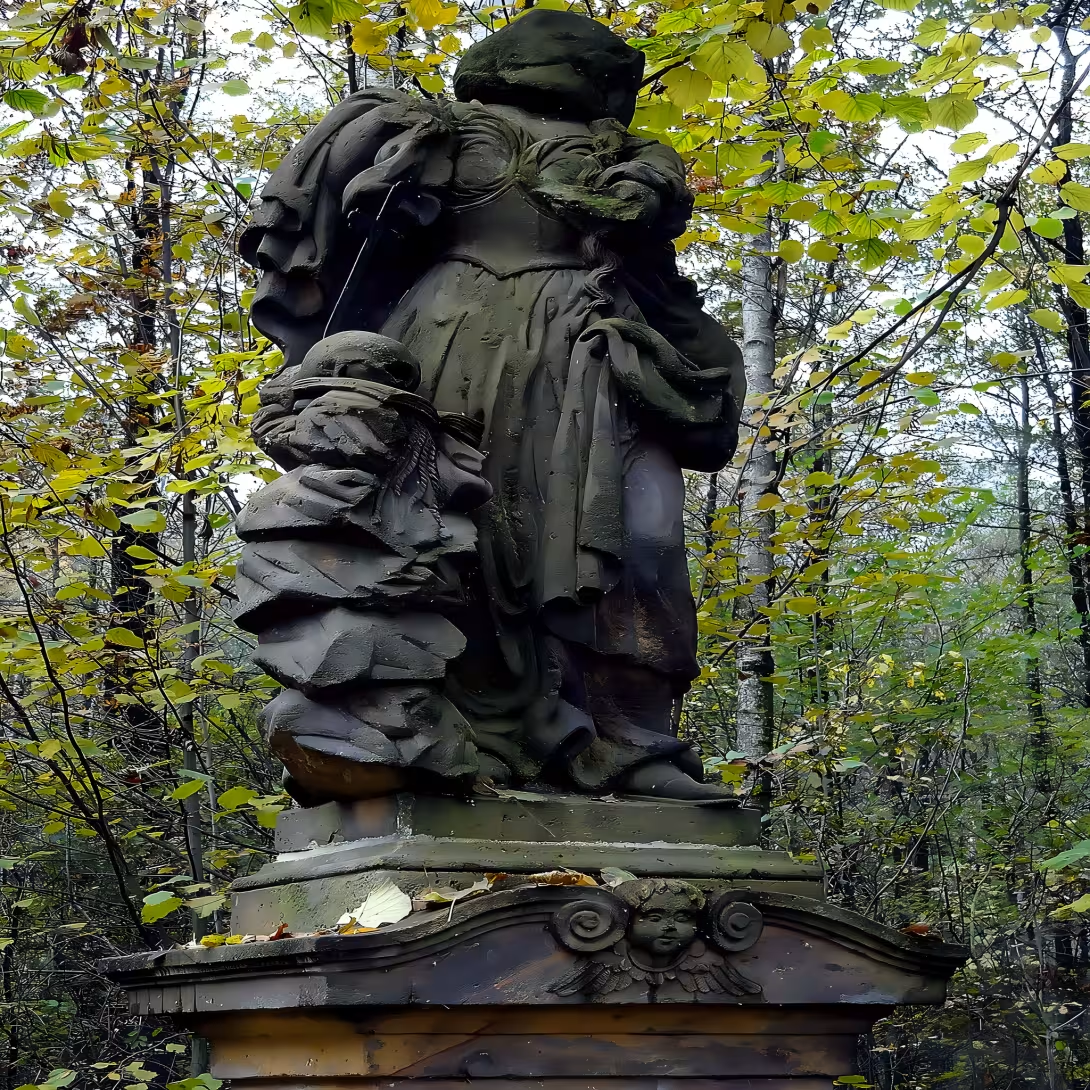
The statue of St. Mary Magdalena is a classical sandstone sculpture of an unknown author from the first third of the 19th century. It is located on the hillside of the hill Špičák south of the village Větrov in Frýdlantých outskirts. From an artistic point of view, it is one of the finest works of its kind in the region. Since 3 October 2008 it has been protected as a cultural monument of the Czech Republic. This work represents an important example of sacral creation associated with regional craft tradition.
During the first third of the 19th century, when the sculpture arose, the Czech countries were in the period of national renewal. At the time, he heard classicism and empire under Habsburg rule. In the Czech regions there was a number of quality sculptures in the sacral space, which was often associated with folk worship. There have been no more detailed reports of the particular contracting authority or the precise circumstances of the creation. However, the object itself bears the features of the then regional stonework.
Marie Magdalena is a tall woman like a standing figure in a so-called contrast post. The right side is supported by a modeled rock. On it lies an open book with reprimand, cross and skull. The saint is dressed in a long blending dress with plenty of folds and has draperies around the left side. The sculpture completely lacks the head and ends of the hands. The whole piece is settled on an older Baroque quadratic plinth. Its base is made up of two low degrees. On the front side of the pedestal is a large plastic relief that captures the scene where Mary Magdalene washes Jesus Christ's feet. The base of the plinth ends with a head decorated with a profiled ledge. It is supplemented by volutes and mascaron on the front.
Details are not given in the available sources about the ownership history and the old fates of the monument. The technical reconstruction was an important milestone in the modern history of the building. At the turn of the 20th and 21st centuries it was performed by Vanesa Trostová.
The fundamental moment for legal protection of the work became 3rd October 2008, when the statue was officially declared a cultural monument of the Czech Republic. Among the most striking visual attractions are the fact that the skull and palms are missing from the sculpture. Attention is also paid to the unconventional relief on the plinth depicting the washing of the feet of Jesus Christ.
The monument is located in the northern part of the Czech Republic in the region of Frýdlanta. It stands on the side of the hill Špičák south of the village Větrov, which is part of the town Frýdlant. Access to this piece of art allows the position in natural terrain on the top.
This statue represents a valuable example of regional sculpture. Her visit offers a meeting with a historical work of art in the region of Frýdlant. It is worth a visit and a personal look at the preserved details of the older Baroque base.
Then and now
Drag the slider to compare how the landmark may have looked when it was built with the view today.
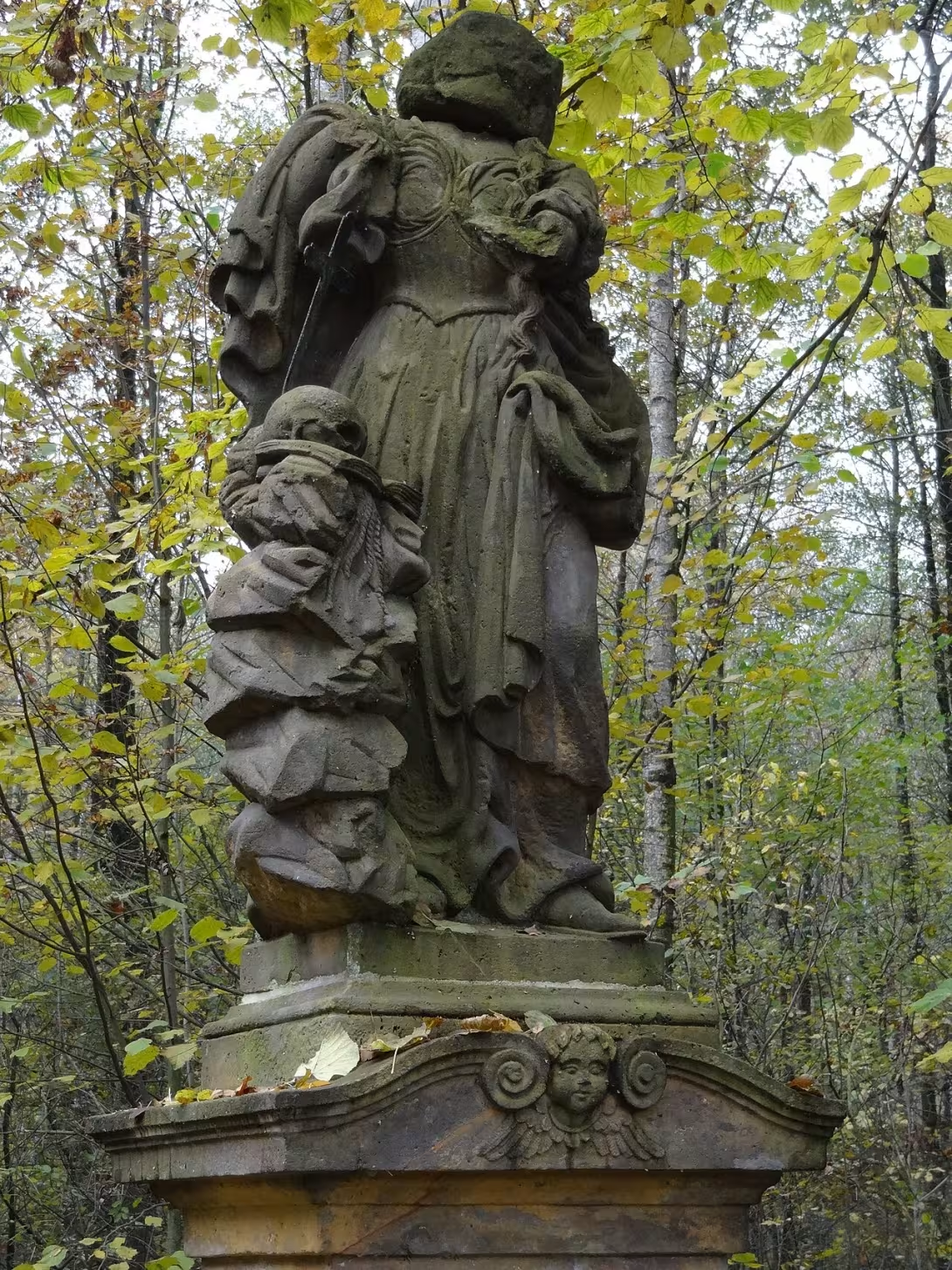
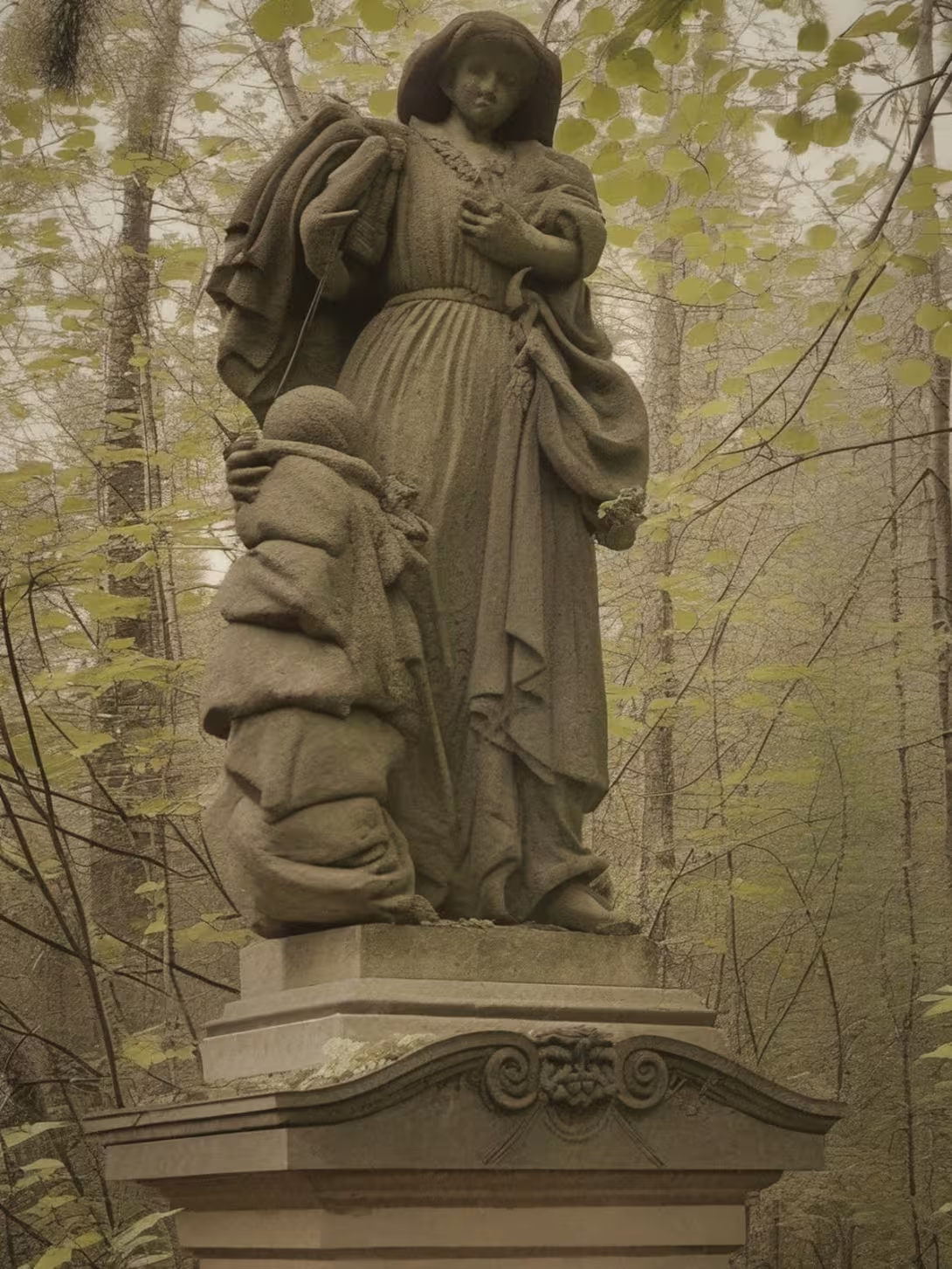
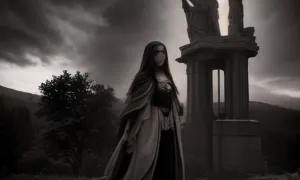
The historical appearance on the left is an AI-generated visualisation and serves as inspiration only.
Historical milestones
- 1700-1750
- The creation of an older Baroque plinth on which a statue was later mounted.
- 1800-1833
- The creation of the sandstone sculpture of Saint Mary Magdalena in the first third of the 19th century.
- 1995-2005
- Professional reconstruction of the statue at the turn of the 20th and 21st centuries.
- 2008
- The statue was officially declared a cultural monument.
Architectural development
The sculpture was created from sandstone by an unknown author in the first period of the 19th century and is established on an older Baroque quadratic plinth, whose base consists of two low degrees. At the turn of the 20th and 21st centuries, the statue underwent professional reconstruction under the direction of Vanesa Trostova. From an artistic point of view, the work is highly valued and represents quality regional stonework.
Points of interest
- Skulpture is a classical sandstone work by an unknown author dating back to the first third of the 19th century. - The statue completely lacks the head and ends of hands or palms. - The work is set on an older Baroque quadratic plinth whose front of the pedestal is decorated with a large plastic relief depicting the scene where Mary Magdalene washes Jesus Christ's feet. - The technical reconstruction of the building was carried out at the turn of the 20th and 21st centuries by Vanesa Trostová. - As a cultural monument of the Czech Republic, the object has been protected since 3 October 2008.
Guide
Show guide text
This text was created by artificial intelligence and has not been editorially reviewed. It may contain inaccuracies.
Welcome to the hillside of the hill Špičák, in the picturesque landscape south of the village Větrov in the amazing Frýdlant outturn. Right now, you are standing in a place that breathes through history and calm, and before your eyes is one of the most remarkable monuments of our region. Look at the sandstone statue of St. Mary Magdalena. As you stand in the silence of the forest and nature, let the first impression of this precious work, which quietly tells the stories of ancient centuries.
Let's dive into the depths of history together and look at how this extraordinary work came into being. The sandstone sculpture itself dates from the first third of the nineteenth century and was made by an unknown author. It is one of the best quality work of its kind in the whole wide area. But her story is made up of several different chapters that took place over time. When you look closely, notice that the statue is set on an older baroque quadratic plinth. This base is much older than the figure itself, because it was created between 17 and 17 hundred and 50. Sometime later, a newer sandstone sculpture was mounted on this older Baroque base. For decades, she resisted the effects of the weather, until at the turn of the twentieth and twenty-first centuries she had had a very important and professional reconstruction that helped restore her dignity. Thanks to its unique value, it was officially declared a cultural monument in the year eight and twenty, thereby locking the chest of its historical heritage forever for future generations.
Now pay attention to the architecture itself and the details that you can observe right in front of you. The figure of a saint is raised in a standing form in a so-called contrast post. This means that the weight of her body lies on one leg, which creates a natural, relaxed yet noble attitude. The right side has this sandstone lady leaning against the rock. There are several symbolic objects on this rock, which belong to the depiction of St. Mary Magdalena. You see here an open book, reprimand, cross and also a skull that symbolizes the permeability of earthly life and deep penance. The front side of the older Baroque pedestal is decorated with a large plastic relief, which represents an impressive scene.
Stop for a moment at the human destinies associated with this place. An important historical personality whose name appears in connection with this place is Vanesa Trostová. People like her, in their own way, formed the spiritual and cultural landscape of the Frydlantians, in which faith, art and reverence to the ancestors mingled.
Looking at the statue, I'm sure you can think of a lot of questions, because this place has secrets and interesting things that don't stop fascinating. As you know, this is a classic sandstone work by an unknown author dating back to the first third of the nineteenth century. But when you look at the sculpture in more detail, you notice something very conspicuous and a little mysterious. The statue lacks a head and ends with hands or palms. Why is that? Did it happen due to the tooth of time, unknown vandalism, or perhaps it was the intention of the creator or the damage during a twisted history? This remains veiled by a secret that gives this place a strange, almost mystical atmosphere. Imagine this figure, without face and palm, looking down into the valley for two hundred years, watching the world change around him without words.
We hope that stopping at this extraordinary monument has enriched you and brought you a moment of peace and thought. When you continue your journey, don't forget to explore other parts of nature and discover the entire Větrov and its surroundings. Thank you for listening to our audio guide, we wish you a wonderful rest of the day and a happy journey on your next tour of history. Goodbye.
Tips for visitors
To visit the sandstone statue of St. Mary Magdalena on the side of the hill Špičák, it is best to choose the morning clock, when the sunlight ideally illuminates the details of this fine work from the first third of the nineteenth century and thus creates a unique atmosphere for observing the sights in nature.
Transportation to the place is possible by car and on foot from nearby Větrova. We recommend to leave our vehicle in a suitable and safe place in the village Větrov and continue on foot on hiking or forest roads leading towards the side of Špičák in the northern part of the Czech Republic.
Due to the location in the forest terrain on the top side of the hill, remember to bring with you fixed hiking shoes, suitable clothes matching current weather and plenty of fluids. A small snack will also be useful, as you will find no sales stands or refreshments at the statue.
For photography we recommend using morning or late afternoon light to highlight sandstone structure. The best shots will be taken from the immediate vicinity of the statue, where it will stand out to be planted in the surrounding nature of the Frýdlant excerpt.
The city of Frýdlant is located within 30 minutes' drive, whose historical centre and other attractions in the region are worth a visit. You can connect a trip along the surrounding forests with light tourism, but due to the terrain on the side of Špičák you need to be more careful and the movement with the pram is not ideal here.
Businesses nearby
Do you run a restaurant, accommodation, shop, museum, rental, wellness or other visitor service near this monument? Show yourself directly to the people heading to it — this is how they will see you in the app and on the web:
Events nearby
Zdroj akcí: otevřená data měst a obcí ČR (Národní katalog otevřených dat) a kalendář akcí Národního památkového ústavu.
Nearby
The monument is located in the northern part of the Czech Republic in the Frýdlantý way, on the side of the hill Špičák south of the village Větrov, which is part of the town Frýdlant.
Accommodation nearby
Trips and activities nearby
Guided tours, tickets and activities nearby from GetYourGuide
Affiliate link: if you buy from the partner, we may receive a commission. The price for you does not change.
Search tours and activities →Themed route
Route of trip in the history of the village Větrov:
1.Větrov Type: Villages Why is it worth a visit: The picturesque village in the northern part of the Czech Republic in the Frýdlantý way serves as an ideal starting point for exploring local beauty. From here, you will go to the south side of the hill Piptoe.
2. Statue of Saint Mary Magdalena Type: Statue (main objective) Why is it worth a visit: This monument is located in the northern part of the Czech Republic in the Frýdlantých excerpt, on the side of the hill Špičák south of the village Větrov. It offers a unique artistic experience and a quiet stop in nature.
3. Frydlant Type: City Why is worth a visit: The village Větrov is a part of this city, located in the immediate vicinity. The whole area offers a pleasant atmosphere in the north of our republic.
Seasonal recommendations
Spring on Větrov brings a awakening nature, when the surrounding trees are just beginning to grow and the fine green creates a bright background for the stone statue of Saint Mary Magdalena. The sun's rays penetrate through the still exposed tree crowns and the morning light gives the whole place a fragile and clean atmosphere. You don't meet many tourists here during this period, so you will enjoy complete peace of mind. I recommend we leave in the morning when the air is the cleanest. Put on fixed shoes in humidified forest terrain and windbreaker, because spring windfalls in high places can surprise.
Summer on Větrov characterizes lush surrounding vegetation, which partially obscures the statue and creates pleasant cool during hot days. The afternoon sun radiates the memory with bright light, but the most beautiful lighting conditions for photography occur at the late sunset when shadows extend. In the main summer season there are a little more tourists coming, so it is best to visit early in the morning when people are empty. Take with you enough drinking water, sunglasses and light breathable clothes, as the climb up the hill will reliably warm you in warm weather.
Autumn turns the surrounding statue of St. Mary Magdalena into a colorful palette of shades of yellow, red and brown. The low sun and morning fog rolling across the valley create a melancholy and mystical atmosphere that perfectly fits this type of monument. The tourist frequency has fallen significantly in this period, so you will enjoy the memory in private. The best time to visit is around noon, when the fog will recede and the sunlight will brighten the autumn landscape for a while. Don't forget the waterproof jacket, the warm hat, and the tight, non-slip shoes for falling and often wet leaves.
Winter gives Větrov a fabulous character, especially when the landscape is covered by a layer of fresh snow that contrasts with a dark stone statue. The lighting is very muted and the days are short, which amplifies the quiet and peaceful atmosphere of the place in advent time. People only come here in the winter months. The best time to visit is around noon, until daylight and temperatures fall to the lowest night values. Warm winter clothes, quality gloves, scarf and winter shoes with a deep sample are essential because the way to the hill is slippery and cold.
Visualizations and artistic views


The visualisations are generated by artificial intelligence and serve as inspiration.
Photos from the area
Real photos taken near the monument

Zdroj a licence jsou uvedeny u každého snímku.
Tips from visitors
No tips yet. Be the first!
Log in and add your tip.
Sources and literature
Fotografie: MartinVeselka / CC BY-SA 4.0, rozlišení zvýšeno umělou inteligencí — Wikimedia Commons. The author and licence also appear when you hover over the image.
Faktickým podkladem tohoto textu byl článek na Wikipedii, jehož autory jsou přispěvatelé Wikipedie. Článek je dostupný pod licencí CC BY-SA 4.0.
Location on the map
Příběhy a pověsti
Legendy, pověsti a příběhy spjaté s touto památkou
Fotografie návštěvníků
Zatím žádné fotografie. Buďte první, kdo přidá fotografii z návštěvy!
Přihlaste se a přidejte svou fotografii nebo hodnoťte.
Za ověřenou návštěvu v aplikaci získáte víc bodů — poznáme podle GPS, že jste na místě.
Reviews and comments