



socha svatého Václava (Velká Ledhuje) Statue
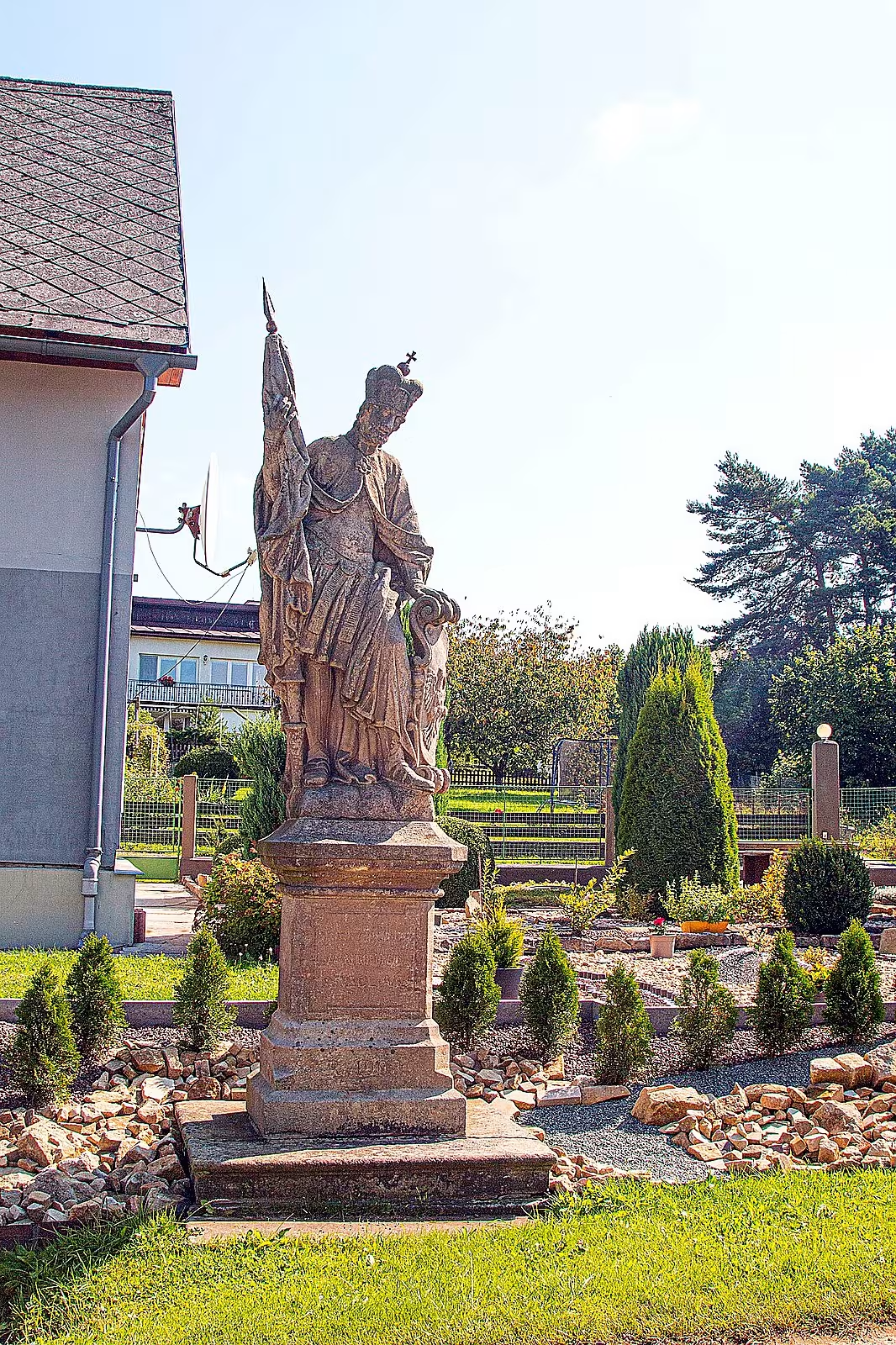
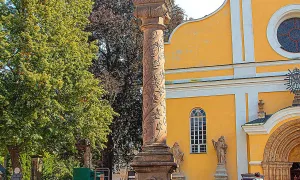
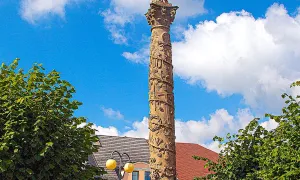
The Baroque sandstone statue of St. Wenceslas stands in the garden near the house No. 163 in Belské street in Velké Ledjuj, the local part of Police nad Metují in the district of Náhod. This cultural monument, protected since 3 May 1958, stands out for artistic processing typical of Ferdinand Maxmilian Brokoff's circle. The building is located on the route of the historic Vamberice pilgrimage route.
The sculpture was created during the period of the high Baroque, when the Czech country strongly influenced the Catholic Reformation. At the time, Europe was dealing with the consequences of war conflicts and emerging enlightenment, reflected in religious iconography. The exact date of creation of the work is not known, but the style of Ferdinand Maximilian Brokoff is one of the important sculptures of the era.
The work is carved from sandstone, material typical of Baroque production in Czech countries. The saint is displayed in a slightly life-size with a centre of gravity on his left leg. In his right hand, he holds the flag on the mast, the left leaning on the shield with the Saint-Clav eagle. A characteristic feature is the richly processed draperies of clothing. Since 1903 the statue has been mounted on a new profiled plinth which complements its overall composition.
Originally, the sculpture was placed at the monastery gate in Broumov, where it was later moved to the current site in Great Leduja. In the catalogue of the National Monument Institute, the object is listed under the register number SAR 28171 / 6-1858.
The importance of the monument underlines its location on the historic Vamberice pilgrimage route, which in the past served as an important spiritual link to the region. Today, the statue of St. Wenceslas is accessible as part of the cultural heritage in the garden at No. 163. Visiting this place offers the opportunity to see a quality Baroque sculpture, which is a direct proof of the artistic tradition associated with the important sculptures' workshops of the high Baroque.
Then and now
Drag the slider to compare how the landmark may have looked when it was built with the view today.
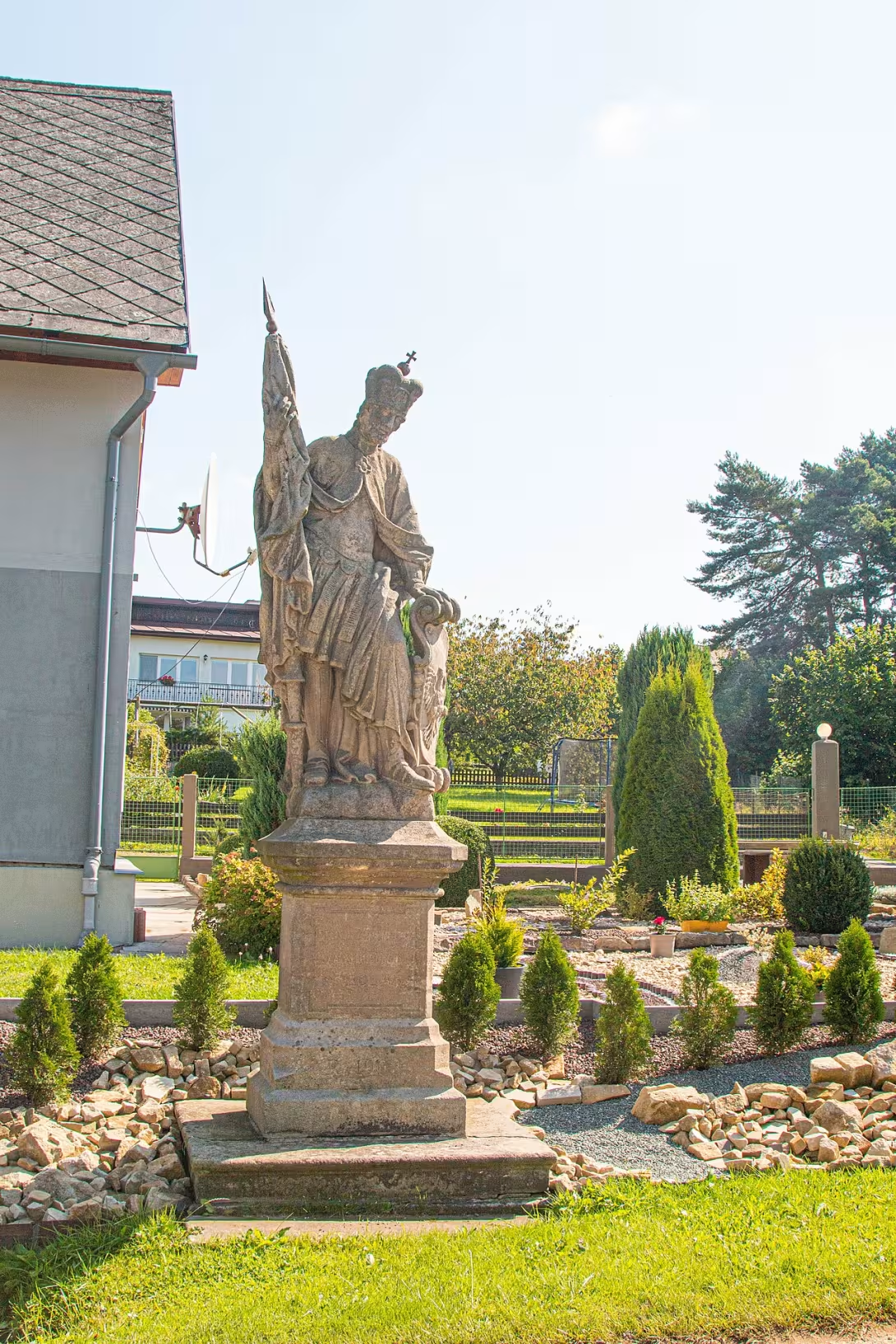
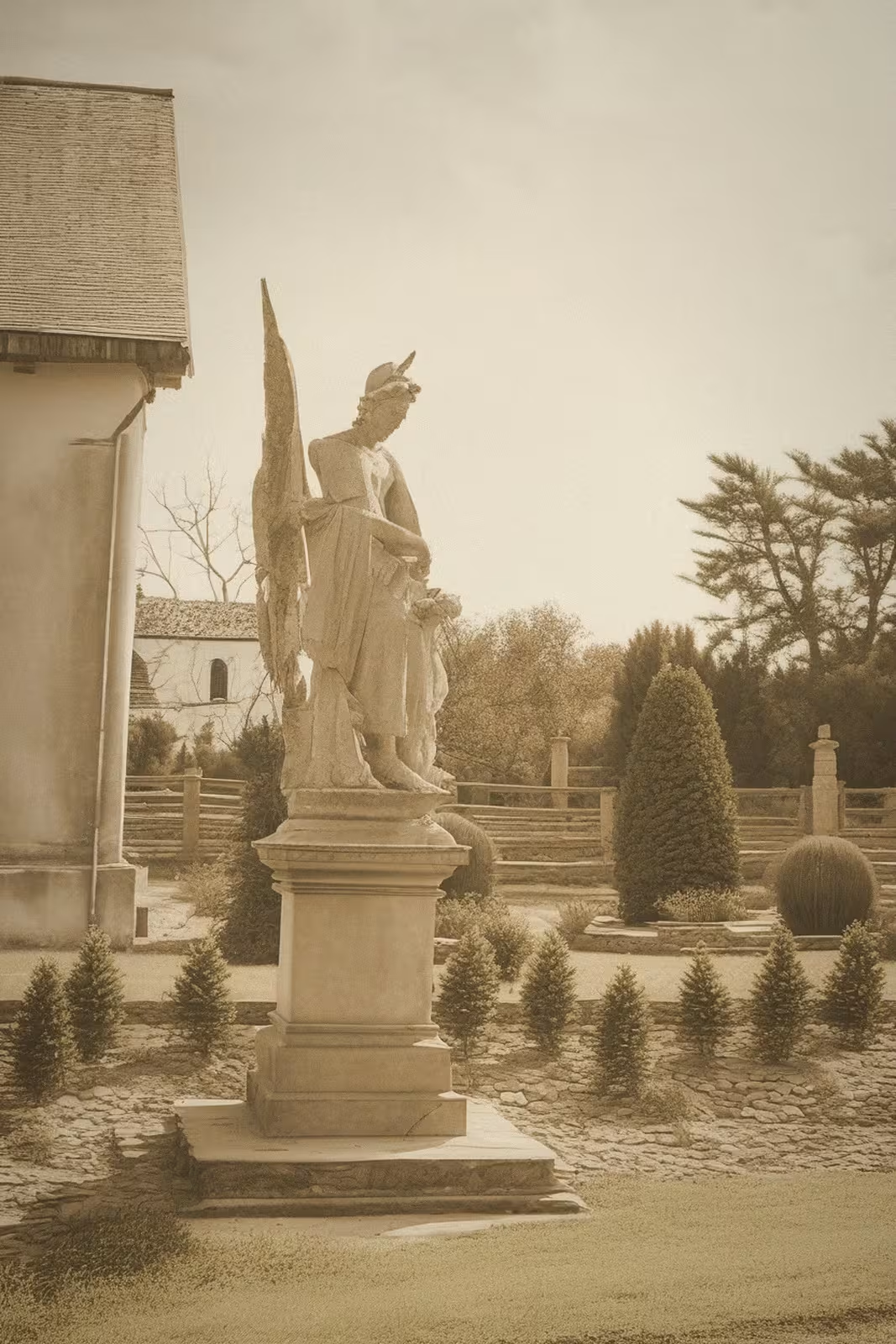
The historical appearance on the left is an AI-generated visualisation and serves as inspiration only.
Historical milestones
- around 1720
- The creation of a Baroque statue in the Ferdinand Maxmilian Brokoff line
- 1903
- Set sculptures on new profile plinth
- 1958
- Listing of statues in the list of local cultural memories
Architectural development
The statue was created in a Baroque style within Ferdinand's Maximilian Brokoff. In 1903 a new profiled plinth was made for the sculpture, on which the statue is still mounted today. The material is sandstone, which is typical of Baroque sculpture production in Czech countries.
Historical events
3.5.1958: The statue was declared a cultural monument. 1903: Planting the statue on a new profiled plinth.
Points of interest
The statue has been a protected cultural monument since the third May of the year a thousand nine hundred fifty-eight. - The artistic processing of the work is typical of the cooperation of sculptor Ferdinand Maximilian Brokoff. - The sculpture was originally located at the monastery gate in Broumov and later moved to its current location. - The building is located on the historical pilgrimage route, which in the past served as an important spiritual link of the region. - The saint is shown in a slightly larger size, holding the flag in his right hand and leaning on the eagle shield.
Guide
Show guide text
This text was created by artificial intelligence and has not been editorially reviewed. It may contain inaccuracies.
Welcome to the beautiful garden of the house number hundred sixty-three in the Great Ledger. You just stopped at something that, in this quiet environment, gives you a sense of deep nobility and history. You are standing right in front of the Baroque statue of St. Wenceslas. Look at her, this piece of sandstone that's right in front of your eyes. She's slightly larger than a normal person, which gives her incredible dignity and strength. Feel the atmosphere around this work. It has a sense of peace, but at the same time, of the unresisting force that this saint represents. This sandstone that you see is not just an ordinary stone. It is a material that carries the soul of the earth and that allowed artists centuries ago to breathe inanimate matter into life and movement.
Let us now return together in time and understand how this work came to be. This sculpture is not the work of chance, but the result of masterwork from the time of Baroque art in our countries reached its peak. We estimate it was built around a thousand seven hundred twenty. It was an era filled with emotion, dynamics and efforts to express divine and human interference through art. The statue comes from the workshop of famous sculptor Ferdinand Maximilian Brokoff. Although he did not directly carve it himself, his influence and style of his collaborators are evident here in every detail. Brokoff's workshop was one of the most important art centers in which technical perfection was combined with a deep feeling for form. The work in this circle meant that the statue would have the right degree of drama and elegance that is so typical of the Baroque.
Now pay attention to the details you have right in front of you. Notice how the figure of St. Wenceslas is shown. The sculptor didn't just want to create a still statue, but a work that works live. Notice the center of gravity of the figure. The saint stands with all his weight on his left leg, which creates the right feeling of stability and gentle movement at the same time. In his right hand, he holds the battalion firmly, indicating his role as protector and leader. The left hand then rests on the shield. Take a closer look at this shield. You'll see an eagle depicted on it, a symbol of the sacramento that immediately reveals the identity of this great man. Another fascinating element to which I challenge you is the work of clothing. Notice the richly-processed drapery. These folds of the cloth are not simply carving stone. They are full of depths, shadows and lights that are constantly changing in them, depending on how the sun moves in the sky. These complex shapes of dress give the character movement and feel that svatý Václav can move at any moment.
So who is this man you're looking at? It is svatý Václav, a character that is absolutely vital to our history and our culture. He's a patron, a hero and a symbol that goes beyond centuries. This statue is not just an artistic object, it is an expression of respect for him and his role in our work. When you look at his face and his attitude, you see in him the strength and calm that he should have had the ideal protector of the people.
I also have an interesting thing for you to understand how this work got here, in this garden. This statue didn't always have to be in this place. Her journey was long and full of changes. Originally located in a completely different environment, near the monastery gate in Broumov. Imagine it in that context, as part of a gate that people went through at a very different time. Later she was moved and finally found her new home right here in Great Ledya. In order to secure the statue and to stand safely, in the year one thousand nine hundred and three it was set on a new, profiled plinth on which it stands today. It is also a very valuable piece of our heritage, as evidenced by the fact that since the third May of the year a thousand nine hundred fifty-eight this statue has been included in the list of national cultural monuments. It is protected as a treasure that we have a duty to preserve for future generations.
I hope that this short journey through time through the history and beauty of the statue of St. Wenceslas has reached out to you and helped you see this place better. Before you go on your next journey, stop for a while, perceive the silence of this space and the beauty of this sandstone work. Let this moment pass and enjoy the beauty of the neighborhood. Thank you for your visit and wish you a pleasant continued walk. Goodbye.
Tips for visitors
To visit the statue of St. Wenceslas in Great Leduje it is ideal to choose a sunny day during the morning or early afternoon. At this time the sun best illuminates the details of sandstone sculpture, allowing you to take quality pictures without sharp shadows in the face of the saint. The statue is located in the garden near a private building, so when photographing take care to respect the surroundings and privacy of local residents. For capturing the entire work I recommend to use a slight perspective that highlights the author's intention to display a figure with a centre of gravity on his left leg. As part of a trip to the surrounding area, you can visit the historical centre of Police nad Metují, the majestic Broum monastery or follow the trail of the Vamberice pilgrimage.
Frequently asked questions
Can the monument be visited?
This is a structure in a public space that can usually be seen from outside free of charge. We have not verified that this particular one is freely accessible.
Where is the monument?
Location: Police nad Metují. The map on this page shows the exact spot.
Why is the monument protected?
It is listed in the Central List of Cultural Monuments of the Czech Republic as a cultural monument (register no. 1000139455).
Businesses nearby
Do you run a restaurant, accommodation, shop, museum, rental, wellness or other visitor service near this monument? Show yourself directly to the people heading to it — this is how they will see you in the app and on the web:
Events nearby
Zdroj akcí: otevřená data měst a obcí ČR (Národní katalog otevřených dat) a kalendář akcí Národního památkového ústavu.
Nearby
Police nad Metují, Broumovský klášter, Vambeřická poutní cesta.
Accommodation nearby
Themed route
1. Vamberice pilgrimage (Path) - This historic trail leads through the surrounding countryside. It's the perfect start to find peace. 2.Police nad Metují (Municipality) - This village offers a place for a short rest. You can observe local life here. 3. The statue of St. Wenceslas (Great Ledjo) (Statue) - The main destination of the trip, which will impress you with its form. It's an important symbol in this area. 4. Broum Monastery (Memorial) - A magnificent building that is worth visiting thanks to its history. It's a perfect finish line.
Seasonal recommendations
Spring brings fresh green and awakening nature to the surroundings. Light is soft and pleasant in this period, which allows better perception of the details of the monument without sharp shadows. I recommend you take your clothes in several layers because the morning cold can quickly take turns with heat. The best is to come soon after sunrise when the air is clean and the surrounding area is fresh.
During summer, the surrounding area is full of dense vegetation and the sun shines the strongest. The atmosphere is alive and warm, making the monument a clear point in the landscape. Due to intense heat, it is advisable to plan a visit in the early morning or late afternoon when light is golden and temperatures are lower. Don't forget the sun protection and plenty of water.
Autumn turns the surroundings into a colorful palette of colors, when leaves from trees turn brown and yellow. A mist often appears in the morning, which gives the place a melancholy and quiet touch. It is important to wear fixed shoes because the road can be slippery due to wet soil and falling leaves. The best time for observation is this afternoon when the sun shines low above the horizon.
Winter covers the memory into a cold and quiet atmosphere, often accompanied by snow or freeze. The statue works very hard and majestically against the grey sky during this period. It is necessary to wear very warm clothes, including gloves and hats, so that the frost does not take over. Due to the short days it is best to visit the place around noon when the light is the most.
Visualizations and artistic views


The visualisations are generated by artificial intelligence and serve as inspiration.
Photos from the area
Real photos taken near the monument


Zdroj a licence jsou uvedeny u každého snímku.
Tips from visitors
No tips yet. Be the first!
Log in and add your tip.
Sources and literature
Photos: Petr1888 / CC BY-SA 4.0 — Wikimedia Commons. The author and licence also appear when you hover over the image.
Faktickým podkladem tohoto textu byl článek na Wikipedii, jehož autory jsou přispěvatelé Wikipedie. Článek je dostupný pod licencí CC BY-SA 4.0.
Location on the map
Příběhy a pověsti
Legendy, pověsti a příběhy spjaté s touto památkou
Fotografie návštěvníků
Zatím žádné fotografie. Buďte první, kdo přidá fotografii z návštěvy!
Log in a přidejte svou fotografii nebo hodnoťte.
Za ověřenou návštěvu v aplikaci získáte víc bodů — poznáme podle GPS, že jste na místě.
Reviews and comments