



Sokolovna v Lounech Sokol gymnasium
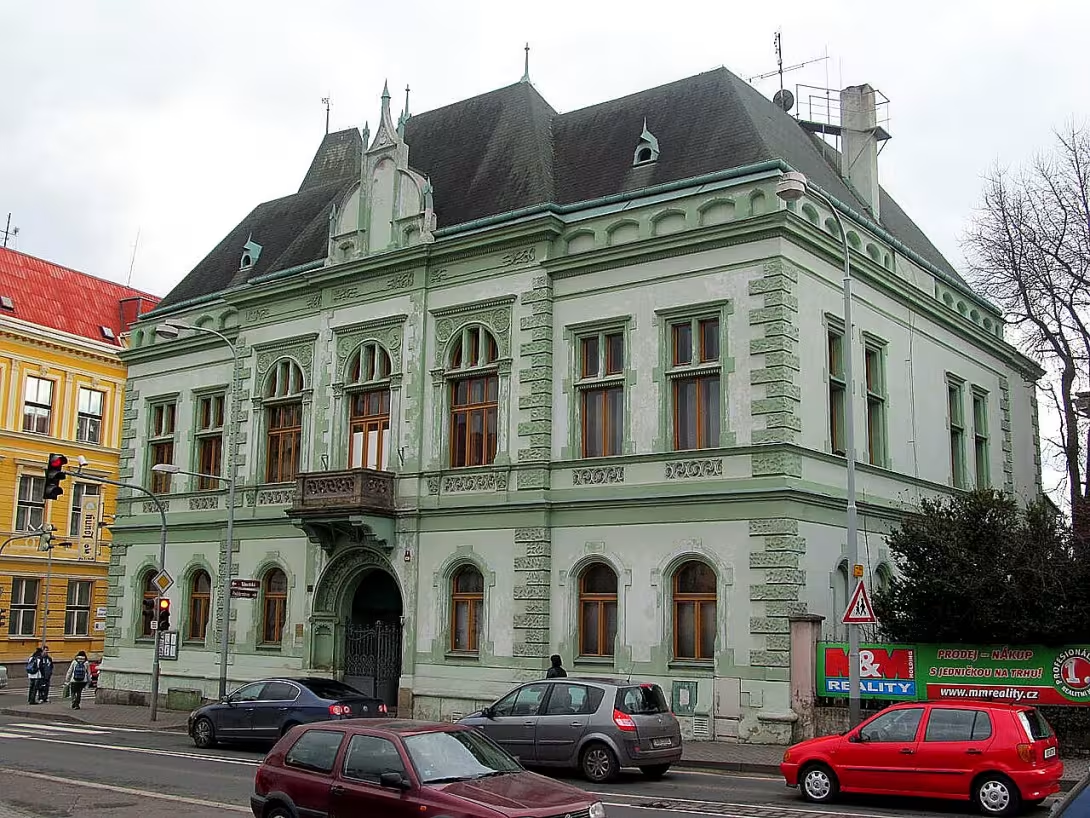
Sokolovna v Lounech is a historic building at the address Poděbradova 638. Since its completion in 1898 it serves as a seat of local body unity. The building represents an important example of Sokol architecture, which at the turn of the 19th and 20th centuries became the centre of social and sports life in Czech countries. Since 1996 the building has been protected as a cultural monument.
Physical unity in Louny was established in 1867, five years after the establishment of the Prague organization. In the 1990s, the association had sufficient resources to build its own facilities that matched the needs of the Sokol movement. The project was entrusted to the Lounian native, architect Kamil Hilbert. The construction itself took place between 1897 and 1898 and the ceremonial opening took place on 10 July 1898.
Architectural rendition is based on period historism. The building was designed as a specific type of sports house that connected spaces for physical animals with places suitable for social events. In the second half of the 20th century, the building underwent modifications in which the cellar space was adapted for restaurant operation.
The history of ownership reflects the agitated events of the 20th century. The original owner was TJ Sokol Louny. However, after the creation of the Protectorate of Bohemia and Moravia, the building was taken by the German administration in 1941 and used as a warehouse. After World War II, the object returned to the hands of the Falcon. After February 1948 and the subsequent cancellation of the organization the administration went under TJ Lokomotiva Louny. The falcon was not returned to the property of the renewed Falcon until 1989.
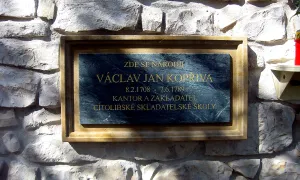
A significant and tragic chapter is the period after the Munich Agreement in 1938. At that time, the falcon sheltered refugees from the occupied border and served as a warehouse for the Sokol property. In October 1949, the large hall became the scene of the political process with 25 people accused of anti-communist resistance. Four of them, Josef Plzák, Bohumil Klempt, Kamil Novotný and Josef Hořejší, were sentenced to death and executed in January 1950. This event is reminiscent of a commemorative plaque on the east facade since 1993.
In 1997, a general reconstruction was completed which restored the building to a dignified form. Today the falcon is once again a functional center. In the vicinity of the historical heart of Louns and the temple of St. Nicholas, it resembles the tradition of Czech social life. Visiting this place offers an opportunity to reflect history, which carries the ideals of national awareness and traces of tragic political upheavals of the last century.
Historical milestones
- 1898
- Completion of construction and festive opening of the falcon.
- 1941
- Confiscation of the building by the German administration and its use as a warehouse.
- 1949
- Doing a political process with 25 people in the big room.
- 1997
- Completion of general reconstruction of the building.
Architectural development
The building was designed in the spirit of history by the native of London, Kamil Hilbert. The construction took place between 1897 and 1898. In the second half of the 20th century, the cellar space was adapted for restaurant operation.
Historical events
Opening ceremony on 10 July 1898. Political trials with resistance fighters in October 1949. General reconstruction completed in 1997.
Owners
TJ Sokol Louny (1898-1941), German administration (1941- 1945), TJ Sokol Louny (1945- 1948), TJ Lokomotiva Louny (after 1948), TJ Sokol Louny (after 1989).
Points of interest
- The building was completed in 1898 and has since served as a seat of local body unity. Since 1996 the building has been protected as a cultural monument. - The project of the building was created by a Lounian native architect Kamil Hilbert. The construction took place between 1897 and 1898 and was opened on 10 July 1898. - After the creation of the Protectorate of Bohemia and Moravia, the building was taken by German administration in 1941 and used as a warehouse. After the Munich Agreement in 1938, it sheltered refugees from the occupied border. - In October 1949, the Great Hall became the scene of a political trial with 25 people accused of anti-communist resistance. Four of them were sentenced to death and executed in January 1950. - A commemorative plaque has been placed on the east facade since 1993, which resembles a tragic political process from 1949.
Guide
Show guide text
This text was created by artificial intelligence and has not been editorially reviewed. It may contain inaccuracies.
Welcome to Louny, a city with rich history and cultural heritage. You are standing in front of one of the most famous monuments of our region - a falcon that boasts a distinctive architecture and interesting history. Take a look up and you will see the elegant facade of the building with its characteristic windows and ledge which represent the time it was built. Notice the atmosphere surrounding you - a sense of history that intersects with modern life.
Sokolovna v Lounech was built between 1897 and 1898 according to the design of architect Kamil Hilbert. This building was designed as the seat of the local body unity of the Falcon, a movement focused on physical training and national education. The architecture of the building is influenced by the historical style that reflects the time of its creation.
Take a closer look at the facade and you will see details such as ledge and window frames that add elegance and solidarity to the building. The inner space is also full of historical clues - from the large hall that served for various events to smaller rooms designed for physical activities.
The building has countless interesting stories associated with considerable personalities. Josef Plzák and Bohumil Klempt were among many who worked in its walls. In 1949 there was a political process with 25 people, an important event in the social history of our region.
One interesting thing about a falcon is its resistance in time. Despite the various changes and challenges to which it was exposed - as a seizure by the German administration during World War II or its use as a warehouse - the falcon remained the center of local life. Since 1996 it has been protected as a cultural monument and serves as a seat of physical unity.
Let's move on to the next part of our guide where you are expected to have even more historical peculiarities and stories. If you want to explore more, you can now continue inside or move around the building to notice more details.
Thank you for your presence, and we hope that your visit to the falcon house in Louny has been interesting to you. Remember to note other attractions of the city and if you want to come back here, we are happy to see you again. Goodbye!
Tips for visitors
The best time to visit is during the morning or in the evening when the sun illuminates the historic facade of the building and allows you to capture the details of Kamil Hilbert's architecture without sharp shadows.
The building is located within walking distance of the main stops.
When shooting, focus on architectural elements on the front of the building. The best light for exterior images is during side lighting, which highlights the plastic decoration of the building.
In the immediate surroundings we recommend a walk through the historical centre of Louny, a visit to St. Nicholas' temple or rest at the Ohře River, which offers a pleasant setting for walking trips.
For families with children, the location is suitable thanks to the proximity of the river and city parks where children can run freely while you admire historical architecture in a quiet part of the city.
Frequently asked questions
Can the monument be visited?
The building is in use (offices, a school, shops and the like). The interior is generally accessible only during operating hours and tours are not usually offered; we have not verified the details. You can see the exterior from the street.
Where is the monument?
Location: Louny. The map on this page shows the exact spot.
Why is the monument protected?
It is listed in the Central List of Cultural Monuments of the Czech Republic as a cultural monument (register no. 1000124088).
Businesses nearby
Do you run a restaurant, accommodation, shop, museum, rental, wellness or other visitor service near this monument? Show yourself directly to the people heading to it — this is how they will see you in the app and on the web:
Nearby
Historické centrum města Louny, řeka Ohře, chrám svatého Mikuláše.
Accommodation nearby
Themed route
Sokolovna v Lounech - type: historical building (sokolovna). Why: This building is one of the oldest sports sights of the city and shows the development of jumping in the 19th century. The visit allows you to understand the local sports tradition and visualize the original interior design. Historical center of Louny - type: historical district. Why: The centre of the city maintains a Baroque and Gothic architecture that reflects the historical life of the city. Spacer across the square and small street provides a feeling of authentic Czech environment. St. Nicholas Church - type: Bishop Church. Why: A Gothic building with a rich altar and history combines faith and art. CZECH NOTE: The path to the church moves near the river Ohře and gives spiritual meaning. Breh Ohře - type: water port / sleep section. Why: The surrounding ohrec landscape offers beautiful views and relaxation. Acceptance of the shore will complete the tourist journey around the monument.
Seasonal recommendations
In the spring, the building shines along with blooming green and fresh air. The atmosphere is full of optimism and the light is soft, which highlights the details of the facade. We recommend visiting the place in the morning and taking a lighter jacket against the cold.
The summer season brings sharp sun and rich colors of surrounding nature. The building operates in hot air monumentally and clearly. The best time for outside observation is late nights when the temperature is more pleasant. Don't forget the comfortable, light clothes and sun protection.
In autumn, the surroundings turn into golden and brown tones, while morning fog gives the memory a mysterious touch. The light is golden and calmer in this period. Hot clothes and waterproof shoes are suitable, ideally when visiting in the afternoon.
In winter, the construction works harder, especially if it is covered by a layer of snow. The contrast of the white collision suit and walls creates an interesting visual impression in short days. It is necessary to wear a thick coat and gloves, and it is best to come before dark.
Visualizations and artistic views

The visualisations are generated by artificial intelligence and serve as inspiration.
Photos from the area
Real photos taken near the monument


Zdroj a licence jsou uvedeny u každého snímku.
Tips from visitors
No tips yet. Be the first!
Log in and add your tip.
Sources and literature
Photos: Gortyna / CC BY-SA 3.0 — Wikimedia Commons. The author and licence also appear when you hover over the image.
Faktickým podkladem tohoto textu byl článek na Wikipedii, jehož autory jsou přispěvatelé Wikipedie. Článek je dostupný pod licencí CC BY-SA 4.0.
Location on the map


Příběhy a pověsti
Legendy, pověsti a příběhy spjaté s touto památkou
Fotografie návštěvníků
Zatím žádné fotografie. Buďte první, kdo přidá fotografii z návštěvy!
Log in a přidejte svou fotografii nebo hodnoťte.
Za ověřenou návštěvu v aplikaci získáte víc bodů — poznáme podle GPS, že jste na místě.
Reviews and comments