






Kostel svatého Petra (Louny) Church
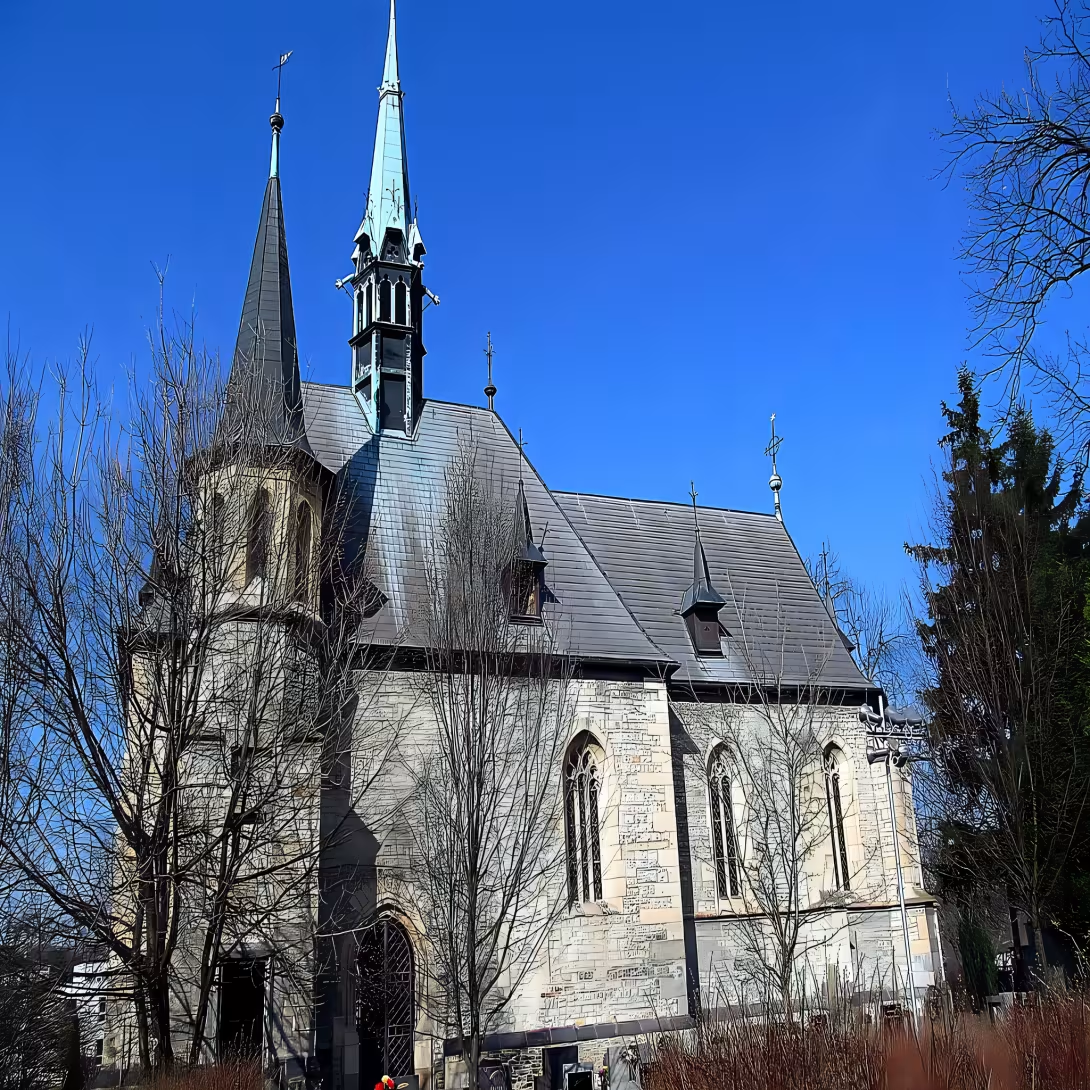
St. Peter's Church in Louny stands in Žatecký suburb and is connected with the deep roots of urban history. It is characterized by the Romanesque masonry of the western facade and the Gothic reconstruction of the mid-15th century, which makes it witness the transformation of Louns from the village in the royal city.
The origin of the church leads to the village of Lúna, which spread around the ford through the Fire near today's church. The oldest written mention is from 1359, when the gift of a township to the church is recorded in the Lonian ledger. The following centuries were supported by townspeople with religious gifts. But his position in spiritual governance remains unclear - he is not listed as parochial in central sources, rather as a Kaplan church.
The decisive change came in the mid-15th century. In 1456 the church began to work intensively under the guidance of builder Nicholas Provoda. The boat and presbytery were built in 1456-1463. During the following centuries the church was enriched: a new bell tower was created in 1613, new portals decorated by sculptor Vincent Strašryba were acquired in the 1970s. Part of the eastern portal was allegedly the relief of the Resurrection of Lazarus, who later moved to the Church of the Mother of God.
After the Thirty Years War, the church was repaired in 1651. In the following centuries it has undergone changes: in 1726 the turret was being dismantled, in 1789 it was abolished by the Josephine reforms, but the city of Louny bought it in 1792. In the 1970s it was modified by architect Josef Mocker.
Since the 1980s, the church stopped serving religious purposes. Today it is used as a concert hall and is protected as a cultural monument of the Czech Republic. The long history from the medieval centre of spiritual governance to the modern space for music illustrates the changing fates of sacral structures.
Then and now
Drag the slider to compare how the landmark may have looked when it was built with the view today.
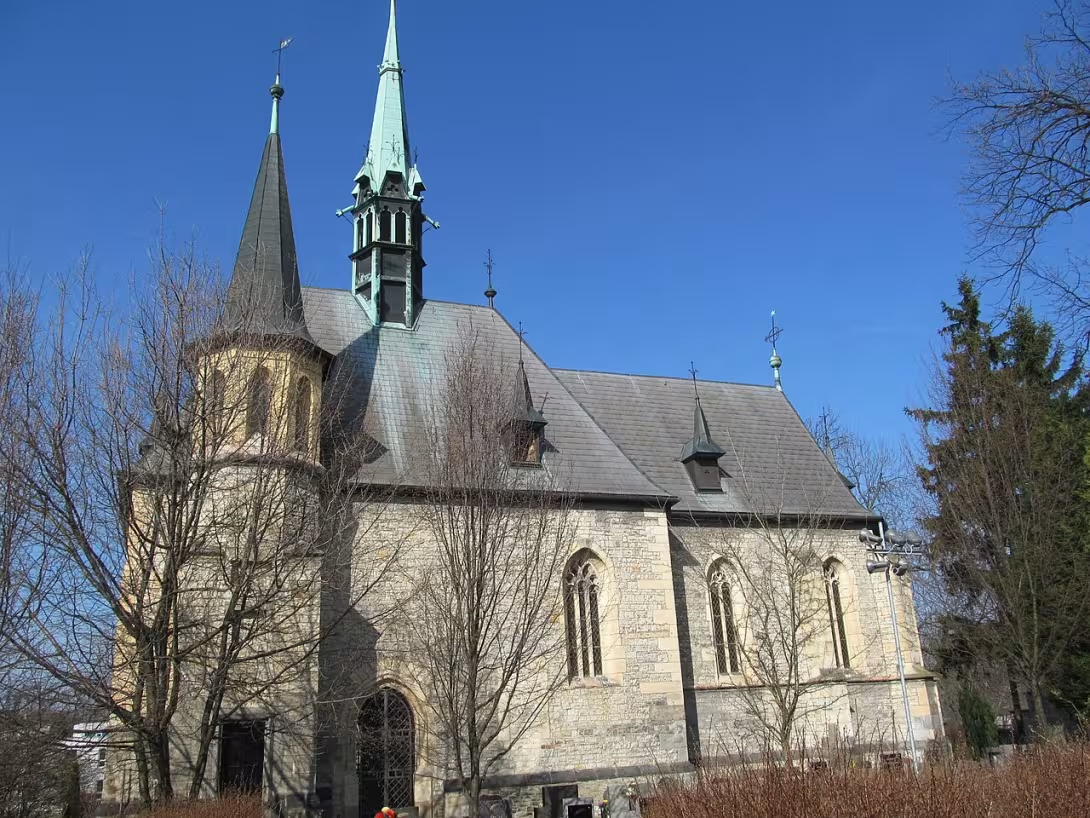
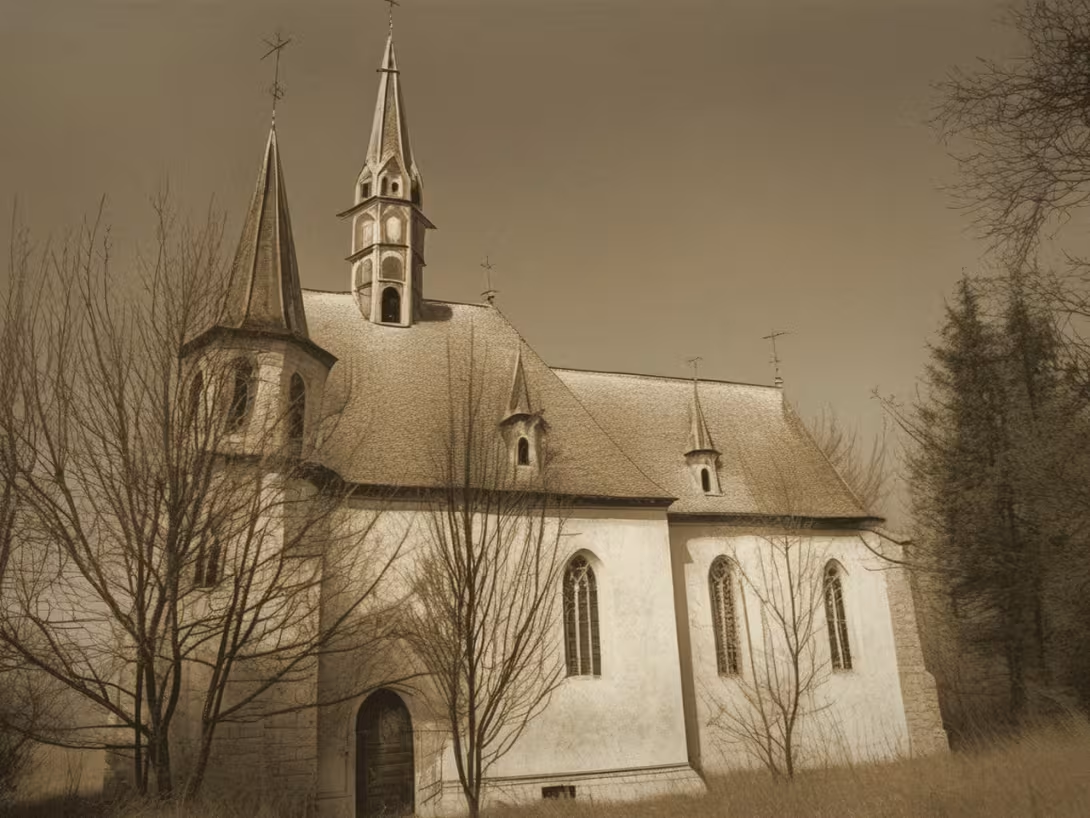
The historical appearance on the left is an AI-generated visualisation and serves as inspiration only.
Historical milestones
- 1115
- A paper fake about the donation of the village Louny to the Benedict monastery in Kladrub (probably non-historic).
- 1451
- First mention of the planned reconstruction of the church by the city council.
- 1456
- The beginning of the Gothic reconstruction of the ship and the presbytery, completed in 1463.
- 1613
- Built a new bell tower, probably wooden with a stone suspect.
- 1789
- The abolition of the church as a filial part of the Yosephin
Architectural development
The basic masonry of the western facade and the southern part of the ship is Romanesque, while the ship and presbytery are Gothic from 1456-1463. A bell tower was built in the 17th century, but it was not preserved. In the 19th century Josef Mocker made modifications which gave the church the present form. The church is surrounded by a fenced wall with gates and originally surrounded the cemetery.
Historical events
- 1359
- The first written mention of the church, when tailor Mikeš gave the church an Orth.
- 1456-1463
- The Gothic reconstruction of the ship and the presbytery, the builder was probably Nicholas Provod.
- 1789
- Cancellation of the church as part of the Josephine reforms, then purchased by the city.
Owners
{'1789-1827': 'Roman Catholic Religious Matrix', 'since 1827': 'City Louny'}
Points of interest
- The church of St. Peter stands at the site of the original village of Lúna, which spread out around the ford through the Fire.
- The oldest written mention of the church is from 1359, when it was mentioned in the Lounian ledger as receiving gifts from townspeople.
- In the middle of the 15th century the church underwent extensive Gothic reconstruction in 1456-1463 under the guidance of builder Nicholas Provoda.
Guide
This guide is narrated by a synthetic voice generated by artificial intelligence.
Show guide text
This text was created by artificial intelligence and has not been editorially reviewed. It may contain inaccuracies.
Welcome to St. Peter's Church in Louny
You are standing in front of one of the most important Gothic sacral structures in our region - the church of St. Peter, which stands above the place where the original village of Lúna once stood. Take a look at his massive western facade, bearing traces of ancient times. Here you can still see the Romanesque elements that have been mixed with later Gothic reconstruction. The church was built in a place where the village spread out around the ford through the Fire, and its history goes deep into the past.
Let's take a closer look at what this church holds for us. The first written mention of it dates back to 1359, when it was mentioned in the ledger as receiving gifts from local townspeople. However, already in 1115, there is a forgery about the donation of the village Louny to the Benedict monastery in Kladruba, which probably never existed. However, this does not mean that the village was not inhabited. On the contrary, it was here that the spiritual centre was created, which became the center of the life of the then village.
In the middle of the 15th century, the church witnessed a significant change. In 1451, the city council decided to reconstruct it. It started in 1456 and lasted until 1463. During this time, the ship and the presbytery were rebuilt, while the western facade and the southern part of the ship preserved Romanesque features. This combination of two construction periods creates a unique atmosphere that you can now perceive.
Now pay attention to the architecture of the church. Although there are no details such as statues or paintings that are typical of Gothic, you can see the structure itself. The Gothic ship and presbytery are significantly higher than the original Romanesque parts, which creates an interesting contrast. Notice how the church rises above the surroundings, reminiscent of its importance to the local community.
In 1613 a new bell tower was built, probably wooden with a stone suspect. This bell tower served as another dominant element of the church and contributed to its character. In the 18th century, namely in 1789, the church was abolished as filial under the josephin reforms, which meant that its importance had changed. However, in 1870 the church was modified by architect Josef Mocker, who gave him a new look and ensured its continued existence.
Key stories associated with this church are often associated with its original meaning as the spiritual centre of Lúna village. Although there is no detailed information available on the specific figures that worked here, we can imagine what role the priests and locals played here. The church was a place of prayer, holidays and important events that connected the community.
One of the most interesting things about this place is its original location. You're standing right where the original village of Lúna was decomposing, which was formed around the ford through the Fire. This ford was an important transport hub that contributed to the development of the region. The church thus served not only as a spiritual centre, but also as a symbol of stability and connections for local residents.
Although St. Peter's church does not at first sight have visible statues or paintings that make it even more interesting, its history and architecture are in themselves fascinating. Imagine what sounds might have sounded like here - the sounds of prayer, singing and everyday life. The church has witnessed many generations, and even today it offers you the opportunity to become acquainted with its history.
If you want to get to know this place in more detail, I recommend you look at the surrounding areas and see the atmosphere that the church radiates. Stay here for a while and think about what roles he played in the past and what stories were written here. St. Peter's Church is not only an architectural monument, but also a living testament to the past that is worth discovering.
Thank you for stopping by this place. We hope that a visit to St. Peter's Church has brought you new knowledge and inspiration. Be attentive and enjoy the atmosphere of this historic place.
Tips for visitors
{'paragraph': 'The best time to visit the church of St. Peter is during the morning when it is quiet and pleasant light to see detailed Gothic architecture. In the summer months it is advisable to avoid the noon hours when the interior may be hot and the presence of a large number of visitors. For lovers of history is the ideal combination of a church visit with a walk around the historical centre, which offers other interesting sights.'}
{'paragraph': 'The church is available by car for which it is possible to use public parking in the centre of Louns. It is recommended to park in the main square or near the Church of the Holy Mother, from where it is only a short walk. The location can also be reached by public transport, the current connection needs to be verified in the traffic search engine. Around the church there are available public transport stops that allow you easy access.'}
{'paragraph': 'When visiting St. Peter's church, we recommend that you wear comfortable clothes and shoes as it is a historic building with stony floors. For convenience, you can bring a small bag of water and perhaps even a hat if the sun shines right in your eyes. It is often cold in the interior of the church, so take a light sweater or sweater. Also remember your mobile phone with enough battery for shooting.'}
{'paragraph': 'Photography in St. Peter's Church is permitted, but it is necessary to respect other visitors and not to violate the rules of the church. The best places for photography are the western facade and the inner space of the ship, where the light is pleasant and the Gothic elements are well displayed. It is recommended to photograph in the morning or afternoon light when shadows are softer and colours are more vivid. In the interior it is advisable to search for places with natural lighting, such as windows next to the altar.'}
{'paragraph': 'There are several interesting places around St. Peter's church that are worth visiting during your trip. Around 300 metres from the church is the Church of the Holy Mother, which is another important sacral object in the historical centre of Lounn. A little further along, approximately 1 kilometer, the Baroque castle Louny is located with its beautiful park which is ideal for relaxation and walks. These places are easily accessible on foot or by car.'}
{'paragraph': 'For families with children, a visit to St. Peter's Church is an interesting opportunity to explore history and architecture. Children can see gothic paintings and statues that are often very impressive. In the vicinity of the church you can also visit the Church of the Holy Mother, where children can see other interesting elements such as stained glass. It is also interesting for children to explore the surrounding historical centre of Louns and discover various architectural details. It is also recommended to visit the castle Louny where children can explore nature in the park and play outside.'}
Frequently asked questions
Is Kostel svatého Petra (Louny) open to the public?
Yes, the church is open to the public. Opening hours are from 9: 00 to 17: 00, the tour is possible until 16: 30.
How do I get to the place by car / public transport?
St. Peter's Church is located in the heart of Louny. The nearest parking lot is available on Masarykova Street, from where the church is about 5 minutes walking distance. MHD Line 1 stops right by the church.
How much is the entrance fee and is it paid on the spot?
Payment is only possible in Czech crowns.
Is the tour suitable for children and seniors?
Yes, a tour of St. Peter's Church is suitable for all ages. The church has accessible staircases and wide walkways, so you can visit it with a pram or wheelchair.
How long does the tour take?
The tour of St. Peter's Church takes approximately 30-45 minutes. However, you can also sit down and relax in the nearby park or take a break at the nearby café.
What are the opening times and booking is required?
The church of St. Peter is open from 9: 00 to 17: 00, and the tour is possible until 16: 30. Reservation is not necessary, but if you want to visit the church with a guide, we recommend booking in advance.
What's interesting in the immediate vicinity?
In the immediate vicinity of St. Peter's church is located the historical center of Louny, where you can find other sights and museums. There is also a park in Žatecké suburb nearby with beautiful views of the city.
For kids
Imagine going back to when the city of Louny was still young and the church of St. Peter was newly built. It's like you're in a different world where people lived by different rules and magic everywhere.
So, how did it look here? Who lived here? What happened here? The city of Louny was a small town that lived from agriculture and shops. People here lived in wooden houses and devoted themselves to working in the fields. St. Peter's Church was the center of the city, where important events took place and where people came to prayer.
Businesses nearby
Do you run a restaurant, accommodation, shop, museum, rental, wellness or other visitor service near this monument? Show yourself directly to the people heading to it — this is how they will see you in the app and on the web:
Nearby
{'monuments': [{\ 'nazen': 'Church of the Mother of God', 'distance': 'approximately 300 metres', 'description': 'another significant sacral object in the historical centre of Lounn.'}, 'natural _ elements': [{'nazen': 'Greece of Ohra': 'distance': 'near the church', 'description': 'Natural boundary of the original village Louny.'}}}}}}}
Accommodation nearby
Themed route
Thematic cruise route: Sacral and Baroque Louny
1. St. Peter's Church * Type: Gothic church with Baroque adaptations * The dominance of the historic Louns core, built in the 14th century, with preserved Gothic elements and rich Baroque decoration. Its location at the Ohře River symbolizes the original importance of the place as a village centre.
2. Church of the Mother of God * Type: Early Baroque Church * It lies only 300 metres from St. Peter's Church and forms a sacral pair. Its interior with frescoes and sculptures is a rare example of Lounian Baroque art.
3. River of the Bend * Type: Natural dominance * It passes directly under the Church of St. Peter and gives the place a peaceful atmosphere. Originally there was a first settlement whose fates are linked to the flow of the river.
4. XZ Chateau 0ZX * Type: Baroque residence with park * Located 1 km from the churches and is the peak of Baroque architecture in the region. Its large park offers picturesque walks and views of the historical centre.
* The route is closed, the visit can be completed by returning to St. Peter's Church. *
Seasonal recommendations
Spring During the spring, when the church of St. Peter in Louny is besieged in a green garment, the enchantment of the church takes place especially in its surroundings. After rainy days, fine humidity evaporates from the stone stairs and pavements, while the sun gradually begins to scatter the shadows between the Gothic arcades. The interior of the church is lit by a pleasant, soft light that penetrates through the stained glass, and the air smells of freshly grazed grass and flowered trees in the surrounding area. The sound environment is also specific - in the morning, the singing of birds is heard, which blends with exposed organas during Sunday services. Practically best to visit the memory in the first two weeks of April when the crowds are minimal and warm. Comfortable shoes are recommended because after the rains the paths can be slippery, and light but warm clothing - spring in the Ústí Region is usually variable. The ideal time is the afternoon when the sun rises high enough to illuminate the details of statues and frescoes, but before evening cooling.
Summer The summer visit to St. Peter's Church brings not only sunny warmth, but also a lively atmosphere, created not only by believers but also by tourists. The church becomes the center of attention due to its strategic location in the middle of the city, where in hot hours people gather under its shadow. The interior is illuminated by bright, almost sharp light, which emphasizes the colours of stained glass and stone details, while the outside is reflected from the white facades of the surrounding houses. The evening lighting is also specific, which starts to pass into autumn tones since July. In the main summer season (July-August) it is recommended to come early in the morning to avoid crowds that often converge around the church after lunch. Suitable is light, but covering clothing - the sun in the Ústí Region is usually intense, and in the interior, where there is no air conditioning, can be stuffy. For the tour it is best to choose the quiet days of the week when the services are less visited.
Autumn Autumn brings the atmosphere of peace and melancholy to the Louns and St. Peter's Church, where nature gradually prepares for winter. The church is surrounded by trees with red and yellow leaves, which in the wind rustle and create a natural escort to Mass. The interior is lit by a colder light, which emphasizes darker tones of stone and wood, while the shadows extend outside and the church gets a more mysterious look. The sound environment is also specific - in November the bell of St. Catherine is often ringing, which reminds of the winter period approaching. In this period it is best to visit the church in September when temperatures are still pleasant and the crowds are minimal. It is recommended to warm but not too heavy clothing - autumn weather is usually unstable, and in a church where there is no heating can be cold. The best time is the afternoon when the sun shines strong enough to examine the details, but before evening cooling.
Winter The winter visit to St. Peter's Church offers a unique atmosphere where the monument turns into a cozy shelter from freezing. The church is surrounded by snow, which dampens sounds and gives the place a peaceful, almost sacred mood. The interior is warm and well lit, while the light from the windows creates a game of shadows and lights that emphasizes the Gothic elements. The advent period is also specific, when the church becomes the centre of Christmas preparations - the cradle is echoing and the scent of candles is floating. In winter it is best to visit the church in December when the crowds are higher, but the atmosphere is unrepeatable. It is recommended that warm, layered clothes, because outside it is usually frost, and in a church where more people are gathered, can be warm. The opening hours are shorter, so it is advisable to come in the morning to make the inspection before closing.
Visualizations and artistic views


The visualisations are generated by artificial intelligence and serve as inspiration.
Photos from the area
Real photos taken near the monument

Zdroj a licence jsou uvedeny u každého snímku.
Atmosphere of the place
This atmospheric visualisation of the place and period was generated by artificial intelligence. It is not real footage of the location.
Tips from visitors
No tips yet. Be the first!
Log in and add your tip.
Sources and literature
Fotografie: Gortyna / CC BY-SA 4.0, rozlišení zvýšeno umělou inteligencí — Wikimedia Commons. The author and licence also appear when you hover over the image.
Faktickým podkladem tohoto textu byl článek na Wikipedii, jehož autory jsou přispěvatelé Wikipedie. Článek je dostupný pod licencí CC BY-SA 4.0.
Location on the map

Příběhy a pověsti
Legendy, pověsti a příběhy spjaté s touto památkou
Fotografie návštěvníků
Zatím žádné fotografie. Buďte první, kdo přidá fotografii z návštěvy!
Přihlaste se a přidejte svou fotografii nebo hodnoťte.
Za ověřenou návštěvu v aplikaci získáte víc bodů — poznáme podle GPS, že jste na místě.
Reviews and comments