






Kostel Čtrnácti svatých pomocníků (Louny) Church
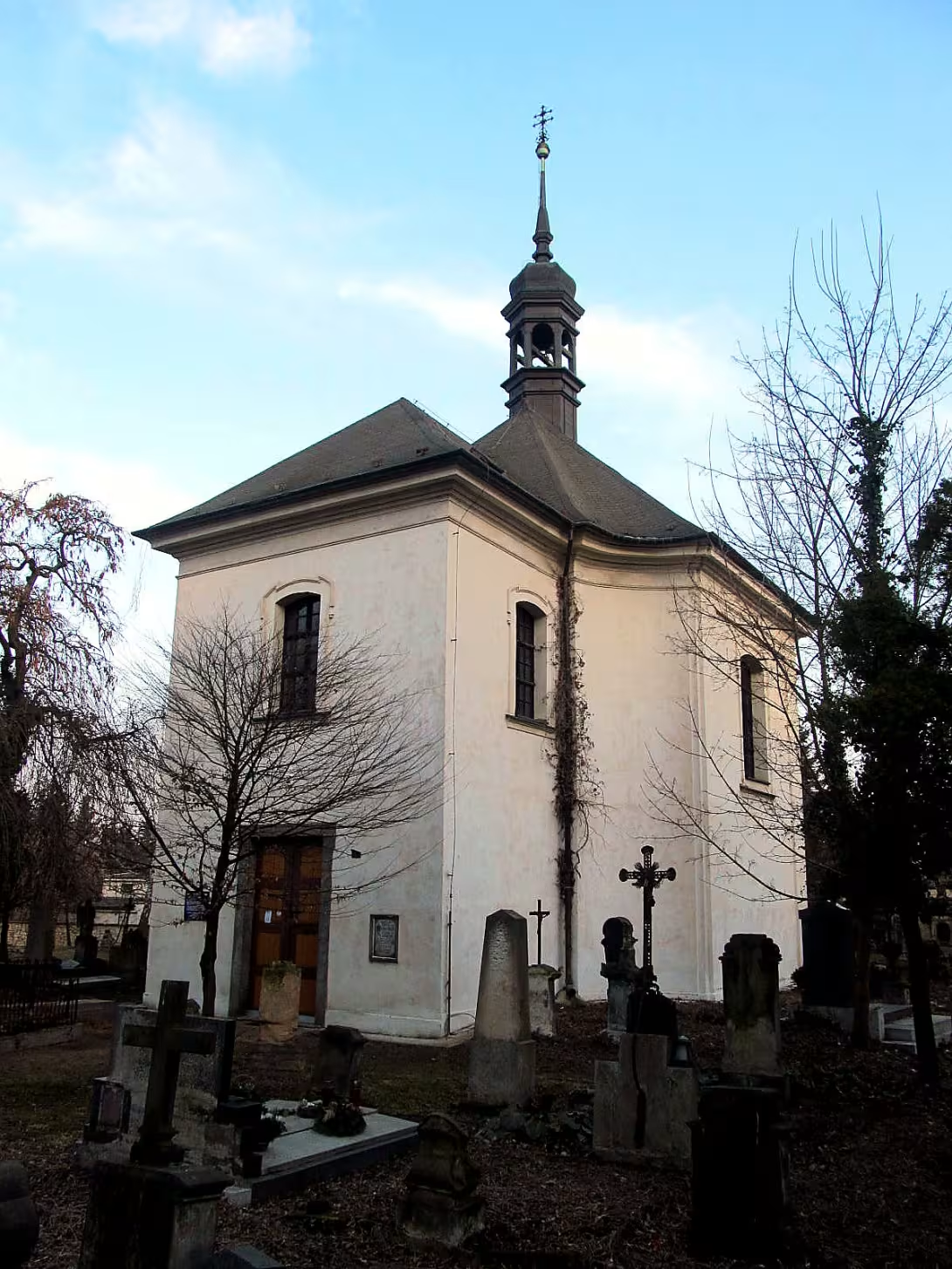
The Church of the Fourteen Holy Helpers and the Holy Trinity in the city of Louny in the former Žatecký suburb was founded in 1718 as a manifestation of the community's faith and solidarity in defending against the plague threat. Today it is protected as a cultural monument of the Czech Republic.
The construction was initiated in 1713 by fear of an impending plague epidemic. The city council has put out a fund-raising fund, to which most townspeople have contributed. After gathering funds in May 1714 and obtaining the consent of the Prague bishop Daniel Josef Mayer, the project was developed by the local builder Ludvík Naymayer. The project was consulted by Pavel Ignác Bayer and another Prague architect who found a number of defects. The construction site - burnt down the urban economic yard burned down in November 1620 - was chosen in accordance with the period procedures.
The construction was accompanied by technical obstacles: part of the vault collapsed and the bricklayer Michael Maggi from Postoloprt was invited to repair it. The church was completed and consecrated in 1718. The decoration was performed by local artists: the altar paintings were painted by Jan Jakub Smicheus, the altar and statues of the Fourteen Holy Helpers by John James Char and frescoes by Antonín Smiche.
In 1738 a hermitage was established at the church, where the hermit rang the bell of kneeling, guarded the cemetery and carried out the burial operations. In 1782 the hermitage was abolished, and the church was cancelled the following year. However, in 1791, at the request of the Municipality - with regard to the surrounding large cemetery - the worship was allowed again. In 2010, the construction was restored and refinanced.
It is an architecturally oriented structure. The ship concurrently passes into a narrower presbytery and hall which are glazed with oval couplers, while the ship is covered with an improper platform dome. The windows are finished with segmental arches, a circle filled with arches. The church is surrounded by an original wall, where there are many quality tombstones from the 19th century. In the cemetery there are important figures from the history of Louns.
Then and now
Drag the slider to compare how the landmark may have looked when it was built with the view today.
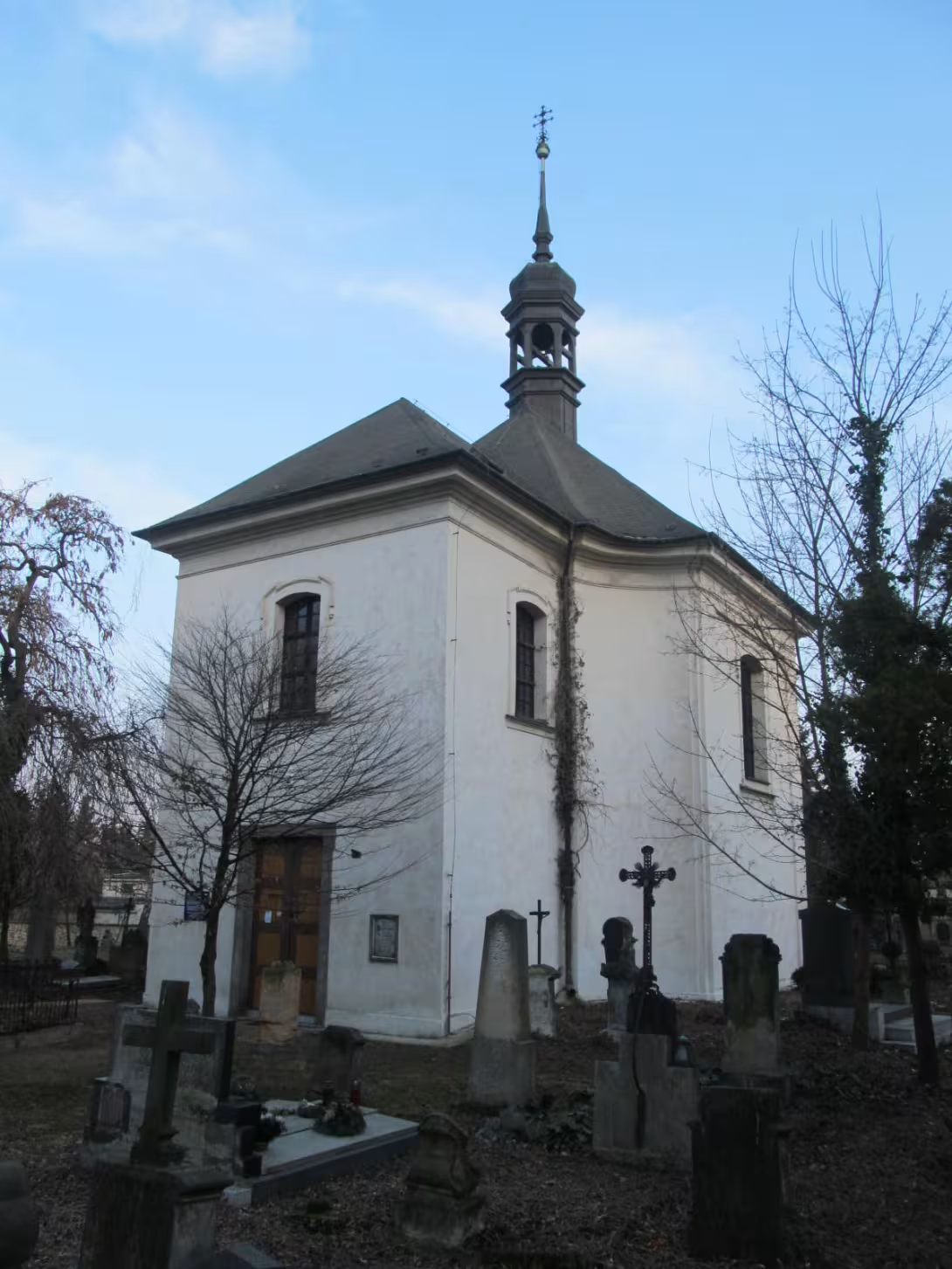

The historical appearance on the left is an AI-generated visualisation and serves as inspiration only.
Historical milestones
- 1713
- Opening a collection to build a church as a protection against the plague.
- 1714
- Late construction due to plague epidemic and technical problems.
- 1718
- The completion and consecration of the church.
- 1789
- Temporary dissolution of the church and transfer of the mobility.
- 2010
- Reconstruction and reconsecration of the church.
Architectural development
One-ship oriented building with oval dome above presbytery and hall, the boat is glassed with an improper area of dome. The windows are finished with segmental arches, a circle filled with arches. In the 1st decade of the 21st century, the remains of a building that had not been preserved were removed. The cemetery is surrounded by an original 18th century wall.
Historical events
- 1713
- The city council initiated the construction of the church as a protection against the plague, selected the collection and obtained the approval of the Bishop of Prague.
- 1718
- The church was completed and consecrated, although the building was accompanied by technical difficulties.
- 1789
- The church was temporarily cancelled, the mobiliary was taken to Little Háj.
- 2010
- The church has been renovated and has been benedicated again.
Points of interest
- The church was built in 1718 in response to the fear of a plague epidemic that was approaching.
- The construction was initiated by the City Council in 1713 and financed by a collection which was contributed by most of the local Louns.
- The church project was developed by the local builder Ludvík Naymayer after consulting Prague architects who found errors in it.
- The church stands at the site of the former economic court, which was burnt down in November 1620.
Guide
This guide is narrated by a synthetic voice generated by artificial intelligence.
Show guide text
This text was created by artificial intelligence and has not been editorially reviewed. It may contain inaccuracies.
Welcome! You are standing in front of the Church of Fourteen Holy Helpers in Louny, one of the most beautiful and oldest sacral buildings in our country. Look up at his mighty towers that are disappearing on the roof of the city.
The church has a long history that goes back to the unknown period. His architecture is the work of Louis Naymayer, who tried to follow the tradition of medieval churches. Notice its Gothic elements, such as windows with stained glass and massive pillars.
The church also has its secrets. In 1789 he temporarily ceased to serve religious purposes, but today it is open again to visitors. What happened in those years? That's the question we're trying to answer.
Notice the details of the church architecture. Look at his narrow windows and powerful pillars that create a sense of respect and seriousness. Now pay attention to the sculptures that decorate the church walls.
The church also has its legendary personalities. Who are the Fourteen Holy Helpers? What is their mission? That's another question we're trying to answer.
Now notice one interesting detail. Look at the church tower, which seems so high that it reached the sky. And then notice that the top of it is finished with a crown. What's that supposed to mean? That's another mystery we're trying to decipher.
And now that you've explored the Church of the Fourteen Holy Helpers, I would invite you to explore and say goodbye to this wonderful monument. I hope you enjoyed it and that you will return again so that you can enjoy more of this amazing historical monument.
Tips for visitors
{'paragraph': 'The best time to visit the Church of Fourteen Holy Helpers is in the morning when the interior is pleasant light and fewer visitors. The Baroque decoration and the light from the window breaks are thus better reflected. During the summer months it is advisable to avoid the noon hours when the church can be very hot. If you want to experience a quiet atmosphere, visit the church on Sunday morning before the service.'}
{'paragraph': 'The church is accessible by car and public transport. In the vicinity of the monument it is possible to find a parking lot, but it is recommended to use public transport, especially in the summer months when parking is often limited in the centre of Louns. You can find current connections and traffic options in the traffic search engine. If you arrive by car, you can use the parking lot near the historical centre.'}
{'paragraph': 'When visiting the church, take on comfortable clothes and shoes as it is a historic building with a stone base that can be cold. It is also recommended to take a small towel or raincoat as it may be cold in the church, especially in the winter months. For convenience, you can also take a small bag of water and refreshments because there are no restaurants in the vicinity of the church.'}
{'paragraph': 'Photography is allowed in the church, but care must be taken to respect other visitors and not touch historical elements. The best places for photography are presbytery with altar and side chapel with decoration. For quality images it is advisable to use natural light from window rotations, especially in the morning or afternoon hours. In the interior, the light is often limited, so bring a camera with ISO settings.'}
{'paragraph': 'In the vicinity of the church is worth visiting a cemetery with high-quality tombstones from the 19th century, located west of the historical centre of Louns and is fenced by the original wall. This cemetery is rich in historical tombstones of important city personalities and offers a quiet environment for walking. Another interesting thing is the Žatecká suburb, which is now part of the Louns and offers period building within a radius of one kilometer from the church. For families with children, it is also advisable to visit nearby historical neighborhoods where children can see old houses and learn about the history of the city.'}
{'paragraph': For families with children, visiting the Church of Fourteen Holy Helpers is interesting thanks to its rich decoration and historical significance. Children can see the statues of the Holy Helpers and listen to the stories associated with them. In the nearby area you can visit the cemetery where children can see old tombstones and learn about the history of the city. For children's entertainment it is advisable to visit also Žatecká suburb, where children can explore old houses and learn about life in the past. '}
Frequently asked questions
Is Kostel Čtrnácti svatých pomocníků (Louny) open to the public?
Yes, the church is open to the public. Opening hours are from Tuesday to Friday from 9: 00 to 5: 00 and weekends from 10: 00 to 16: 00.
How do I get to the place by car / public transport?
The Church of Fourteen Holy Helpers is located in the heart of Louny. The car can be reached in front of the church or on the surrounding streets. City transport can be reached by bus No. 101 or 102, the stop is right by the church.
How much is the entrance fee and is it paid on the spot?
Payment shall be made on the spot in the form of cash or payment cards.
Is the tour suitable for children and seniors?
Yes, a church tour is suitable for all age groups. The church has accessible staircases and flat floors, so it is also available for people with movement problems.
How long does the tour take?
The church tour takes approximately 30-45 minutes. More time can be spent if you want to learn more about the history and meaning of the church.
What are the opening times and booking is required?
The church opening hours are from Tuesday to Friday from 9: 00 to 5: 00 and weekends from 10: 00 to 16: 00. Reservation is not necessary, but we recommend prior verification of opening hours on the church website or directly inside.
What's interesting in the immediate vicinity?
In the immediate vicinity of the church is located the historical center of Louny, where you can visit other sights such as chateau, town hall or museum. There are also many shops and restaurants where you can spend free time.
For kids
Imagine going back 316 years to the city of Louňovice in Bohemia. The city is full of life and energy. People live in small houses, trade in markets and keep animals in the fields.
The Church of Fourteen Holy Helpers was the heart of the city. It was built in 1710 and its beautiful staine- glass window shined like a pearl in the sunlight. People came to church for prayers, holy processions and joyful celebrations. To imagine it, the church was like a big theater, where there were amazing beautiful scenes.
Businesses nearby
Do you run a restaurant, accommodation, shop, museum, rental, wellness or other visitor service near this monument? Show yourself directly to the people heading to it — this is how they will see you in the app and on the web:
Nearby
City of Louny, former Žatecká suburb
Accommodation nearby
Themed route
I propose an interesting trip along the historic places of Louny, which connects the main destination with the surrounding attractions.
1.Kostel Čtrnácti svatých pomocníků (Louny) Type: church Why is it worth a visit: This main destination of our journey represents a significant sacral monument to Louns. It offers a unique atmosphere and resembles the rich spiritual history of the city.
2. CrunchxZ 0ZX Type: cemetery Why is it worth a visit: It is located west of the historic centre of Louns and is fenced by the original wall. It hides quality tombstones from the nineteenth century, including the graves of prominent figures of the city.
3. Žatek suburb Type: historical district Why is it worth a visit: This historic neighborhood is located within a mile of the center. It will capture its well-preserved period development, which illustrates the character of the Lounian suburb.
Seasonal recommendations
Spring in Louny brings the surrounding nature to life and brings a fresh atmosphere to the area around the monumental temple. The sun rays begin to penetrate through high gothic windows and play an interesting game of lights on a cool stone wall. During this period you will not meet large groups of tourists, which guarantees a peaceful and thoughtful visit. Due to variable March or April weather, it is worth wearing layered clothing and fixed footwear, because the tiles in the area can be slippery after rain. The best time to explore the interior is in the morning, when the city is still alive and the monument offers the quietest environment.
The summer sounds Louny with a tourist rush and the main season attracts lovers of architecture from far and close. The sharp noon sun creates strong contrasts out there and radiates radiantly the complex exterior of the building, while the strong walls inside maintain a pleasant cool. The practical advice for warm months is to take a tour early in the morning to avoid afternoon heat and the biggest crowds of hikers. Light summer clothes are suitable, but do not forget the headgear for the journey by burning streets and possibly a scarf over the shoulders when entering the sacral space. In the afternoon, the surroundings of the monument are the most lively, which will be appreciated by those who seek the thrill.
Autumn brings a melancholy mood to the Louns and the shrinking days change the overall nature of the visit. Trees in parks coloured in golden tones form a beautiful natural background for shooting the exterior details of the Lounian temple. The atmosphere inside the monument is extremely intimate during its dry days, which is contributed by the attenuated natural light penetrating through the stained stained windows. Because temperatures are dropping rapidly, the necessary equipment is a warm coat, scarf and waterproof shoes to walk around the city. The best time to visit is the afternoon hours before dusk, when the low autumn sun magically illuminates the facade of the building.
Winter covers Louny in silence and in advent time this historical monument has a unique spiritual dimension. Short days and early dimming mean that the interior is soon shrouded in shear and the tour takes place under artificial lighting, which enhances the monumental nature of the interior space. Since heating in historical temples is often limited, it is absolutely necessary to choose a winter jacket, hat, gloves and warm socks. The walk requires caution on the icy sidewalks around the building. The best time for a winter trip is the noon time, when the outside is warmer and the occasional rays of the sun light the winter sky above the city.
Visualizations and artistic views


The visualisations are generated by artificial intelligence and serve as inspiration.
Photos from the area
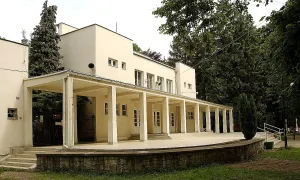
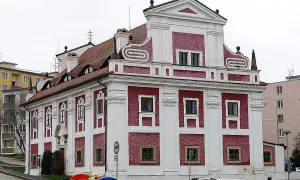
Real photos taken near the monument


Zdroj a licence jsou uvedeny u každého snímku.
Atmosphere of the place
This atmospheric visualisation of the place and period was generated by artificial intelligence. It is not real footage of the location.
Tips from visitors
No tips yet. Be the first!
Log in and add your tip.
Sources and literature
Fotografie: Gortyna / CC BY-SA 3.0 — Wikimedia Commons. The author and licence also appear when you hover over the image.
Faktickým podkladem tohoto textu byl článek na Wikipedii, jehož autory jsou přispěvatelé Wikipedie. Článek je dostupný pod licencí CC BY-SA 4.0.
Location on the map

Příběhy a pověsti
Legendy, pověsti a příběhy spjaté s touto památkou
Fotografie návštěvníků
Zatím žádné fotografie. Buďte první, kdo přidá fotografii z návštěvy!
Přihlaste se a přidejte svou fotografii nebo hodnoťte.
Za ověřenou návštěvu v aplikaci získáte víc bodů — poznáme podle GPS, že jste na místě.
Reviews and comments