



Špitál s kaplí sv. Václava Defunct structure
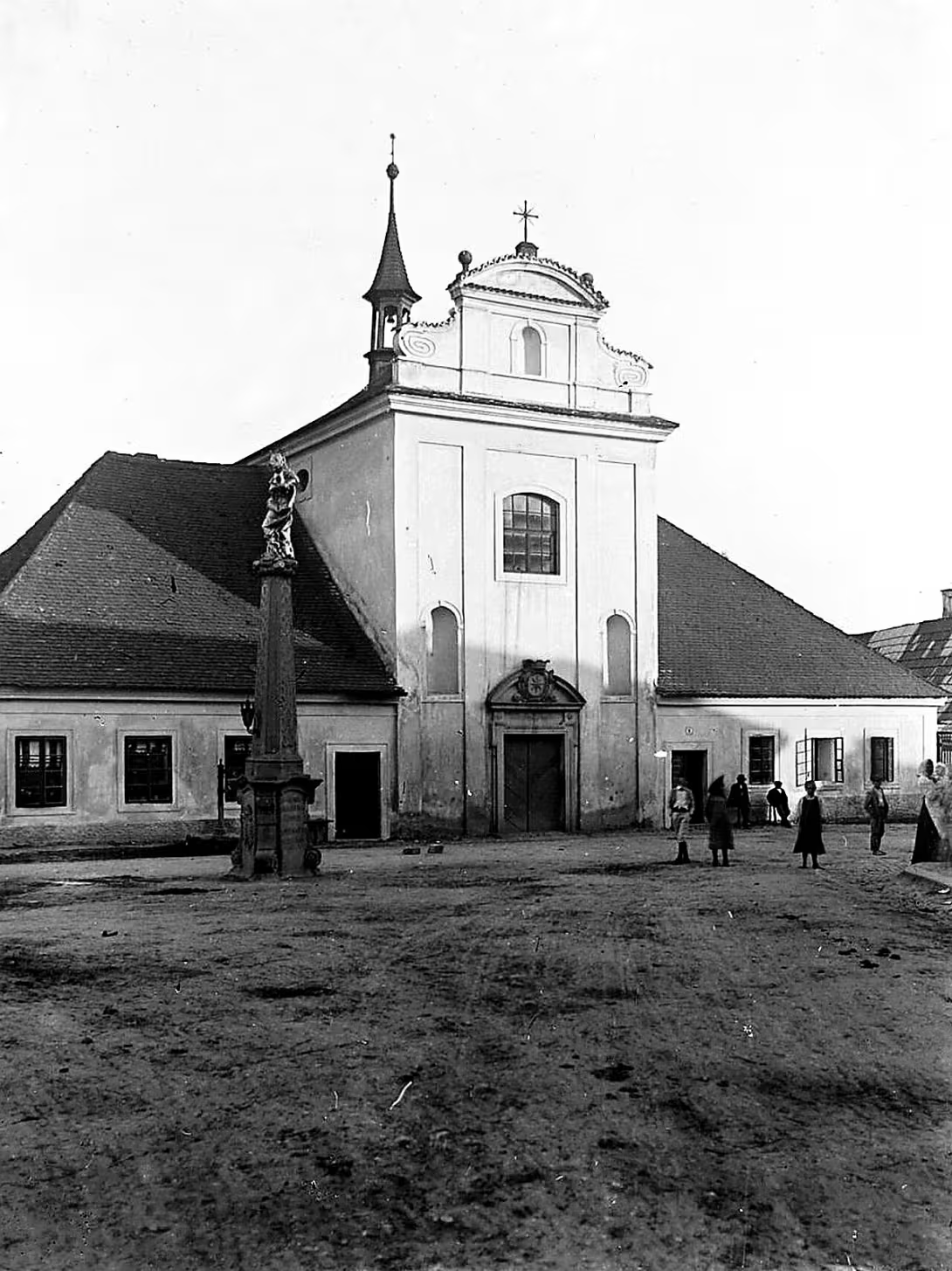
Objekt se nedochoval — na místě dnes nestojí. Následující text popisuje jeho historii, ne současnou návštěvu.
Špitál s kaplí sv. Václava in Častolovice, the village in the district of Rychnov nad Knežnou in Králové Hradec region, is a historical object long extinct. This early Baroque superintendent's hospital with the unoriented chapel of St. Wenceslas was built for old servants from the castle and the poor from the surroundings. The chapel, the work of Karl Luraga, represents an important architectural monument.
The foundation of the hospital dates back to 1647 and was part of Otto's Oppersdorf initiative. The position of the building itself was carried out by his son Václav Ignác of Oppersdorf, who replaced the original frequent-hunting hospital demolished in 1620 and standing on the site of the later inn Pansky House. The new building was ground floor with a high roof divided into two symmetrical halves, between which was the chapel of St. Wenceslas.
Architecturally, the hospital is interesting by horizontal lines and vertical element of the central chapel. The chapel originally served as a Loretan chapel with simple decoration. The main altar was a Baroque work from the second half of the 17th century with the theme of Visiting P. Marie, later transferred to Záměky during the Sternberkovsky ownership.
Over the years, the hospital and the chapel have undergone several stages of modifications and repairs. In 1784 a set of buildings was subjected to repairs which included the inner equipment of the chapel. There were other changes in the 20th century: in 1929 the tiles were increased and the chapel was cleaned and repaired. In 1950-1954 there were further modifications, including installation of new windows and roof repairs.
The ownership history of the hospital is linked to the Oppersdorf family who founded it. During the time of the Sternbergs, the main altar was transferred to another estate. In 1950, the property reform hospital went under the administration of the local national committee, which led to further bankruptcy of the building.
The key event in the 20th century was the abolition of the monument protection of the building in 1975 and the subsequent blast of the building on 25 April of the same year, when Ingstav s. p. ensured its removal for the expansion of the main transit communication.
Today, the hospital with the chapel of St. Wenceslas no longer exists and its place is a monument to history, which commemorates the importance of social buildings in the Baroque period. Despite the demise, the monument retains its place in common memory and is an interesting subject for the historical study of the region.
Špitál s kaplí sv. Václava in Častolovice reminds us of the importance of social institutions in the past and how changes in political and economic conditions can be reflected in construction. Visit the place where this historical object once stood to remind you of its importance to regional history and understand how time changes can be reflected in the physical landscape.
Then and now
Drag the slider to compare how the landmark may have looked when it was built with the view today.
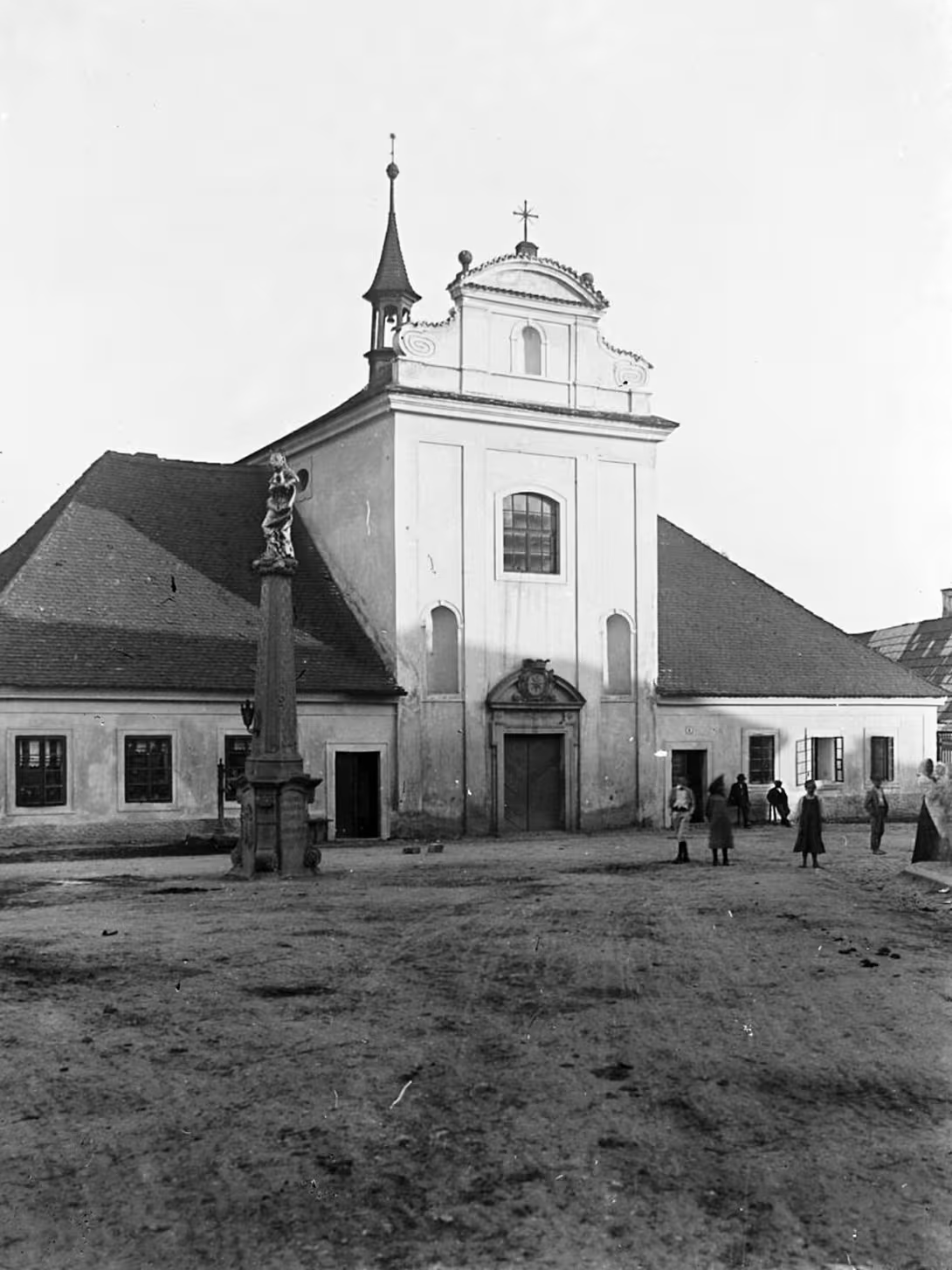
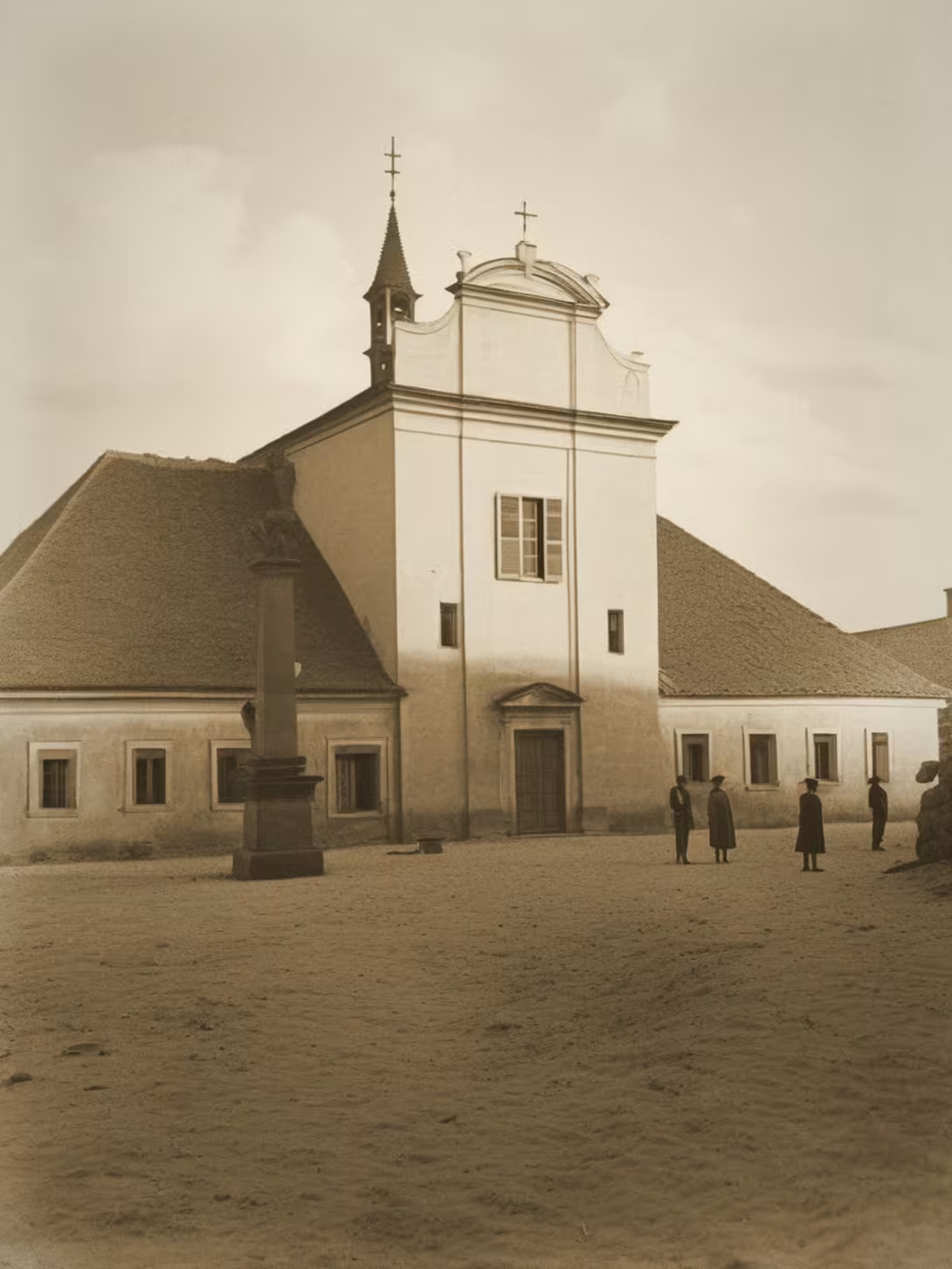
The historical appearance on the left is an AI-generated visualisation and serves as inspiration only.
Historical milestones
- 1647
- The founding of Otto Hospital in Oppersdorf.
- 1784
- Repair of construction file.
- 1975
- The construction was shot to expand the passageway.
Architectural development
Original hospital demolished in 1620, new building built in the 17th century with Baroque altar and chapel. Some repairs took place in the 20th century, but the building was destroyed.
Historical events
- 1647
- The founding of Otto Hospital in Oppersdorf.
- 1784
- Repair of construction file.
- 1975
- The construction was shot to expand the passageway.
Owners
Founded by Otto of Oppersdorf in 1647, built by Václav Ignác of Oppersdorf. During the time of the Sternbergs, the main altar was transferred to another estate.
Points of interest
- Špitál s kaplí sv. Václava was built for old servants from the castle and poor from the surroundings. The chapel is the work of Karl Luraga, which makes it an important architectural monument. - The hospital dates back to 1647 and was one of Otto's Oppersdorf initiatives. - The history of the hospital is linked to the Oppersdorf family who founded it. - The key event was the abolition of the building's monument protection in 1975 and the subsequent blast of the building.
Guide
Show guide text
This text was created by artificial intelligence and has not been editorially reviewed. It may contain inaccuracies.
Welcome to Chastolovice. You stand in a place that carries deep traces of ancient aid, care and human fate. Although the view of today's surroundings may seem quiet and perhaps a little unknown, there has been a story around you that has shaped the lives of many people in this region for centuries. Feel this atmosphere, feel the silence of the place that once formed the center of social care and spiritual peace. In front of you there is a space where various layers of society met, and even though the main buildings are no longer here, their link still resonates in this place.
Let's go back to the deep past together to understand why this place is so special. Imagine the year one thousand six hundred forty-seven. A time when the world was shaped in new ways and there was a need to create places where people could lean on the help of others. It was during this important period that this hospital was established. The initiative that made all this work possible was a nobleman named Otta z Oppersdorfu. His intention was not only to build buildings, but to create an institution that would serve those most in need at the time. This hospital was not just an ordinary house, it was an overseer's hospital, which means it was closely connected to the local castle and its administration.
It's important to remember who all this was meant for. The spy served mainly the old servants of the castle, who, after years of loyal work, were no longer able to perform their duties and needed a dignified place for their rest of their lives. At the same time, poor people from all over have found refuge here. It was a space for people who lost their strength or means, and who offered them not only shelter, but also a sense of belonging to the surrounding society. In this way, the hospital performed its vital human function.
Now pay attention to how this place looked and how it was built. Even though we see today only fragments of history, in times of its greatest fame, this complex formed a harmonious whole. In his heart there was a chapel dedicated to St. Wenceslas. This chapel was not just a simple religious space, but a real architectural pearl. Its creator was an important builder Karel Lurago, whose name is among the most important in the area of architecture at the time. Thanks to his hands, the chapel gained its early baroque character, which carried both elegance and dignity.
When you think of the whole area in your mind, try to perceive its layout. The hospital wasn't just one building, it was a set of buildings. Ground-floor houses were located on the sides, which served directly to hospitals and hospitals. These houses formed the edge of the hospital and created a closed, safe space for all residents. This whole set of buildings has been maintained over the years, for example, in the year of the thousand seven hundred and eighty-four there was extensive repair to maintain its functionality and appearance.
Looking at this place, we can't avoid the characters behind all this. The Oppersdorf family was inextricably connected to this place. In addition to the founder of Otto, we must also remember Václav Ignác of Oppersdorf, who was part of this important family and whose history of the hospital is so deeply rooted. These people were not just landowners, they were people who determined the fate of the whole place and its inhabitants.
But now I have to take you to one of the most dramatic parts of this story, a thing that brings sadness and wonder how quickly the world can change. The history of this place also has its painful chapter. Not a shumket away, in the year one thousand nine hundred seventy-five, there was an event that completely changed the face of this place. In order to expand the passageway, the building of the hospital and its parts was shot down. It is both fascinating and tragic how efforts to modernise and improve transport have faced the protection of historical heritage. This event left a rift in the landscape, which we see today as this very space where history meets the modern world.
Think about what this event tells us about the fleeting of things. One moment, one decision can change what's been built for centuries. Yet, while the buildings are gone, the spirit of Karl Luraga, the work of noble generations and the lives of many servants and poor people still present here. It's not just rocks or walls, it's a story about human help, faith and how people tried to make a better life in difficult times.
Now try to look around you again. Even if you can't see the whole baroque courtyard or the whole hospital house, see it as a witness of time. Every detail you see here, even if it's just empty space or the rest of the original structure, is part of this big puzzle of the past.
Thank you for choosing to explore this story with us. We hope that this short journey in time has helped you to better understand the importance of this place in the history of Chastolovice. Continue your walk now and pay attention to other attractions that the surroundings offer. We'll let you know you were with us. Goodbye.
Businesses nearby
Do you run a restaurant, accommodation, shop, museum, rental, wellness or other visitor service near this monument? Show yourself directly to the people heading to it — this is how they will see you in the app and on the web:
Nearby
🏰 Historic sites (97)
- Muzeum Častolovicka 0.0 km
- Zámek Častolovice 0.2 km
- Nový zámek 1.3 km Komenského 1
- Josef Růžička 1.7 km
- Rudolf Hoffmann 1.7 km
- Nejsvětější Trojice 2.0 km
- sv. Václav 2.0 km
- Panna Maria 2.0 km
- sv. František 2.0 km
- sv. Vojtěch 2.0 km
- Trojiční sloup 2.0 km
- Panna Maria Immaculata 2.1 km
- Witch Memorial 2.1 km
- Gelerie Žofín 2.2 km
- Barium 3.9 km web
- Zámek Černíkovice 6.8 km
- Obětem války 7.1 km
- Tvrziště Těšnov 7.3 km web
- T.G.M. 7.4 km
- Muzeum a galerie Orlických hor 7.5 km
🍽️ Restaurants and dining (90)
- Five-Caffe 0.1 km
- Beseda 0.1 km
- Okapi 0.1 km
- U Lva 0.3 km
- Toniova zámecká kavárna 1.2 km
- Restaurace Na Skále 1.6 km Kotyzova 395
- Restaurace Secesse 1.7 km Komenského 555
- Riwa 1.9 km
- Sokolovna 2.0 km Komenského 265
- Spiegelův Dvůr 2.0 km
- Hotel Panský dům 2.2 km Tyršova 15 web
- Hotel u Splavu 2.7 km Ke Koupališti 93
- Čestická hospoda 2.8 km
- Hostinec U Hubálků 3.4 km web
- Motorest Lípa 4.8 km
- Na Nádraží 5.8 km Rudé armády 44
- Hospůdka Lena 5.9 km Komenského 492 +420 736 149 892
- LENA 5.9 km
- Obecní hospoda Lípa nad Orlicí 6.2 km
- U Hotmarů 6.3 km Dukelská 34
🏨 Accommodation (28)
- HARABURDI® Recyclart Hotel 2.7 km U Kapličky 90 web
- HARABURDI Recyclart Hotel 2.7 km web
- Autokemp Orlice 2.7 km +420 737 406 741 web
- Kostelec 3.3 km
- U Hubálků 3.4 km web
- Penzion Podhorní mlýn**** 4.1 km Podhorná 478 +420 604 975 634 web
- Penzion Pod Rozhlednou 6.3 km web
- Havel 7.3 km
- Hotel herman 7.4 km
- Penzion U Zvonu 7.4 km
- Motel Roubenka 7.5 km
- Hotel Krajka 7.6 km +420 494 370 485 web
- Kemp Písák 7.6 km
- April Hotel Panorama 8.4 km +420 494 534 619 web
- Vodácké tábořiště 8.9 km web
- Chata na Vyhlídce 9.8 km web
- Ubytování U Splavu 9.9 km
- Penzion Trnka 10.1 km Lázeňská 384 +420 737 779 309 web
- Penzion Stará pošta 10.4 km
- Hotel Studánka**** 10.5 km +420 494 389 200 web
🚲 Rentals and sport (12)
- Městské koupaliště 2.8 km web
- SK Týniště nad Orlicí - Stadion Olšina 7.5 km
- Sportisimo 7.7 km
- Atletický stadion 7.8 km
- hřiště ZŠ 8.3 km
- Bowling 8.4 km
- Spartan aréna 10.6 km
- Motokrosová trať Holice 13.6 km
- Požární nádrž 14.0 km
- Zimní stadion 14.4 km
- Cyclosport KOLMO 14.5 km Dolní 286 +420 739 556 030 web
- Cycli 14.6 km
🥾 Hiking and nature (157)
- Sokolská zahrada 0.4 km
- Zámecký park Častolovice 0.5 km
- Pod Houští 1.6 km
- Za Humny 1.7 km
- Park u Zastávky 1.7 km
- Studánka Pod borovicí 1.8 km web
- Kamenec 2.0 km
- Park u Stavebnin 2.4 km
- Vila Sklenářka 2.8 km web
- Letovisko Mírov 3.0 km web
- Čertův sklípek 3.1 km
- Husova vyhlídka 3.3 km
- Tabulka 3.3 km
- Červená vrata 3.4 km
- Chlum 3.7 km
- Seykorova studánka 4.0 km web
- Na Náklích 4.2 km
- Na Vrchu 4.4 km
- Vrchy 4.5 km
- Na Hrádku 4.7 km
Visualizations and artistic views


The visualisations are generated by artificial intelligence and serve as inspiration.
Photos from the area
Real photos taken near the monument


Zdroj a licence jsou uvedeny u každého snímku.
Tips from visitors
No tips yet. Be the first!
Log in and add your tip.
Sources and literature
Photos: Unknown authorUnknown author / Public domain — Wikimedia Commons. The author and licence also appear when you hover over the image.
Faktickým podkladem tohoto textu byl článek na Wikipedii, jehož autory jsou přispěvatelé Wikipedie. Článek je dostupný pod licencí CC BY-SA 4.0.
Location on the map


Příběhy a pověsti
Legendy, pověsti a příběhy spjaté s touto památkou
Fotografie návštěvníků
Zatím žádné fotografie. Buďte první, kdo přidá fotografii z návštěvy!
Log in a přidejte svou fotografii nebo hodnoťte.
Za ověřenou návštěvu v aplikaci získáte víc bodů — poznáme podle GPS, že jste na místě.
Reviews and comments