



Spořilov Chateau
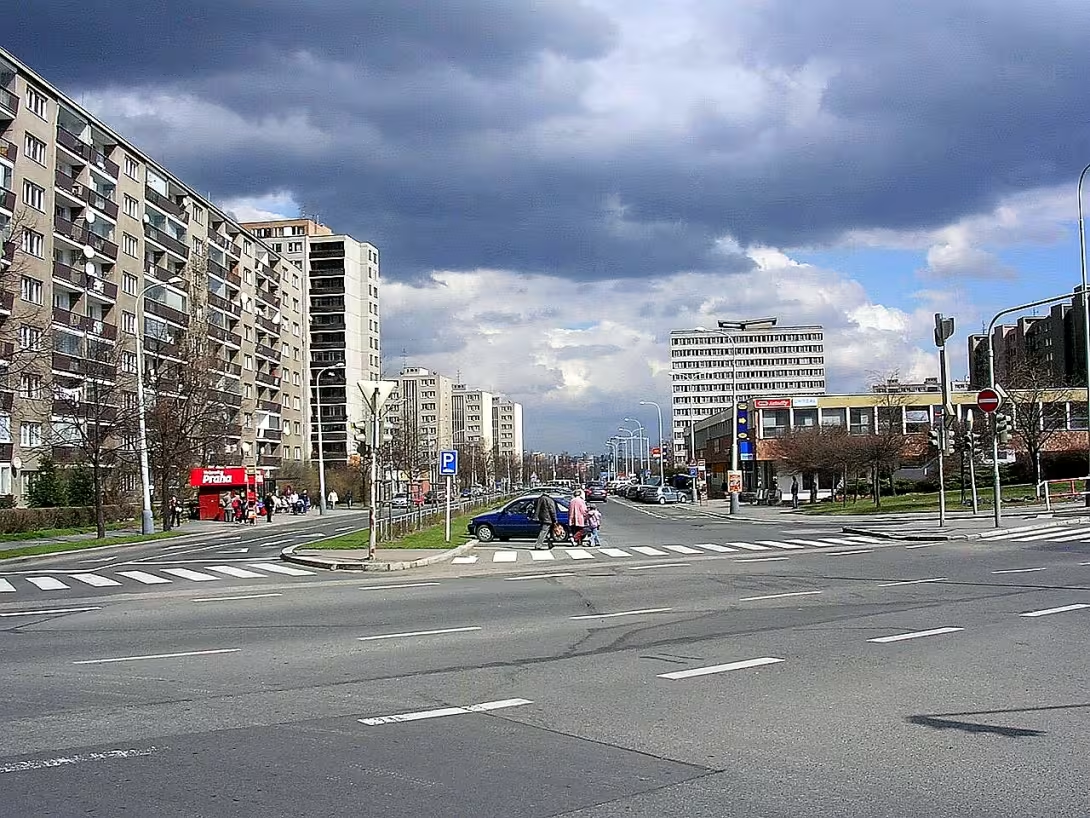
Spořilov occupies the southwestern part of the cadastral territory of Zázělice and since 1922 it has been part of the Great Prague. With an area of 2,05 km ² and a population of around 14 000 inhabitants (according to the 2000 census), the separate district is also separated from the rest of Prague by the valley of Botič and Hamer pond.
The creation of Spořilova is linked to 1924, when the City Savings Bank in Vinohrady founded a construction cooperative named Spořilov on the proposal of its director Václav Gláčka. The construction was carried out in 1926-1929 according to the design of architects J. Barka and Professor J. Bertla. It became one of the oldest garden cities on the territory of Great Prague. During World War II from 1939 to 1945, the territory became a city-state of the German Empire under the artificially created name "Rosenbühl." After the war, Spořilov gradually introduced into the system of Prague Circuits: first it belonged to the circuit Praha XIII-Vršovice, then to the respective organizational units to anchor firmly in Prague 4 since 1960 and especially since 1990.
Old Spořilov is characterized by a unique street naming system inspired by American urbanism. Instead of traditional names, we can find streets named by sides of the world and practice: South I-XVII, North I-XI, Northwest I-VI and others. The natural centers of this district were Roztylská Square with a church and tram end on the former Bratislava Square. In 1933 there was a new sokolovna in Northwest VI, where two WelkIist lites were planted in memory of the founders of the Czech village of Sokol, Dr. Miroslav Tyrš and Jindřich Fügner. In 1935, the functionalist church of St. Anežka was built with the design of architects Nikolai Pashkovsky and Stanislav Režný, who has been managing the Franciscan Order from the very beginning. The memorial is also a monument to the heroes of Zborov from 1937-1940 in Roztylsky Square, commemorating the victory of the Czechoslovak legionnaires of July 2, 1917.
In the 1960s and 1970s, the modern estate designed by architects J. Holechek and J. Krákor was built around Old Spořilova. The first part (Spořilov I) was established in 1961- 1967 with originally 3667 housing units for 15 000 inhabitants. The completion of the 1980s (1976- 1981) added additional 288 housing units. On Božkovská street no. 4 there is a building of the clinic designed by Z. Vodou and P. Bečvář. The Spořilov II site occupies the eastern part of the entire territory.
However, Spořilova was gradually transformed into a geographical and social island. From the 1960s to the 1980s, it was surrounded by wide speed roads: from the left, it is bounded by a six-striped D1, from the northeast by a six-striped City Circuit and from the east by an Spořilov connection, which also divided Spořilov into two parts. The original Spořilov can only be reached by bridge or underpass today, which has significantly changed its character and links to the surrounding area.
Spořilov is a fascinating example of urban evolution: from a pioneering garden town with a unique urban system to a modernist settlement that has become a geographically isolated neighborhood over time. Its architecture, interesting history and preserved monuments from various periods of the 20th century make it an interesting location for those interested in the development of Czech Prague and architectural styles of the second half of the last century.
Then and now
Drag the slider to compare how the landmark may have looked when it was built with the view today.
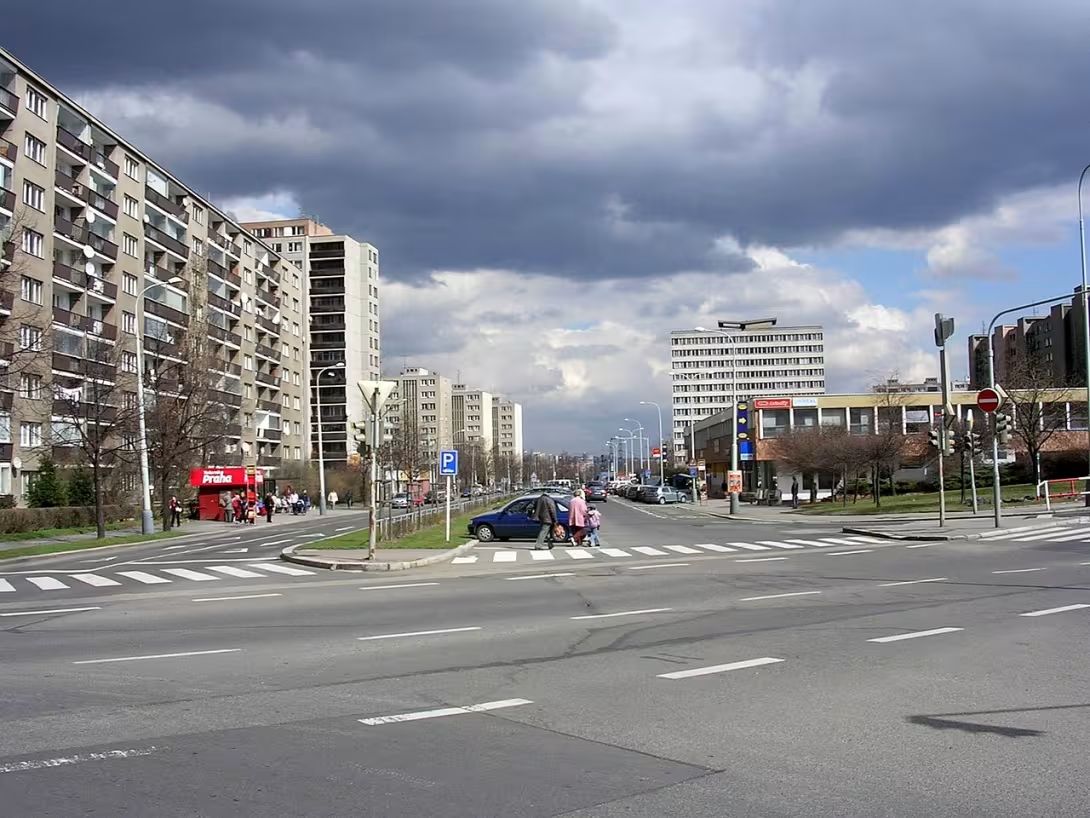

The historical appearance on the left is an AI-generated visualisation and serves as inspiration only.
Historical milestones
- 1922
- Spořilov became a part of Great Prague.
- 1924
- Establishment of construction team Spořilov and start planning of garden city.
- 1926-1929
- Construction of the original colony of family houses according to projects J. Barka and J. Bertla.
- 1935
- Opening of the functionalist church of Saint Anežka České near Roztylský Square.
- 1939-1945
- The district was called 'Rosenbühl'.
- 1961-1967
- Built in the Spořilov I and II housing in the functionalist style.
Architectural development
The original part of Spořilova (Old Spořilov) was created in 1926-1929 as a garden town with family houses and unique street naming system. In 1961- 1967 the Spořilov I and II settlements were built in a functionalist style. The church of St. Anezka České from 1935 is a functionalist building with a distinctive cubist form. In the 1970s the Spořilov II housing estate was completed by 288 housing units. The building in Božkovská Street No. 4, from 1960-1970, is the work of architects Z. Wyda and P. Bečváře.
Historical events
- 1922
- The territory of Spořilova became part of the Great Prague.
- 1924
- Establishment of the construction cooperative Spořilov City Savings Facility on Vinohrady.
- 1939-1945
- During the German occupation, the district was artificially named 'Rosenbühl'.
- 1961-1967
- Built in Spořilov I and II. according to projects of architects J. Holeček and J. Krákora.
Owners
The sequence of owners with years if available, otherwise zero.
Points of interest
- Spořilov was created as a garden town in 1924 on the initiative of the City Savings House in Vinohrady, named after its director Václav Gláček.
- In the years 1926-1929 one of the oldest garden cities in the territory of Great Prague was built according to the design of architects J. Barky and Professor J. Bertla.
- The territory of Spořilova was part of the artificially created name "Rosenbühl" within the German Empire during World War II (1939-1945).
- The unique street naming system is inspired by American urbanism, with names like South I-XVII, North I-XI or North Western I-VI.
- In Roztyl Square stands a monument to the heroes of Zborov (1937-1940), commemorating the battle of Czechoslovak legionaries from July 2, 1917.
Guide
This guide is narrated by a synthetic voice generated by artificial intelligence.
Show guide text
This text was created by artificial intelligence and has not been editorially reviewed. It may contain inaccuracies.
Sporilov is a Prague district located in the southwestern part of the Zábehlic cadastral territory and belongs to Prague 4. The Botich valley and the Hamerský pond separate it from Zábehlic itself. There are no significant transport or administrative connections between them, so Prague residents and locals alike perceive Sporilov as an independent district. The larger part consists of a colony of family houses, later called Starý Sporilov. On its northern edge lies Sporilov I housing estate, and to the east is Sporilov II housing estate.
Sporilov is among the oldest garden cities in the territory of Greater Prague. In 1924, the Municipal Savings Bank on Vinohrad celebrated twenty-five years of its existence by founding, at the suggestion of director Václav Sklenička, the Sporilov building cooperative. The district's name comes from this. Construction took place between 1926 and 1929 according to plans by architect Bark and professor Bertl. During the German occupation, the district was given the artificially created German name Rosenbühl. Previously, only two settlements stood here, Upper and Lower Roztyly, which no longer exist today.
A special feature of the original part is the naming of streets, inspired among other things by American systems. Around the Eastern and Southern squares runs a series of numbered streets, for example South, North, or Southeast, each with an ordinal number. Later extensions did not follow this system.
The housing estate was built between 1961 and 1967 according to plans by architects Holeček and Krákora. Originally it was designed for 3,667 apartments for 15,000 residents. During construction from 1976 to 1981, an additional 288 apartments were added.
In 1935, a functionalist church of Saint Agnes of Bohemia was built near Roztylský Square according to designs by Nikolaj Paškovský and Stanislav Režný. Franciscans have managed it from the beginning. Between 1937 and 1940, a monument called Heroes of Zborov stood in the square. It commemorated the victorious battle of Czechoslovak legionnaires on July 2, 1917. As early as 1933, the Sokol organization opened a new Sokol hall and planted two linden trees there in memory of Miroslav Tyrš and Jindřích Fügnera.
From the nineteen sixties to the nineteen eighties, wide expressways surrounded the original Sporilov. From the southwest, it is the D1 highway, from the northeast the City Ring Road, and to the east the Sporilovská connection, which additionally divided the district into two parts. Sporilov thus became literally an island, accessible only by bridge or underpass.
Frequently asked questions
Is Spořilov open to the public?
Yes, the chateau is open to the public from April to October. Admission fee is payable on site.
How do I get to the place by car / public transport?
Spořilov is well accessible by public transport line No. 137 from the centre of Prague. The car can be parked in front of the lock or nearby.
How much is the entrance fee and is it paid on the spot?
Payment is made on the spot at the cash register.
Is the tour suitable for children and seniors?
Yes, the tour is suitable for all ages. The chateau offers a quiet atmosphere and interesting historical information.
How long does the tour take?
The tour takes about 1 hour, but you can spend more time in the garden or taking pictures.
What are the opening times and booking is required?
Opening hours are from April to October from 9:00 to 5:00. Reservation is not required, but we recommend to check availability in advance.
What's interesting in the immediate vicinity?
The church of St. Catherine and the chapel of St. John Nepomucký are nearby. It is also possible to walk around the surrounding landscape and see local fauna and flora.
For kids
Imagine going back to when Spořilov was a small municipal court. It was a village where people who worked in fields and forests lived. There used to be a big building that was like a chateau. And it is this building that has become a place we know as a chateau today.
How did it look here? Who lived here? What happened here? The chateau in Spořilov was built in the 14th century and served as a seat of the flags and later as a chateau. It was a strong chateau with a tower and a moat to protect the inhabitants from the invading of the enemy.
Businesses nearby
Do you run a restaurant, accommodation, shop, museum, rental, wellness or other visitor service near this monument? Show yourself directly to the people heading to it — this is how they will see you in the app and on the web:
Events nearby

Zdroj akcí: otevřená data měst a obcí ČR (Národní katalog otevřených dat) a kalendář akcí Národního památkového ústavu.
Nearby
- The square with the church of Saint Anežka Czech and historical center of Old Spořilova is located near Roztyly Metro Station.
- Natural water area separating Spořilov from Záčelice, located near the Boot.
- Natural flow that passes through the edge of Spořilova and Zátřice.
- Traffic nodes near Spořilova, connecting the district to other Prague.
Accommodation nearby
Trips and activities nearby
Guided tours, tickets and activities nearby from GetYourGuide
Affiliate link: if you buy from the partner, we may receive a commission. The price for you does not change.
Search tours and activities →Themed route
Thematic cruise route: Spořilov and its surroundings
1. Roztyl Square * Type: * Historical center with church and urban atmosphere. Why? It is the heart of the Old Spořilov, where the church of St. Anezka of Bohemia stands with a calm atmosphere and is surrounded by picturesque alleys. There is also Roztyly Metro Station, ideal for the beginning or end of the trip.
2. Boot * Type: * Natural flow with possibilities of relaxation and natural beauty. * Why? * It passes through the edge of Záčelice and offers an opportunity to walk along the water. There is also a possibility to sit by the shore, which is a great way to relax after a walk through the city.
3. Hamer Pond * Type: * Natural water surface with rich ecosystem. Why? It separates Spořilov from Záčelice and is an ideal place for bird and nature observation. There is a walking path around the pond that is suitable for relaxation or short hiking.
4. Spořilov (main destination) - surroundings of St. Wenceslas Church * Type: * Memorial and quiet environment. * Why? * St. Wenceslas Church is an important dominant of Spořilov and is worth visiting for its history and architecture. The surrounding area is also a quiet area, which is suitable for relaxation or a short walk.
The route is designed to combine historical and natural beauty areas, with all points close to each other - mostly within 1 km apart. The trip can take place in a few hours.
Seasonal recommendations
Spring In the spring months, Spořilov and Záčelka offer a pleasant combination of blooming nature and historical peace. After rainy days, forests and parks turn into green magic, while sunny moments illuminate ancient buildings with golden light. The atmosphere is calm, almost intimate, because tourists have not yet started coming in such numbers as in summer. A visit is recommended in March or April, when nature wakes up and the sights are not overpopulated. Comfortable clothes with the possibility to cover themselves - spring weather is variable, and the morning or evening can be cold. The best time is this afternoon, when the sun rises high enough, but the crowds are still low.
Summer The summer visit of Spořilova and Záčelice brings warm, sunny days when historical spaces and surrounding nature become an ideal place for walking. In the main summer season (July-August), however, it is necessary to count on higher attendance, especially on weekends and holidays. It is recommended to come early in the morning to avoid crowds at the most visited sights. Summer is also ideal for cycling trips around the area, as warm weather allows comfortable travel. Clothes should be light, but with sun protection - hat, sunglasses and cream with high protection factor are essential.
Autumn Autumn brings to Spořilova and Zachovice rich leaf colours and a peaceful atmosphere where tourists start to come home and get the sights on authenticity. In September and October the weather is pleasant, but with the advancing colder days the lighting changes - the sun sets earlier, and historic buildings gain a mysterious atmosphere. It is recommended to visit in September when it is still warm, but nature offers beautiful shades. In October and November, warmer clothes are suitable, as evenings can be cold. The best time is the afternoon when the light is softer and the sights look the most beautiful.
Winter The winter visit of Spořilova and Záčelice is magical, especially in advent time, when historical spaces are projected into candles and Christmas decorations. The snow covers the surrounding forests and parks, which gives the place a fabulous atmosphere. In winter, however, it is necessary to expect shorter opening times for monuments and possible inspection restrictions. Hot, waterproof clothing is recommended as the weather can be variable and moist. The best time is the afternoon when the light is sufficient, but the crowds are minimal. Winter walks around are pleasant, but it is necessary to take care of slippery pavement.
Visualizations and artistic views


The visualisations are generated by artificial intelligence and serve as inspiration.
Photos from the area
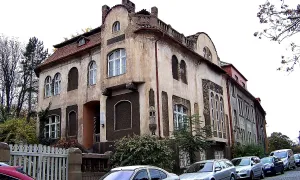
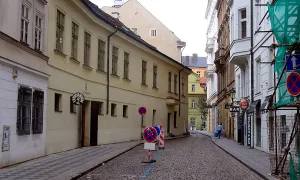
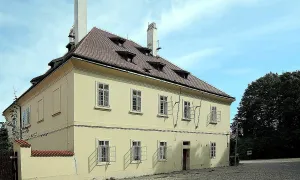
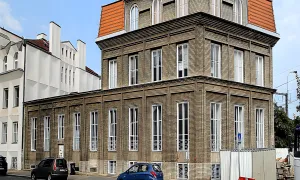
Real photos taken near the monument


Zdroj a licence jsou uvedeny u každého snímku.
Tips from visitors
No tips yet. Be the first!
Log in and add your tip.
Sources and literature
Photos: cs:ŠJů / Public domain — Wikimedia Commons. The author and licence also appear when you hover over the image.
Faktickým podkladem tohoto textu byl článek na Wikipedii, jehož autory jsou přispěvatelé Wikipedie. Článek je dostupný pod licencí CC BY-SA 4.0.
Location on the map
More monuments – Záběhlice (Praha 4)
Show all in the municipality
Příběhy a pověsti
Legendy, pověsti a příběhy spjaté s touto památkou
Fotografie návštěvníků
Zatím žádné fotografie. Buďte první, kdo přidá fotografii z návštěvy!
Log in a přidejte svou fotografii nebo hodnoťte.
Za ověřenou návštěvu v aplikaci získáte víc bodů — poznáme podle GPS, že jste na místě.
Reviews and comments