






Rámová Castle
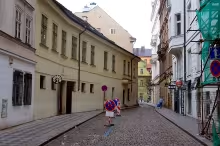
Rámová Street is located in the heart of the Old Town of Prague and forms a direct link between Long street in the south and Haštalská in the north. At first glance, it acts as an inconspicuous passageway, but its name and the building are indicative of an ancient craft environment that has shaped the neighborhood for centuries.
The street name has two possible explanations. This points more directly to the Blue Frame house on number 4, whose name is probably reflected in the street name. The second option is older and connects the name with the frames used by the weavers to tighten and dry the skirt. The Soukenický cím has been in Prague since 1340 and the Soukenická Street, which is connected to the Dlouhou from the eastern side, has been documented in Prague since the 15th century. The name Rámová itself then settled in written sources in the middle of the 18th century.
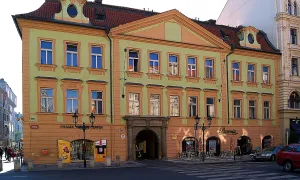
Street construction is colorful. Right on number 1 offers fruits and vegetables Frutapura. On the corner with the Longou is the House U Dvou of Gold Corners (No. 2 / Long 21), the house is further housed by Qubus Design Studio (No. 3), which brings to the historic alley contemporary design. The central dominant is the Blue Frame House at number 4, whose name is defined by the whole street, and the bar restaurant at number 5. The street on the Hashtalska side closes the town house on number 8.
Special attention deserves to be paid to the House of Carnival at number 6, sharing an address with Long 25. In its premises, the Foundation manages the Czech Baroque Gallery Lapidarium, which exhibits sculptures of Czech Baroque artists and complements them with contemporary art. This is a living cultural space planted in an authentic old-town house - not just a stone depository.
For a visitor coming from busy Long is Rámová a pleasant calming. It does not offer a fancy facade or a magnificent square, but it shows the sober face of the township's Old Town with houses bearing historical names. The Lapidarium Gallery is worth a stop in itself: Baroque sculpture in the authentic setting of the Old Town alley is still rare in Prague.
Then and now
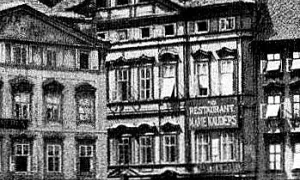
Drag the slider to compare how the landmark may have looked when it was built with the view today.
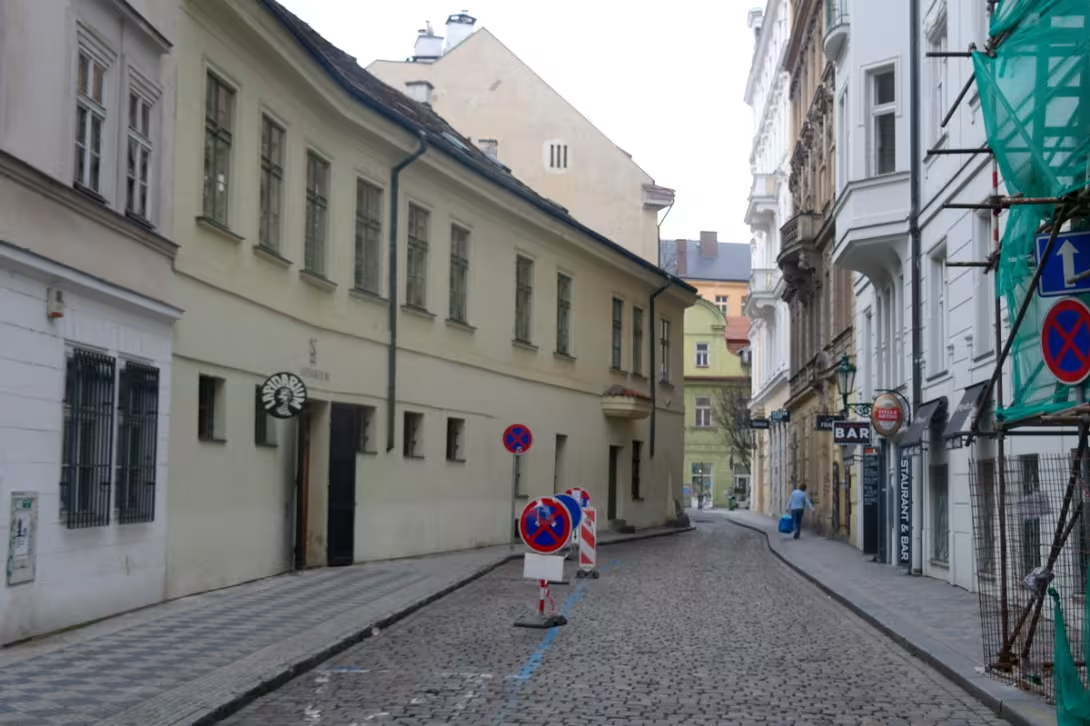
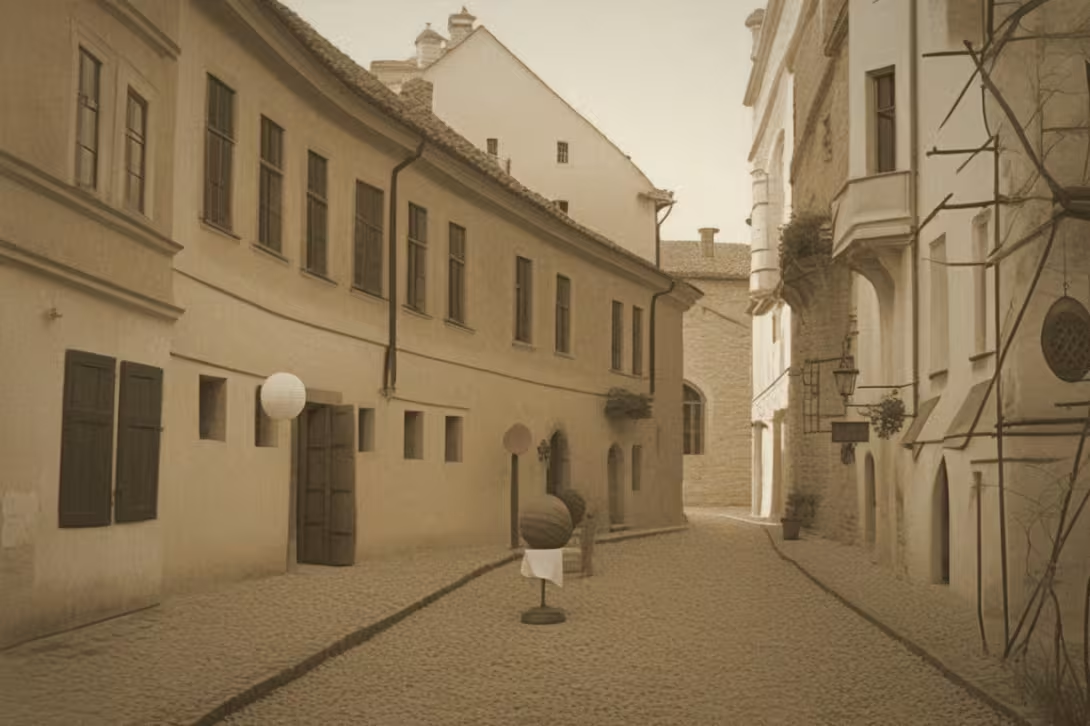
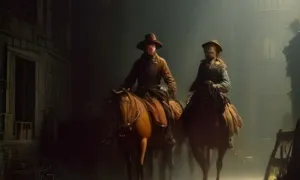
The historical appearance on the left is an AI-generated visualisation and serves as inspiration only.
Historical milestones
- Around 1340
- The documented existence of a soukenic guild in Prague, which affected the street name.
- 15th Century
- The soukenice street (connected to the Dlouhou) is documented in writing.
- 1750
- The street name Rámová has settled in written sources.
- 18.-19th century
- The development and development of a building street with typical townhouses.
- 20th century
- Establishment of the Lapidarium Gallery in the House of the Crows (No.
Architectural development
The castle was built in Gothic style at the end of the 13th century.
Historical events
- 1250
- Foundation of the castle of the Crossroads of the Order of St. Cyril and Methodius
Owners
Cross-country order
Points of interest
- The name of the street Rámová probably comes from the house U Blue Frame on number 4.
- The name may also be related to the frames used by the wearer to tighten and dry the skirt.
- The Soukenický cím in Prague has been documented since 1340.
- The Lapidarium Gallery in the House of Krkavci (no. 6) exhibits Baroque sculptures of Czech artists and contemporary art.
- The street offers an authentic environment of old-town houses with historical names.
Guide
This guide is narrated by a synthetic voice generated by artificial intelligence.
Show guide text
This text was created by artificial intelligence and has not been editorially reviewed. It may contain inaccuracies.
Welcome to Rámová. You are standing in one of the narrow and fascinating corners of Prague's Old Town, where time seems a little slower than on the wide boulevards not far from you. If you have just come from the busy and lively street of Long, notice how the space around you changes. This short alley, which takes you towards Haštalská, is like a small chapter from the history of the city, which encourages you to walk slower and more attentive to every facade that appears before your eyes. Feel this atmosphere, this sense of proximity to history, which is so tangible in these places.
Let's go back deep into the past together to understand why this place looks like it does. To understand the identity of this street, we need to look at its roots that go back to the 14th century. Already around 1340 we can find the existence of a soukenic guild in Prague in historical records. This is a crucial moment for understanding the whole place. The neighbors were people who were involved in the production and processing of the skirt, and their presence here was so significant that it directly influenced the name of this part of town. In the 15th century, this journey in written testimonies was referred to as Soukenická Street, which directly referred to the craft activity that was prosperous here at the time. Imagine those busy days when craftsmen moved around these places and the economic heart of old Prague formed here.
Now pay attention to the architecture surrounding you. Although the street has changed many times over the centuries, its character remains deeply urban and historical. Most of the houses you're looking at right now represent a typical development that developed and stabilized mainly in the eighteens and ninetheenth century. These are classic townspeople 'houses that make up an impenetrable and beautiful wall around you. When looking at their facade, try to perceive their shape and structure. Although we do not know the names of the particular architects who designed these facades, their work speaks for itself. Every house here is a witness of different periods, every facade has traces of time and every window can tell a story about families who lived here, traded and formed part of Prague's society.
In this context, it is very important to see how the names of the buildings and the streets themselves have gradually changed. The name Rámová definitely lasted until 1750 in written sources. And that's where we come up with one of the most interesting questions about this place. So why is the street called Rámová? Here, there are two likely explanations that you can keep in your mind as you browse. The first option, which is very specific, refers to one of the dominant objects in this vicinity. It's a house on number four, known as the Blue Frame. This name was very oriental for people in the past and helped them to easily orient themselves in the labyrinth of Prague streets.
However, there is also a second, perhaps even deeper theory, which is directly related to the sets we talked about. Imagine the work tools of the craftsmen at the time. The weathermen used special wooden structures to stretch and dry the newly made cloth, which could resemble frames. So it is possible that the street name is not just a reference to a particular house, but an echo of an old craft that once ruled here. This ambiguity between the name of the house and the name of the craft tool gives the street Rámová a certain mystery that you can throw as a question when looking at individual numbers of descriptive.
If you move any further, please pay attention to the house at number 6, which is called Vrkavci. This place in the last century has gained a whole new dimension thanks to the founding of the Lapidarium Gallery. It's a place where history meets the present. If you choose to enter it, you will see a fascinating contrast. The gallery displays sculptures of Czech Baroque artists, which bring to this narrow street a sense of grandeur and artistic expansion, while at the same time you will find works of contemporary art. It is a beautiful example of how historical buildings can still be used live and how culture can keep old places in contact with the modern world.
You're standing where every brick and facade is trying to tell you something. From the medieval guild to the Baroque statues and modern art, this street is like a living organism that breathes constantly. Don't forget to stop and watch. Look not only for the great monuments, but see the fine structure of the historic city that lies in the details of these townhouses.
But now I will not hold you back any longer in further discovery. Continue your journey, let yourself be guided by the atmosphere and explore other parts of Old Town. Maybe he's pulling you towards the Long, or he's attracting you to a more peaceful way through Hashtali. Enjoy every step and every moment spent in the heart of Prague. Thank you for joining me on this short historical walk through Rámová. To a reunion.
Frequently asked questions
Is Rámová open to the public?
Yes, she's open to the public. Opening hours: 9: 00 - 17: 00, in winter only on weekends.
How do I get to the place by car / public transport?
Rámová can be reached by road I / 2 from Mělnik towards Lovosice. Parking is possible near the castle or nearby. If necessary, bus lines Mělík - Lovosice can be used.
How much is the entrance fee and is it paid on the spot?
Payment is only possible in cash.
Is the tour suitable for children and seniors?
Yes, a tour of Ramová Castle is also suitable for families with children, but we recommend lending a child's chair or wheelchair. For seniors, access to some parts of the castle is possible only by stairs.
How long does the tour take?
The tour of the Ramá Castle takes approximately 1-2 hours, depending on the interest and attention of visitors.
What are the opening times and booking is required?
Opening hours: 9: 00 - 17: 00, in winter only on weekends. Reservation is not necessary, but we recommend to contact the landlord in advance.
What's interesting in the immediate vicinity?
In the immediate vicinity of Ramová Castle is the Elbe and the possibility of seeing the river for a stroll or boat trip. The town of Mělík with its historical core and castle Mělnik can be visited in the vicinity.
For kids
Imagine going back to the past to the Middle Ages, when Castle Rámová was a real kingdom. How did it look here? Who lived here? What happened here?
It was a castle full of life and struggle. There were soldiers on his walls protecting the country from its enemies. In the halls and chambers, there were gentlemen and women who ruled over this kingdom. Among them was a priest who served in the chapel of St. John Nepomuk.
Businesses nearby
Events nearby
Zdroj akcí: otevřená data měst a obcí ČR (Národní katalog otevřených dat) a kalendář akcí Národního památkového ústavu.
Nearby
Elbe
Melt
Accommodation nearby
Trips and activities nearby
Guided tours, tickets and activities nearby from GetYourGuide
Affiliate link: if you buy from the partner, we may receive a commission. The price for you does not change.
Search tours and activities →Themed route
1. Rámová - * Memorial and former prison * Start with Ram, unique monuments associated with Czech history and resistance. Its walls bear traces of war events and still seem mysterious. The inner spaces offer a view of the period architecture and exhibition of resistance.
2. Long street - * Historical commercial street * Go to Long street, where there are many protected houses and shops. This street is one of the oldest in Prague and offers an authentic atmosphere of medieval and Renaissance life.
3. Haštalská street - * Cultural and historical artery * Continue on Haštalská Street, which connects Staré Město to New Town. Its name refers to the medieval trade of hash trees (shovels) and today you will find restaurants, cafés and cultural facilities.
4. Lapidarium Gallery - * Art Gems * Close your visit to the Lapidarium Gallery, where you can get acquainted with Baroque sculptures of Czech masters and contemporary art. The exhibition offers not only works of art but also historical contexts.
Seasonal recommendations
Spring In Frasov, where ancient stone houses and narrow streets intersect with a calm atmosphere of Prague suburb, spring brings a unique harmony of light and nature. After rainy days, the streets turn into green corridors, where sun rays are reflected on the facades of houses and shadows create a light game that highlights medieval details. In parks and gardens around the monument, apple trees begin to bloom, whose fragrance is mixed with the scent of a wet ground. The morning fog is also specific, which often rolls around the streets in spring months and gives the place a mysterious, almost fairy-tale mood. It is recommended to visit the memory early in the morning when the air is fresh and the crowd is minimal - ideal time is between 9 and 11 o'clock. Clothes should be layered: the spring sun may be direct, but evenings are usually cold. Avoid visiting during a period of heavy rains, when some older parts of the monument may be less accessible.
Summer Summer offers not only warm sunny days, but also an opportunity to explore the memory in pleasant, but not too hot weather, typical of Prague suburb. In the main summer season, the streets are filled with life - local shops and cafés are attracted to terraces where you can taste fresh tea or ice cream. The evening lighting is also specific, when historical facades are projected into the light of street lamps and create a pleasant atmosphere for evening walks. It is recommended to arrive early in the morning, no later than 10 o'clock to avoid crowds of tourists gathering at noon at the most famous sights. Clothes should be easy, but with the possibility to hide from any Prague exaggeration - it is recommended to wear sunglasses and a hat. In the summer months, the monument is open longer, but some minor exposures may have limited access due to high traffic.
Autumn Autumn in Frav brings unique colour, when leaves on old trees turn into golden and red shades that are reflected in the windows of historic houses. The atmosphere is calm and nostalgic, where the local streets are emptied and the monument becomes intimate. The morning and afternoon light is also specific, which creates long shadows and gives place a dramatic character. In this period there is also the opportunity to experience the Frame in advent time, when the streets are decorated with candlesticks and Christmas decorations are starting to appear since November. It is recommended to visit the memory in the morning when the air is clean and the temperature is pleasant - ideal time is between 10 and 13 o'clock. Clothes should be warm, but not too heavy, because autumn weather changes quickly. Avoid visiting in a period of strong winds, when some older parts of the monument may be less stable.
Winter Winter Frarovo is like a fairy tale - white roofs of houses, frozen windows and streets covered with thin ice create a magical atmosphere that strengthens Christmas decorations and lights. Specific is also the short daylight that gives the monument a mysterious, intimate touch, especially in the afternoon, when the sun boils down at a low angle and illuminates historical details. In winter the monument is open with limited capacity and therefore it is recommended to visit it in the morning, preferably between 11 and 13 o'clock when the most light is. Clothes should be warm and laminated - temperatures often fall below the freezing point, and winds from the south can be penetrating. Avoid visiting during a period of severe snowstorms, when some roads can be difficult to pass. In winter, it is also possible to experience Rárov in peace, when the local streets are emptying and the monument takes up the historic atmosphere.
Visualizations and artistic views


The visualisations are generated by artificial intelligence and serve as inspiration.
Photos from the area
Real photos taken near the monument


Zdroj a licence jsou uvedeny u každého snímku.
Tips from visitors
No tips yet. Be the first!
Log in and add your tip.
Sources and literature
Fotografie: Horakvlado / CC BY-SA 4.0 — Wikimedia Commons. The author and licence also appear when you hover over the image.
Faktickým podkladem tohoto textu byl článek na Wikipedii, jehož autory jsou přispěvatelé Wikipedie. Článek je dostupný pod licencí CC BY-SA 4.0.
Location on the map

Příběhy a pověsti
Legendy, pověsti a příběhy spjaté s touto památkou
Fotografie návštěvníků
Zatím žádné fotografie. Buďte první, kdo přidá fotografii z návštěvy!
Přihlaste se a přidejte svou fotografii nebo hodnoťte.
Za ověřenou návštěvu v aplikaci získáte víc bodů — poznáme podle GPS, že jste na místě.
Reviews and comments