



kostel svatého Mikuláše v Praze-Starém Městě Church
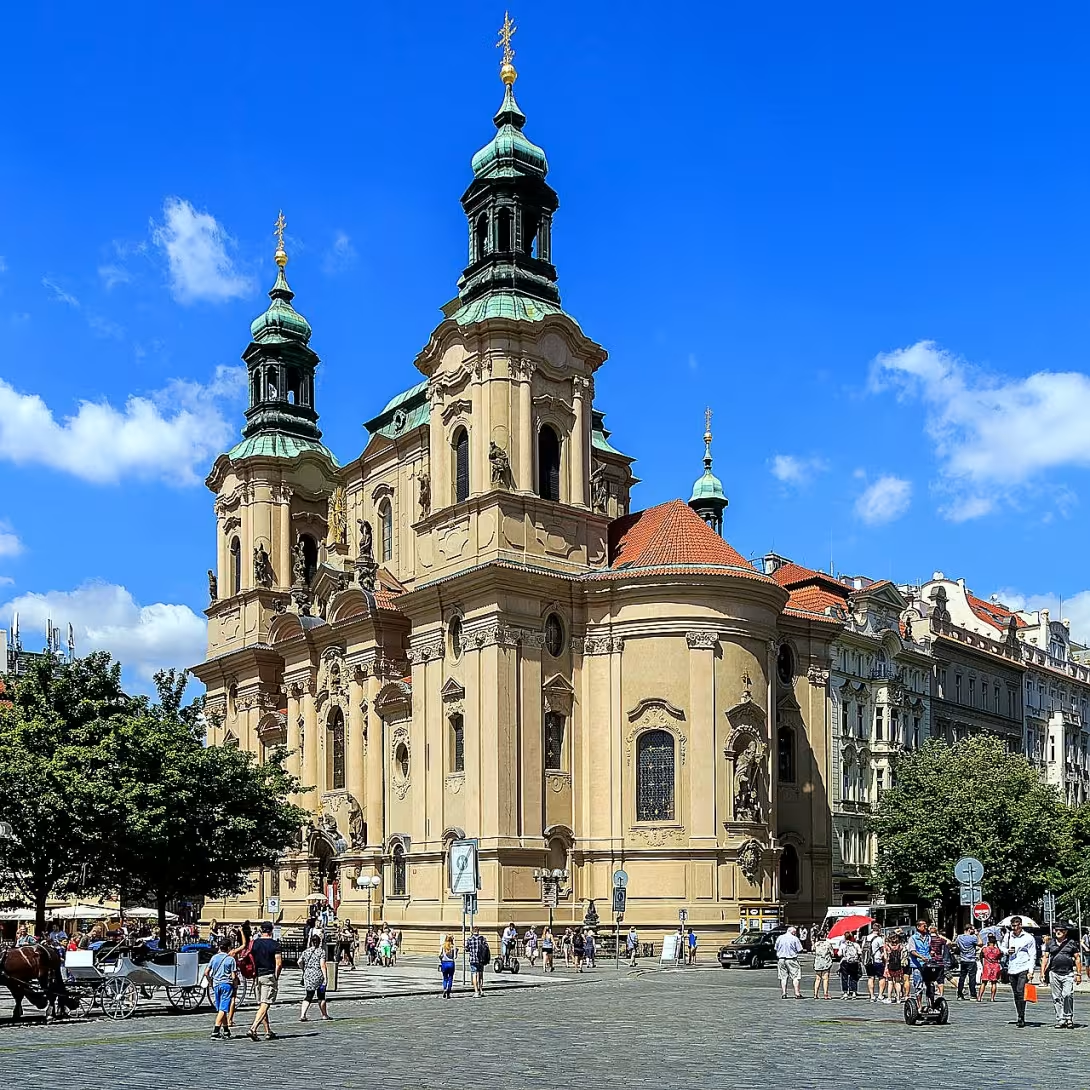
The Church of St. Nicholas is located on Old Town Square in Prague and represents one of the most deranged sacral buildings in the centre. The present temple was established between 1732 and 1737, according to the design of the builder Kilián Ignác Dientzenhofer and replaced the Gothic basilica, whose beginnings are attributed in 1273. The original Gothic building was a tower with a prism tower covered by a needle roof and formed an important opposite of the Church of the Holy Mother in front of Tyn on the opposite side of the square.
For King Wenceslas IV, the church became one of the centers of Hussite ideology. Reformers Jan Milíč z Kroměříže and Matěj z Janova preached loudly here. After the period of rebellion, the building returned to the Catholic tradition. In 1635 it was taken over by Czech benedictini from the Emmausian monastery, with which the emperor opened up space for the community of the Taiwanese Montserrat. The monks performed the first reconstruction in 1650-1660 under the leadership of Abbot Matthew Ferdinand Sobk of Bílenberk. At the beginning of the 18th century they entrusted the builder František Maximilian Kaňka and his father Vít Václav Kaňka with the design and implementation of the prelature and refectory.
The decisive change came in the 1930s. Between 1730 and 1739, the original Gothic building was completely demolished, leaving only the crypt. A new Baroque building with an essential architectural solution was created in its place - a central layout with a cross dome and an extended conclusion. There was a prelatura on the west side. The interior was decorated by paintings of artists Jan Kryštof Lički, Jan Bedřich Hess and Matìj Zimprechtá, which decorated the altars. Asami decoration (whose frescoes were later killed) was also included.
In 1787 for the reign of emperor Joseph II there was a fundamental breaking point. The church was desecrated and the monastery was abolished. All equipment, including bells and objects of art, has been sold or reclaimed. In 1791 the property was purchased by the Prague municipality, which used it as a warehouse. Grains were stored here during the Napoleon wars. In 1865 the space was prepared as a concert hall. The fundamental turnaround occurred in 1871 when the Russian Orthodox Church rented the building, which had not had its own temple in the Czech countries until then. The church served Czech and mainly Russian believers until 1914. His first spiritual administrator became Nikolaj Nikolajevič Ryžkov, later the metropolitan Yevlogij and bishops Sergi and Isaakij were active here. After the acquisition of its own churches (Cyril and Methodius and the Deck of Bohodenice), the building was transformed into a garrison church and warehouse.
The church's appearance today bears traces of its complicated past. During the rendering of the old Prague, an adjacent Baroque prelature was demolished, opening a view of the side facade. In 1904 it was modified by architect Rudolf Kříženecký quasibaroque portal. Only a few building elements were preserved from the original Gothic building in today's cellar. The church remains an important testament to the transformation of Old Prague and the arrogance of the holy space.
Then and now
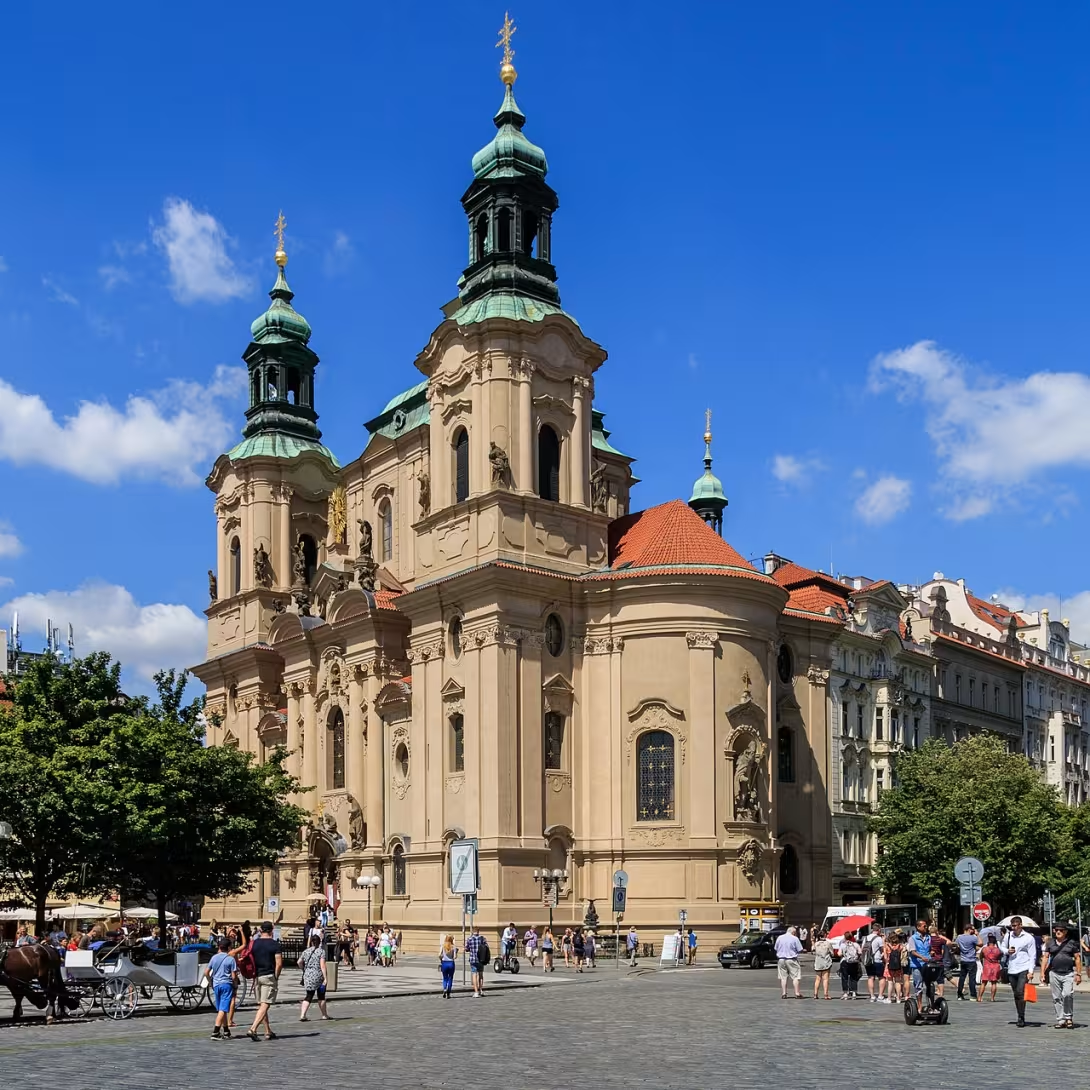
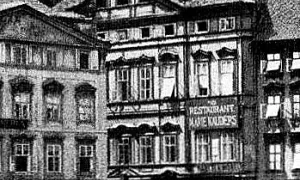
Drag the slider to compare how the landmark may have looked when it was built with the view today.
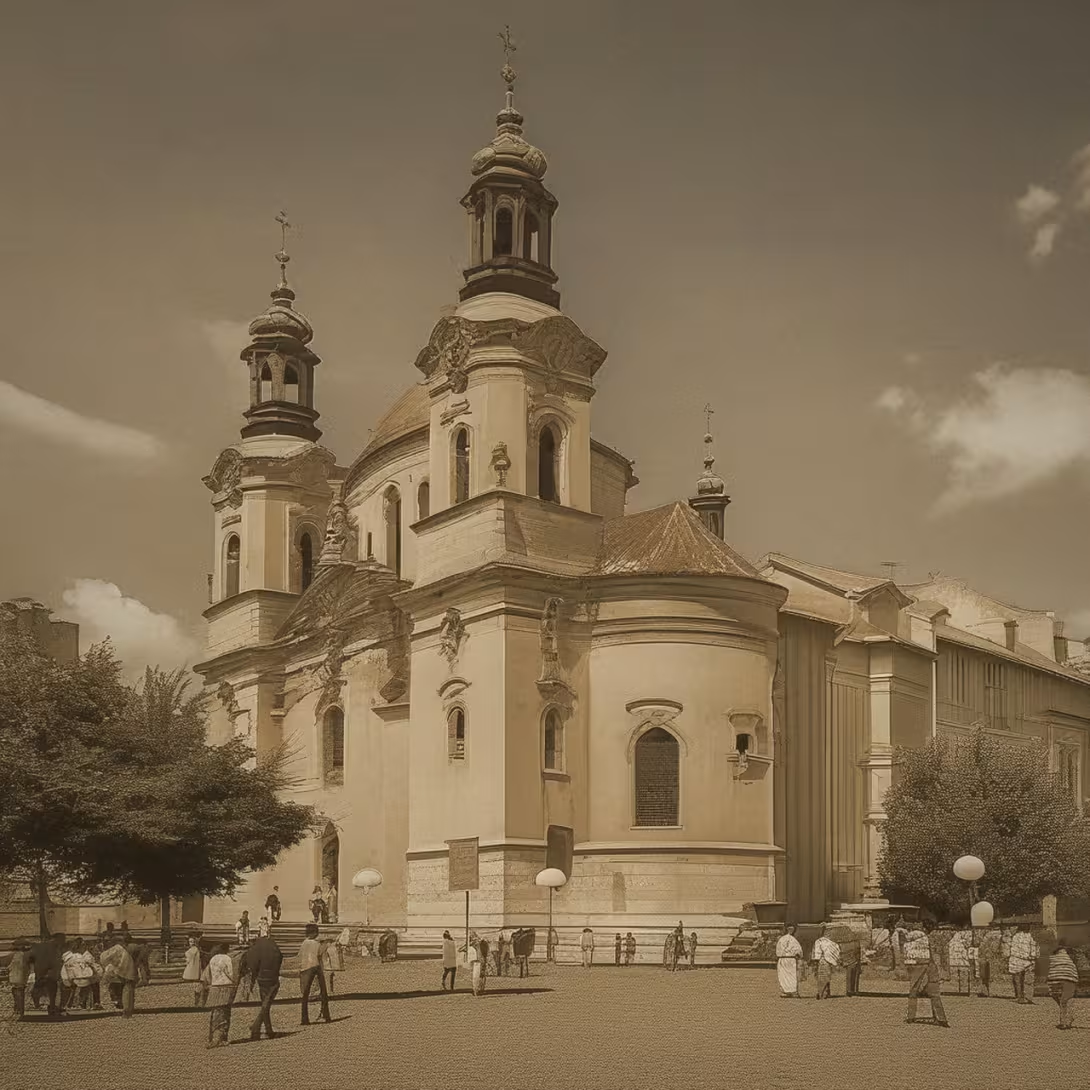
The historical appearance on the left is an AI-generated visualisation and serves as inspiration only.
Historical milestones
- 1273
- mentioning the gothic parish church
- 1635
- acquisition of the church with Czech benedictine from the Emmausian monastery
- 1732
- opening of the contemporary baroque temple
- 1787
- desecration of church and abrogation of monastery
- 1871
- rental of the temple of russian orthodox church
Architectural development
On the site of the original Gothic basilica was built baroque central building with a dome in the crossing. In 1904, the southern facade was modified by Rudolf Croženecký using a quasibaroque portal. Only a few elements were preserved from the original medieval building in today's cellar.
Historical events
1635 acquisition of church benedictine, 1787 desecration of church for Josef II., 1871 rental of Russian Orthodox Church
Owners
Benediktini (from 1635), Prague village (from 1791), Russian Orthodox Church (from 1871)
Points of interest
- The church of St. Nicholas is located on Old Town Square in Prague and represents one of the most deranged sacral buildings in the centre. - The present temple was created between 1732 and 1737, according to the design of the builder Kilian Ignác Dientzenhofer, replaced the Gothic basilica from 1273. - For King Wenceslas IV the church became one of the centers of Hussite ideology and here the reformers Jan Milíč z Kroměříže and Matěj z Janova preached. - In 1635 they took over the Czech benedictini from the Emmausian monastery, with which the emperor made room for the community from Catalan Montserrat. - In 1787 the church was desecrated and the monastery was abolished for the reign of emperor Josef II. The property was taken over by the Prague village, which used it as a warehouse.
Guide
This guide is narrated by a synthetic voice generated by artificial intelligence.
Show guide text
This text was created by artificial intelligence and has not been editorially reviewed. It may contain inaccuracies.
The Church of Saint Nicholas we can find on Old Town Square in Prague. Today's Baroque church was created in the 1930s according to the design of architect and builder Kilian Ignaz Dientzenhofer.
A Gothic parish church, mentioned as early as 1273, previously stood in its place. It was a basilica with a prismatic tower on its western facade, to which a parsonage and parish school were adjoining. It formed a counterweight to the Church of Our Lady before Tyn on the other side of the square. During the reign of King Wenceslas the Fourth, reformist preachers John Milíč of Kroměříž and Matthew of Janov preached there. Only a few Gothic elements remained from the original building, walled up in today's crypt.
In 1635, Czech Benedictines from the Emmaus Monastery acquired the church. They had to vacate their former monastery for a new community that the emperor had invited from the Catalan Montserrat. The Benedictines first added monastery buildings. At the beginning of the eighteenth century, young František Maxmilián Kaňka designed a prelature and refectory for them, and the construction was carried out by his father Vít Václav Kaňka. Then the Gothic basilica was demolished, only the crypt remained, and Dientzenhofer built a central structure with a dome and an extended chancel.
However, the monastery did not last long. In 1787, during the reign of Emperor Joseph the Second, it was dissolved and the church was desecrated. The altars, paintings, sculptures, and bells were either sold or distributed. Among other things, the main altar painting by Jan Kryštof Liška Saint Nicholas Blessing the Ships was removed. The statue of Saint John Nepomuck ended up on the bridge in Přeštic, from where it collapsed into the river in the 1980s. After restoration, it went to the Lapidary of the National Museum.
From 1791, the church belonged to the Prague community and served as a warehouse. During the Napoleonic Wars, grain was stored in it. In 1865 it was cleared and prepared as a concert hall. In 1871, at the request of Russian Count Goleniščev-Kutuzov, it was leased to the Orthodox Church, which did not have its own church in the Czech lands. It served mainly Russian believers until 1914, and the first spiritual administrator was Nikolaj Nikolajevič Ryžkov. The Asam frescoes were whitewashed at that time.
During the demolition of old Prague, by 1908 the prelature and monastery buildings were torn down. This opened up a view of the church's side facade. In 1904, architect Rudolf Kříženecký supplemented it with a portal imitating the Baroque style.
Tips for visitors
The best time to visit is in the morning or late afternoon when soft light hits the Baroque facade, which is ideal for photography. In the interior we recommend watching the light game in the space of the boat, which highlights the details of the construction.
The monument is located in the city centre, so it is available by car and public transport.
When entering the temple, it is recommended to choose a respectful garment corresponding to the sacral space. We advise families with children to prepare a short accompanying narrative context on baroque art so that children can better perceive space and its history.
In the immediate vicinity, within walking distance of a few minutes, you can visit the Old Town Square and the Church of the Mother of God before Tyn.
Frequently asked questions
Can the monument be visited?
Religious buildings are usually open mainly during services; at other times a visit is normally arranged with the parish or the operator. We have not verified specific times.
Where is the monument?
Location: Pařížská, Staroměstské náměstí, Staré Město, Praha, Hlavní město Praha. The map on this page shows the exact spot.
Why is the monument protected?
It is listed in the Central List of Cultural Monuments of the Czech Republic as a cultural monument (register no. 38203/1-32).
For kids
Imagine going back 299 years to Prague-Old Town. Where would you get lost? In streets full of carriages and people in historic clothes? At the end of one of these narrow streets was the church of St. Nicholas.
How did it look here? There were big cities that went further than you know. People lived in houses with stone walls and roofs covered with shingles. There was a fireplace for cooking food and a fireplace for heating. St. Nicholas' church was one of the most beautiful and important buildings in the city.
Businesses nearby
Do you run a restaurant, accommodation, shop, museum, rental, wellness or other visitor service near this monument? Show yourself directly to the people heading to it — this is how they will see you in the app and on the web:
Events nearby


Zdroj akcí: otevřená data měst a obcí ČR (Národní katalog otevřených dat) a kalendář akcí Národního památkového ústavu.
Nearby
Old Town Square, Church of the Mother of God before Tyn
Accommodation nearby
Trips and activities nearby
Guided tours, tickets and activities nearby from GetYourGuide
Affiliate link: if you buy from the partner, we may receive a commission. The price for you does not change.
Search tours and activities →Themed route
1. Old Town Square Type: Square Why to visit: This historic site serves as an ideal starting point for exploring nearby monuments.
2. Church of the Mother of God before Tyn Type: Church Why to visit: This Gothic building with high towers is one of the most prominent buildings in this area.
3. Church of St. Nicholas Type: Church Why to visit: The main destination of your route, which represents the key sacral object in this location.
Seasonal recommendations
In the spring life returns around the old town streets and the light is softer, highlighting the details of the sacral architecture. The atmosphere is fresh and quieter than at the highest temperatures. I recommend wearing layered clothes because the wounds can still be cold. The best thing is to visit the church in the morning when the streets are even less crowded and the sun gradually lights up between the buildings.
The summer season brings intense sunlight and long days to Prague, but also the greatest burden of visitors. Around the church there is a sense of constant movement and lively energy of the city. Due to high temperatures and crowds, it is best to come right after opening to ensure a quieter tour in a cooler interior area. Dress lightly and do not forget enough fluids during walks around the historical centre.
Autumn moons offer a magical atmosphere thanks to golden light and morning fog that encapsulates Prague roofs. Colors in the surroundings give the place a nostalgic touch. It is an ideal time for photography, especially in the afternoon when the sun shines low. Prepare for colder weather and wear a practical jacket or scarf. The number of people is usually lower than in summer, which allows us to perceive history in silence.
In winter, the light in the interior of the church is very cosy and contrasts with the cold outside streets. The short days and the advent time of calm give the place a special sacred character. Due to low temperatures it is necessary to have very warm clothes and high-quality footwear for walking on slippery tiles. Visit the memory around noon when the light is most stable and the day is longest.
Visualizations and artistic views


The visualisations are generated by artificial intelligence and serve as inspiration.
Photos from the area
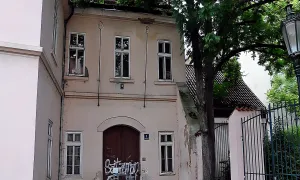
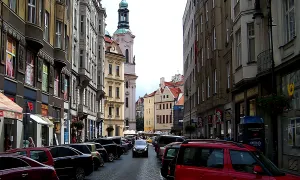
Real photos taken near the monument

Zdroj a licence jsou uvedeny u každého snímku.
Atmosphere of the place
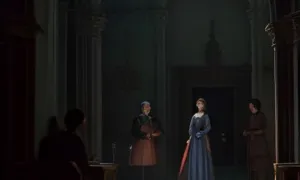
This atmospheric visualisation of the place and period was generated by artificial intelligence. It is not real footage of the location.
Tips from visitors
No tips yet. Be the first!
Log in and add your tip.
Sources and literature
Photos: A.Savin / FAL — Wikimedia Commons. The author and licence also appear when you hover over the image.
Faktickým podkladem tohoto textu byl článek na Wikipedii, jehož autory jsou přispěvatelé Wikipedie. Článek je dostupný pod licencí CC BY-SA 4.0.
Location on the map
More monuments – Staré Město
Show all in the municipality

Příběhy a pověsti
Legendy, pověsti a příběhy spjaté s touto památkou
Fotografie návštěvníků
Zatím žádné fotografie. Buďte první, kdo přidá fotografii z návštěvy!
Log in a přidejte svou fotografii nebo hodnoťte.
Za ověřenou návštěvu v aplikaci získáte víc bodů — poznáme podle GPS, že jste na místě.
Reviews and comments