






Stará Báň Fortress
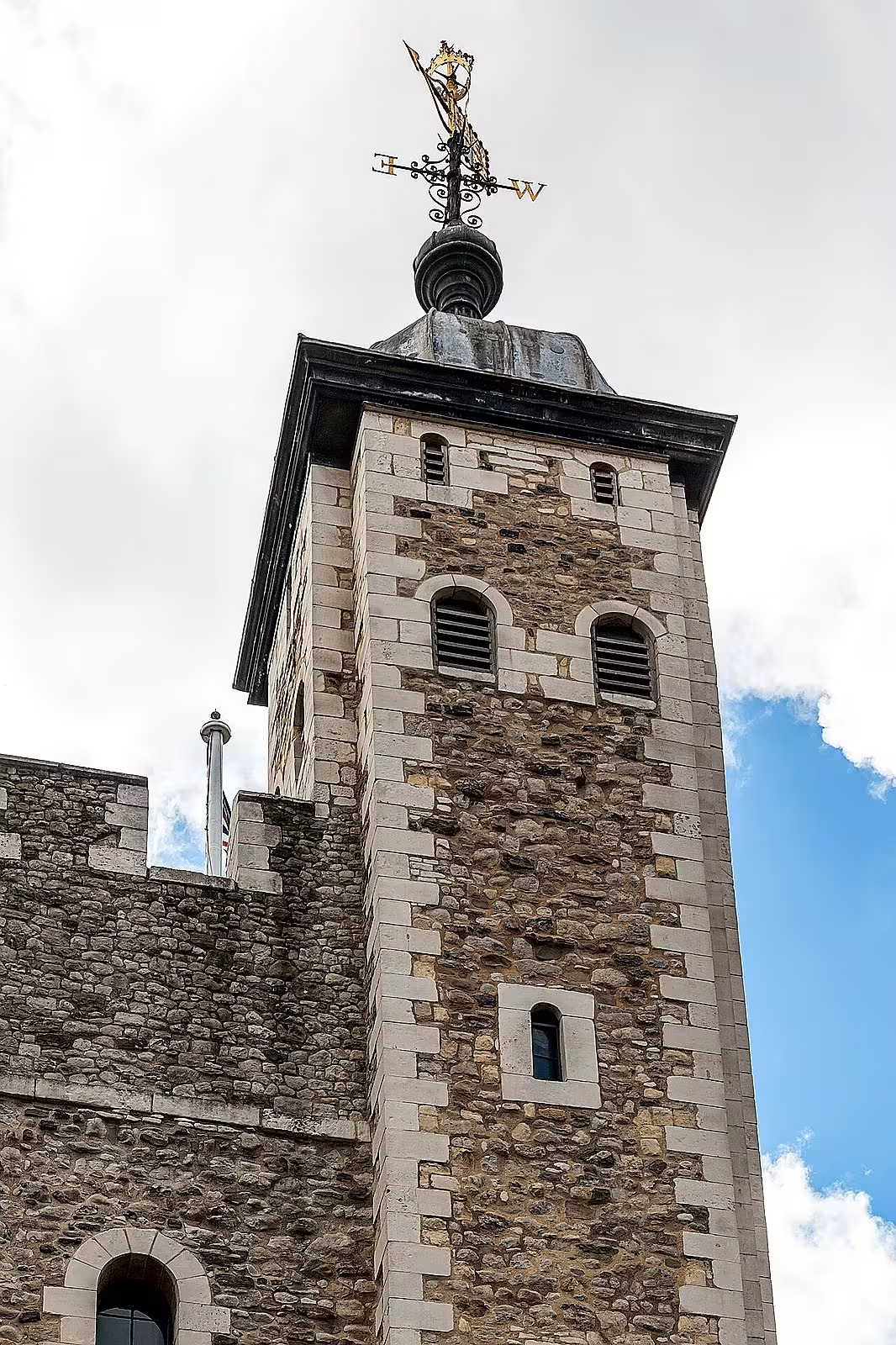
Stará Báň is a historical site featuring remnants of a medieval castle located east of Hradčany in the Nymburk district of Central Bohemia. This protected cultural monument provides insight into the region's feudal past and showcases the architectural and social dynamics of medieval Bohemia. Its significance lies not only in its physical remains but also in its documented history, which traces ownership through notable figures.
The origins of Stará Báň date back to at least 1391 when it was first mentioned as a village with a castle. During this period, Bohemia was part of the Holy Roman Empire and experienced significant feudal development, leading to the construction of castles for defense and administration by local nobility. The initial owner recorded is Hald z Báně, marking the beginning of a lineage reflecting shifting regional power dynamics.
Architecturally, Stará Báň featured defensive elements typical of its era. The site includes an irregularly shaped hill approximately 26 by 19 meters in size, surrounded by a moat and outer rampart indicative of its strategic importance. Over time, landscape alterations, such as the removal of part of the rampart, have changed its original form.
Ownership transitioned through several notable figures over the centuries. After Hald z Báně, it was held by Jan z Báně in 1460 and Jíra Opat z Maličína a z Báně between 1451 and 1454. The Baderský family became prominent owners starting in 1497, with Hynek and his son Jiří as key figures. By the mid-16th century, the castle fell into disuse, leading to its abandonment. In 1551, a land registry entry noted the village and abandoned castle along with a courtyard. The estate eventually came under Emperor Rudolf II's ownership in 1584, marking the end of local noble control.
Throughout its history, Stará Báň has witnessed significant changes in ownership and use, reflecting broader socio-political shifts within Bohemia. Despite these transformations, it remains an important historical landmark offering a glimpse into medieval life and architecture.
Today, visitors can explore the remnants of Stará Báň near a road with traces of its agricultural past nearby. The preserved moat and rampart provide tangible links to its defensive origins, while the surrounding Central Bohemian countryside adds context to its historical setting. Although much has changed since its days as a bustling noble residence, the site continues to captivate those interested in medieval history.
Stará Báň stands as a valuable cultural monument that invites exploration and reflection on the region's rich past. Its enduring legacy offers visitors an opportunity to connect with the historical narratives of Bohemia's feudal era and appreciate the architectural ingenuity of its time.
Then and now
Drag the slider to compare how the landmark may have looked when it was built with the view today.
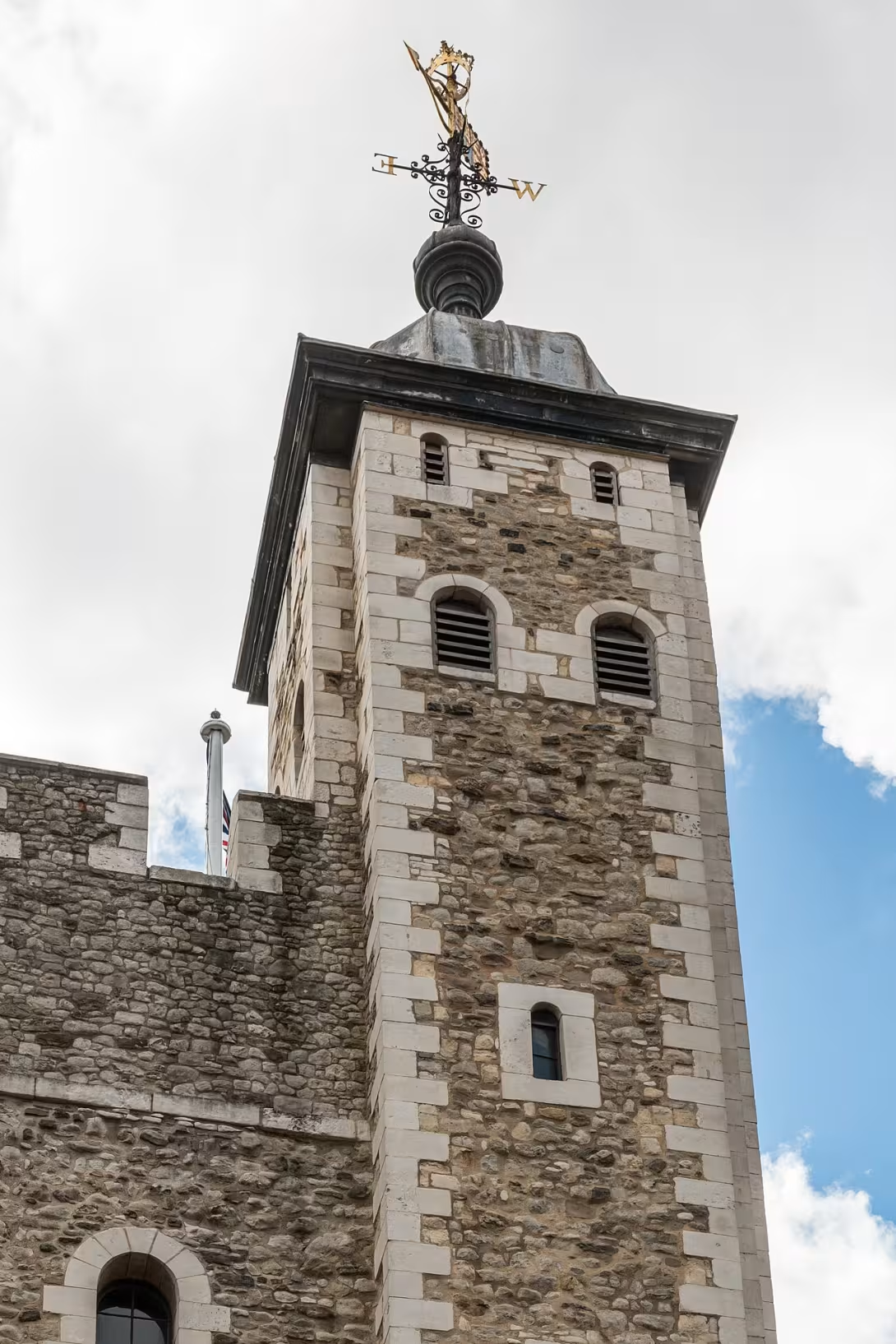
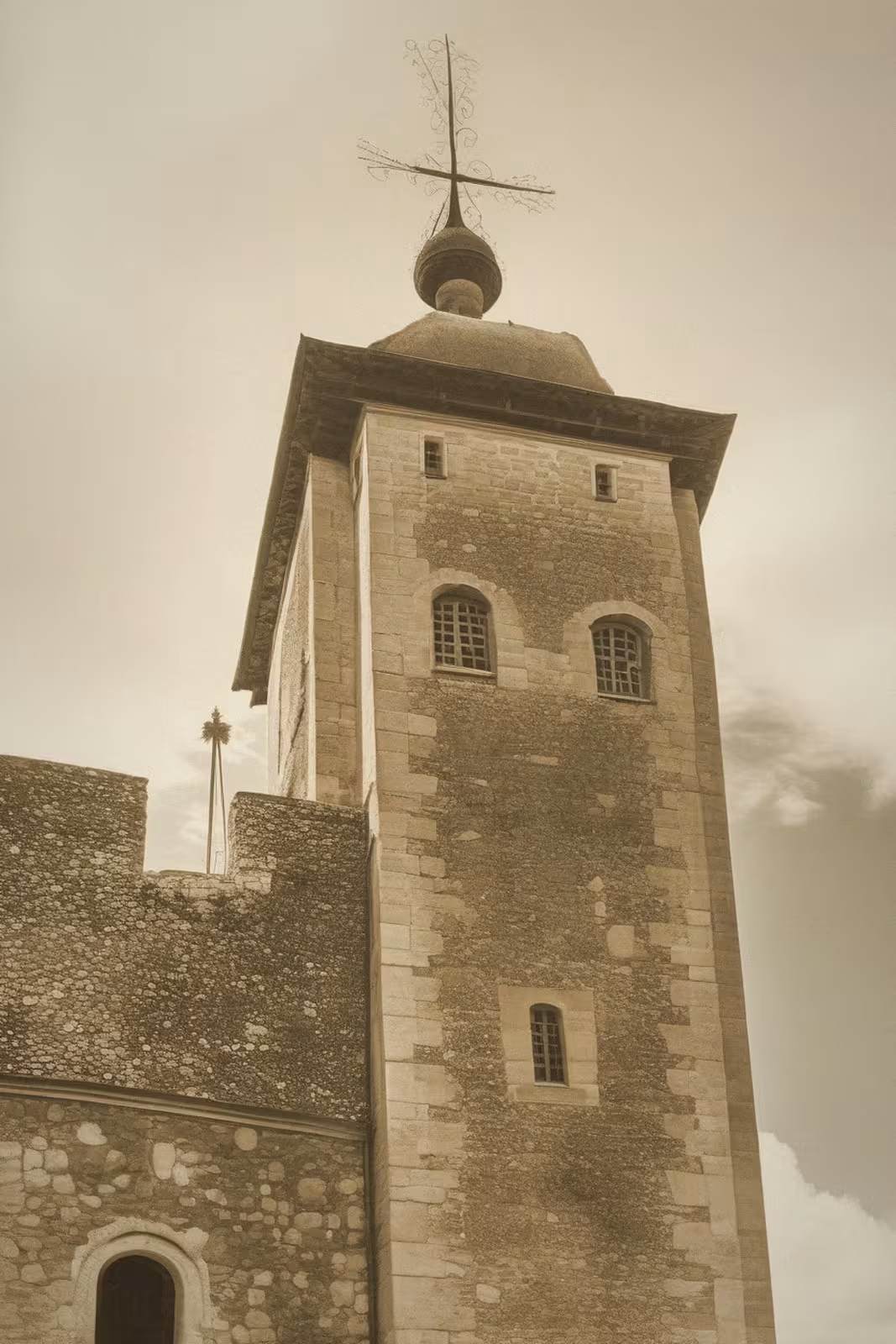
The historical appearance on the left is an AI-generated visualisation and serves as inspiration only.
Historical milestones
- 1391
- First mention of Staré Báně as a village with a castle.
- 1451
- Jíra Opat from Maličín and Báně becomes the owner.
- 1460
- Jan z Báně takes over ownership of the castle.
- 1497
- The Baderský family becomes the main owner.
- 1551
- Land registry record of an abandoned castle and village.
- 1584
- The castle passed into the ownership of Emperor Rudolf II.
Architectural development
The site originally featured a medieval castle that served as a residence for local nobility. Over time, it fell into disuse and was eventually abandoned by the mid-16th century. The landscape has been altered since then, particularly with the removal of part of the rampart.
Historical events
First documented mention of the village and castle in 1391.
In 1551, a land registry entry noted the village and abandoned castle with a courtyard.
Emperor Rudolf II purchased the estate in 1584.
Owners
The first documented owner was Hald z Báně in 1391. Ownership later passed through Jan z Báně (1460), Jíra Opat z Maličína a z Báně (1451–1454), and the Baderský family from 1497, with Hynek and his son Jiří being notable owners. The estate was eventually acquired by Emperor Rudolf II in 1584.
Points of interest
- One lesser-known fact about Stará Báň is that it was part of the Holy Roman Empire during its early history, which influenced its architectural style and feudal significance in medieval Bohemia.
- A surprising aspect of Stará Báň's history involves its transition from a noble residence to an abandoned site by the mid-16th century, reflecting broader socio-political changes that led to the decline of many such castles during this period.
- An intriguing legend associated with Stará Báň suggests that hidden tunnels once connected it to nearby structures, allowing for secretive movements and communications during times of conflict or intrigue among local nobility.
- A curious detail about its ownership history is that the estate came under Emperor Rudolf II's control in 1584, marking a shift from local noble families to imperial possession, which was relatively rare for such sites at the time.
- Despite its current state as ruins, Stará Báň once featured an irregularly shaped hill surrounded by a moat and rampart, showcasing advanced defensive architecture that was typical of medieval fortifications in Bohemia.
Guide
This guide is narrated by a synthetic voice generated by artificial intelligence.
Show guide text
This text was created by artificial intelligence and has not been editorially reviewed. It may contain inaccuracies.
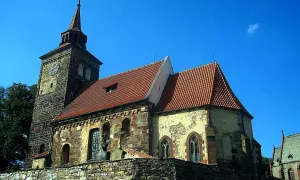
Welcome to Stará Báň, one of the most interesting historical sites in this region. You stand before the remains of a medieval castle that towers over the surrounding landscape. Take note of its character – the castle ruin is located on an irregular hill, surrounded by a deep moat and outer ramparts. This is evidence of its original defensive function.
Let's move forward in time to discover how Stará Báň developed from its inception. The first mention of this village with a castle dates back to 1391. At that time, it belonged to the Holy Roman Empire, which influenced its architecture and feudal significance in medieval Bohemia. Over time, the castle changed hands among various owners, including Jíra Opat of Malice and from Báň, Jan of Báň, and the Baderský family.
Take note of the local architecture. The castle ruin is a remnant of a medieval fortress built without regard for classic motte-and-bailey design. This means that the castle buildings were constructed without following traditional designs and were more intended for residential purposes. Take a look at the visible ramparts and ditches here.
Now, pay attention to some key personalities associated with this site. Hald of Báň, Jan of Báň, Jíra Opat of Malice and from Báň, Hynek Baderský of Újezd, and Emperor Rudolf II – the names of these figures are linked to the history of Stará Báň. Of interest is that in 1584, the castle was transferred under Emperor Rudolf II, reflecting its great significance in contemporary politics.
One interesting aspect of Stará Báň is that it was part of the Holy Roman Empire, which influenced its architecture and feudal importance in medieval Bohemia. This is something that will surely captivate you.
Come explore this historical site and reflect on what you have seen and heard. Stay connected with history and the atmosphere of the Middle Ages.
Tips for visitors
The best time to visit Stará Báň is during late spring or early autumn when the weather is mild, and the surrounding countryside of Central Bohemia is particularly picturesque with vibrant greenery or colorful fall foliage. These seasons also tend to be less crowded, providing a more serene experience as you explore the ruins.
Public transport can also be used; however, it's advisable to check current routes and schedules through an online search or local travel resources to plan your journey effectively.
When visiting Stará Báň, consider bringing comfortable walking shoes as you'll likely want to explore the ruins on foot. A camera is recommended for capturing the scenic views of the countryside and the historical remnants of the castle. Additionally, bring a hat, sunscreen, or a light jacket depending on the weather, along with water and snacks if planning an extended stay.
For photography enthusiasts, early morning or late afternoon provides the best natural lighting to capture the ruins against the soft hues of sunrise or sunset. The irregular shape of the castle remnants offers unique angles for shots, particularly from higher ground nearby where you can get a panoramic view of the site and its surroundings.
In terms of nearby attractions within 30 minutes, consider visiting Hradčany, which is close to Stará Báň. This area provides additional historical context with its own charming sites and landscapes. It's perfect for those interested in exploring more about the region’s medieval history.
For families with children, Stará Báň offers a great opportunity to engage young ones with stories of knights and castles while enjoying an outdoor adventure. The open space around the ruins is suitable for kids to explore safely under supervision. Bringing along a picnic can make it a delightful day out in nature.
Frequently asked questions
Can the monument be visited?
This is a ruin. Such sites are often freely accessible, but some can only be visited with a guide or are closed for safety reasons. We have not verified the current situation – take care and respect any restrictions.
Where is the monument?
Location: Středočeský kraj. The map on this page shows the exact spot.
Why is the monument protected?
It is listed in the Central List of Cultural Monuments of the Czech Republic as a cultural monument (register no. 1000135557).
Businesses nearby
Do you run a restaurant, accommodation, shop, museum, rental, wellness or other visitor service near this monument? Show yourself directly to the people heading to it — this is how they will see you in the app and on the web:
Nearby
The site is located near a road, with remnants of an agricultural estate nearby. The surrounding landscape includes typical Central Bohemian countryside features.
Accommodation nearby
Trips and activities nearby
Guided tours, tickets and activities nearby from GetYourGuide
Affiliate link: if you buy from the partner, we may receive a commission. The price for you does not change.
Search tours and activities →Themed route
Trasa: Stará Báň and Surroundings
1. Stará Báň (castle): A historic castle worth visiting due to its well-preserved architecture and rich history. It is located in a peaceful setting, offering beautiful views of the surrounding landscape.
2. Panská Lhota: A small village with historical buildings situated near the castle. Its streets are lined with old houses, providing a tranquil atmosphere.
3. Church of Saint Peter and Paul: A church located near the castle that offers stunning views of the surroundings. Its history dates back to the 14th century.
4. Panská Lhota - park: A small park located near the church offering a peaceful atmosphere and pleasant seating.
Seasonal recommendations
Jaro
In the spring season, Stará Báň is surrounded by blooming trees and flowers, creating a pleasant atmosphere. The lighting is natural, so visitors can observe architectural details and historical elements without disruptive artificial lighting. The best time to visit Stará Báň in the spring is in May or June when crowds are smaller, allowing you to explore the site in peace. We recommend wearing walking shoes suitable for cobblestones and defensive walls.
Summer
In the summer season, Stará Báň is very popular, so it's a good idea to arrive early to avoid crowds. The lighting is natural, but in hot weather, it's wise to bring water and seek shade under trees. The atmosphere is relaxed, making it suitable to bring along picnic sets and relax near the site. The best time to visit Stará Báň in summer is in July or August when the weather is pleasant, allowing you to explore the site in peace.
Autumn
In the autumn season, Stará Báň is surrounded by the colors of fall foliage, creating a pleasant atmosphere. The lighting is natural, so visitors can observe architectural details and historical elements without disruptive artificial lighting. The best time to visit Stará Báň in autumn is in September or October when crowds are smaller, allowing you to explore the site in peace. We recommend bringing an umbrella as the weather can be unpredictable.
Winter
In the winter season, Stará Báň is closed due to inclement weather, but if you're willing to venture outside, you can explore the site in peace. The lighting is artificial so that visitors can see architectural details and historical elements. We recommend wearing warm clothing and shoes suitable for snow cover. The best time to visit Stará Báň in winter is in December or January when the weather is coldest, allowing you to explore the site in peace.
Visualizations and artistic views


The visualisations are generated by artificial intelligence and serve as inspiration.
Tips from visitors
No tips yet. Be the first!
Log in and add your tip.
Sources and literature
Faktickým podkladem tohoto textu byl článek na Wikipedii, jehož autory jsou přispěvatelé Wikipedie. Článek je dostupný pod licencí CC BY-SA 4.0.
Location on the map




Příběhy a pověsti
Legendy, pověsti a příběhy spjaté s touto památkou
Fotografie návštěvníků
Zatím žádné fotografie. Buďte první, kdo přidá fotografii z návštěvy!
Log in a přidejte svou fotografii nebo hodnoťte.
Za ověřenou návštěvu v aplikaci získáte víc bodů — poznáme podle GPS, že jste na místě.
Reviews and comments