



Stará radnice (Jablonec nad Nisou) Town hall
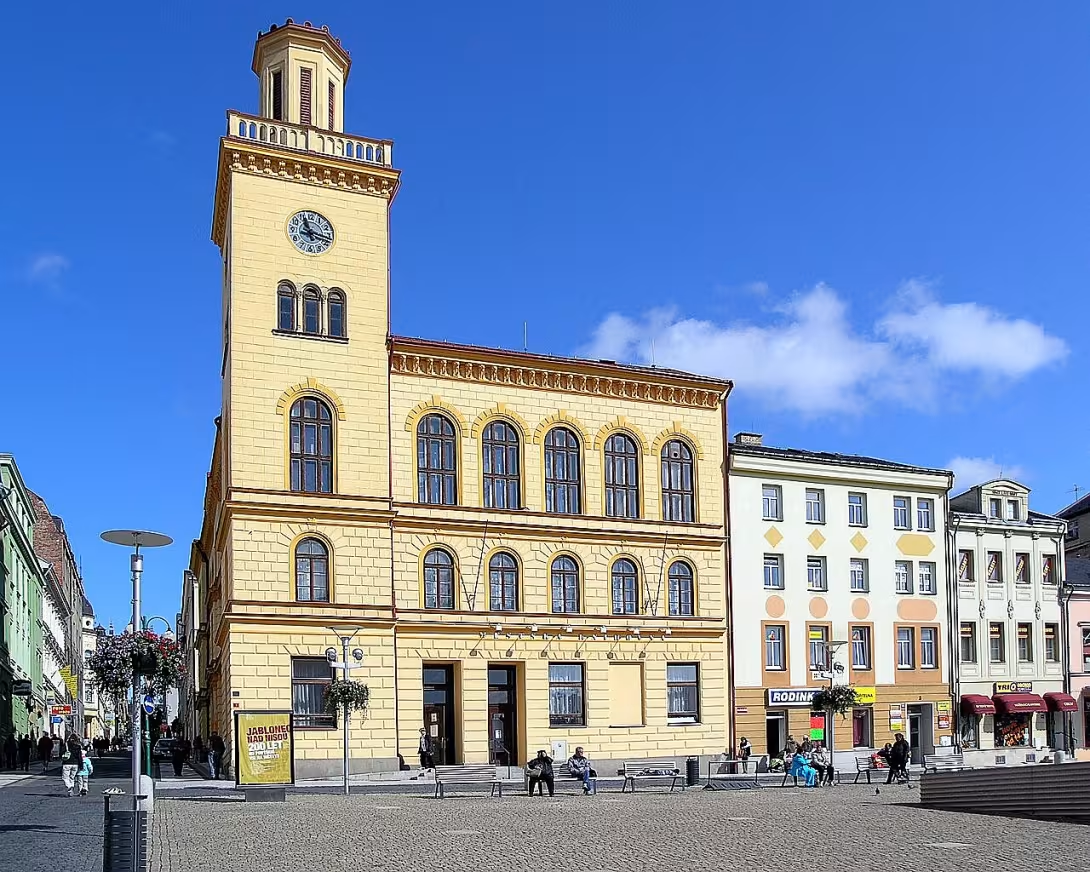
The Old Town Hall in Jablonica nad Nisou is a non-Renaissance building from 1867 to 1869, which stands on the Lower Square. This building is an important cultural monument. During his existence he served the city administration, post office, district office and since 1933 also the library.
The construction was built in the period of historism. This architectural direction in the 1960s in Central Europe preferred a return to Renaissance forms as a symbol of urban prosperity. Austria-Hungary was then undergoing political changes after the Austrian-Prussian war. The author of the project was Liberec architect and builder Gustav Sachr.
The two-storey brick building bears the characteristics of a Munich-oriented neoRenaissance, also known as an arched style. The most distinctive element of the exterior is the corner prism tower with narrower polygonal attachment. The façade is decorated with stucco boasts and the windows have arches.
During the 20th century, the town hall went through several modifications. In 1901 the extension to Chvojkov Street was realized. In the 1930s, the main entrance moved to the top of the tower and a display cabinet was created on the ground floor. The interior and background were significantly transformed during the extensive reconstruction between 1969 and 1978, when the said display cabinets were removed. The contemporary art solution of interiors includes works of art from the 1970s, such as brass sculptures of Wroclaw K. Novák, glass stained glass or paintings of Jiří Dostál and Jiří Nepazický.
The building was originally used as a German library, since 1945 it has been a Czech library. Since 1958, the building has been listed in the list of cultural monuments.
The Old Town Hall is an important proof of the historical construction of the center of Jablonec nad Nisou and the development of the city administration in the 19th century. Visiting this place offers an opportunity to become familiar with the architecture of history as well as the artistic rendering of interiors from the second half of the 20th century.
Then and now
Drag the slider to compare how the landmark may have looked when it was built with the view today.
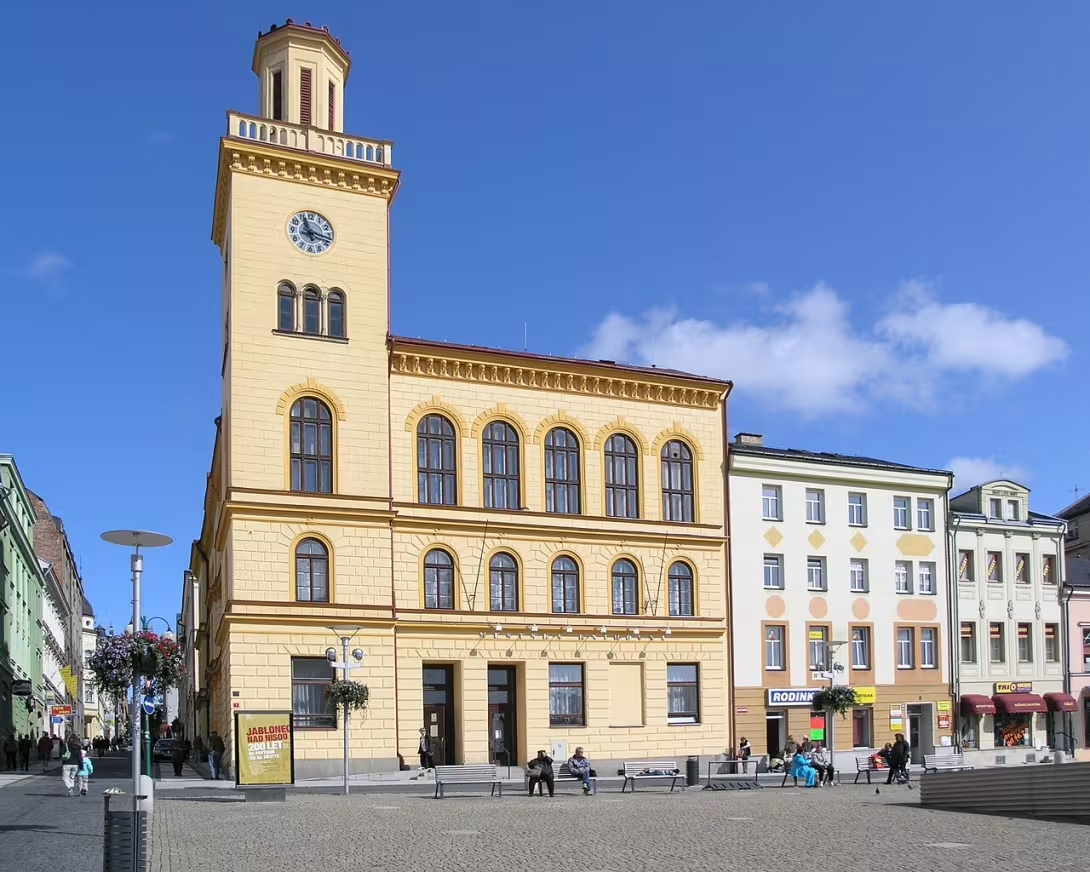
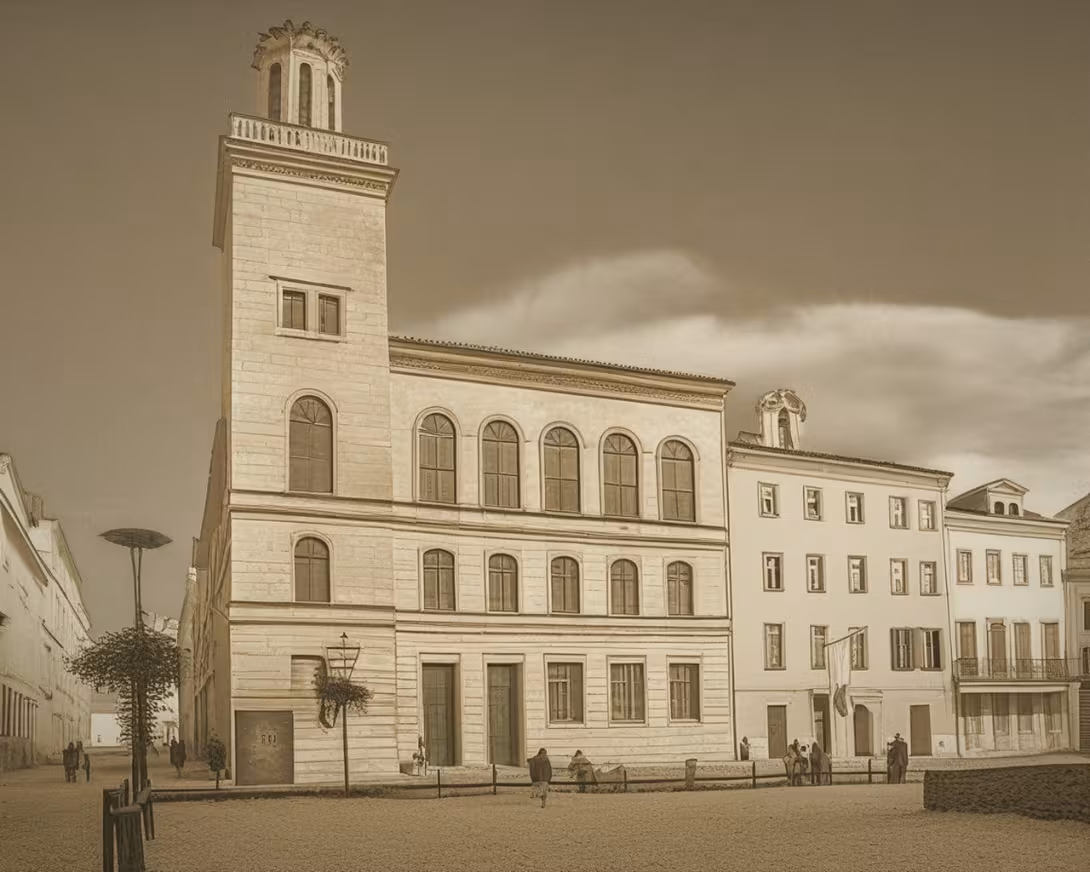
The historical appearance on the left is an AI-generated visualisation and serves as inspiration only.
Historical milestones
- 1867
- The construction of the old town hall building.
- 1933
- The building started as a library.
- 1958
- The building was declared a cultural monument.
- 1969
- Opening of extensive reconstruction and modernization of the background.
Architectural development
The building is walled, two storey and bears the hallmarks of a Munich-oriented Neo-Renaissance. In the course of the 20th century it has undergone several modifications, including the movement of the entrance and later removal of the display cabinets in the framework of modernization. The interior was significantly completed during reconstruction in the 1970s by artistic parts.
Historical events
In 1901 there was an extension to Chvojkov Street. In the 1930s, the entrance was moved to the foot of the tower and a display cabinet was created on the ground floor. In 1969-1978 the building underwent extensive reconstruction of the interior and background.
Points of interest
- The building was built between 1867 and 1869 in a neoRenaissance style and stands on the Lower Square. - Over the years the building served the city administration, post office, district office and since 1933 also the library. - The author of the project was Liberec architect and builder Gustav Sachr. - The most significant element of the outer part of the building is the corner prism tower, which ends with a narrower polygon extension. - In interiors there are works of art from the 1970s, such as brass sculptures, glass vitrates or paintings.
Guide
Show guide text
This text was created by artificial intelligence and has not been editorially reviewed. It may contain inaccuracies.
Welcome to Jablonica over Nisa. Right now you're standing in the Lower Square, in the very heart of this city, and before your eyes, one of the most important buildings in the whole area is standing. Before you go any further, stop for a moment and feel the atmosphere of this place. In front of you stands the old town hall, a building that is not only a wall and a stone, but a living witness to many years of urban life. Do you perceive the seriousness and elegance that this building radiates? It is an object that by its presence determines the character of the entire square and encourages you to look at it more carefully.
Let's go back in time together and understand how this building came to be. In order to understand the importance of this town hall, we need to look at the period when the city began to develop rapidly. The whole construction was started in a thousand eight hundred sixty-seven and completed in a thousand eight hundred sixty-nine. At that time, the city needed a dignified and representative residence that corresponded to its growing importance. This building was built as a symbol of stability and expansion. It's not just a random house, but a deliberately created space to serve people and their management for decades.
Now pay attention to the very form of the building that you are currently watching. If you look at her overall face, you'll see that she's in a neo-Renaissance style. This style brings us back to the ideals of beauty, order and harmony. The whole project was prepared by an important person, a Liberec architect and builder Gustav Sachr. His work here left a deep mark. Notice how the building works because of a kind of creation called the Arc Style. This method of construction was strongly influenced by the architecture that was developed in Munich at that time. It's this effect that you can feel in the details and in the overall sound of the building. If you look up and look at the most distinctive element of the outer part, you will probably see the corner prism tower immediately. It dominates the whole area and gives the building its solid, stable and noble appearance. It is this very tower that defines and builds up a sense of dignity from a distance.
However, this building has never served only as a beautiful set for the square. Her history is full of different roles that have been changing over time. It was originally designated as the seat of the city administration, which means that many important things were decided here for the lives of all the people. These premises were also located at the post office and district office. Imagine all the people who have come here in the past to settle their affairs, send letters or deal with official matters. The building was an artery that connected the city to the environment and the world. Later, however, her function changed and the building gained a completely different, calmer character. Since the year one thousand nine hundred thirty-three the library has been serving in these premises. The place where officials used to decide has become a place where people seek knowledge, peace and inspiration. This transformation from the office to a place for culture and learning is one of the most important stories this town hall tells.
There are also various personalities associated with this place, who left their mark. Although you do not have to name every detail, it is good to know that names like Vratislav K. Novák, Jiří Dostál or Jiří Nepasický are closely related to the history of this place. Their presence and involvement in this object helps us to better understand the human dimension of this history. Each building is composed not only of architects, but above all of the people who lived in it, worked or admired it.
It's interesting to watch the old town hall deal with the challenges of time. Although it was built in the nineteenth century, it was not forgotten. In a thousand and nine hundred and fifty-eight, it was officially declared a cultural monument, the highest recognition of its historical and aesthetic value. This means that its protection and preservation are a priority for the city. Over the years, the building had to adapt to modern times. In the year one thousand nine hundred sixty-nine there was extensive reconstruction and modernization of the background so that the building could continue to perform its tasks and serve the people at present without losing its historic spirit.
You may be asking what other secrets this building holds. One of the constant topics for visitors is the constant movement between what was and what is now. How could it be that a place that was once full of official hustle and bustle and mail became a silent haven between library shelves? This transformation is a fascinating example of how society's needs change, but at the same time, certain buildings remain solid points that can accept these changes.
Now that you have seen this building and understood its meaning, I suggest you continue your walk along the Lower Square. The Old Town Hall will still stand here as a guardian of history and a reminder of everything the city of Jablonec nad Nisou has been through. Feel the beauty of the surrounding environment and look at the details every building in this square wants to tell you. Thank you for stopping by and paying attention to this historic monument. We wish you a nice walk through town.
Tips for visitors
A tour of the Old Town Hall exterior I recommend planning for the morning hours when the sun illuminates the facade of the building and highlights the details of the arc style. The building is situated in the Lower Square, where you can easily walk from the city centre or public transport, whose current connection can be verified in the traffic search engine. For photographers is the most interesting view from the square, which allows you to capture the entire non-Renaissance architecture in the context of the surrounding historical development. In the immediate vicinity of the Lower Square you can admire other historical objects that illustrate the atmosphere of the old Jablonec. I recommend to families with children a walk around the square where they can see the decorative elements of the facade and become acquainted with the history of the city right in its center.
Frequently asked questions
Can the monument be visited?
The building is in use (offices, a school, shops and the like). The interior is generally accessible only during operating hours and tours are not usually offered; we have not verified the details. You can see the exterior from the street.
Where is the monument?
Location: Jablonec nad Nisou. The map on this page shows the exact spot.
Why is the monument protected?
It is listed in the Central List of Cultural Monuments of the Czech Republic as a cultural monument (register no. 1000131428).
Businesses nearby
Do you run a restaurant, accommodation, shop, museum, rental, wellness or other visitor service near this monument? Show yourself directly to the people heading to it — this is how they will see you in the app and on the web:
Events nearby
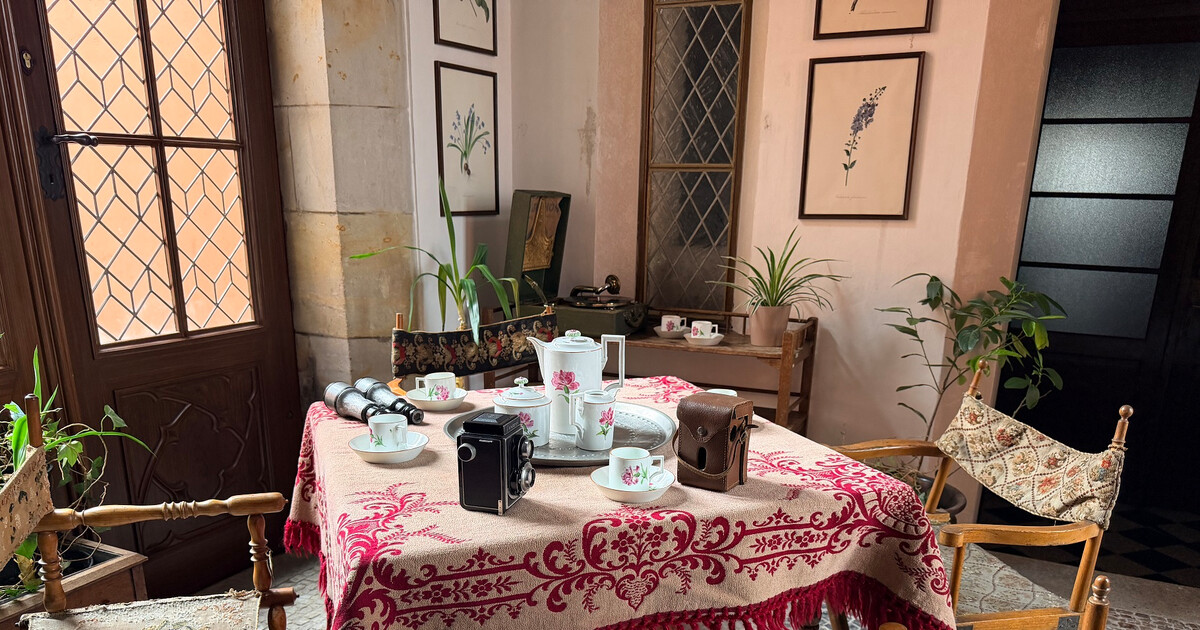


Zdroj akcí: otevřená data měst a obcí ČR (Národní katalog otevřených dat) a kalendář akcí Národního památkového ústavu.
Nearby
Budova se nachází na Dolním náměstí v centru Jablonce nad Nisou, v blízkosti dalších historických objektů městské zástavby.
Accommodation nearby
Trips and activities nearby
Guided tours, tickets and activities nearby from GetYourGuide
Affiliate link: if you buy from the partner, we may receive a commission. The price for you does not change.
Search tours and activities →Themed route
Old Town Hall - historical building. The main destination of the route, the impressive 19th-century architecture that tells the story of the city.
City Hall Station - open area. A quiet stone courtyard with historical sculptures, ideal for absorbing the atmosphere of the city centre.
Town Hall Tower - architectural element. From the top of the tower comes panoramic views of the Lower Square and surrounding historical houses, a great opportunity for photography.
Historical exhibition inside the town hall - exhibition. Documents, images and artifacts represent the development of Jablonec over Nisou and the life of city authorities.
Underground, underground. A preserved cellar with an interpretation of old urban archives, interesting for lovers of history.
Seasonal recommendations
Spring: In the spring, the Old Town Hall in Jablonica above Nisou offers the most beautiful views when flowering trees and shrubs of the surrounding green square revive. Sunshine days turn into soft sunshine in the evening, which gives the atmosphere a romantic mood. It is recommended to visit the morning or afternoon when the temperature is pleasant and the crowds are minimal. Clothes should be mild - perhaps with an umbrella for possible spring rain.
Summer: In the summer period, the Old Town Hall in Jablonica takes on the greatest life. The sun illuminates the square all day long, allowing long walks and relaxation on local benches. The best time is in the afternoon, when the temperature is moderate, but before that, play with the sunlight. Clothes should be light and light, remember UV protection.
Autumn: Autumn atmosphere in Jablonica above Nisou is full of colors: yellow, orange and red leaves. The sun hides earlier, adding soft light to the landscape around the Old Town Hall. The best time to visit is in the afternoon when temperatures are warmer and the crowds are already smaller. Clothes should be mild with the possibility to add layers for winter.
Winter: In winter, the Old Town Hall in Jablonica has a quiet and quiet character over Nisa. The sunny day illuminates the room, which is ideal for photo or short walks. The best time to visit is at noon, when the temperature rises slightly above the ice line. Clothes should be warm and protective against cold and snow - remember gloves and shoes adapted to cold conditions.
Visualizations and artistic views


The visualisations are generated by artificial intelligence and serve as inspiration.
Photos from the area
Real photos taken near the monument


Zdroj a licence jsou uvedeny u každého snímku.
Tips from visitors
No tips yet. Be the first!
Log in and add your tip.
Sources and literature
Photos: Matěj Baťha / CC BY-SA 3.0 — Wikimedia Commons. The author and licence also appear when you hover over the image.
Faktickým podkladem tohoto textu byl článek na Wikipedii, jehož autory jsou přispěvatelé Wikipedie. Článek je dostupný pod licencí CC BY-SA 4.0.
Location on the map
More monuments – Jablonec nad Nisou
Show all in the municipality
Příběhy a pověsti
Legendy, pověsti a příběhy spjaté s touto památkou
Fotografie návštěvníků
Zatím žádné fotografie. Buďte první, kdo přidá fotografii z návštěvy!
Log in a přidejte svou fotografii nebo hodnoťte.
Za ověřenou návštěvu v aplikaci získáte víc bodů — poznáme podle GPS, že jste na místě.
Reviews and comments