



Stará radnice ve Svitavách House
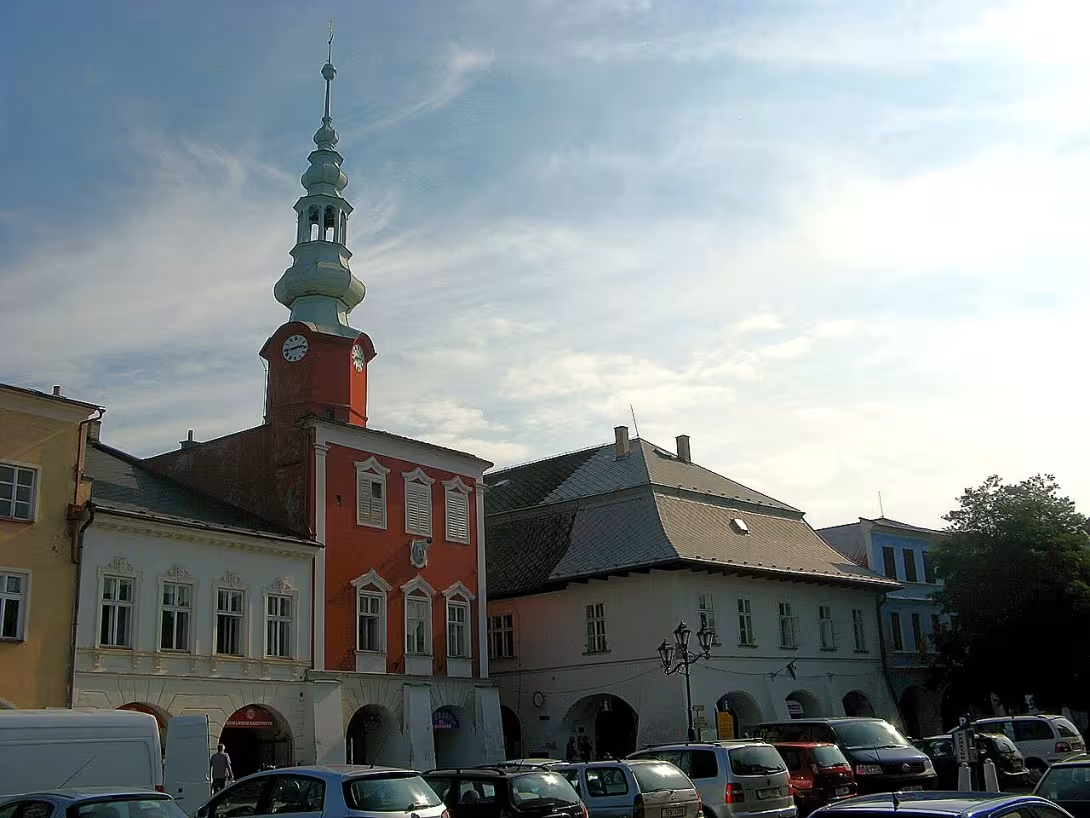
Stará radnice ve Svitavách is a Renaissance building in Peace Square. It served the needs of the city administration and is today protected as a cultural monument of the Czech Republic. This building is close to the historic house U Mourenín. Today's image of the monument is the result of several rebuilding phases that have caused natural disasters.
Before the city had established its own mansion, the adversaries and council met in the houses of current magistrates and mayors. In the first half of the sixteenth century, the Czech countries under the rule of the Jagellons and the beginning of the Habsburg Dynasty took place to strengthen the power and independence of the city authorities. This forced the acquisition of representative council buildings. The struggle for autonomy and the growing agenda led the council to buy a house in the square, which until then was in private hands. Everything took place on May 18, 1538, when Svitavy bought the property from the former owner of Michl Ditrich for 115 kicks of half-breed grosses.
The building has undergone several construction modifications in response to the fires that have hit the city. The first reconstruction took place after the fire in 1590. The second reconstruction, which fundamentally changed the appearance of the exterior and interior, took place in 1781 after the biggest fire in the history of Svitov.
The property history includes the private owner Michl Ditrich, from whom the house was purchased by the administration in 1538. Since this event the building has performed its primary functions.
The key point in the history of the building was 1538 and the transaction mentioned was 115 kicks of mixed grosses. The ensuing development was shaped by fires in 1590 and 1781, which required major building modifications and changed the appearance of the building.
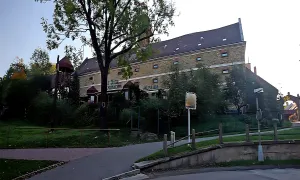
Today, the Old Town Hall is located on Peace Square in Svitavy. The surrounding area offers valuable historical buildings including the neighbouring house U Mouřenín. The building enjoys the status of cultural monument of the Czech Republic.
The preserved Renaissance building represents an important proof of the development of the city administration and administration in Czech countries. When visiting the Square of Peace in Svitavy, it is worth seeing this historical monument standing next to the house U Mourenín personally.
Historical milestones
- 1538
- Město Svitavy bought the house from Michl Ditrich for 115 kicks of mixed grosses for the needs of the city administration.
- 1590
- The first town hall reconstruction took place after the city fire.
- 1781
- A second reconstruction took place, which fundamentally changed the appearance of the building after the biggest fire in the history of Svitavov.
Architectural development
The building has undergone several building modifications in response to natural disasters. The first modifications followed the city fire in 1590. A fundamental change of exterior and interior took place during the second reconstruction in 1781 after the biggest fire in Svitavov's history.
Historical events
In 1538, the city bought a house for the purposes of the town hall for 115 kicks of mixed grosses. In 1590, the city was hit by a fire, followed by the first reconstruction of the building. In 1781 Svitavy was hit by the biggest fire in history, which required a second major reconstruction changing the appearance of the building.
Owners
First, the private owner Michl Ditrich, bought the building from him in 1538 by Svitavy City Council.
Points of interest
- Stará radnice ve Svitavách is a Renaissance building situated on Peace Square in close proximity to the historic house U Mourenín. - Today's appearance of the monument is the result of several rebuilding phases that were triggered by natural disasters and fires in 1590 and 1781. - Before the city had its own mansion, the Consensus and the council met in the houses of the current magistrates and mayors. - The house was purchased by the former private owner Michl Ditrich on 18 May 1538 for 115 kicks of mixed grosses.
Guide
Show guide text
This text was created by artificial intelligence and has not been editorially reviewed. It may contain inaccuracies.
Welcome to Svitavy. You have just put on headphones and prepared for a common journey through the history of this place. You are standing right in the square of Peace, in the heart of the city, where everyday life meets the glare of ancient times. The old town hall stands before your eyes. Notice how this building works in general with the surrounding square. Her presence here is very strong and undeniable. Also note its location, it is located in close proximity to the historic house U Mourenín. This proximity to two important buildings creates a special atmosphere for this corner of the city, which you should perceive when you look at the building.
Let us now move together in time, deep into the past, until the city of Svitavy began to take the form that you may even feel today in the breath of history. We have to go back to the year 15-35. At this important moment, the city had to decide on its future and how it would be managed. Město grew then, its needs changed, and with them the need to have a place for governance and official activity. It needed a seat for its growing administration and city administration. That's why the city council decided to get their own building. This building has not been public since the beginning, as you might assume today. It was originally private property. Město bought it from a man named Michl Ditrich. This transaction was an important step at the time and cost the city a considerable amount, namely the hundred and fifteen half of the mixed grosses. Imagine the situation at that time, the city invests in its own building and creates the basis for its future governance.
Now pay attention to the very form of the building in front of you. Although at first sight it may seem that its appearance is immutable, in fact, its present form is the result of many processes and events that have taken place over the centuries. It's a Renaissance building, which leaves traces in its appearance. Now if you look at its facade and its overall structure, try to realize that what you see is not just one solid image from one time. It's more of a complex mosaic of change. Their cause was not always the deliberate construction work, but often the fateful events that hit the city.
The history of this town hall is closely and inseparably linked to fire. In the past, fires have been a major test for every city and for Svitavas, in particular, these events were crucial. The first major reconstruction, which significantly affected the city hall's appearance, took place in the year fifteen hundred and ninety. This reconstruction was a direct result of the fire that hit the city at the time. The building had to be repaired and modified so that it could perform its part again. But that wasn't the end of change. Another, perhaps even more fundamental test, came in seven hundred and eighty-one. After the biggest fire in Svitov's history, the city hall had to go through reconstruction again. It is these interventions, caused by natural disasters, that have fundamentally changed what the building looks like today. It's fascinating to think about how each of these reconstructions added a new layer to her face and how every toilet before the fire became a new chapter of her existence.
So notice that the resemblance you are now observing is the result of the city's struggle against the destructive forces of nature. Every repair and reconstruction was triggered by the need to rebuild and restore what the firepower destroyed. This gives some depth in the building and reminds us how fragile human works can be in confrontation with nature.
If we want to talk about the people associated with this place, we need to mention the name Michl Ditrich again. Even though there was less talk of him in centuries, he was the one who allowed the city to become its seat. Without his decision to sell, the history of the city administration in Svitavy could evolve in a completely different direction.
There's one more interesting thing that might interest you if you look at this building again. You may not realize this, but this building, which we see today as a symbol of city administration and public life, had its beginnings as a simple private house. Imagine the contrast between the individual's private life and the public life of the entire city, which later took place here. This transformation from private space into the heart of the city administration is one of the most interesting aspects of the history of this town hall.
Today this building is protected as a cultural monument of the Czech Republic. This means that its importance goes beyond the borders of only one city and is recognised as a valuable heritage of the whole country. It is proof that even after all the fires, reconstructions and changes, this town hall remains an important point on the map of our common heritage.
I hope this brief insight into the past has helped you better understand and perceive the place you're standing on right now. The Old Town Hall is not just a building, it is a living witness to Svitavov's history, a witness to growth, change and overcome disasters. Now that you know more about her origins and the path she's gone through, I suggest you continue your walk around Peace Square. See other houses nearby, feel the atmosphere of this place and continue to discover the other secrets this city offers. Thank you for spending this moment with us. We wish you a nice walk.
Tips for visitors
Best time to visit The Old Town Hall in Svitavy is a quieter atmosphere on Peace Square during the morning hours and you can enjoy a peaceful view of the historic building and its immediate surroundings. Take comfortable shoes to walk on historic paving and camera to capture beautiful architecture. The soft morning light is most suitable for photography, which will ideally highlight the details of the facade of Old Town Hall and the neighbouring house U Mourenín. In the immediate vicinity within 30 minutes walk you can admire the entire historic Square of Peace with its picturesque installation. For families with children this walk is easy and offers plenty of space for stops and rest in the city centre.
Frequently asked questions
Can the monument be visited?
This is a residential or farm building, not a museum with opening hours. Please view it from public space and respect the owners' privacy. We have no information about access to the interior.
Where is the monument?
Location: Město, Pardubický kraj. The map on this page shows the exact spot.
Why is the monument protected?
It is listed in the Central List of Cultural Monuments of the Czech Republic as a cultural monument (register no. 1000139131).
Businesses nearby
Do you run a restaurant, accommodation, shop, museum, rental, wellness or other visitor service near this monument? Show yourself directly to the people heading to it — this is how they will see you in the app and on the web:
Nearby
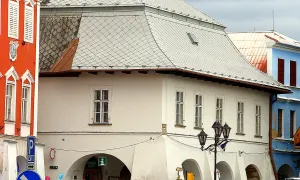
Náměstí Míru ve Svitavách s historickou zástavbou a sousedním domem U Mouřenína.
Accommodation nearby
Themed route
I propose a thematic tour of historical sites.
1. Square of Peace in Svitavy with historical installation Type: Space and architecture Why is it worth a visit: This magnificent square forms the natural heart of the city and is surrounded by picturesque ancient houses. It offers a unique atmosphere and a view of the preserved historical form of the local development.
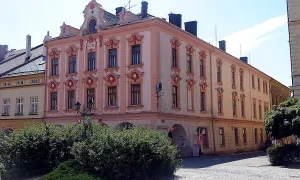
2. House U Mourenín Type: Historical building Why is it worth a visit: This nearby monument-protected house captures every visitor with its unique outdoor decoration and rich history. It's a great example of old construction art right next to the main point.
3.Stará radnice ve Svitavách Type: Main historical monument Why is it worth a visit: This dominance represents a wonderful example of urban architecture with valuable details. Her visit completes a tour of the historical core and brings the glorious times of the past closer.
Seasonal recommendations
Spring brings awakening nature, and the historic town hall building is beautifully embossed under the fresh blue sky, while the sun's rays begin to warm and reflect off the renovated facade. The atmosphere in the streets is calm, as the main tourist rush is yet to come. During this period you do not need heavy winter coats, a light windbreaker and comfortable shoes to walk through the city. The best time to visit is in the morning, when you can relax and see the surroundings without rush and crowds of people.
Summer offers long sunny days, when the city lives fully and the central square warms the colors of the surrounding green and flowering beds. The lighting of the monument is sharp and distinctive, which is evidenced by the taking of memorial photos, but afternoon temperatures can be very high. Therefore, it is recommended to leave either early in the morning after opening or in the late afternoon when the heat drops. Due to the main tourist season, you will encounter more visitors, so remember to wear a headgear, sunglasses and a bottle of drinking.
Autumn turns the surroundings into a colorful palette of shades of yellow, orange and red, creating an extremely picturesque setting for lovers of quieter scenery. The morning fog often covers the town hall tower and gives the place a mysterious and slightly melancholy atmosphere. Soggy weather and cooler wind require a warmer sweater, tight waterproof shoes and umbrella. Visiting is best planned for lunch hours, when the sun breaks the clouds and warms the air for a while.
Winter covers the historic center into silence, which occasionally only disturb the snow crunch under your feet, and early dimming makes artificial lighting of architectural details stand out. At advent time, the whole area is very cozy and festive, but temperatures are falling to freezing. The need is a quality winter jacket, warm hat, gloves and tight shoes, because the tiles can slide.
Visualizations and artistic views


The visualisations are generated by artificial intelligence and serve as inspiration.
Photos from the area
Real photos taken near the monument

Zdroj a licence jsou uvedeny u každého snímku.
Tips from visitors
No tips yet. Be the first!
Log in and add your tip.
Sources and literature
Photos: Jarda 75 / CC BY-SA 3.0 — Wikimedia Commons. The author and licence also appear when you hover over the image.
Faktickým podkladem tohoto textu byl článek na Wikipedii, jehož autory jsou přispěvatelé Wikipedie. Článek je dostupný pod licencí CC BY-SA 4.0.
Location on the map
Příběhy a pověsti
Legendy, pověsti a příběhy spjaté s touto památkou
Fotografie návštěvníků
Zatím žádné fotografie. Buďte první, kdo přidá fotografii z návštěvy!
Log in a přidejte svou fotografii nebo hodnoťte.
Za ověřenou návštěvu v aplikaci získáte víc bodů — poznáme podle GPS, že jste na místě.
Reviews and comments