



Starosedlský hrádek Fortress
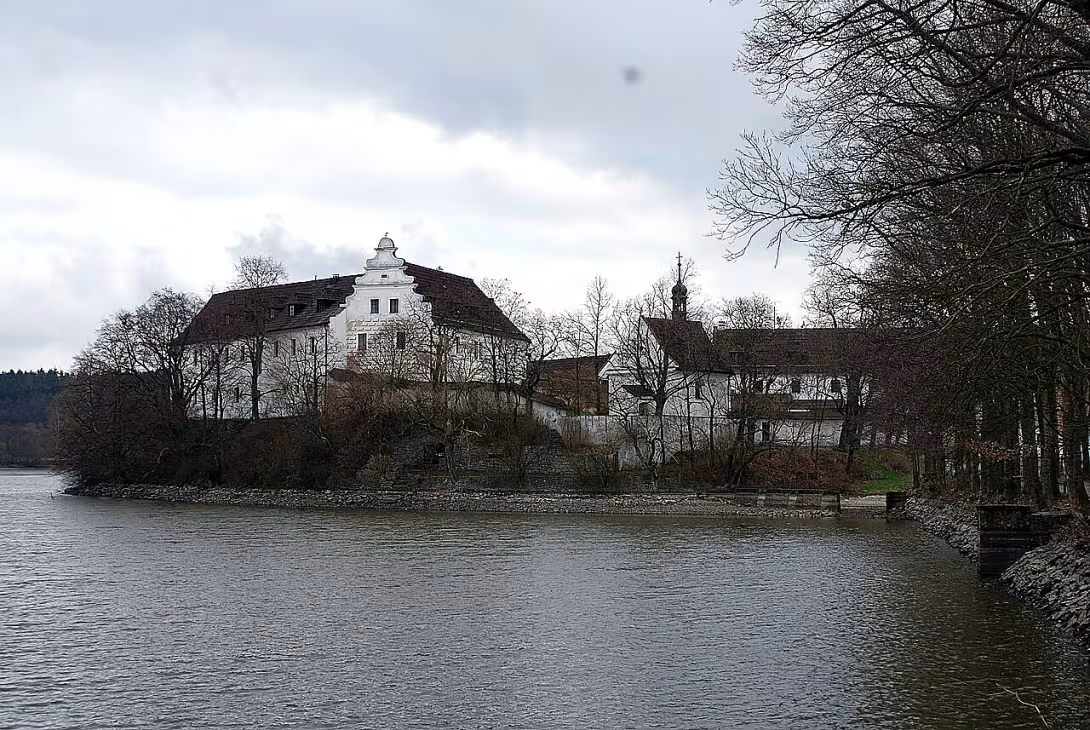
Starosedlský hrádek is a chateau near the village of Staré Sedlo in the district of Příbram in Central Bohemia. This cultural monument was created on the site of the medieval fortress, which was rebuilt in the second half of the 16th century into Renaissance style and later modified in Baroque style.
The first written mention of the place dates back to 1376, when the village belonged to Peter People of Old Sedl. In the fifteenth century, Sobehrd was based on the fort and his son, Mikulash, followed by him. Later, the property fell as death to the monarch, from whom the brothers Diviš and Václav of Nechvalic acquired it. Subsequently the holder became Jan Štěpánovec z Vrtby. As a supporter of the family of the Rožmberks, since 1469 he wrangled with the Froststers of Svoshín who conquered the fort in 1472. After the death of Jan Štěpánovec, he crossed the farm to Sezim from Vrtba and then to his family. One of the descendants was Bedřich Libstejnský of Kolovrat, who in 1519 referred to the fortress and surrounding village. After his death in 1531, Marjana Libštejnská of the Temple managed the property.
The chateau is located on a low island over the Chateau pond. The two-storey building has two wings, of which parts of the late Gothic building from the 15th century are preserved in the south. A letter sgraffiti was preserved on the facades and the architectural element is the saddle portals. The ground floor rooms are encapsulated with crest and valleys with sections. In one of the rooms is used four-and-a-half crest vault with middle pillar. The fort is adhered to by the courtyard, whose eastern side is the ground floor houses, which originally served as an economic and administrative background. The north side of the court closes the construction of the 1990s, built on the site of the former barn and barn. South of the yard is the chapel of the Most High Trinity from the end of the sixteenth century. It has a rectangular plan, a half-circle presbytery and a ship with a glass nail arch, while its hall is baroque.
In the second half of the 16th century the original fortress was rebuilt into a Renaissance chateau under the leadership of Albert Libstejnský of Kolovrat. After his death Jaroslav Libstejnský of Kolovrat took over the building, which in 1593 transferred the farm to his wife Kateřina Mezerický from Lomnice. After her death, the estate became part of the inheritance for Cousin Henry and his heir. During the state uprising in 1620, the chateau was occupied by Czech states. After the battle on the White Mountain, Kateřina Boubinská managed it again until her death in 1625. After the period of ownership of Libstejnský, Jesuits from Březnice, who used the chateau as a summer residence until the abolition of the order in 1773, lived here since the end of the seventeenth century. The farm was then managed by the National Fund and since 1868 belonged to Schwarzenberg, who owned it until 1948.
In the second half of the twentieth century the chateau served the local national committee, there was a school and there were also garages of the single agricultural cooperative. The whole area is today protected as a cultural monument. The history of this place offers insight into the complex relationships of noble families and religious changes in Czech countries. Visiting the chateau is an opportunity to learn architecture that combines Gothic, Renaissance and Baroque elements.
Historical milestones
- 1376
- First written mention of the village and its ownership by Peter People of Old Sedl.
- 1472
- Jan Zmrzlík ze Svojšína has conquered the old-fashioned fortress.
- 1549
- Albert Libštejnský z Kolovrat has taken over the farm management.
- 1620
- The chateau was taken by Czech states during the state uprising.
- 1868
- The chateau was purchased by Schwarzenbergové.
Architectural development
Originally a medieval fortress built on a low island over the Chateau pond. In the second half of the 16th century it was rebuilt into Renaissance style and later modified in Baroque style. In the south wing are preserved parts of late Gothic building from the 15th century.
Historical events
1472: Jan Zmrzlík ze Svojšína conquered the old-fashioned fortress; 16th century: reconstruction of the original fortress to the Renaissance chateau; 1620: prevents the chateau of the Czech state during the state uprising; 1773: abolition of the Jesuit Order and change of farm management.
Owners
1376: Petr Lid ze Starého Sedla 15th century: Sobehrd and Mikulash; later the ruler; the brothers Diviš and Václav of Nechvalic; Jan Štěpánovec z Vrtby; after 1472 Jan Zmrzlík ze Svojšína; Bedřich Libstejnský of Kolovrat; Albert Libštejnský z Kolovrat; Jaroslav Libstejnský of Kolovrat; Kateřina Mezerická from Lomnice; Kateřina Boubinská; Jesuits in March (from the end of the 17th century); Demand Fund; from 1868 Schwarzenbergové; until 1948 Schwarzenbergové.
Points of interest
- Starosedlský hrádek is a cultural monument in Central Bohemia.
- Originally there was a medieval fortress, which was rebuilt into Renaissance style and later modified in Baroque style.
The first written mention of the place dates back to 1376.
- The chateau is situated on a low island over the Castle Pond and has a two storey building with parts of a late Gothic building from the 15th century.
- In the second half of the 16th century, the original fortress was rebuilt into a Renaissance chateau under the leadership of Albert Libstejnský of Kolovrat.
Guide
Show guide text
This text was created by artificial intelligence and has not been editorially reviewed. It may contain inaccuracies.
Welcome to the Old Town Chateau. You have just entered the space where history touches the present and where every stone trail tells the story of power, survival and transformation. You are standing in a place that is deeply rooted in the landscape near the village of Staré Sedlo in the district of Příbram. In front of your eyes is a building that acts as a harmonious whole at first glance, but if you look at it more closely, you start to see layers of time in it. Feel the atmosphere of this place, feel the calm that exists here, but bear in mind that this peace is the result of centuries of development, conflicts and the rise of important generations. Look around you, the surrounding landscape and the Castle Pond, which lies directly below the low sharpness on which this object stands. This position, above water, was the key to its existence from the beginning.
Let us now return to the past together to understand how everything began. The history of this place is not only a modern story, but it goes back to the dark and exciting times of the Middle Ages. The first paper trail leading us to this place dates back to 1376. In that year, a reference to the village and its ownership appeared in the documents, which at that time falls under the person of Peter Lida of Old Sedl. Imagine the world back then, the world of knights and the constant building of fixed settlements. At that time there was no chateau, as you know, but a medieval fortress. It was a building designed primarily for defence, functional and relentless. This fortress was the cornerstone on which the entire appearance of the complex was later built.
Now pay attention to how the fate of this place changed over the next century. History was not only a linear process, but rather a constant struggle for influence and control. In 1472 came one of the most important events of the early history of this place. Jan Zmrzlík ze Svojšína was able to conquer the old-fashioned fortress. Imagine the tension that must have been in the vicinity when power was changing by force. This moment was an important point that showed that this place was of strategic importance and that the most important people of the time wanted to control it.
If you look at the construction itself now, try to realize that what you see is the result of fascinating architectural evolution. Starosedlský hrádek is not a work of one period, but is a living chronicler of different styles. The original medieval fortress was rebuilt over time. At one point, the Renaissance style was promoted, which brought to the architecture a greater degree of elegance, light and human dimension. Later, the building was adapted to the Baroque style, which brought to the building nobility, wealth and specific dynamics of shapes. Although you see the whole as one building today, it is actually a fascinating composite painting, where medieval brutality meets Renaissance balance and baroque beauty. Feel these changes in the shape of the facade and the overall structure of the object, which tell you about every epic that left its mark.
Now we must move on to the people who have shaped this place. Starosedlský hrádek was home and residence for noble families whose names still inspire respect. In 1549 Albert Libštejnský z Kolovrat took over the farm management. The Libstejn family was one of those who left a deep mark and helped change the character of this place. But history wouldn't have been so dramatic if there hadn't been a time of great political upheaval. In 1620, during the stormy state uprising, the chateau was seized by Czech states. It was a time of uncertainty when the fates of noble settlements changed, depending on the political decisions and battles that then decided the future of the whole kingdom.
After these turbulent years, however, the fate of the place has settled once again in the hands of important generations. In 1868 the chateau was purchased by Schwarzenbergové. This family, which in Czech history is associated with an enormous number of cultural and political heritage, has brought stability and further development into place. Thanks to their ownership, the chateau became part of a wider cultural and social context that lasted for decades.
The interesting thing that may interest you is the constant transformation. Starosedlský hrádek is not just a building, it's a process. It is a process of transition from a defensive point where people were hiding from the enemy to a representative mansion where festivities were held and decisions were made about the fate of the state. Is there a mystery to this - how the impenetrable fortress became an elegant residence? How did these walls combine the rudeness of medieval stone with the subtlety of baroque forms? This question remains open and you can look for it when looking at the various parts of the complex.
But now I will not hold you any longer. Starosedlský hrádek is today protected as a valuable cultural monument and is here to enjoy its beauty and history in peace. I suggest you continue your tour, feel the silence of the surroundings, look at the details that architecture offers you, and let yourself be carried away by the atmosphere of this place. Every step of this place can bring you closer to understanding the history that took place here after more than six terrible years. Thank you for spending this moment with us, and we wish you a beautiful and inspiring walk in history.
Tips for visitors
The best time to visit the Old Town Chateau is in the spring and autumn periods when it is quieter and nature offers unforgettable views. This time of the year also brings ideal light for photography of historical buildings.
When planning a visit, remember the appropriate suit, especially if you visit the chateau in colder months. Don't forget about the sun gate and enough drinking during the summer visit.
For photography it is best to use the early morning or late afternoon light when the sun lights the lock from the side. The best places for photography are especially the chateau pond and terraces overlooking the surrounding countryside.
In the vicinity of the Old Town Chateau is the Chateau pond, which is an ideal place for relaxation or picnic. For families with children, the surrounding forests offer the possibility of short walks and exploring nature.
Frequently asked questions
Can the monument be visited?
Some buildings of this kind are open for guided tours, others serve another purpose or are privately owned. We have not verified whether and when this monument is open – please ask the operator.
What are the opening hours and admission?
We have not verified the opening hours or admission. Current information is published by the operator.
Where is the monument?
Location: Středočeský kraj. The map on this page shows the exact spot.
Why is the monument protected?
It is listed in the Central List of Cultural Monuments of the Czech Republic as a cultural monument (register no. 1000146301).
Businesses nearby
Do you run a restaurant, accommodation, shop, museum, rental, wellness or other visitor service near this monument? Show yourself directly to the people heading to it — this is how they will see you in the app and on the web:
Events nearby

Zdroj akcí: otevřená data měst a obcí ČR (Národní katalog otevřených dat) a kalendář akcí Národního památkového ústavu.
Nearby
Zámecký rybník.
Accommodation nearby
Themed route
1. Starosedlský hrádek (chateau) (Type: Historical monument) - Discover the architecture and history of this important object. 2. Starosedlský hrádek (lock) (Type: Area and courtyard) - Take a walk in the immediate vicinity of the building. 3. Chateau pond (Type: Water area) - Enjoy a quiet atmosphere near the water near the monument.
Seasonal recommendations
Spring brings awakening nature and fresh greenery that surrounds historical masonry. The atmosphere is full of hope and fine spring light, which highlights the details of the facade. We recommend moisture-resistant footwear, because the surrounding roads can be muddy on a defrosted ground. An ideal visit in the morning is when the air is the cleanest.
The summer season offers thick shade of trees and rich green parks that provide relief from heat. The sun illuminates architecture sharply, but attracts the most visitors. It is advisable to come right at the opening to avoid the biggest crowds in the season. Don't forget the headgear and plenty of fluids.
In autumn, the surroundings of the chateau turn into golden and red tones, creating a nostalgic and romantic mood. Frequent morning fog gives the memory a mysterious look and peace. Because of the weather, choose layered clothes. The best time for walks is late afternoon when the light is softest.
In winter, the monument is a sharp and quiet impression when the trees are without leaves and the landscape is covered with snow. There is a room that is missing at other times. It is necessary to have warm and waterproof clothes and fixed shoes.
Visualizations and artistic views


The visualisations are generated by artificial intelligence and serve as inspiration.
Photos from the area
Real photos taken near the monument

Zdroj a licence jsou uvedeny u každého snímku.
Tips from visitors
No tips yet. Be the first!
Log in and add your tip.
Sources and literature
Photos: Feťour / Public domain — Wikimedia Commons. The author and licence also appear when you hover over the image.
Faktickým podkladem tohoto textu byl článek na Wikipedii, jehož autory jsou přispěvatelé Wikipedie. Článek je dostupný pod licencí CC BY-SA 4.0.
Location on the map





Příběhy a pověsti
Legendy, pověsti a příběhy spjaté s touto památkou
Fotografie návštěvníků
Zatím žádné fotografie. Buďte první, kdo přidá fotografii z návštěvy!
Log in a přidejte svou fotografii nebo hodnoťte.
Za ověřenou návštěvu v aplikaci získáte víc bodů — poznáme podle GPS, že jste na místě.
Reviews and comments