



Starý Světlov Castle ruin
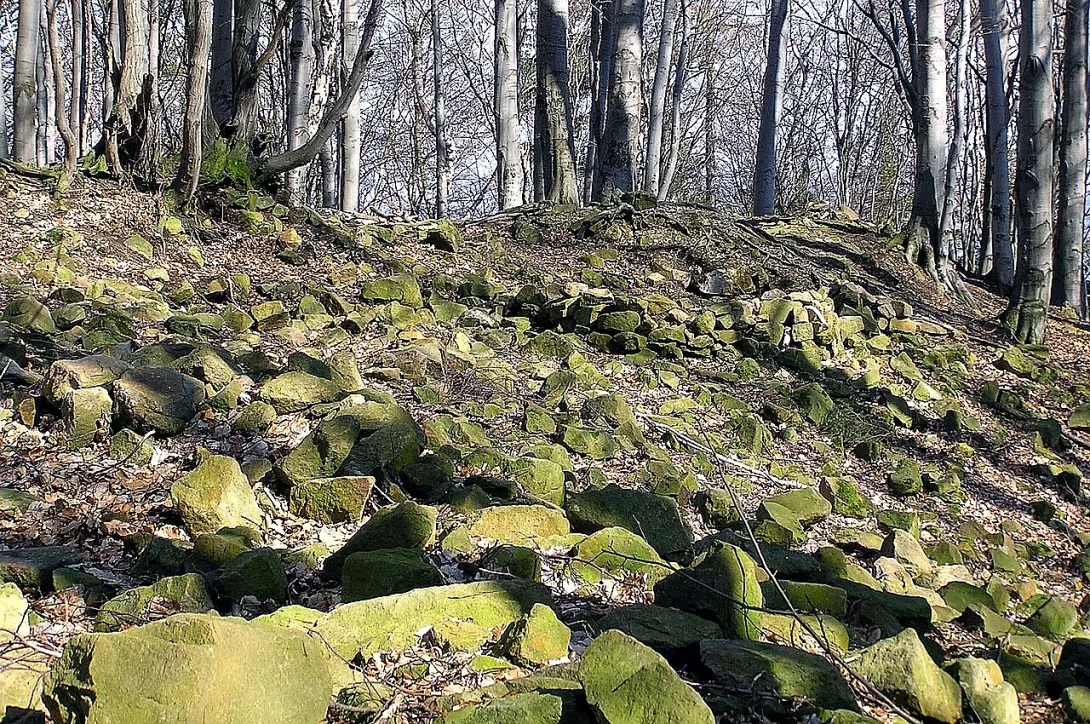
Starý Světlov is a ruin of the castle in the Vizovická mountains, Zlín district. It is located about 10 km southwest of Vizovice and approximately 1 km northwest of Podřad near Luhačovice. This monument is of significant historical value as it was founded in the second half of the 13th century and served as a strategic place for different owners. Since 1964 it has been protected as a cultural monument, which underlines its historical and architectural importance.
The oldest written mention of the castle dates back to 1275 and relates to Høman of Svělova. Over the years, ownership has been alternating between different families, with the gentlemen of Sternberg being one of the most important owners since the end of the 13th century. In 1360 the castle belonged to Albert of Šternberk and later became co-ownership of Elishka of Šternberk, who gained it in 1399 to her husband Vok from Kravař. After the death of Vok, there was a dispute about ownership between members of the Clan family.
The architecture of the castle has undergone several stages of development. In the 15th century, construction modifications were made, such as the insertion of vaults into the palace walls and the rebuilding of a parking wall with a defence object. These changes have increased his defensive capabilities. The castle front was extended to southwest and northwest.
In history, the castle became the property of various personalities, including King Zikmund of Luxembourg, who passed it on to his wife Barbora Celská in 1423. The castle was also connected to Pankrác of Liptovsky St. Nicholas, the thieving knight. After the death of Jaroslav of Šternberk in 1420, the castle was involved in political and military conflicts.
Key events include the Battle of the Bojkovice Fortress in 1464 between Matthew of Sternberg and Nicholas Bystřice of Ojník, which culminated in reconciliation through Prince Victoria Opavský. The castle was affected by Czech-Hungarian wars between Jiří z Kunštát and Podebrad and Hungarian Matyas Korvina, which led to devastating raids.
Today Starý Světlov is accessible to visitors and serves as a witness of the rich history of the region. Despite the damage, it remains an important cultural monument. Its unique construction of the castle gate and building phase in the palace provide interesting information for historians and tourists. The visit offers a view of the past and quiet moments in the natural environment of the Vizovické mountains.
Starý Světlov is a monument that allows you to appreciate the persistence and transformation of time. Its ruins bear witness to the region's rich heritage and commemorate the importance of protecting cultural monuments for future generations. Visiting this castle is also an inspiration for the recognition and preservation of historical values.
Then and now
Drag the slider to compare how the landmark may have looked when it was built with the view today.
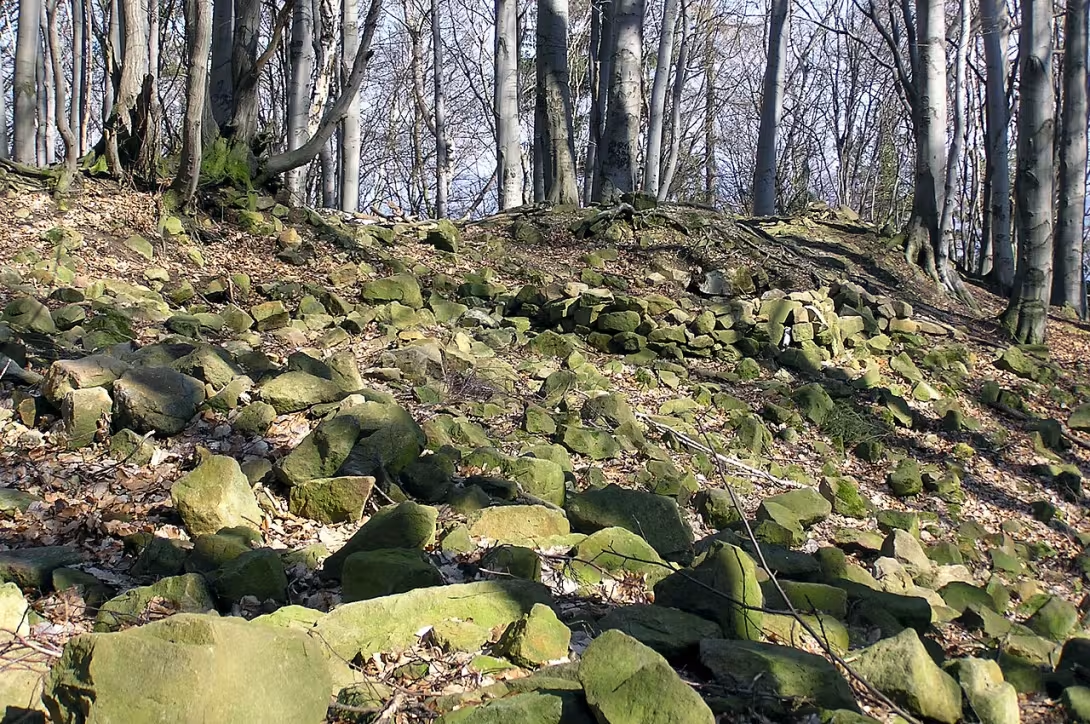

The historical appearance on the left is an AI-generated visualisation and serves as inspiration only.
Historical milestones
- 1275
- The oldest written mention of the castle in connection with Høman of Svělov
- 1360
- The castle is referred to as the property of the gentlemen of Sternberg
- 1423
- Castle won by King Zikmund Lucemburský
- 1964
- The ruins area was declared a cultural monument
Architectural development
In the first half of the 15th century, the vaults were inserted into the walls of the palace and the park wall was rebuilt with the gate object extended. At the same time, the premises were extended to cover southwest and northwest. The castle probably replaced earlier wooden fortifications on the top of Rýsov.
Historical events
1420: The fall of Jaroslav of Šternberk in the battle under Vysehrad; 1426: The assignment of the castle of Barbora Celská; 1464: Battle of the Bojkovice fortress between Matthew of Sternberk and Nicholas Bystřice of Ojnice
Owners
Heřman ze Světlova (1275), Šternberk family (including Alberto, Alšík and Viléma), Eliška from Šternberk and Vok from Kravař (1399), Jaroslav from Šternberk (1417), Zikmund Lucemburský (1423), Barbara Celská (1426), Moravian status and four holders (1449), Henry from Lipé (1466)
Points of interest
- The castle was founded in the second half of the 13th century and since 1964 it has been protected as a cultural monument. - The oldest written mention of the castle dates back to 1275 and relates to Høman of Svělova. - In the 15th century, building modifications were made, such as the insertion of vaults into the palace walls and the rebuilding of the park wall. - King Zikmund Lucemburský Castle in 1423 advanced his wife Barbora Celsky. The castle was affected by Czech-Hungarian wars that led to devastating raids.
Guide
Show guide text
This text was created by artificial intelligence and has not been editorially reviewed. It may contain inaccuracies.
Welcome to the ruins of Castle Starý Světlov. You are standing in a place where time has stopped and echoes of ancient power are mixed with the noise of wind in the surrounding hills. Look around you and feel this atmosphere. In front of your eyes, there are stony remains that once formed an impervious fortress and center of power in this part of the country. This ruin is not just a pile of stones, but a living witness to the history that took place right here in the heart of the Vizovická Highlands. Feel the strange combination of calm and monumentality that surrounds you. These places have their own weight, their own silent speech, which you can hear right now when you stop and just let yourself look at this place that has survived for centuries.
Let us now move further into the past together to understand why this castle was built in the first place. Starý Světlov was not built randomly on top of the hill. Its existence is deeply rooted in the second half of the 13th century, when strategic areas were needed. The oldest clue left by written history leads us straight to 1275. In this very year, the first time the name of the Høman of Svetlov appears in the documents, a character who is inextricably connected to this place and whose name this castle has written down in history. The castle was built with a clear purpose - it had to control the surrounding countryside and serve as an administrative center of a large estate. Look towards the valley, where the landscape extends towards Luhačovice. It was this view that was crucial. From a height, the residents and gentlemen could see the movement of people and costs in the valley, thus fulfilling their role as an impenetrable guard point.
Now pay attention to what you have left to view from these remains. Even if you look at the ruins today, try to imagine in your mind what these walls might have looked like at the time of their greatest glory. Notice the structure of these stone units and how they integrate into the surrounding terrain. Although most buildings no longer exist, there is a constant process of transformation and development in the history of the castle. In the fifteenth century the castle passed through significant building modifications which gave it a new, more modern look for the time being. If you look at the remnants of the space that once formed the palace, remember that it was during this period that massive arches were inserted into the walls. These vaults were intended not only to supply buildings with nobility, but above all with stability and resilience. Also, the parks, the protective elements that encircled the castle, were rebuilt at that time to better fulfil their military function. Although these details are now partially forgotten in ruins, their presence in history tells us that the castle has constantly evolved and adapted to the needs of its owners who wanted to have the best in the area.
The history of this place is interwoven with the names of powerful people whose fates were closely linked to this fortress. The castle was not only a military fortress, but a home for prominent figures who influenced both political and social events. Over the centuries, the castle has been held by the mighty House of Sternberk. In 1360 the castle was already firmly in their hands, which meant that this place was part of one of the most important houses in the country. Later, in 1423, the castle was won by the king Zikmund Lucemburský himself. Imagine the weight of power in these walls. Zikmund was a figure that shaped the fate of the entire empire, and having such a castle in your hands meant having the key to taking over the entire region. Apart from kings and nobles, there were also people whose names tell us about family ties and social life - names like Barbara Celská or Pankrác z Liptovského Svatého Mikuláše. Each of these names has left an invisible mark in the history of this place and reminds us that there were real human stories, joy, and fears hiding behind every wall.
You might find one interesting thing that gives this place a special depth. It is a fact that even though you are looking at a ruin today, which acts as a silent monument to the past, its importance for culture and history has never elapsed. There is a special paradox - a castle that was once a symbol of political and military power, has become a symbol of the cultural heritage that we must protect for future generations. Since 1964, this area has been officially declared a cultural monument. The silent presence of these walls, which have survived for centuries, carries the secrets of all those people who once looked into the valley, noticed the danger, or simply watched the sun rise above the Vizovická hill. There's something fascinating about it that a place that was created to defend and rule is today protected to teach and inspire us.
I will no longer take you into consideration and leave you with your own thoughts and impressions. Continue the tour, walk between these remains and try to feel a piece of history in each stone. Let the atmosphere of Old Svělova consume you and enjoy this view of the surrounding countryside. Let yourself be carried away by the idea of those who stood before you hundreds of years ago. Thank you for spending this moment with us. I wish you a pleasant further journey and many other interesting experiences in discovering the beauty of our country.
Tips for visitors
The best time to visit the ruins is late spring season or autumn, when nature around the castle colors beautifully and the weather becomes more stable. For lovers of photography are ideal moments around sunset, when light rests on ruins and creates interesting shadows. The best views can be obtained from places raised near the monument.
You can reach the place by car or use public transport. Check the current connection of means of transport in internet search engines.
Since it is a ruin in the field, we recommend to bring comfortable shoes, plenty of drinking water and possibly a snack. For families with children, the visit is an interesting opportunity to discover history in nature, however, it is necessary to be more careful when moving between stone structures.
In the nearby area you can visit the peak of Baba, which offers beautiful views within the Vizovická highlands. The whole area around the village Podvrár u Luhačovice is ideal for short walks in nature.
Frequently asked questions
Can the monument be visited?
This is a ruin. Such sites are often freely accessible, but some can only be visited with a guide or are closed for safety reasons. We have not verified the current situation – take care and respect any restrictions.
Where is the monument?
Location: Zlínský kraj. The map on this page shows the exact spot.
Why is the monument protected?
It is listed in the Central List of Cultural Monuments of the Czech Republic as a cultural monument (register no. 1000146068).
Businesses nearby
Do you run a restaurant, accommodation, shop, museum, rental, wellness or other visitor service near this monument? Show yourself directly to the people heading to it — this is how they will see you in the app and on the web:
Events nearby
Zdroj akcí: otevřená data měst a obcí ČR (Národní katalog otevřených dat) a kalendář akcí Národního památkového ústavu.
Nearby
The castle is located near the top of Baba (635 m above sea level) in the Vizovická Highlands, about a kilometer northwest of the village Podzdravna near Luhačovice.
Accommodation nearby
Themed route
1. Subpart of Luhačovice, village: Great place to start a trip near historical monuments. 2. Starý Světlov, ruins: The main destination of the trip, which offers a view of the historical remains of the castle. 3. Baba, top: The point of view from which you can observe the surrounding landscape. 4. Visual surface, landscape: This area forms a wonderful environment for your entire route.
Seasonal recommendations
Spring: In the spring period Starý Světlov offers a unique atmosphere where the ruin is transformed into a living canvas of blooming nature. The sun's rays illuminate ancient stone material and allow shadows to tell historical stories while the surrounding forests begin to bloom. For the visit it is advisable to dress in mild clothing because the temperature can be variable.
Summer: The Starý Světlov summer offers a sunny atmosphere that is ideal for days in the countryside. The sun illuminates the ruin in full beauty and the surrounding landscape turns into a living flower paradise. This season it is recommended to come earlier because flying days can be very visited. Hot clothes and sun protection (coat and jeweler) are key to comfort during the visit.
Autumn: In autumn Starý Světlov offers a melancholy atmosphere when the leaves are colored and fallen on ancient stone walls. The sun's rays create beautiful colors and the telescope is influenced by changing climate. For the visit it is advisable to prepare for colder temperatures and the possibility of rain, so that durable shoe and warm clothes are recommended. The best time to walk is at noon, when the sun still lights up the ruins.
Winter: Winter Starý Světlov offers a completely different atmosphere, when the ruin turns into a cloudy and mysterious place. Freezing sun rays illuminate ancient stone material and snow cover adds unique beauty to the view. This season it is advisable to dress as warmer as possible, including wind and humidity protection (lead coat, warm shoes). The best time to walk is at noon when the sun is highest and illuminates the ruins.
Visualizations and artistic views


The visualisations are generated by artificial intelligence and serve as inspiration.
Photos from the area
Real photos taken near the monument

Zdroj a licence jsou uvedeny u každého snímku.
Tips from visitors
No tips yet. Be the first!
Log in and add your tip.
Sources and literature
Photos: Tomáš Páv / Public domain — Wikimedia Commons. The author and licence also appear when you hover over the image.
Faktickým podkladem tohoto textu byl článek na Wikipedii, jehož autory jsou přispěvatelé Wikipedie. Článek je dostupný pod licencí CC BY-SA 4.0.
Location on the map
More monuments – Zlínský kraj
Show all in the region

Příběhy a pověsti
Legendy, pověsti a příběhy spjaté s touto památkou

Fotografie návštěvníků
Zatím žádné fotografie. Buďte první, kdo přidá fotografii z návštěvy!
Log in a přidejte svou fotografii nebo hodnoťte.
Za ověřenou návštěvu v aplikaci získáte víc bodů — poznáme podle GPS, že jste na místě.
Reviews and comments