



Starý židovský hřbitov v Kolíně Jewish cemetery
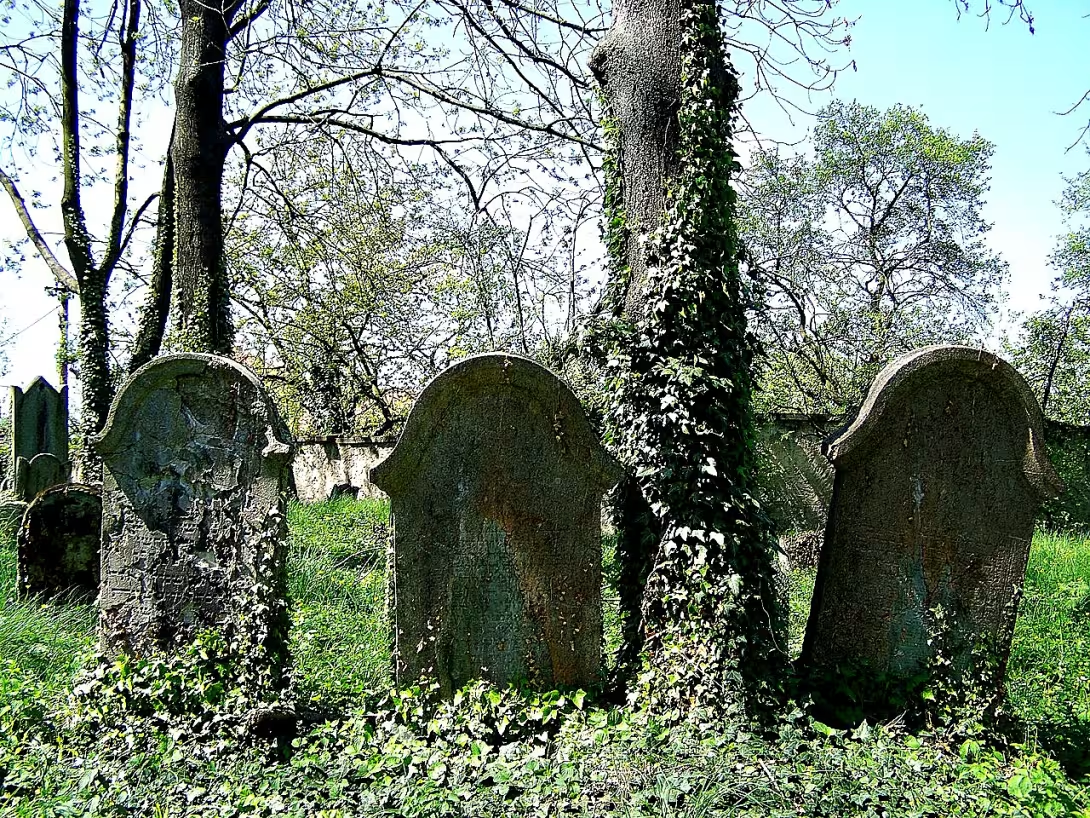
Starý židovský hřbitov v Kolíně is a medieval burial site on site Kolín II, founded probably in 1418. His rich collection of tombstones makes this cemetery the second most important Jewish burial ground in the Czech Republic after Prague. This cultural monument documents the development of tombstone architecture and the history of Jewish communities in the region.
The cemetery appeared during the Hussite movement when Jewish communities played a key role in the social and economic life of Czech cities. Over the years, the site has been expanded several times.
On an area of 1,128 hectares there are 2,693 tombstones, called matrices. Most of these dates back to the 16th to 19th century, the oldest preserved stone dates back to 1492. The tombstones show diverse styles from Renaissance to Classicism. Important monuments include the Renaissance tombstone of Rabbi Becalel's son from 1599, decorated with a grape of wine, and a newer stone of the manufacturer Josef Weissberger (1824-1872), which has elements of classicism.
In the 20th century, the area of the complex was reduced due to the creation of the Scout Club. Since 1996 the cemetery has been managed by the Jewish village in Prague.
The last funeral was held here in 1887, when the new Jewish cemetery in Cologne was opened. Significant persons buried in this place include Eliáš ben Šemuel Maisel (died 1621), the likely ancestor of the Prague Primas Mordechai Maisel, his tombstone is decorated with a symbol of the mouse. Another important monument is the renaissance stone of Rabbi Chajima ben Sinai (1624), located on the hill in the middle of the cemetery, whose decoration was inspired by the tombstone of his uncle, the famous Rabi Löw.
The cemetery has entrances from the Godfather and the Sun Street. The area is closed, but the keys can be borrowed at the City Information Center on Charles Square.
Starý židovský hřbitov v Kolíně is a unique archive of Jewish history and art, which makes this place an essential destination for everyone interested in the history of Czech Jewish communities.
Then and now
Drag the slider to compare how the landmark may have looked when it was built with the view today.
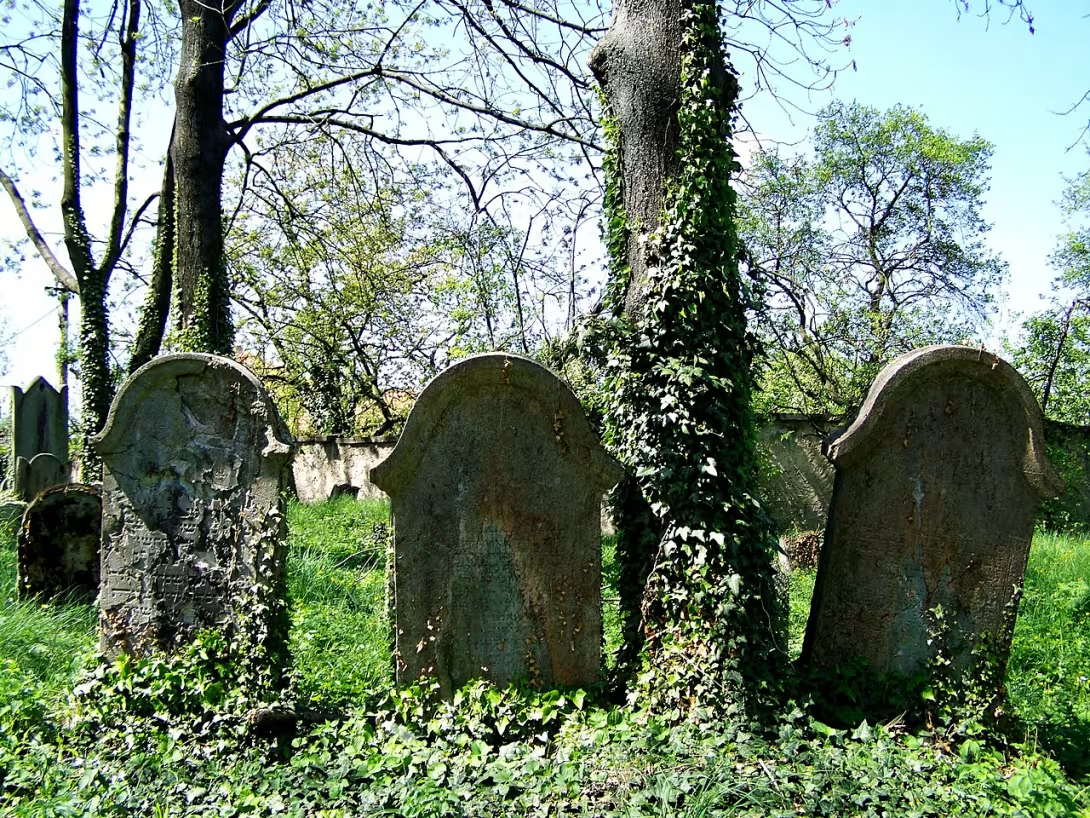
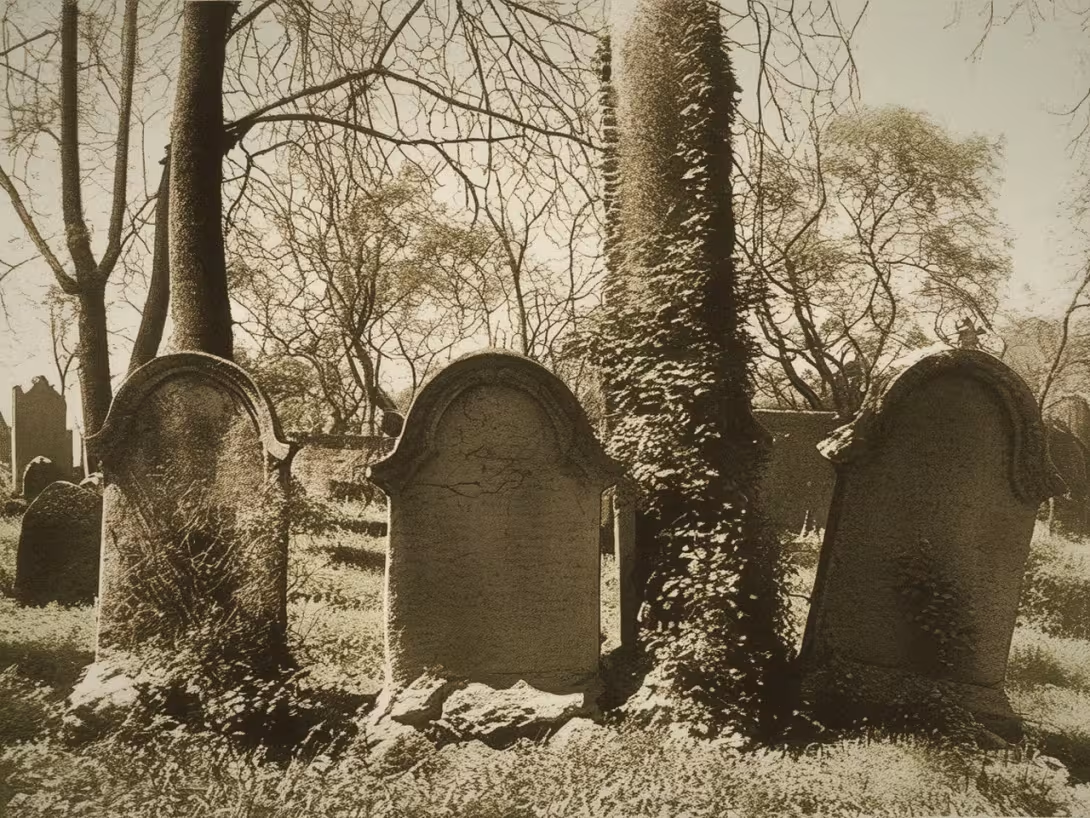
The historical appearance on the left is an AI-generated visualisation and serves as inspiration only.
Historical milestones
- 1418
- alleged cemetery creation
- 1492
- the creation of the oldest preserved tombstone
- 1887
- last funeral ceremony
- 1996
- acceptance of the premises into the care of Jewish municipalities in Prague
Architectural development
The cemetery has been extended several times throughout history. The tombstones show styles from Renaissance to Classicism. In the 20th century the area of the complex was reduced due to the construction of the adjacent scout clubhouse.
Historical events
The foundation of the cemetery in 1418 and the completion of the funerals in 1887 in connection with the creation of a new cemetery in Cologne-Zalábí.
Owners
Since 1996 Jewish village in Prague.
Points of interest
- It is the second most important Jewish cemetery in the Czech Republic after Prague. - There are 2,693 tombstones on an area of 1,128 hectares called matrices. The oldest preserved stone dates back to 1492. - The tombstone of Elijah Ben Shemuel Maisela is decorated with a symbol of the mouse. The Renaissance tombstone of Rabbi Becale's son 1599 is decorated with a grape of wine.
Guide
Show guide text
This text was created by artificial intelligence and has not been editorially reviewed. It may contain inaccuracies.
Welcome to Cologne. You've just entered a space that is much more than a resting place for the deceased. You are standing in front of one of the most important historical units in the entire region, the old Jewish cemetery, which is a silent witness to centuries of human life, faith and transformation. Feel this strange atmosphere that is surrounding you right now. It is silence that carries the weight of history, and space that encourages you to move slowly, wisely. In front of your eyes is a complex that is not just a collection of stones, but a living chronicle of the community that has shaped its identity here for many generations.
Let's go back to when it all started. Although the exact date of establishment of this place is not clear, historical records lead us to 1418. Imagine that huge time dimension. This cemetery served the local Jewish community for nearly five centuries, until 1887, when the last funeral ceremony was performed. This means that this space was the center of spiritual life and memory after almost half a lover. It is fascinating to realize that right here, in Cologne, a tradition so deep and significant arose that this cemetery is now considered the second most important Jewish cemetery in the whole Czech Republic, just after the famous one in Prague. You are therefore in a place which has a very special position in the national context.
Now try to look around you and pay attention to what you see. This area is situated on an area of no more than one hectare, namely one hundred twenty-eight hundred hectares per whole. This area is incredibly densely filled with monuments. There are over two thousand six hundred ninety-three tombstones in this space. In the Jewish tradition, these stones are called matrices. If you look at their amount and how they're arranged, you can feel the incredible density of history. Most of these stones that you are now observing come from between the sixteenth and nineteenth centuries. If you move between them, you'll see how the architecture and the way people expressed their respect and their faith through carving art was changing over time. Each matte is a unique document of its time, separated from modern uniformity.
Pay attention now to the specific details you can see while walking. If you look at individual tombstones, you can see in them traces of different styles that evolved over time. For example, Renaissance tombstones, such as the one belonging to Rabbi Becale's son, show us how rich and artistic the craft was then. These stones are not just simple tombs, they are works of art that tell us about the aesthetic ideas of people who lived here hundreds of years ago.
The history of this place is also a history of specific people whose names deserve to be remembered. Among those who rest here are important personalities such as rabín Chajim ben Sinaj or Josef Weissberger. These figures were pillars of the community that has maintained this space for centuries. And if you're looking for something really unusual, try looking for Elijah Ben Shemuel's tombstone. Its monument is very specific in this area because it is decorated with a mouse symbol. This detail can be mysterious and carries its own symbolism, which you can keep in your mind when you observe the surrounding area.
There is also one thing that can really surprise you and underlines the incredible continuity of this place. Although most stones are younger, the oldest preserved tombstone you can see here dates back to 1492. Imagine a long time ago when the world was shaped in a completely different way, and yet this stone stands here and reminds us of its presence.
This site is not just the past, it is also an inheritance that is being cared for today. It is protected as a cultural monument of the Czech Republic and since 1996, the Jewish village in Prague has been established for its protection and maintenance. Thanks to this care we can now perceive these rare matrices in their authentic form and study them as an untouchable piece of history.
Now I won't keep you any longer. Continue your peaceful walk through this sacred space. Let the atmosphere drift, look at the individual details of the tombstones, perceive their texture and symbolism. Let yourself stop at the chosen stone and just think for a moment about the lives that were once part of the Cologne society. Every step you take between these nuts is a step in time. We wish you a peaceful and inspiring tour of this special place.
Tips for visitors
For the best experience we recommend visiting during the morning hours or late afternoon. In these times, light is ideal for capturing the details of historical tombstones and avoiding the greatest rush of people.
You can reach the place by car and public transport.
Due to the historical nature and uneven terrain, we recommend to bring comfortable shoes and possibly water.
If you are looking for ideal places for photos, focus on the spaces between old stones in soft daylight, which highlight the texture of historical material.
For families with children, the tour is an excellent opportunity to learn history, but it is necessary to follow a calm and respectful approach to the monument. For more information about the surroundings, visit the City Information Centre on Charles Square.
Frequently asked questions
Can the monument be visited?
Cemeteries and graves are usually accessible; please respect the dignity of the place. We have not verified the opening hours of this cemetery.
Where is the monument?
Location: Kolín II, Středočeský kraj. The map on this page shows the exact spot.
Why is the monument protected?
It is listed in the Central List of Cultural Monuments of the Czech Republic as a cultural monument (register no. 1000131339).
Businesses nearby
Do you run a restaurant, accommodation, shop, museum, rental, wellness or other visitor service near this monument? Show yourself directly to the people heading to it — this is how they will see you in the app and on the web:
Nearby
City Information Center on Charles Square.
Accommodation nearby
Trips and activities nearby
Guided tours, tickets and activities nearby from GetYourGuide
Affiliate link: if you buy from the partner, we may receive a commission. The price for you does not change.
Search tours and activities →Themed route
1. City Information Center on Charles Square Type: Information centre Why to visit: Here you can find maps and detailed information about the history of local monuments.
Starý židovský hřbitov v Kolíně Type: Historical monument Why to visit: This unique location represents an important testimony about the history of the local Jewish community.
3. The immediate cemetery area Type: Outdoor exposure Why to visit: Walk between ancient tombstones allows you to observe the artistic details of historical monuments in peace.
Seasonal recommendations
Spring - In this period, the old Jewish cemetery in Cologne is awakening to life. Morning sun rays light up between trees and light up stone tombstones, creating a quiet, almost poetic impression. Flowers begin to bloom along the paths, so the fragrance of the fresh earth with the scent of spring is mixed. We recommend arriving after the afternoon when there are fewer visitors and the light is softer. Dress in layered clothes - a light jacket or sweater will protect you from colder morning hours, but you won't overheat when the sun gets stronger later. Enter the cemetery soon after opening so that you can enjoy the sights without crowd.
Summer - In the summer months, the cemetery spreads out in bright sun, highlighting the contrasts between dark stone carving and green trees. The atmosphere is calm, but during the main summer season may increase the number of tourists, especially in the afternoon. It is ideal to plan a visit early in the morning, when roads are even more empty and temperatures are more pleasant. We recommend light, breathable clothes, hat and plenty of fluids because the sun can be intense. If you want to capture the atmosphere in silence, choose the time just after sunrise when the shadows extend and the city sounds are muted.
Autumn - Autumn light in the cemetery brings golden shades of leaves that complement dark stones and create a melancholy but cosy mood. There are fewer visitors in this period, which allows you to focus on the details of historical tombstones. We recommend arriving in the late afternoon when the sun softens the scene and the temperature is no longer so high. Dress in warmer sweaters and comfortable shoes because autumn leaves can be slippery.
Winter - In winter, the cemetery will be covered in quiet snow, which will highlight the structure of stone tombstones and give the place almost mystical character. Light is often scattered and colder, which underlines the historic atmosphere. Dress in warm layers, don't forget your hat, gloves and waterproof shoes because snow and ice can be dangerous. Short walks along the snow covered roads allow you to relax to break up the monument and soak up its unique winter peace.
Visualizations and artistic views


The visualisations are generated by artificial intelligence and serve as inspiration.
Photos from the area
Real photos taken near the monument


Zdroj a licence jsou uvedeny u každého snímku.
Tips from visitors
No tips yet. Be the first!
Log in and add your tip.
Sources and literature
Photos: Krvesaj / CC0 — Wikimedia Commons. The author and licence also appear when you hover over the image.
Faktickým podkladem tohoto textu byl článek na Wikipedii, jehož autory jsou přispěvatelé Wikipedie. Článek je dostupný pod licencí CC BY-SA 4.0.
Location on the map
More monuments – Kolín II
Show all in the municipality



Příběhy a pověsti
Legendy, pověsti a příběhy spjaté s touto památkou

Fotografie návštěvníků
Zatím žádné fotografie. Buďte první, kdo přidá fotografii z návštěvy!
Log in a přidejte svou fotografii nebo hodnoťte.
Za ověřenou návštěvu v aplikaci získáte víc bodů — poznáme podle GPS, že jste na místě.
Reviews and comments