






Štefánikův most Bridge
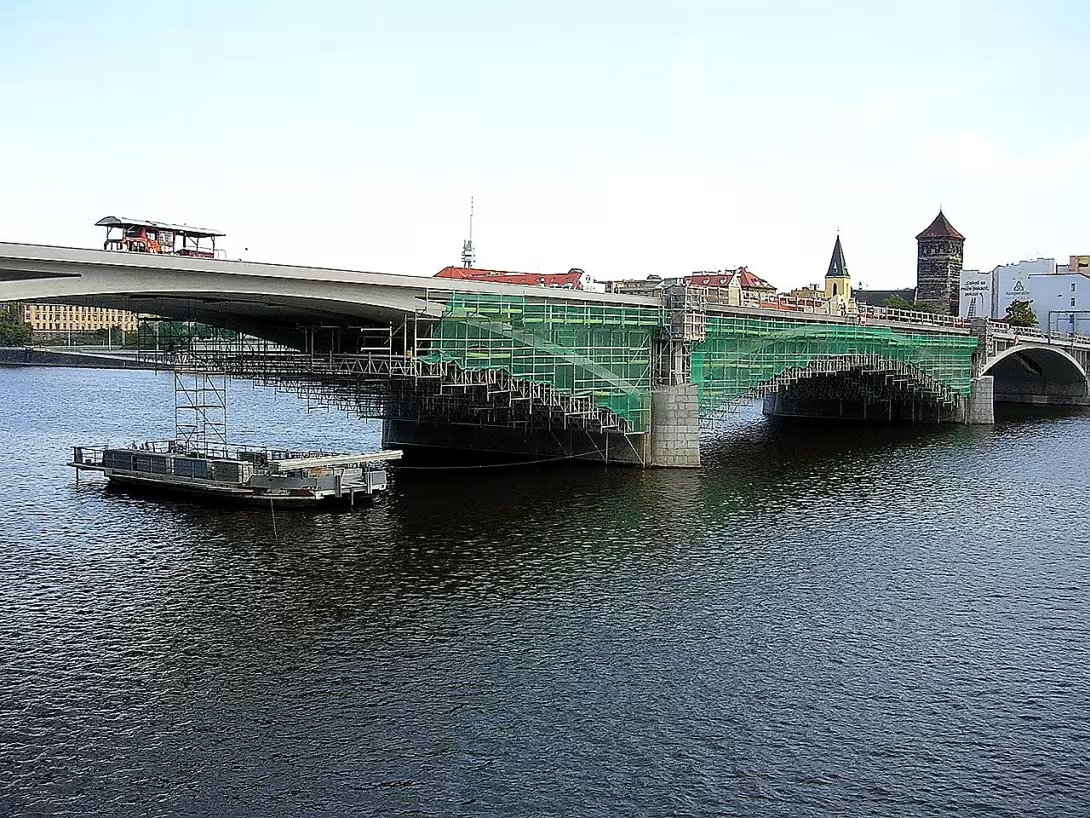
Štefánikův Most is a steel bridge with a rich history, connecting two sides of Prague and reflecting the city's architectural evolution. Located in Holešovice, Prague, this monument has undergone significant changes since its original construction from 1865 to 1868.
The original bridge was built during a time of significant change for Prague, as the city underwent modernization and urban development. The bridge was reconstructed in 1898 before being demolished between 1946 and 1947. A new steel bridge was constructed between 1949 and 1951, featuring a three-field steel structure with a total length of 182 meters.
The bridge's architecture is notable for its innovative use of steel and concrete at the time of its construction. The original bridge used traditional materials, while the current bridge features a more modern design. The bridge's three fields are supported by steel beams, with a total width of 58.8 meters, 64.4 meters, and 65.1 meters.
Throughout its history, Štefánikův Most has been renamed several times to honor notable figures. Initially named after Emperor Franz Joseph I., the bridge was later renamed in honor of Milan Rastislav Štefánik and then Jan Šverma. In 2025, a new pedestrian ramp was built on the right bank of the Vltava River.
Today, Štefánikův Most remains an important landmark in Prague, offering stunning views of the Vltava River and surrounding landscape. Visitors can access the bridge via Letenský Tunel and Dvořákova Nábřeží. The bridge's rich history and architectural significance make it a must-visit destination for anyone interested in exploring Prague's cultural heritage.
In conclusion, Štefánikův Most is a testament to Prague's enduring spirit of innovation and progress. Its complex history and striking architecture make it a unique and fascinating monument that is well worth visiting.
Then and now
Drag the slider to compare how the landmark may have looked when it was built with the view today.
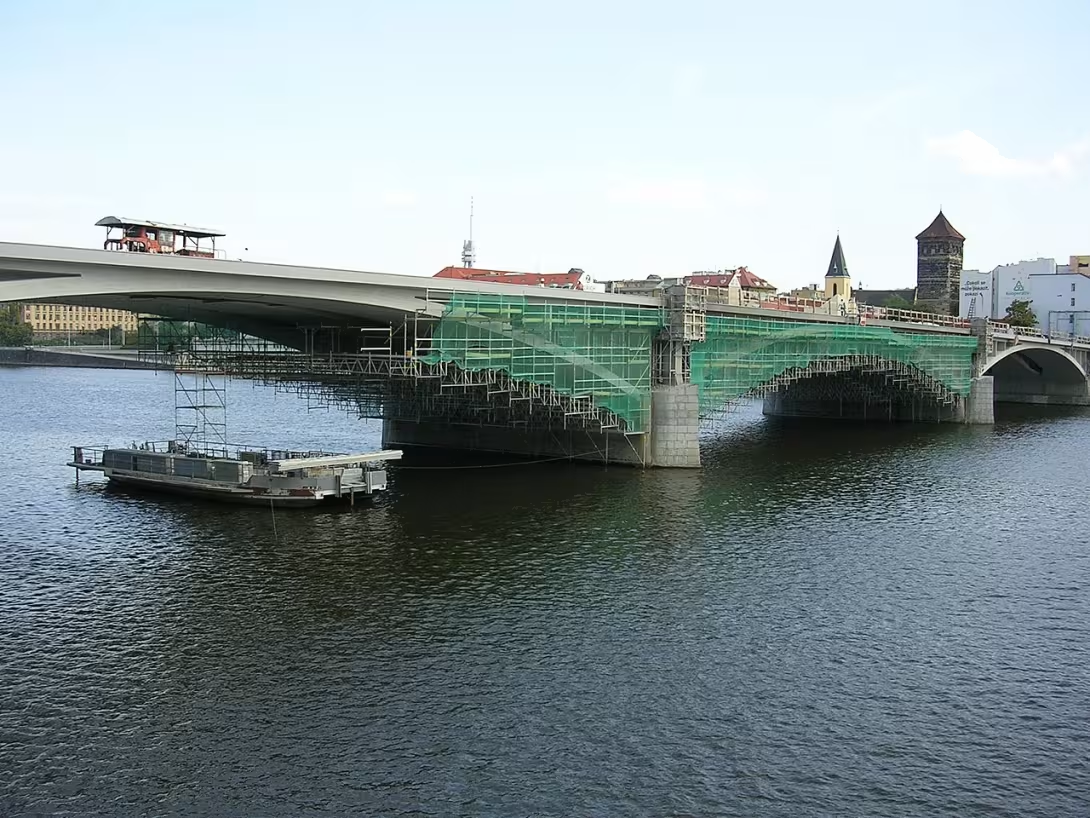

The historical appearance on the left is an AI-generated visualisation and serves as inspiration only.
Historical milestones
- 1865
- Original bridge construction began
- 1868
- Original bridge completed
- 1898
- Reconstruction of the original bridge
- 1946
- Demolition of the original bridge began
- 1951
- New steel bridge construction completed
Architectural development
The original bridge was built in 1865-1868, reconstructed in 1898, and demolished in 1946-1947. The current steel bridge was constructed between 1949 and 1951.
Historical events
1865-1868: Original bridge built
1898: Reconstruction
1946-1947: Demolition
1951: New bridge construction
Points of interest
– The original bridge was designed by architect Josef Zasche, who also designed other notable Prague landmarks like the Rudolfinum concert hall and the National Museum.
– During World War II, the bridge was used as a makeshift runway for Allied planes to take off from the Vltava River. This unique feature of the bridge's history is often overlooked in favor of its more well-known architectural significance.
– The bridge has been renamed several times due to changing historical circumstances. Initially named after Emperor Franz Joseph I., it was later renamed after Milan Rastislav Štefánik, a Slovak politician and aviator who played a key role in the Czechoslovakian independence movement.
Guide
This guide is narrated by a synthetic voice generated by artificial intelligence.
Show guide text
This text was created by artificial intelligence and has not been editorially reviewed. It may contain inaccuracies.
Welcome to Štefánikův most, a steel bridge with a rich history that has been connecting two sides of Prague and reflecting the city's architectural evolution for over a century.
As you stand before this iconic landmark, take a moment to appreciate its sheer scale. The original bridge was completed in 1868, but it wasn't until the reconstruction in 1898 that it took on its current form. And yet, despite its age, Štefánikův most remains an important part of Prague's infrastructure and a testament to the city's ability to adapt and evolve.
Now, let's take a step back in time and explore the history behind this beloved landmark. The original bridge was designed by architect Josef Zasche, who also left his mark on other notable Prague landmarks like the Rudolfinum concert hall and the National Museum. But it wasn't until 1946 that the original bridge began to be demolished, making way for a new steel structure that would become Štefánikův most.
As you look up at the bridge's imposing steel beams, take note of its unique architecture. The design is a testament to the ingenuity and skill of Vlastislav Hofman and Otakar Širc, the architects responsible for bringing this vision to life.
Štefánikův most has played host to many notable figures over the years, including Milan Rastislav Štefánik, Leoš Janáček, and Jan Šverma. Each of these individuals left their mark on Prague's cultural landscape, and it's a testament to the bridge's enduring appeal that it continues to inspire and captivate visitors to this day.
Now, here are three lesser-known facts about Štefánikův most that will give you a deeper appreciation for its significance: during World War II, the bridge was used as a makeshift runway for military aircraft; in the 1950s, the bridge was a popular spot for young lovers to steal kisses under the cover of darkness; and in recent years, Štefánikův most has been recognized as an important cultural landmark, earning it a place on the city's list of protected monuments.
As you continue your journey through Prague, take a moment to appreciate the significance of this iconic landmark. And who knows? You might just find yourself drawn back to Štefánikův most again and again, each time uncovering new secrets and surprises that make it an even more special place in your heart.
Thank you for joining me on this journey through the history and architecture of Štefánikův most. I hope you've enjoyed this audio guide as much as I have, and that it's inspired you to explore even more of what Prague has to offer. Until next time, farewell!
Tips for visitors
Best Time to Visit: The best time to visit Štefánikův most is during the spring or autumn when the weather is mild and the surrounding landscape is particularly beautiful. Avoid visiting during peak summer months as it can get quite crowded. Take advantage of the scenic views of the Vltava River and enjoy a peaceful stroll across the bridge during these seasons.
Frequently asked questions
Can the monument be visited?
This is a structure in a public space that can usually be seen from outside free of charge. We have not verified that this particular one is freely accessible.
Where is the monument?
Location: Nové Město, Hlavní město Praha. The map on this page shows the exact spot.
Businesses nearby
Do you run a restaurant, accommodation, shop, museum, rental, wellness or other visitor service near this monument? Show yourself directly to the people heading to it — this is how they will see you in the app and on the web:
Events nearby

Zdroj akcí: otevřená data měst a obcí ČR (Národní katalog otevřených dat) a kalendář akcí Národního památkového ústavu.
Nearby
The surrounding landscape features the Vltava River, with nearby landmarks including Letenský tunel and Dvořákova nábřeží.
Accommodation nearby
Trips and activities nearby
Guided tours, tickets and activities nearby from GetYourGuide
Affiliate link: if you buy from the partner, we may receive a commission. The price for you does not change.
Search tours and activities →Themed route
Štefánikův most to Vltava River
This thematic route takes you on a journey from the iconic Štefánikův most to the scenic Vltava River, with stops at nearby landmarks that offer stunning views and unique experiences.
1. Štefánikův most: Start your journey at this historic steel arch bridge, which offers breathtaking views of the Vltava River and the city skyline. 2. Letenský tunel: Walk along the riverbank to reach the Letenský tunel, a hidden gem that provides an unique perspective on the city's infrastructure. Take in the sights and sounds of the tunnel before continuing your journey. 3. Dvořákova nábřeží: End your route at Dvořákova nábřeží, a picturesque riverside promenade lined with trees and offering stunning views of the Vltava River. Relax and take in the scenery as you conclude your thematic tour.
This route offers a unique blend of history, architecture, and natural beauty, making it an unforgettable experience for visitors to Prague.
Seasonal recommendations
Spring
As the snow melts away, Štefánikův most transforms into a picturesque spot with blooming flowers and greenery. The morning sun casts a warm glow on the steel structure, making it an ideal time to visit. Be prepared for larger crowds as the weather warms up, especially on weekends. Wear comfortable shoes and layers for changing temperatures.
Summer
During the peak tourist season, Štefánikův most is bustling with people enjoying the scenic views of the Vltava River. The evenings are warm and sunny, making it perfect for a romantic stroll or a family outing. Arrive early to beat the crowds, and don't forget your sunscreen and a hat.
Autumn
As the leaves turn golden, Štefánikův most takes on a cozy atmosphere. The autumn foliage creates a stunning backdrop for photos, and the crisp air is invigorating. Visit during weekdays to avoid larger groups of tourists. Dress in layers for the changing temperatures, and don't forget your camera to capture the beautiful scenery.
Winter
Štefánikův most takes on a magical quality during the winter months, with festive lights illuminating the steel structure. The cold weather means smaller crowds, making it an ideal time to visit if you prefer a more peaceful experience. Wrap up warm and enjoy the serene atmosphere, but be aware that some attractions or facilities might have limited hours or be closed.
Visualizations and artistic views


The visualisations are generated by artificial intelligence and serve as inspiration.
Photos from the area
Real photos taken near the monument

Zdroj a licence jsou uvedeny u každého snímku.
Tips from visitors
No tips yet. Be the first!
Log in and add your tip.
Sources and literature
Photos: cs:User:ŠJů / CC BY-SA 3.0 — Wikimedia Commons. The author and licence also appear when you hover over the image.
Faktickým podkladem tohoto textu byl článek na Wikipedii, jehož autory jsou přispěvatelé Wikipedie. Článek je dostupný pod licencí CC BY-SA 4.0.
Location on the map
More monuments – Nové Město
Show all in the municipality


Fotografie návštěvníků
Zatím žádné fotografie. Buďte první, kdo přidá fotografii z návštěvy!
Log in a přidejte svou fotografii nebo hodnoťte.
Za ověřenou návštěvu v aplikaci získáte víc bodů — poznáme podle GPS, že jste na místě.
Reviews and comments