



Štítina Chateau
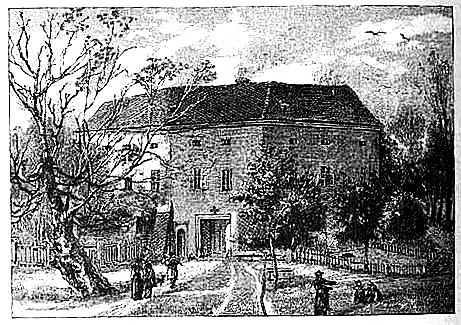
Objekt se nedochoval — na místě dnes nestojí. Následující text popisuje jeho historii, ne současnou návštěvu.
The chateau Štítina was a fortified residence in the village Štítina in the district of Opava. The first mention of it dates back to 1282, when the list shows up in the Predicate of Beneš from Ština. However, this reference cannot be understood as proof of the existence of a stone chateau. The oldest source for the existence of the chateau is only the Charter of 18 April 1377, when it belonged to John of Bítov.
Since the end of the 14th century, a long number of owners have begun to illustrate the importance of this mansion in the region of Opava. Between 1381 and 1383, the prince of Pámek Jan of Bítov forced his brother Aleš Zlámanci to sell the shield. It was gradually changed over the next decades by various nobles and owners - vicar Mikuláš from Plště, brothers Onu Kyjovec and Jan from Lukavka, Hartel Tunkel, Cheněk from Cvorkov and Zbyněk Hrozivnáč from Heraltic. In the 15th century it was owned by the other princes Vilém and Arnošt. In 1461 Arnošt fortress advanced Jaroslav Stoš from Posutice.
In the 16th and 17th centuries, it came into the hands of other nobles. Since 1569 it was owned by Fridrich the elder Cetrys of Kynšik, whose sons sold it in 1576 to Nicholas of Kravař. In 1806 it was acquired by the Chejks of Badenfeld. In 1837 it was bought by the Order of German Knights, which held it until 1925.
The shape of the Shield was marked by the 20th century. After World War I, in March 1919, the Ministry of Agriculture in Prague imposed forced administration on the farm. In 1925, under the first land reform, the residual estate became the property of František J. Zíka, President of the Silesian Agricultural Council. After 1945 it was taken over by the Czechoslovak state. Part of the building was used by local government as offices, part served as hospitality.
In the final stage of its existence, Štítina suffered neglect. Over the years, when no one cared for the object properly, it gradually faded. In 1988, a desolate and looted chateau was demolished without performing a landmark survey and, despite the opposition of the monuments, demolished. There's nothing left of it today but a historical memory and a record in the archives.
Then and now
Drag the slider to compare how the landmark may have looked when it was built with the view today.
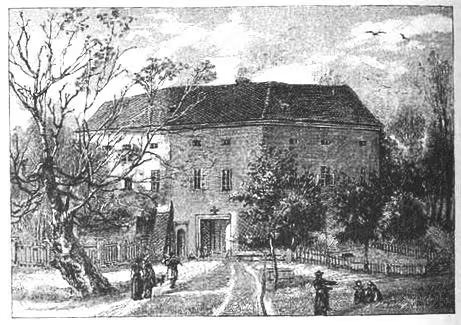

The historical appearance on the left is an AI-generated visualisation and serves as inspiration only.
Historical milestones
- 1282
- First mention in the list of Beneš from the Shieldship.
- 1377
- The first certain historical source of the existence of the chateau.
- 1837
- Buying the chateau with the Order of German Knights.
- 1988
- The demolition of the building despite the protestors' protests.
Architectural development
Originally it was a medieval fortress or chateau, which was later rebuilt into a chateau. Over the centuries, he went through changes within different ownership periods. In recent decades before the demolition, the object has been decaying considerably.
Historical events
1377 - the first certain historical source of the existence of the chateau, 1576 - sale of the chateau to Mikuláš Tvorkovsky from Kravař, 1837 - purchase of the chateau by the Order of German Knights, 1988 - demolition of the building.
Owners
Jan z Bítova (1377), Aleš Zlámán (1381-1383), close princes Vilém and Arnošt (1447-1452), Jaroslav Stoš z Posutic (1461), Matyáš Bystřický ze Studnic (1513), Jindřich Šíp z Bránice, Fridrich st. Cetrys z Kynšperka (1569), Mikuláš Tvorkovský z Kravař (1576), Čejks of Badenfeld (1806), Order of German Knights (1837), František J. Zíka (1925), Czechoslovak State (1945).
Points of interest
- The first mention of the chateau dates back to 1282, when the Predicate of Beneš from Ština appears. - The oldest certain source of the chateau is the charter of April 18, 1377, where it belonged to John of Bítov. - Since the end of the 14th century, a long series of owners have begun, illustrating the importance of this mansion in the region of Opava. - In 1806 the Chejkovs of Badenfeld acquired it and in 1837 the Order of German Knights, which held it until 1925. - After World War I, the Ministry of Agriculture in Prague imposed forced administration on the farm.
Guide
This guide is narrated by a synthetic voice generated by artificial intelligence.
Show guide text
This text was created by artificial intelligence and has not been editorially reviewed. It may contain inaccuracies.
The castle in Štítina in the Opava region no longer stands today. Originally there was a fortress or stronghold here, and its story reaches deep into the Middle Ages.
The name Štítina appears for the first time in a document from 1282, in the title of Beneš of Štítina. From this mention, however, one cannot reliably conclude that a stone fortress already stood there at that time. The oldest reliable evidence of the fortress comes from a document dated April 18, 1377. At that time it belonged to Jan of Bítov. Between 1381 and 1383, Opava Prince Přemek forced him to sell Štítina to his brother Aleš Zlámanec.
After that the owners changed frequently. Štítina was held by Mikuláš, a vicar in Plšť, then by brothers Oneš Kyjovec and Jan of Lukavce, Hartel Tunkel, Čeněk of Tvorkov and Zbyněk Hřivnáč of Heraltic. His widow Kateřina of Tvorkov handed over Štítina to Tas of Bítov. Between 1447 and 1452, Opava Prince Vilém held the fortress and the village, and after him his brother Arnošt. In 1461 he transferred the stronghold to Jaroslav Stoš of Posutic. After him his widow held it with his sons. In 1513 Matyáš Bystřický of Studnice acquired the stronghold, and after him Jindřich Šíp of Bránice. From 1569 it belonged to Friedrich the Elder Cetrys of Kynšperk. His sons in 1576 sold the stronghold along with the estate to Mikuláš Tvorkovský of Kravaře.
In 1806 the castle was acquired by the Čejkové family of Badenfeld. In 1837 the Order of the German Knights bought it from them. After the First World War, in March 1919, the Ministry of Agriculture in Prague imposed forced administration on the estate. The Order owned the estate with the castle until 1925. At that time the estate became what was called a residual estate as part of the first land reform. It was acquired by František Zíka, president of the Silesian Agricultural Council and the Central Economic Association and the Central Warehouse in Opava.
After 1945 the castle fell to the Czechoslovak state. Part of the building served the local national committee as offices and there was also a tavern operating there. The unmaintained castle gradually deteriorated. In 1988 the abandoned and ransacked building was demolished. This happened without any historical survey and despite the objections of heritage conservationists.
For kids
Imagine going back to when the Štítina was the highest seat of the lords of the House of Szczecin. The chateau stood on top of the river and was like a chateau protecting its late Spanish war. Who lived there? Gentlemen of the House of Szczecin who had great conjecture with Emperor Rudolf II.
It was like a game where heroes fought for power and wealth. And there was an unforgettable wedding in the chateau between the Duke of Hradec and Štěpánka, the daughter of the Lord of the House of Szczecin.
Businesses nearby
Do you run a restaurant, accommodation, shop, museum, rental, wellness or other visitor service near this monument? Show yourself directly to the people heading to it — this is how they will see you in the app and on the web:
Events nearby
Zdroj akcí: otevřená data měst a obcí ČR (Národní katalog otevřených dat) a kalendář akcí Národního památkového ústavu.
Nearby
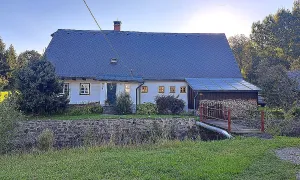
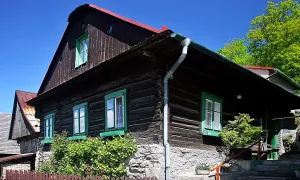
Shield surroundings
Visualizations and artistic views


The visualisations are generated by artificial intelligence and serve as inspiration.
Photos from the area
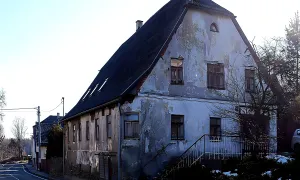
Real photos taken near the monument


Zdroj a licence jsou uvedeny u každého snímku.
Atmosphere of the place
This atmospheric visualisation of the place and period was generated by artificial intelligence. It is not real footage of the location.
Tips from visitors
No tips yet. Be the first!
Log in and add your tip.
Sources and literature
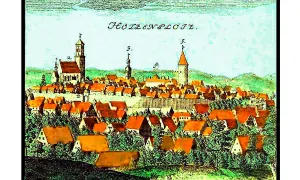
Photos: velmi staré veřejně dostupné vyobrazení / Public domain — Wikimedia Commons. The author and licence also appear when you hover over the image.
Faktickým podkladem tohoto textu byl článek na Wikipedii, jehož autory jsou přispěvatelé Wikipedie. Článek je dostupný pod licencí CC BY-SA 4.0.
Location on the map
Příběhy a pověsti
Legendy, pověsti a příběhy spjaté s touto památkou

Fotografie návštěvníků
Zatím žádné fotografie. Buďte první, kdo přidá fotografii z návštěvy!
Log in a přidejte svou fotografii nebo hodnoťte.
Za ověřenou návštěvu v aplikaci získáte víc bodů — poznáme podle GPS, že jste na místě.
Reviews and comments