



Sudslavická jeskyně Cave
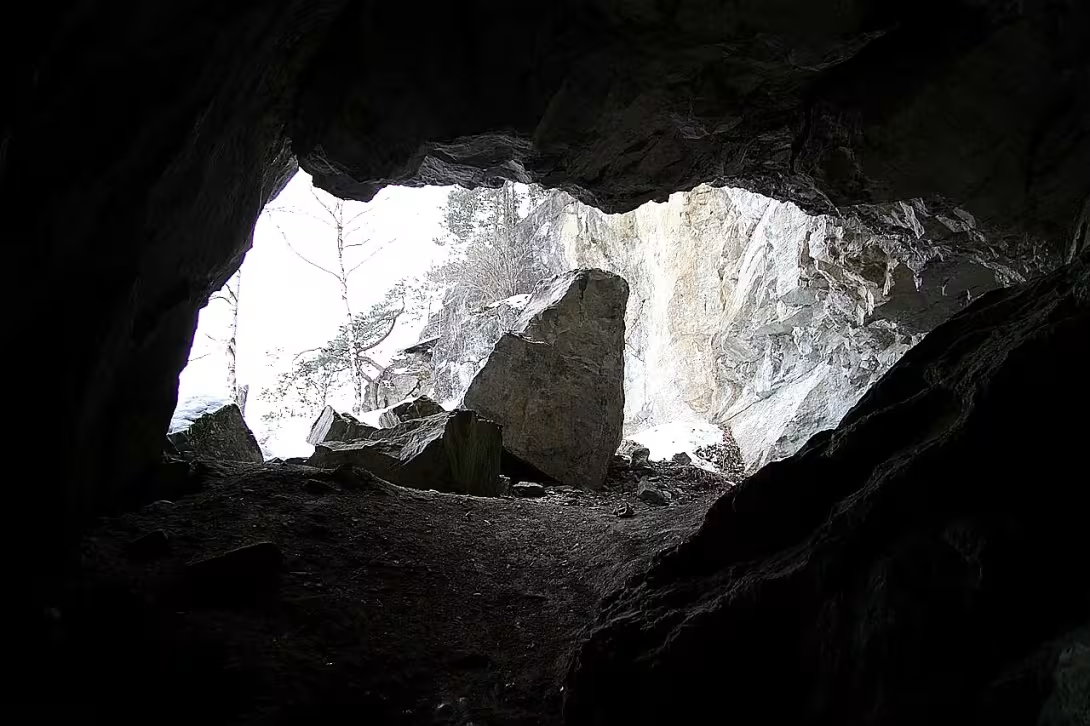
Sudslavická jeskyně, located in the municipality of Vimperk in Pošumav, is a unique karst unit with significant paleontological value. This natural object, which is part of the Opolenec Nature Reserve, was discovered in the late 18th century as a rich source site of skeletal remains of Pleistocene fauna. Today the cave is accessible to visitors and offers a view of fascinating geological and historical aspects.
The cave was formed as part of the karst phenomena of Opolenec hill, whose original structure was partially destroyed by the extraction of crystalline limestone. Limestone, which forms a large part of the hill, was stored as a lens and in the southern part of the quarry two cracks were uncovered in the mining activity at the end of 1879. These cracks contained a mixture of limestone debris, porous clay and rich paleontological material. In 1880-1883, Czech paleontologist Jan Nepomuk Woldřich carried out extensive research, during which 70 species of juvenile pleistocene and holocene fauna were discovered. His work has brought about 9,000 bones and 13,000 teeth to world awareness.
The current state of the cave is torsal, formed by a 15-metre corridor open to the quarry. The corridor has a width between 1.5 and 5 metres and a height between 2.5 and 4 metres. There's a smaller corridor coming out of the main corridor and an enlarged niche on the opposite side. The original limestone blocks were removed during paleontology work, but it is still possible to see the karst products selective corrosion on the walls and ceiling.
There are several natural attractions around the cave. The Natural Reserve Opolenec offers the opportunity to explore the turmaline sun on the rock massif above the cave and the memorable Sudslavická lípa, which is the second largest linden in the Czech Republic. The Sudslavický circuit educational trail combines local natural attractions and allows visitors to explore botanical formations, including limestone flora and orchids. There is also the possibility to get acquainted with the cold cabins and the location of the so-called Bohumilic meteorite.
Sudslavická jeskyně today is not only a monument to geological and paleontology studies, but also an accessible tourist place that offers visitors the opportunity to explore the rich history and natural beauty of the area. Its importance lies not only in documentation of prehistoric ecosystems, but also in its unique geological structure. Visiting the cave is therefore a great opportunity for those interested in history and nature, and offers a view of the fascinating past of our planet.
Historical milestones
- 1879
- The discovery of two cracks filled with limestone debris and paleontological material during mining.
- 1880
- The beginning of Jan Nepomuk Woldřich's paleontology work.
- 1883
- Complete extensive paleontological research in the cave.
Architectural development
The cave is a natural formation created by karst processes in crystalline limestone. The original structure was partially distorted by the mining activity in the surrounding quarry. The current appearance consists of a 15-metre corridor with a niche and a smaller side foot.
Historical events
A large number of skeletal remains were discovered in the cave at the end of the 18th century. In 1880-1883 the paleontologist Jan Nepomuk Woldřich conducted extensive research on fauna. At the end of 1879, two cracks with rich paleontological material were uncovered during mining in a nearby quarry.
Points of interest
- Sudslavická jeskyně is a unique karst unit with significant paleontological value. - The cave was discovered in the late 18th century as a rich source site of skeletal remains of pleistocene fauna. - Czech paleontologist Jan Nepomuk Woldřich conducted extensive research here in 1880-1883, during which 70 species of young pleistocene and holo-cene fauna were discovered. The cave is part of Opolenec Nature Reserve. - The educational trail of the Sudslavický circuit combines local natural attractions, including the turmaline sun and the memorable Sudslavický lípa.
Guide
Show guide text
This text was created by artificial intelligence and has not been editorially reviewed. It may contain inaccuracies.
Welcome to the heart of Opolenec Nature Reserve. You are standing in a place that at first glance can act as a simple, peaceful corner of the Shumava landscape, but in fact you are located with one of the most important geological treasures of all of Poshumavi. Feel this atmosphere, the silence of the surrounding forest and the knowledge that it is here, beneath your feet, that lies a secret that goes deep into the ancient past of our planet. In front of you there is a space that is not just a common territory, but a living testimony about the constant changes in the country and the life that existed here long before the first people.
Now let's look together at how this place got into world knowledge. Sudslavická jeskyně is not just a random finding, it is a unique karst unit whose formation was influenced by complex processes of limestone settlement. Although people knew about the existence of these spaces at the end of the eighteenth century, their true scientific importance began to stand out much later when experts began to address them. The key break occurred in the year one thousand eight hundred seventy-nine. There was an unexpected discovery during normal mining in this area. Two large cracks were found in the work, which were filled with limestone debris. But this finding was not just an ordinary finding of stone. In these cracks, an enormous amount of paleontological material was hidden, which immediately attracted the attention of scientists.
Now pay attention to what you can see right around you and how this place is presented today. You must know that the current state of the cave is technically called the torsal. This means that don't expect large, monumental halls to bend you around with their size. What we see today as the cave itself is actually just a short corridor that shows us only a fraction of its original complexity. If you look at the structure of the surrounding terrain, notice how the limestone rubble consists of small and larger fragments that have settled here for centuries. These cracks that were once discovered are the key to understanding how material came into this space from the surface and how it was preserved here. Feel this raw beauty of natural stone, which has no artificial decoration, because its only creator was nature itself and relentless time.
In order to fully understand the weight of this place, however, we need to mention a figure without which the Sudslavická jeskyně would remain a simple rift in the country. It's Jan Nepomuk Woldřich. This important Czech paleontologist decided that this place would not only be a common find but a scientific treasure. In the years of a thousand eight hundred eighty to a thousand eight trăm eighty three conducted extensive and extremely important research. Woldřich was not just a collector; It was a man who could read the stories of the ages from bone remains. His work here was a pillar of modern paleontology and thanks to his patient and precise examination of these narrow spaces we managed to understand what life looked like during the pleistocene period. Thanks to his determination, we now know that this place was once much richer and more lively than it seems.
Stop for a moment and imagine the fascinating secret that was hidden here. What is this world that left these bone remains? Imagine an era of pleistocene fauna. By the time these remains were laid here, this area was home to animals that no longer exist. It was a time of huge changes, when the climate was constantly flowing between extreme temperatures and when animals had to adapt constantly to a harsh environment. Sudslavická jeskyně served as a vast, natural archive of these ancient lives. Every bone found in these cracks witnessed an era completely different from ours. It's a fascinating notion that right here, in these narrow corridors, lies the fragments of the world that was once the dominant ruler of this landscape. This cave is not just a geological unit, it's a real time capsule that allows us to look into the depths of time.
Now that you know the story of this special place and know the weight each stone and every crack in this reservation carries, I suggest you take a quiet walk through the surrounding nature reserve of Opolenec. Feel her silence and try to find the echo of those ancient times. Even though the cave itself is only a short corridor today, its importance to understanding the history of our country is immense. Let yourself be inspired by what Jan Nepomuk Woldřich has discovered here, and look at this landscape with a new respect for what it holds. Thank you for coming to meet us with the secret of the Sudslavická Cave. We wish you a beautiful and inspirational walk in the beautiful nature of Poshumavi.
Tips for visitors
Best time to visit The Sudslavická cave is in spring and autumn months when temperatures are pleasant and the cave offers the most beautiful light effects. These periods also minimise the likelihood of high traffic, which ensures a more peaceful examination.
You can also reach the room by public transport, and specific connections and times can be found in the current route search engine.
When visiting the cave, it is advisable to bring with you fixed shoes which protect against wet and uneven terrain. Fill your inventory with an umbrella or submersible as the underground space can be wet.
For photography it is best to use the natural light available at the beginning and end of the tour. The best places for photography are inside the cave where fascinating geological shapes can appear.
For families with children, the Sudslavická circuit offers an interesting educational trail where children can see the cold cabins and other natural phenomena.
Frequently asked questions
Can the monument be visited?
We have not verified whether this monument is accessible. Please ask the owner or operator, or the local municipal office.
Where is the monument?
Location: Vimperk, Jihočeský kraj. The map on this page shows the exact spot.
Why is the monument protected?
It is listed in the Central List of Cultural Monuments of the Czech Republic as a cultural monument (register no. 1000150321).
Businesses nearby
Do you run a restaurant, accommodation, shop, museum, rental, wellness or other visitor service near this monument? Show yourself directly to the people heading to it — this is how they will see you in the app and on the web:
Events nearby

Zdroj akcí: otevřená data měst a obcí ČR (Národní katalog otevřených dat) a kalendář akcí Národního památkového ústavu.
Nearby
Přírodní rezervace Opolenec, skalní masiv s turmalíny, památná Sudslavická lípa, naučná stezka Sudslavický okruh a mrazové sruby.
Accommodation nearby
Themed route
Thematic cruise route from Vimperk
1.Sudslavická jeskyně * Type: * Underground cave It is worth visiting for its unique geological shapes and history, which can be discovered during guided tours. The cave offers a view of the ice cabins and other underground formations.
2. Natural Reserve Opolenec * Type: * Natural reservation This location is ideal for nature lovers where rich flora and fauna can be observed. It is known for its rock massif with turmaline bearings that attract geological enthusiasts.
3. SudSlavic Circuit * Type: * Educational Path This trail leads along a beautiful landscape and offers information about local natural services, the history of the area and its environment. It's a great way to immerse yourself in the beauty of Vimperk.
4. Memorial SudSlavická lipa * Type: * Historical wood This legendary linden is one of the oldest and largest trees in Bohemia. It is a place where you can relax and appreciate the history and nature of the area.
This route offers a combination of underground discoveries, natural beauty and historical monuments, making it ideal for a day trip.
Seasonal recommendations
In spring, the surrounding area of Vimperk is colored in fresh green and air smells of moisture and awakening vegetation. Light is delicate in this period, which gives nature around the cave a special lightness. We recommend to wear solid, waterproof shoes because the road can be muddy due to melting snow and rain. The best place to visit is in the morning, when nature is the most active.
The summer season offers the greatest contrast between the heat of the outside world and the refreshing cold inside the cave. The sun hits the surrounding forests intensively, creating a clear and lively atmosphere. Due to the increased interest of visitors in the main summer season, it is advisable to arrive as early as possible in the morning to enjoy peace. Nevertheless, bring with you a light layer of clothing that will protect you from sudden cooling in a colder cave environment.
Autumn moons bring a melancholy and mysterious atmosphere to the area around the Sudslavická Cave, accompanied by fog and golden shades of leaves. The lighting is low and dramatic at this time, which perfectly matches the rock landscape. It is necessary to prepare for variable weather and slippery surfaces, so choose layered clothes and high-quality shoes with good grip. An ideal visit in the afternoon is when the sun best highlights the colors of the surroundings.
In winter the surroundings are quiet and often covered with snow, which creates a very calm and isolated atmosphere. The day is short and light is weak, which gives the place seriousness. Dress very warmly and do not neglect the quality of the layers to keep warm even if you stay in the area.
Visualizations and artistic views


The visualisations are generated by artificial intelligence and serve as inspiration.
Photos from the area
Real photos taken near the monument


Zdroj a licence jsou uvedeny u každého snímku.
Tips from visitors
No tips yet. Be the first!
Log in and add your tip.
Sources and literature
Photos: Chmee2 / CC BY 3.0 — Wikimedia Commons. The author and licence also appear when you hover over the image.
Faktickým podkladem tohoto textu byl článek na Wikipedii, jehož autory jsou přispěvatelé Wikipedie. Článek je dostupný pod licencí CC BY-SA 4.0.
Location on the map




Příběhy a pověsti
Legendy, pověsti a příběhy spjaté s touto památkou

Fotografie návštěvníků
Zatím žádné fotografie. Buďte první, kdo přidá fotografii z návštěvy!
Log in a přidejte svou fotografii nebo hodnoťte.
Za ověřenou návštěvu v aplikaci získáte víc bodů — poznáme podle GPS, že jste na místě.
Reviews and comments