



Švédský most Bridge
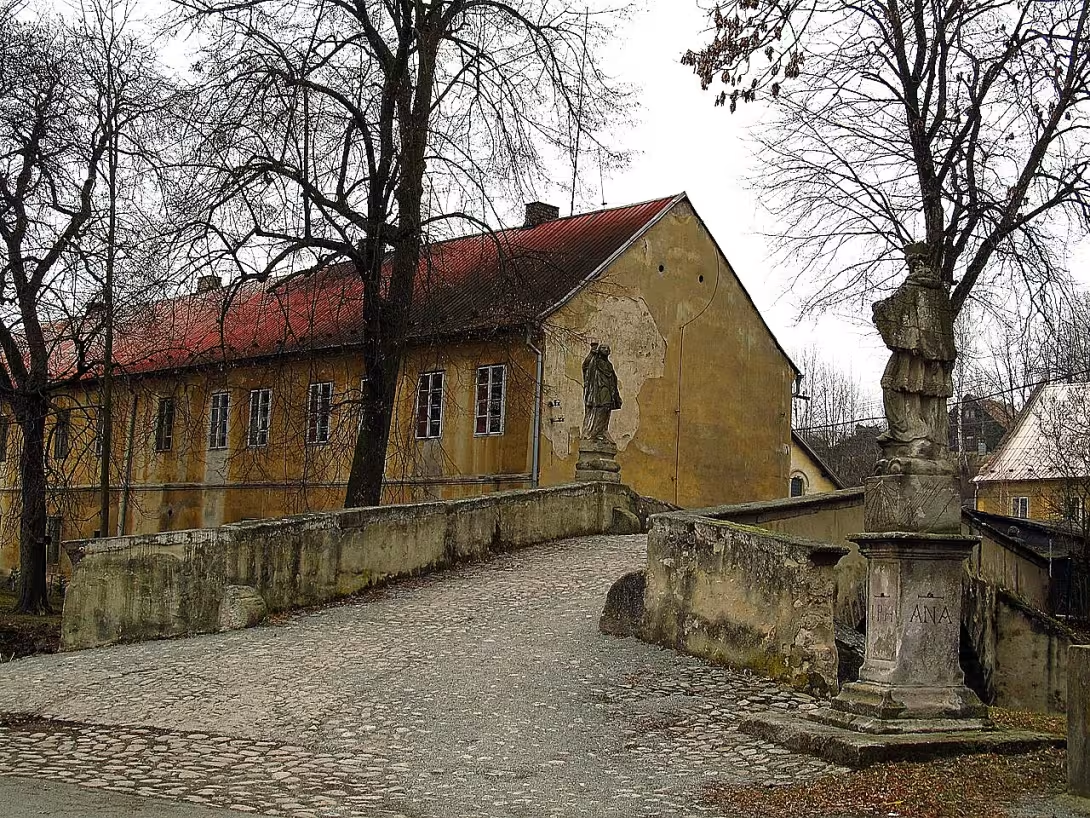
The Swedish Bridge is a baroque stone bridge in Dobřov in the area Rokycany Pilsen Region. It spreads the Klabava River with statues of St. Barbara and St. John Nepomuk. The bridge is of cultural importance because it has been listed as a cultural monument since 1964 and since 1995 it has been located in an area known as the village heritage. His name, "Švédský most," or the Swedish Bridge, suggests his historic role during the 1930s "War, when cannonballs were allegedly transported to the Swedish artillery.
The exact date of construction of the Swedish Bridge is uncertain; But historical sources suggest that it was probably built in the second half of the 17th century. This period coincides with the ownership of Dobřov's hardware store Širer of Waldheim (1624-1692). The bridge's name reflects its strategic importance during the 1930s "War, when it served as a road for transporting military supplies, namely cannonballs produced in the local village. This historical context underlines the role of the bridge not only as an architectural performance, but also as an essential part of regional defence and logistics.
Architectural, Swedish Most of them are single-arc stone constructions 20 metres long and 4 metres wide, with an arc of 7 metres long and rising to a height of 4 metres above the riverbank. The construction of the bridge reflects the baroque style prevailing during its construction, highlighting grandeur and complex details. Important artistic elements include the central statue of St. Barbara holding the chalice, dated 1791, and the older sun base for the statue of St. John Nepomuk, which was installed and sanctified in 1720.
In its history, the Swedish Bridge recorded various changes in ownership and administration. The bridge construction is linked to the time when Shirer of Waldheim owned Dobřa's hardware store, which suggests that he or his successors may have entrusted him. Despite these historical shifts, the bridge remains a testament to the region's cultural and architectural heritage.
Key events associated with the Swedish Bridge include his role during the Thirty Years' War and the installation of statues in the 18th century. The statue of St. John Nepomuk was installed and sanctified on the bridge in 1720, which marks an important addition to its artistic features. These elements highlight the historical and cultural importance of the bridge beyond its functional use.
Today Swedish The bridge stands in Dobřov's historical centre as a preserved monument. Although it is no longer used for car traffic, it remains accessible to visitors who can appreciate its architectural beauty and historical importance. The area around the bridge is rich in other cultural monuments, including protected innkeeper buildings dating back to 1750 and several remarkable trees like oak near Buryšek and Laiba's linden. The planned hiking trail leads from the bridge through the historical core of Dobrov and offers further exploration of its heritage.
The Swedish majority is not only a remarkable example of Baroque architecture, but also a symbol of the region's historical resilience and cultural development. Its preservation allows visitors to connect with the past while enjoying the calm beauty of Dobřov's landscape. For those who are interested in history, architecture or simply looking for a peaceful retreat, the Swedish majority offers an enrichment experience that is both educational and inspiring.
Then and now
Drag the slider to compare how the landmark may have looked when it was built with the view today.
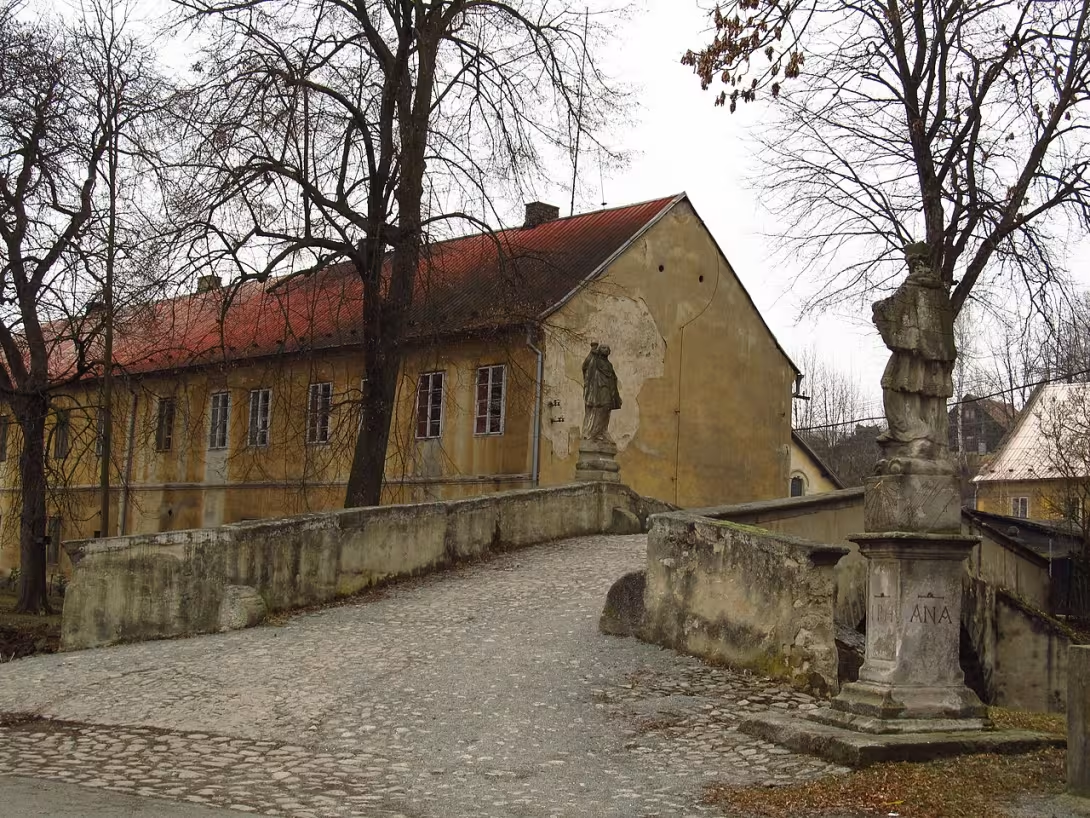

The historical appearance on the left is an AI-generated visualisation and serves as inspiration only.
Historical milestones
- 1964
- The bridge was listed as a cultural monument.
- 1720
- The statue of St. John Nepomuk was installed and sanctified.
Architectural development
Švédský most is a single-arc stone construction with a length of 20 metres and a width of 4 metres. The angle is 7 meters with a height of 4 meters above the riverbed. It offers a central statue of St. Barbara with a chalice dated 1791 and an older sun base for the statue of St. John Nepomuk.
Historical events
The bridge probably came from when Shirer of Waldheim owned Dobřa's hardware store, maybe in the second half of the 17th century.
During the 30-year war, the cannonballs were allegedly transported across this place for Swedish artillery, leading to their name "Švédský most.".
The statue of St. John Nepomuk was built and consecrated on the bridge in 1720.
Points of interest
- the name "Švédský most" or Swedish bridge is a nod to its historical role during the 1930s "War, when it was used as a strategic route for transporting cannon balls across the Klabava River, which highlights its importance in regional military logistics.
- Although the date of construction of the bridge is uncertain, its construction and properties suggest that it was probably built in the second half of the 17th century, perhaps commissioned by Shirer of Waldheim during his ownership in Dobřov's hardware store, suggesting a link between the local industry and the development of infrastructure.
- The central statue of St. Barbara on the bridge dating back to 1791 adds to its historical narrative an artistic layer reflecting the baroque influences that emphasize the grandeur and intricate details that were prevailing at the time of its construction.
- Despite changes in ownership over the centuries, the Swedish majority remained a cultural monument and since 1964 it has been listed as a cultural monument which underlines its permanent architectural and historical importance to the region.
- The integration of the bridge into Dobřová's heritage area since 1995 underlines not only its individual importance, but also its role in the wider context of the preserved cultural landscape, which offers visitors a view of the rich history of the region.
Guide
This guide is narrated by a synthetic voice generated by artificial intelligence.
Show guide text
This text was created by artificial intelligence and has not been editorially reviewed. It may contain inaccuracies.
The Swedish Bridge in Dobřívě on the Rokycansko is a Baroque stone bridge over the Klabava river. It stands in the historic centre of the village, which has been a village heritage zone since 1995. It was entered in the list of cultural monuments on March 13th, 1964. It no longer serves road traffic. Its full name is the bridge with statues of Saint Barbara and Saint John of Nepomuk.
The bridge has a single arch with a span of 7 metres. It is 20 metres long, 4 metres wide, and rises 4 metres above the water level at its highest point. The roadway is paved and slopes upward toward the centre. There is a one-metre difference between its peak and the ends of the walls.
In the middle of the bridge stands a statue of Saint Barbara on a plastered wall, holding a chalice in her right hand. The date 1791 is carved on the back of her pedestal. At the entrance to the bridge from the left bank stands a statue of Saint John of Nepomuk on a higher pedestal. The pedestal is older than the statue and originally had a cross on it. On the sides it bears depictions of a sundial.
When exactly the bridge was built is unknown. According to the village chronicle, it was built when the Dobřívě foundry was owned by Schirer of Waldheim, who lived between 1624 and 1692. It was most likely built in the later years of the second half of the 17th century. However, an older bridge probably stood on the same spot. There is a tradition that cannon balls were transported across it during the Thirty Years' War, cannon balls that were made for Swedish artillery at the Dobřívě hammer. This is where the name Swedish Bridge comes from. The statues of saints were added in the 18th century. The first was the statue of Saint John of Nepomuk, made and consecrated in 1720.
Just under 30 metres upstream on the left bank stands another monument, a timber-framed single-storey inn from 1731. Its owner gained the right to serve alcohol in 1750, and the building still serves its original purpose today. It also houses the Jindřich Mošna Memorial Hall. There are several heritage-protected farmsteads and timber-framed houses around the bridge. You will also find notable trees here: the Burýšků Oak, the remains of the Laibl Linden, and the Linden Alley by the canal.
A blue-marked hiking trail runs across the bridge. It leads to the Dobřívě hammer and further upstream along the Klabava river through Strašice to the Tři trubky hunting lodge in the Brdy Protected Landscape Area.
Tips for visitors
The best time to visit Švédský most is at the end of spring or early autumn months when the weather is pleasant and the surrounding nature is particularly lively. During these seasons, you can enjoy comfortable temperatures that are ideal for walking around the historic center of Dobřov. In addition, a visit outside the top tourist season allows a more intimate experience with fewer crowds, making it easier to appreciate the architectural beauty of the bridge and its cultural importance.
From here, you can go to the city centre or take a short shuttle ride if available. Public transport options may include buses connecting Dobřov to nearby cities and cities; However, specific routes should be verified in advance.
When visiting Švédský most, consider bringing comfortable walking shoes as you probably explore the area on foot. The camera or smartphone is recommended to capture picturesque views of the bridge and its surroundings, especially during the golden hour at dawn or sunset when light increases stone architecture. In addition, with a map or GPS access it can be useful for navigation the historical centre and exploring nearby attractions.
For lovers of photography is among the best places around the Švédský most view across the river where you can capture the entire range of bridge in the background of Dobřov landscape. The area near Dubu near Burýšek and Laiba's linden offers unique natural frames for your images. Early morning or late afternoon light provides a soft glow that highlights the texture of a baroque stone bridge, making these times ideal for photography.
In addition to Švédský most itself, families with children can enjoy exploring a nearby cultural monument building which served as a inn since 1750. This site offers a view of local history and architecture. It is also worth visiting protected agricultural houses in the surroundings that provide information about traditional Czech rural life. For those who are interested in nature, remarkable trees such as oak by Buryšky and Laiba's linden can be fascinating stops for both adults and children who learn about local flora.
Frequently asked questions
Can the monument be visited?
This is a structure in a public space that can usually be seen from outside free of charge. We have not verified that this particular one is freely accessible.
Where is the monument?
Location: Dobřív, Plzeňský kraj. The map on this page shows the exact spot.
Why is the monument protected?
It is listed in the Central List of Cultural Monuments of the Czech Republic as a cultural monument (register no. 1000140797).
Businesses nearby
Do you run a restaurant, accommodation, shop, museum, rental, wellness or other visitor service near this monument? Show yourself directly to the people heading to it — this is how they will see you in the app and on the web:
Nearby
Švédský most is located in the historical center of Dobrov. Near, across the river, there is a cultural monument building that has served as an inn since 1750. There are several protected estates and remarkable trees such as oak by Burýšky and Laib's linden.
Accommodation nearby
Trips and activities nearby
Guided tours, tickets and activities nearby from GetYourGuide
Affiliate link: if you buy from the partner, we may receive a commission. The price for you does not change.
Search tours and activities →Themed route
Thematic cruise route: Dobřev and its historical monuments
1.Švédský most - * Type: * Most historic - * * Švédský most is a positive architectural monument in the historical centre of Dobrov. As a passable majority of partitions symbolize the connection between the past and the present city, namely the signpost of its historical structure and architecture.
2. Cult building (duration) - * Type: * Cultural monument - * Why is it worth a visit: * Receipts from the Swedish Bridge are located a cultural monument building, which has to be like a poop since 1750. This historic building offers a live base and a culture of minimized generations that aim at architecture is a testament to the reasonable cultural operation.
3. Protected mansions - * Type: * Historical used lost - * Why is it worth a visit: * In accordance with Article. These buildings will preserve historical evidence of the use of waters and smaller traditions, which is interesting for those interested in history and architecture.
4. Apples in Cupcakes - * Type: * Historical lime - * Why is it worth visiting: * Oak near Burýšky is one of the main additions to the monuments of the area. This ancient oak is carried by a natural geezer, but also by a bridge with culture and historical value, which are in the way of the gap and nature in this area.
5. Laib's Lips - * Type: * Historical lime alleys - * Why is it worth a visit: * Laib's lids are intended for a new historical and aesthetic value. These lipa but are providing assistance for a long-term thrust outside the cities and their natural environment while also celebrating as mine for rest and reflection.
This route offers a new project of historical and cultural rich people, with these monuments being an ideal way to take care of it.
Seasonal recommendations
Spring: The arrival of spring on Švédský most brings a refreshing transformation as nature awakens, painting the surrounding landscape with vibrant green and fine wild flowers. This season offers a unique opportunity to witness the rebirth of flora along the banks of the river and create a picturesque environment ideal for peaceful walks or photography. Visitors should use milder weather by dressing in layers that can be easily adjusted because temperatures fluctuate all day long. Early wounds are particularly calm and less crowded, which provides an ideal time to explore the historical site without the rush of larger crowds.
Summer: Summer in Švédský most is characterized by long daily hours and warm temperatures, making it a popular time for outdoor activities. The lush green and flowering flowers increase the natural beauty of the area, creating a lively atmosphere that attracts both local and tourist. If you want to fully enjoy your visit during this top season, plan to arrive early in the morning or later in the afternoon to avoid the lunch crowd. We recommend comfortable walking shoes and light breathtaking clothes, along with sun protection such as caps and sunscreen to ensure a pleasant experience.
Autumn: Autumn in Švédský most offers a stunning view of autumn leaves, with pulsating red, oranges and yellow rays that turn the landscape into a stunning canvas. Colder temperatures make it an ideal time for outdoor exploration, whether you are hiking along the routes or simply enjoy a peaceful walk around the historic place. As the days grow shorter, visitors should plan to arrive early in the day to make full use of the natural light and capture the beauty of the season. Paint clothing is recommended because temperatures may vary significantly between morning and evening.
Winter: Winter brings a calm and quiet atmosphere to Švédský most, with snow that often surrounds the surrounding countryside and turns the area into a picturesque winter wonderland. Reduced daily times create a unique charm, especially at sunrise or sunset when soft light increases the historical features of the site. Visitors should dress warmly in layers, including hats, gloves and insulated shoes, to enjoy their visit comfortably despite cold weather. It is also important to note that certain facilities may have limited operating hours during this season, so a forward check is recommended.
Visualizations and artistic views


The visualisations are generated by artificial intelligence and serve as inspiration.
Photos from the area
Real photos taken near the monument


Zdroj a licence jsou uvedeny u každého snímku.
Tips from visitors
No tips yet. Be the first!
Log in and add your tip.
Sources and literature
Photos: Hana Kubíková / CC BY-SA 3.0 — Wikimedia Commons. The author and licence also appear when you hover over the image.
Faktickým podkladem tohoto textu byl článek na Wikipedii, jehož autory jsou přispěvatelé Wikipedie. Článek je dostupný pod licencí CC BY-SA 4.0.
Location on the map
More monuments – Dobřív
Show all in the municipality

Příběhy a pověsti
Legendy, pověsti a příběhy spjaté s touto památkou
Příběh: Švédský most
Bylo to v pondělí ráno, kdy se Martin, řemeslník s tváří jemně zraženou časem, objevil na Švédském mostě, nerozeznatelný ve svém tmavém plášti. Pár kroků od …
Číst příběh
Pověst: Švédský most
Traduje se, že za dlouhých zimních večerů, kdy Klabava šumí pod ledem a mlha se plazí po lukách nad Dobřívem, starousedlíci vyprávěli příběh o mostě, jenž ne…
Číst příběhFotografie návštěvníků
Zatím žádné fotografie. Buďte první, kdo přidá fotografii z návštěvy!
Log in a přidejte svou fotografii nebo hodnoťte.
Za ověřenou návštěvu v aplikaci získáte víc bodů — poznáme podle GPS, že jste na místě.
Reviews and comments