



Svídna Defunct village
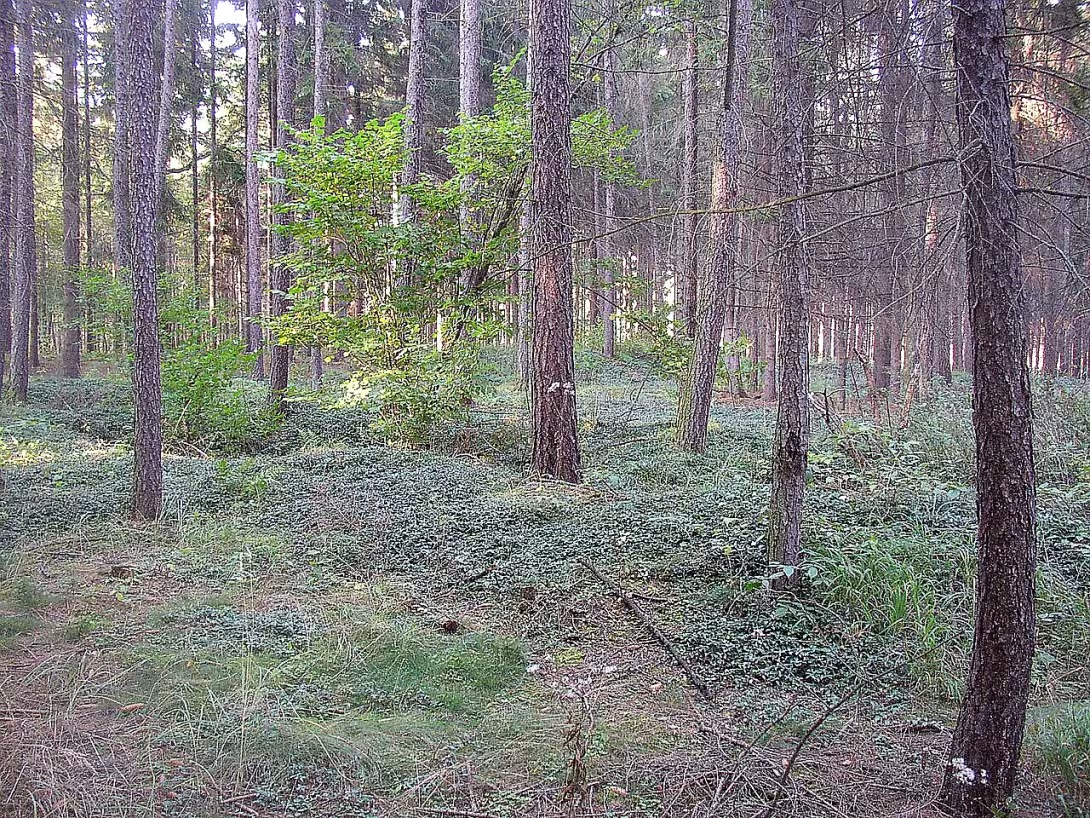
Svídna is an archaeological site that represents an extinct medieval village ten kilometres west of Slané in the cadastral territory of Drnek in Kladno district. This monument is remarkable because it was one of the first Czech villages where houses were built exclusively from stone - namely opposites. Based on the turn of the 13th and 14th centuries, Svídna reflects the intense urbanization and development of new settlements in Central Europe at that time. Despite its innovative construction, the village was abandoned in the 16th century because of its unfavourable location. In the 1960s, archaeological research was carried out which provided valuable data on life in the medieval village.
The creation of Svědně is connected to the period at the turn of the 13th and 14th centuries, when the development of new settlements in Bohemia took place. This historical context reflects the broader trend of urbanisation in Central Europe, where new forms of settlement and construction were sought. Svídna was one of the first Czech villages to accept an innovative process of building stone houses, namely opposites. This step could have been motivated by the need for more durable and more resilient buildings, which was very important for the time being.
The Svídna is presented as a regularly parted village with 14 stone houses. These houses were approximately 8 × 24 metres and were built exclusively from opposites, which is very unusual for the medieval period. The village was designed so that the houses surrounded by an elongated village and behind them were gardens. This arrangement suggests a certain degree of planning and organization of life in the village. Furthermore, traces of field strips that have survived about 500 metres east of the village provide additional information on agricultural land use and farm organisation.
The history of Candle is characterized by its rapid abandonment. Despite its innovative construction, the village was abandoned in the 16th century due to its unfavourable location. This fate can be associated with geographical or economic factors that have affected the life of the village. Archaeological research carried out in the 1960s revealed important information about the structure and organization of the village, which enabled a better understanding of life in the medieval Czech village.
Svídna is today an archaeological site that attracts interested people about history and archaeology. Although the village itself does not exist, its findings and structure provide valuable information about life in Czech medieval settlements. For tourists, Svídna is an interesting location which offers an overview of the historical development of residential structures and construction techniques in Bohemia. Visiting this site allows you to gain a deeper understanding of medieval life and architecture, which is a valuable experience for every historically curious tourist.
Svídna commemorates the importance of remembering the past and preserving its tracks. It is evidence of innovations that have been carried out in the past, although some of them have not been consistently successful. Svídna is a reminder of how human society evolved and how it sought to find a new solution for its needs. For everyone interested in the history of Czech settlements, visiting this archaeological site is not only an educational but also an inspiring experience.
Historical milestones
- the turn of the 13th and 14th centuries
- The establishment of a village with houses built from opposites.
- 16th century
- Leaving the village because of an unfavourable location.
- 1960s
- Execution of archaeological research of the site.
Architectural development
The village was regularly quartered and consisted of 14 stone houses with dimensions of approximately 8 × 24 metres. The houses surrounded an elongated village behind which the gardens were located.
Historical events
- 1300
- The establishment of a village at the turn of the 13th and 14th centuries.
- 1500
- Leaving the village due to unfavourable location.
Points of interest
- Svídna is an archaeological site of a extinct medieval village ten kilometers west of Slatná. - This monument is remarkable because it was one of the first Czech villages where houses were built exclusively from stone - namely opposites. - Svídna reflects the intense urbanization and development of new settlements in Central Europe at the turn of the 13th and 14th centuries. - The village was designed with 14 stone houses that surrounded an elongated village, suggesting a certain level of planning and organization of life in the village. - Despite its innovative construction, Svídna was abandoned as early as the 16th century due to unfavourable location.
Guide
Show guide text
This text was created by artificial intelligence and has not been editorially reviewed. It may contain inaccuracies.
Welcome to the historic site of Candles, the unique archaeological site of the extinct medieval village. You are standing in front of this very place, where one of the first Czech settlements built exclusively of stone once decomposed. Notice around you the quiet environment that is now covered with plants and stones, traces of the past that resemble the rich history of this place.
Svídna was founded on the turn of the 13th and 14th centuries as one of the first Czech settlements where houses were built exclusively from specific material - optics. This selection of architectural material reflected an innovative approach and technology at the time when intensive urbanization in Bohemia began. Although the specific creators of these houses remain unknown, their work represents an important chapter in the development of Czech settlements.
Look up and around you to see how the stones that once formed robust houses now lie spread out on the ground. These pieces of opposites are direct witnesses to the past and tell the story of the lives of the people who once lived in this village. Although particular architectural details are difficult to recognize today, their mere existence is a fascinating element of this archaeological site.
Although historical personalities associated with this place remain unnamed, Svídna itself represents an interesting story. However, the village was abandoned in the 16th century due to its unfavourable location. This fact is an important part of its history and reflects the dynamics of the changes that the settlements of the time were subject to.
The interesting thing about Candle is that it was one of the first Czech villages built exclusively from stone. This fact makes it not only historically but also architecturally important. It is a reminder of the innovative spirit and technological progress of the time.
Now that you've looked at the basic elements of this place, we invite you to dive deeper into its history. Archaeological research carried out in the 1960s opened new chapters of knowledge and allowed us to better understand the life and fate of this extinct village.
Let yourself move around a little bit and discover other details. Every stone can bring new knowledge of the past. Svídna is explorable both in terms of history and nature.
Thank you for your visit to this unique place. We hope his beauty and secrets touched you. We wish you to return, so that further examination will bring you more knowledge and experience. May our journey awaken you to a new interest in history and archaeology.
Tips for visitors
The best time to visit is the spring or autumn season when the soil is dry and the shadows from the low sun better highlight the minor inequalities in the terrain that mark the former places home. To move in this terrain we recommend to wear fixed shoes because it is an archaeological site in nature. If you want to capture the atmosphere of an extinct village, photograph in the morning or evening, when light creates interesting shapes on the ground. For families with children, the visit is as interesting as finding clues of the past in the landscape, although there are no large buildings on the site. Transport is possible by car and public transport; Please check the current connection in the search engine.
Frequently asked questions
Can the monument be visited?
This is an archaeological site. Often there is little to see on the ground and the land may be private. We have not verified access.
Why is the monument protected?
It is listed in the Central List of Cultural Monuments of the Czech Republic as a cultural monument (register no. 1000124781).
Businesses nearby
Do you run a restaurant, accommodation, shop, museum, rental, wellness or other visitor service near this monument? Show yourself directly to the people heading to it — this is how they will see you in the app and on the web:
Nearby
🏰 Historic sites (77)
- Památník obětem první světové války 2.2 km
- zámek Mšec 3.7 km
- Pyrám - Martinický obelisk 5.0 km
- Vojenská technika 5.8 km
- sv. Václav 6.0 km
- sv. Václav 6.0 km
- Pomník Eduarda Bayera 6.3 km
- sv. Jiří bojující s drakem 6.3 km
- Nové Strašecí 6.7 km U Školy 123 +420 313 572 563 web
- Pomník obětem 1. světové války 7.2 km
- Václav Beneš - Třebízský 7.7 km
- Sobín 8.0 km
- hrob T. G. Masaryka 8.1 km
- Pamětní síň Alice Garrigue Masarykové a Českého červeného kříže 8.5 km web
- T. G. Masaryka 8.5 km
- Muz. sport. vozů 8.7 km
- Pomník obětem 1. světové války 8.7 km
- zámek Lány 8.8 km Zámecká 2
- Alžběta Pugnarová 9.4 km
- Richard Fanta 9.4 km
🍽️ Restaurants and dining (193)
- Na Knížecí 3.9 km
- Stop Cafe 6.0 km web
- U Dubu 6.1 km
- Bikers bar Vodárna 6.1 km
- Antonio 6.2 km +420 721 616 131 web
- U Mikeše 6.3 km
- Stop Cafe 6.5 km
- Kafe Klub 6.7 km
- Jídelna u Axamitů 6.7 km
- Hospůdka U Jany 6.8 km
- kebab4you 6.8 km
- Pizza House 6.8 km
- Langoše 6.8 km
- Pivárium 6.8 km web
- Kavárna Kaffka 6.8 km Palackého 43 +420 731 805 885
- Pizza Fly 6.9 km web
- Jansa 6.9 km
- Restaurace u Maresi 7.5 km
- Ježkova Bašta 7.7 km +420604790997 web
- U Šlégrů 7.8 km
🏨 Accommodation (25)
- U Bartoušků 2.2 km
- Červená stráň 3.8 km
- Hotel Pod Sluncem 7.9 km Třebíz 25 +420312521898 web
- Bechnerův statek 8.7 km
- Camping Bucek 8.7 km +420 313 564 212 web
- Astra 9.1 km
- Atlas 9.3 km
- Ungelt 9.8 km
- Hejtmanský dvůr 9.9 km web
- Penzion Iris 10.0 km
- U Zlatého selátka 10.6 km
- Ubytovna Slaný Trilorn 10.7 km Pražská 804 +420 605 080 064 web
- Ubytovna Racanda 10.7 km
- Ubytovna Na zvonečku 10.9 km
- Ubytovna U Konvalinků 10.9 km
- Penzion 68 11.2 km
- U Admirála 11.3 km web
- Hotel Merkur 12.0 km
- Sport Hotel Sletiště 12.0 km +420 312 249 465 web
- Turistická ubytovna Centrum 12.2 km Váňova 322 +420603816906 web
🚲 Rentals and sport (43)
- býv. voj. prostor 6.1 km
- SAMS - Stochov 6.2 km web
- Sportovní hala Stochov 6.3 km U stadionu 531 web
- Sportovní hala BIOS 6.5 km Husova 1146
- Hokejbalové hřiště 8.4 km
- Plovárna Slaný 9.0 km
- Tenisový klub Lány 9.4 km web
- Venkovní posilovna 9.4 km
- Sokolovna 9.6 km
- Sokolovna 9.6 km
- Sokolovna 9.6 km
- eMsport 9.7 km
- Studio BB 9.8 km
- Tenisové kurty 9.8 km
- Střelnice na Haldě Vinařice 9.8 km web
- Sportovní hala Háje 10.1 km web
- Snowboard - lyže - boty 10.8 km
- Vavřinec, Beach klub Kladno 10.9 km web
- Živé vobrazy 11.7 km
- LTC Slovan Kladno 11.8 km
🥾 Hiking and nature (149)
- Dračí studánka 0.1 km
- Háj 2.0 km
- Ostrov u Jedomělic 2.5 km
- lesní studánka 2.5 km
- Ve Šperkotně 2.9 km
- Jáma větrní Pozdeňského dolu 3.3 km
- Jáma Nejedlý IV 3.9 km
- Jindřichův pramen 4.6 km
- Pramen Dr. A. Tůmy 4.6 km
- býv. lázně Šternberk 4.7 km
- Pramen - lesni studánka 5.6 km
- Studánka nad Punčochou 5.8 km
- Královka 6.0 km
- Na Pilavě 6.0 km
- U Rumcajse 6.2 km
- Smetanovy Sady 6.4 km
- Lesní studánka 6.5 km
- Milská stráň 6.7 km
- Jáma Nejedlý III 6.9 km
- jáma Schoeller 7.0 km
Accommodation nearby
Themed route
Travel Route: Svídna
1. Main objective: Svídna (archaeological site) Type: Archaeological site Why it is worth a visit: Svídna is one of the oldest known settlements in Bohemia, with roots reaching back to the Stone Age. Here you can see the remains of ancient houses and understand the life of our long-distance ancestors.
2. Ambient forests Type: Natural environment Why is it worth a visit: The woods around the Candles offer beautiful walks where you can enjoy peace and nature. It is an ideal place to relax after educational examination of archaeological sites.
3. Ancient Paths Type: Historical element Why is it worth a visit: These ancient trails were an important part of the transport network in the past. Walking through them allows you to imagine how people moved and communicated in the prehistoric world.
4. Archaeological exposure (within Candles) Type: Exhibition Why is worth a visit: Exposure provides a detailed view of the discoveries from the site, including tools and ceramics. It's a great way to better understand historical contexts and the importance of Candle.
5. Information Centre (within Candlestick) Type: Information centre Why is it worth a visit: Here you will find all the necessary information about the archaeological site, including maps and brochures. It is also a place for learning more about the history of this area.
This route offers a combination of history and nature, allowing deep insight into the past and the use of the current environment.
Visualizations and artistic views

The visualisations are generated by artificial intelligence and serve as inspiration.
Photos from the area
Real photos taken near the monument


Zdroj a licence jsou uvedeny u každého snímku.
Tips from visitors
No tips yet. Be the first!
Log in and add your tip.
Sources and literature
Photos: User:Miaow Miaow / Public domain — Wikimedia Commons. The author and licence also appear when you hover over the image.
Faktickým podkladem tohoto textu byl článek na Wikipedii, jehož autory jsou přispěvatelé Wikipedie. Článek je dostupný pod licencí CC BY-SA 4.0.
Location on the map
More monuments – Středočeský kraj
Show all in the region




Příběhy a pověsti
Legendy, pověsti a příběhy spjaté s touto památkou
Fotografie návštěvníků
Zatím žádné fotografie. Buďte první, kdo přidá fotografii z návštěvy!
Log in a přidejte svou fotografii nebo hodnoťte.
Za ověřenou návštěvu v aplikaci získáte víc bodů — poznáme podle GPS, že jste na místě.
Reviews and comments