






Synagoga v Golčově Jeníkově Synagogue
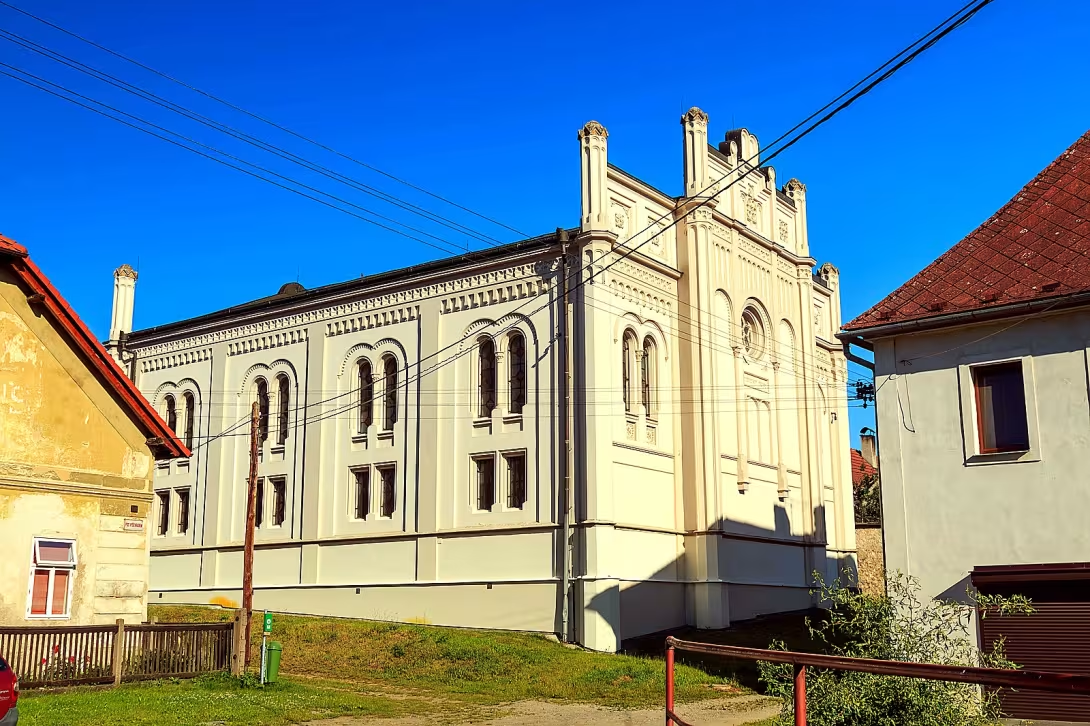
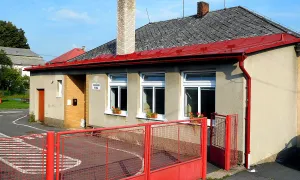
Synagoga v Golčově Jeníkově is a Neo-Romanesque building from 1871-1873, located in Pod Vysehrad street in the centre of the former Jewish district. The building is today protected as a cultural monument of the Czech Republic and serves as a depository of the Jewish Museum in Prague.
The formation of the synagogue falls within the period of economic expansion of Austria-Hungary and emancipation of the Jewish population, when the construction of sacral objects in historical styles developed intensively in Czech countries. The new building replaced the older wooden prayer house, which died of a fire in 1808.
The construction is part of the wider urban complex of the Jewish quarter. In the 1990s, the building underwent a complete reconstruction that ensured its original appearance.
The Jewish community disappeared in 1940 and the services were held here until the beginning of World War II. In 1942-1965 the church used the Czechoslovak Hussite as a prayer house. Since 1969 the building has been managed by the Jewish Museum in Prague, which uses it as a depository.
In the immediate surroundings, many other protected buildings connected with the history of Jewish settlement have been preserved. Visitors can see here the former prayer house of the Halithic Jews, the Rabbi house, the Yeshiva, the mikes and the meat shop. The Jewish cemetery is also located in the village.
The synagogue is currently not open to the public. Yet it is an important proof of the historical appearance of the Jewish district and its tour within the surrounding monuments offers a comprehensive view of the extinct religious community in the region.
Then and now
Drag the slider to compare how the landmark may have looked when it was built with the view today.
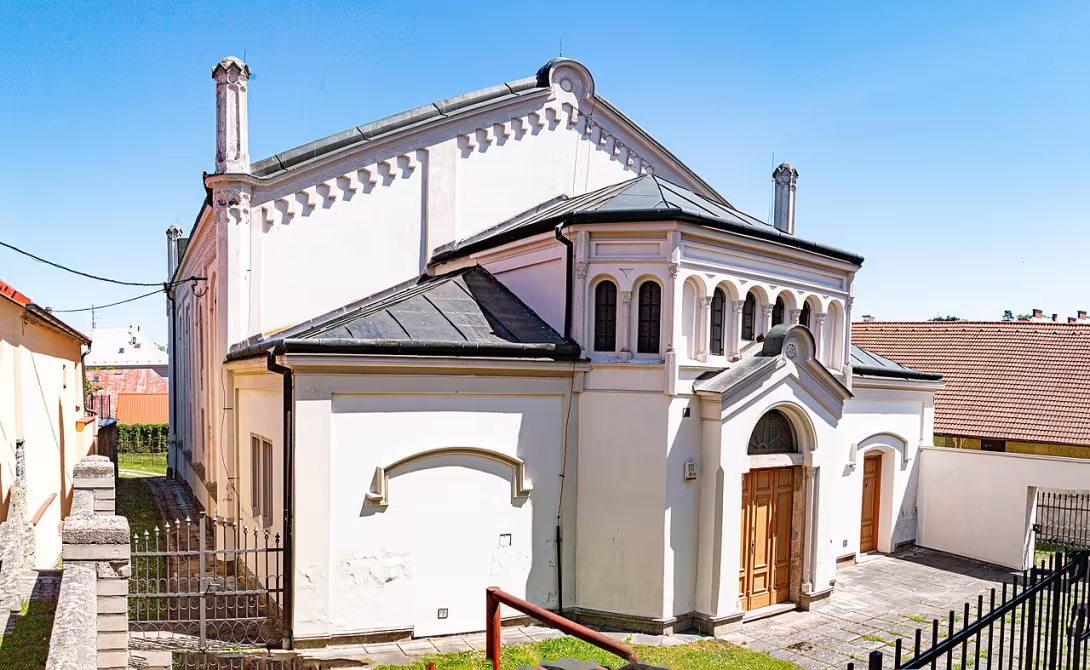
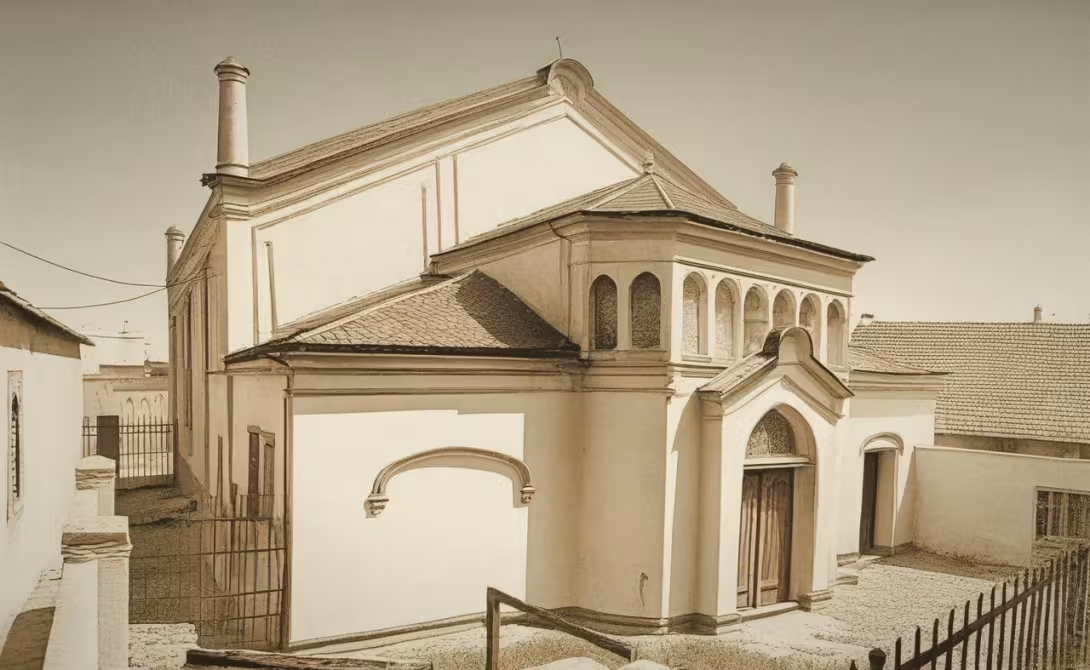
The historical appearance on the left is an AI-generated visualisation and serves as inspiration only.
Historical milestones
- 1808
- Fire of the original wooden prayer house.
- 1871
- Construction of the new synagogue.
- 1940
- The demise of the local Jewish community.
- 1969
- The building started as a depository of the Jewish Museum in Prague.
Architectural development
The construction was realized in a new Romanesque style at the end of the 19th century. In the 1990s, the building underwent a complete reconstruction. The building is part of the wider urban complex of the Jewish quarter.
Historical events
In 1808, the original wooden prayer house burned down. In 1942-1965 the building was used by the Czechoslovak Hussite Church. Since 1969 the building has been administered by the Jewish Museum in Prague.
Points of interest
- The synagogue is a new Romanesque building built in 1871-1873 in the centre of the former Jewish district. - The new building replaced the older wooden prayer house, which burned down in 1808. - In 1942-1965 the church used the Czechoslovak Hussite as a prayer house. - The building underwent a complete reconstruction in the 1990s, which preserved its original form. - The building currently serves as a depository of the Jewish Museum in Prague and is not accessible to the public.
Guide
Show guide text
This text was created by artificial intelligence and has not been editorially reviewed. It may contain inaccuracies.
Welcome to Golčov Jeníkov, a place full of history and secrets hidden behind the walls of ancient buildings. You stand before one of the most glorious monuments of this region - the New Romanesque Synagogue, whose facade addresses you with its elegant design and historical spirit. Look up at its architectural elements and let's immerse ourselves in the story that this building has in itself.
The synagogue was built between 1871 and 1873 as a substitute for an older wooden mosque which tragically burned down in 1808. This fire hit the core of the Jewish community, leading to a decision to build a new, more permanent and safer house of prayer. The new synagogue was located in the center of the former Jewish district, it became not only a place of religious ceremonies, but also a symbol of resistance and hope.
The architecture of this synagogue is full of details that attract you to explore. The New Romanesque style is reflected in the style of its decorated elements - see the elegant carving of wood and stone. Although a particular architect has not been recorded, the artistic expression is undoubtedly the work of the masterful hands of that time.
The synagogue served its original purposes until the beginning of World War II, when tragedy hit the local Jewish community. After 1940 the situation changed dramatically - the demise of this community brought new chapters in the history of the building. From 1942 to 1965, the building served as a prayer room of the Czechoslovak Hussite Church, another interesting phase of its existence.
Since 1969 the synagogue has been transformed into a depository of the Jewish Museum in Prague. This new purpose brought another layer of history and preserved the memory for future generations.
The interesting thing is that the synagogue underwent reconstruction in the 1990s, allowing it to maintain its original flash and become a place where history and the present flow together.
Now that they've explored this building, we're going to invite you to explore Golch's Jeník. Every alley can hide new stories and every corner of history. I wish you a comfortable walk and hope to meet with other beautiful sights of this place. Thank you for your visit!
Tips for visitors
The best time to visit is during the sunny morning, when the light beautifully highlights the new Romanesque architectural elements on the facade. Due to the location in the centre of the village, we recommend a visit on working days when traffic is quieter.
You can reach Golč's Jeníkov by car and public transport. Parking is possible in adjacent streets near the Jewish quarter. Check the current traffic connections in available connection search engines.
For photography we recommend using the morning light that hits the front of the synagogue. The object is very photogenic from the street, with the best composition obtained from a slight distance to capture the overall symmetry of the New Romanesque building.
In the immediate vicinity, do not miss a walk in the Jewish quarter, where in addition to the synagogue you will also find the former prayer house of the Halič Jews and other historical objects. For a comprehensive experience we recommend visiting the local Jewish cemetery.
When visiting with children, take a walk in the neighborhoods as an educational opportunity. The place is suitable for a quiet family walk through history, we recommend to take with you comfortable shoes to move on historic tiles and plenty of fluids, especially in the summer months.
Businesses nearby
Do you run a restaurant, accommodation, shop, museum, rental, wellness or other visitor service near this monument? Show yourself directly to the people heading to it — this is how they will see you in the app and on the web:
Events nearby
Zdroj akcí: otevřená data měst a obcí ČR (Národní katalog otevřených dat) a kalendář akcí Národního památkového ústavu.
Nearby
V obci se nachází židovský hřbitov a řada dalších památkově chráněných objektů židovské čtvrti, včetně bývalé modlitebny haličských Židů.
Accommodation nearby
Trips and activities nearby
Guided tours, tickets and activities nearby from GetYourGuide
Affiliate link: if you buy from the partner, we may receive a commission. The price for you does not change.
Search tours and activities →Themed route
Synagoga v Golčově Jeníkově Type: Main destination, sacral monument This is the key point of the entire route, which represents proof of the rich Jewish history of the village. Visitors can admire architectural elements here and look into the history of the community that once lived here.
Jewish Cemetery Type: Monumental protected object It is located directly in the village and forms a logical whole with the synagogue. A walk between the tombstones allows you to dive into the atmosphere of the place and think about the fate of the people buried here.
Former Prayer of Halič Jewish Type: Monumental protected object This object complements the image of the Jewish quarter and shows the specificities of the life of this particular population group. It is worth visiting for its historical value and unique position within the local development.
Memory protected objects Jewish quarter Type: Cultural monuments The surrounding area of the main goal consists of a number of other protected buildings which together form a unique urban complex. The tour of these places allows you to understand the overall context and distribution of the Jewish community in Golčov Jeníkov.
The route is designed to gradually explore the most important points of Jewish history in the village. It begins with the synagogue, continues to the cemetery and continues towards the prayer house and other objects of the neighborhood. All places are in the immediate vicinity, allowing a comfortable walk without the need for transport. The entire circuit can be managed in one afternoon, making it an ideal destination for lovers of history and architecture.
Seasonal recommendations
Spring: In spring the surroundings of the synagogue awaken to life and the surrounding greenery begin to bloom, creating a fresh and optimistic atmosphere. The soft spring sun highlights the architectural details of the building beautifully. We recommend taking layered clothes because the weather can still be variable, and visiting to plan around noon when the light is most stable and visitors are still less than in the summer months.
Summer: The summer season offers the longest days and intense sunlight that hits the facade of the monument in full force. Nature around Golčov's Jeníkov is the most full and colorful at this time. Because of the higher number of people in the main summer season, it is best to come early in the morning or late in the afternoon to avoid the greatest heat and crowds. Remember light clothes and sun protection.
Autumn: Autumn brings a melancholy and calm mood to the scene, underlined by the colours of decaying leaves and occasional morning fog. The low sun creates long shadows and golden reflections on the synagogue walls, which is ideal for observing architecture. It is advisable to prepare warmer clothing and comfortable shoes for walking around, while morning hours offer the cleanest air and a quieter atmosphere.
Winter: In winter there is a monument in silence and calm, especially if snow or frost cover the surroundings. The day is short and the light is rapidly disappearing, so it is necessary to verify in advance the shorter opening times. For a visit it is necessary to have very warm clothes so that the outdoor cold does not spoil the experience of the tour. It's best to plan a visit on bright, sunny days in the middle of the day.
Visualizations and artistic views


The visualisations are generated by artificial intelligence and serve as inspiration.
Photos from the area
Real photos taken near the monument


Zdroj a licence jsou uvedeny u každého snímku.
Tips from visitors
No tips yet. Be the first!
Log in and add your tip.
Sources and literature
Photos: Petr1888 / CC BY-SA 4.0 — Wikimedia Commons. The author and licence also appear when you hover over the image.
Faktickým podkladem tohoto textu byl článek na Wikipedii, jehož autory jsou přispěvatelé Wikipedie. Článek je dostupný pod licencí CC BY-SA 4.0.
Location on the map
Příběhy a pověsti
Legendy, pověsti a příběhy spjaté s touto památkou
Fotografie návštěvníků
Zatím žádné fotografie. Buďte první, kdo přidá fotografii z návštěvy!
Log in a přidejte svou fotografii nebo hodnoťte.
Za ověřenou návštěvu v aplikaci získáte víc bodů — poznáme podle GPS, že jste na místě.
Reviews and comments