



Synagoga v Polici Synagogue
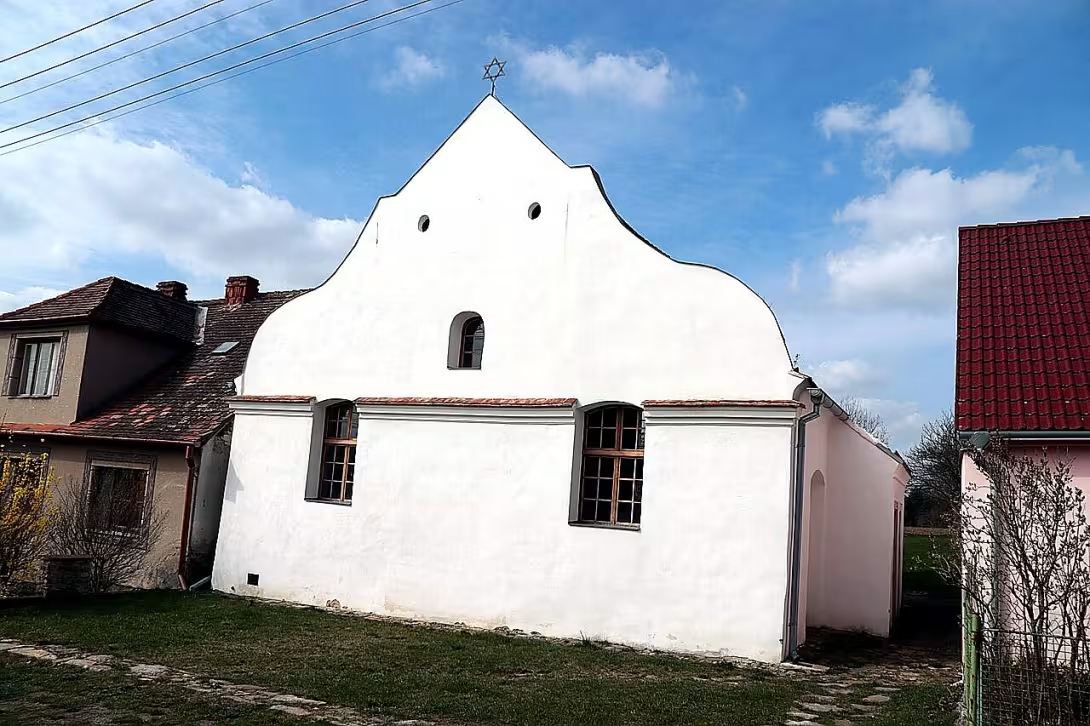
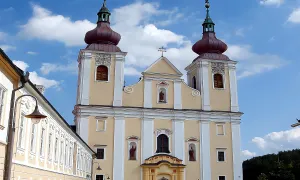
The Synagoga v Polici is a unique 18th-century rural Baroque synagogue located in the village of Police, Czech Republic. Built between 1758 and 1759 by rychtář Izák Landesmann after a fire destroyed its wooden predecessor, it stands as part of a preserved urban complex on Židovské Street. This area includes other historical structures such as a winery and a hospital with baths, reflecting the Jewish community's presence since at least 1671. Recognized for its cultural significance, the synagogue is now protected as a cultural monument of the Czech Republic.
The origins of Synagoga v Polici are deeply rooted in the history of the Jewish community in Police, which likely began settling there after being expelled from Znojmo in 1454. The earliest documented presence dates to 1671 with the arrival of Jewish immigrants from Vienna. By the early 18th century, approximately 40–50 families resided in the village. A translocation edict issued by Emperor Charles VI in December 1726 mandated that Jews relocate to designated areas away from Catholic churches and cemeteries. Consequently, in 1728, the Jewish community was compelled to move to Židovské Street, where they established a new synagogue after their original one on the village square was sold.
Architecturally, Synagoga v Polici is notable for its Baroque style, crafted by zednický mistr Matyáš Kirchmayer from Kdousov. The building features a nearly square ground plan with dimensions of 850 x 830 cm and a vaulted ceiling reaching 660 cm in height, topped with a saddle roof. Its façade is adorned with a Baroque heart-shaped gable. Originally, the synagogue included a vestibule with separate entrances for men and women, as well as galleries supported by stone columns on pedestals. The interior was illuminated by large windows and featured decorative elements such as stucco medallions representing celestial bodies.
Ownership of Synagoga v Polici has changed hands several times throughout its history. Initially belonging to the Jewish community until 1917, it was purchased by Alfred Vražda z Kunevaldu during World War I. In 1919, following the establishment of Czechoslovakia, Vražda donated the synagogue to the local Sokol Association, which repurposed it as a gymnasium, significantly altering its original structure. The building was later transferred to the Federation of Jewish Communities in 2004.
Throughout its history, Synagoga v Polici has witnessed numerous transformations and events. During World War I, the synagogue's interior was heavily modified by the Sokol Association for gymnastic activities. Further changes occurred under Communist rule, including structural alterations and modernizations. In recent years, efforts have been made to restore the synagogue to its original 1759 state. A comprehensive restoration project began in 2012, culminating in a grand reopening in July 2020 after extensive renovations.
Today, Synagoga v Polici stands as a testament to the resilience and history of the Jewish community in Police. The restored building now hosts an exhibition titled "Židé na venkově," which maps out the life of Jews in rural areas and the history of the Jewish population in Police and its surroundings. Visitors can explore this cultural monument, appreciating its architectural beauty and historical significance.
Synagoga v Polici is not only a remarkable example of Baroque architecture but also a symbol of the enduring legacy of the Jewish community in Central Europe. Its preservation allows visitors to connect with the past and understand the rich tapestry of history that shaped this region. A visit to Synagoga v Polici offers an opportunity to delve into the cultural heritage of Police, making it a worthwhile destination for those interested in history and architecture.
Then and now
Drag the slider to compare how the landmark may have looked when it was built with the view today.
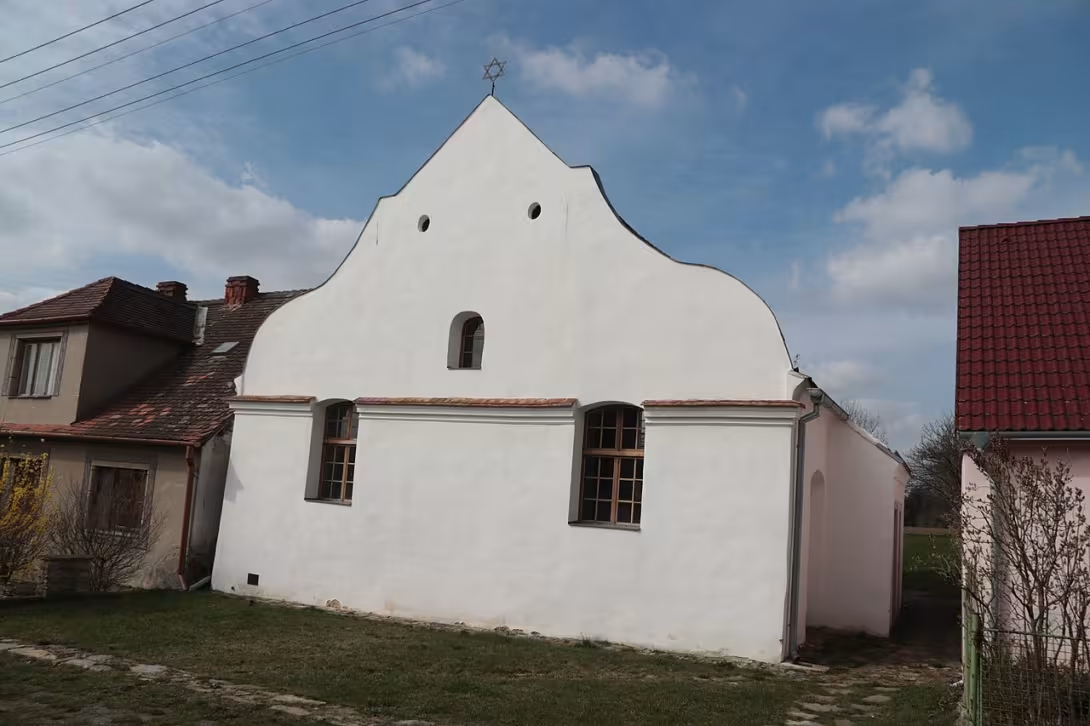
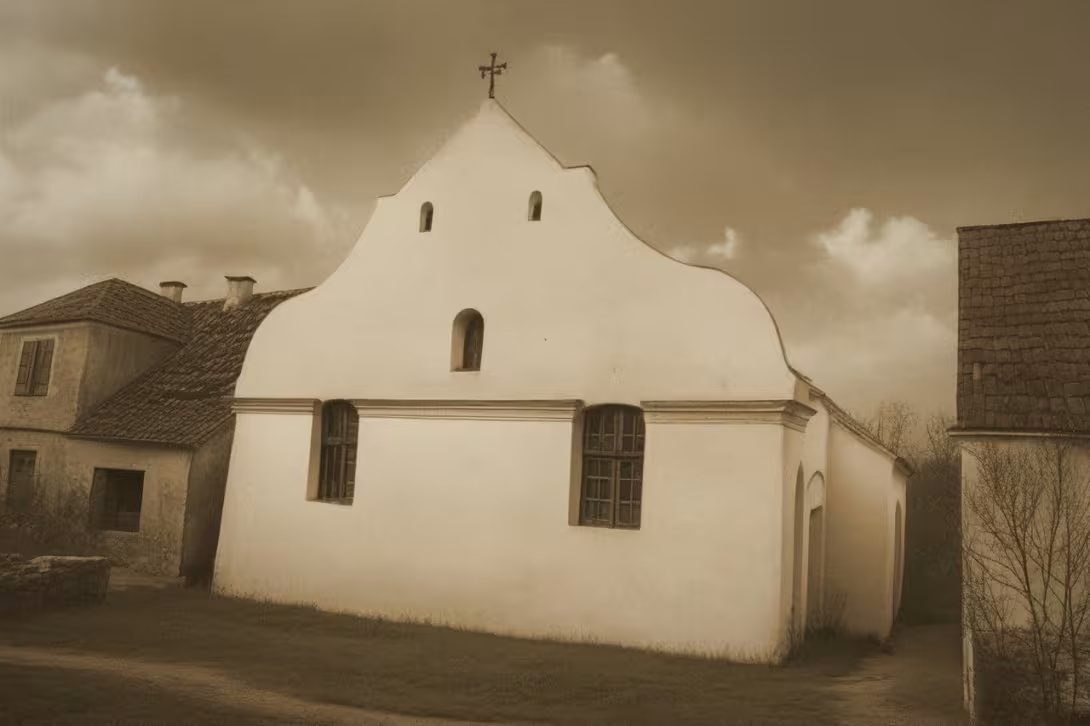
The historical appearance on the left is an AI-generated visualisation and serves as inspiration only.
Historical milestones
- 1728
- The Jewish community was forced to move to Židovské Street.
- 1758
- A fire destroyed the original wooden synagogue.
- 1917
- Alfred Vražda purchased the synagogue from the Jewish community.
- 2004
- The building was transferred to the Federation of Jewish Communities.
Architectural development
The Synagoga v Polici underwent significant changes over time. Initially built as a stone structure in 1759 after a fire destroyed its wooden predecessor, it later served various purposes under different owners. During the First Republic, it was converted into a gymnasium by the Sokol Association, which altered much of its original architecture. Further modifications occurred during the Communist era and until 2004.
Historical events
In 1728, the Jewish community was forced to relocate to Židovské Street due to a translocation edict.
The original synagogue burned down in 1758, leading to the construction of the current building in 1759.
During World War I, in 1917, Alfred Vražda purchased the synagogue from the Jewish community.
In 2004-2005, a historical survey was conducted by representatives of the Federation of Jewish Communities and other experts.
Owners
Židovská obec (Jewish Community), until 1917
Alfred Vražda z Kunevaldu, from 1917
Místní Jednota sokolská (Local Sokol Association), from 1919
Federace židovských obcí (Federation of Jewish Communities), since 2004
Points of interest
- The Synagoga v Polici was originally owned by the Jewish community until 1917, after which it was purchased by Alfred Vražda z Kunevaldu during World War I. This transition marked a significant shift in its usage and ownership history.
- In an unusual twist of fate, the synagogue was donated to the local Sokol Association in 1919 by Vražda, who had acquired it just two years earlier. The association repurposed it as a gymnasium, leading to substantial modifications that altered much of its original structure.
- The architectural design of Synagoga v Polici includes a unique Baroque heart-shaped gable on its façade, which is an uncommon feature among rural synagogues from the 18th century. This distinctive element adds to its historical and aesthetic significance.
- Despite being heavily modified during World War I for gymnastic activities by the Sokol Association, Synagoga v Polici underwent a comprehensive restoration project starting in 2012. The efforts culminated in a grand reopening in July 2020, restoring much of its original 1759 appearance.
- The synagogue's interior originally featured separate entrances and galleries for men and women, reflecting traditional Jewish practices of the time. This design element highlights the cultural and religious customs that were integral to the community’s daily life in the 18th century.
Guide
This guide is narrated by a synthetic voice generated by artificial intelligence.
Show guide text
This text was created by artificial intelligence and has not been editorially reviewed. It may contain inaccuracies.
The former synagogue in Polici is a rare example of a rural Baroque synagogue from the mid-eighteenth century. It stands on the southern edge of Židovská ulice, a street that has been preserved in nearly its entirety. The former ghetto also includes a wine tavern, a hospital with a bath house, and a Jewish cemetery.
Jews settled in Polici probably already after their expulsion from Znojmo in fourteen fifty-four. The oldest written record of the local community is connected to the arrival of evacuees from Vienna in sixteen seventy-one. An edict by Emperor Charles the Sixth from seventeen twenty-six ordered Jews to live on separate streets, far from Catholic churches and cemeteries. In seventeen twenty-eight, they therefore had to move from the town square to the newly established Židovská ulice. They had to sell their first synagogue on the square. A new one, likely made of wood, was built in seventeen thirty, but it burned down in seventeen fifty-eight. The town judge Izák Landesmann then had a stone synagogue built at his own expense. In seventeen fifty-eight and seventeen fifty-nine it was constructed by the mason Matyáš Kirchmayer from Kdousov.
It is a single-story building with an almost square floor plan, a gable roof, and a high barrel vault. The façade was decorated with a Baroque heart-shaped gable. On the vault, oval stucco medallions are visible, six along the edges and one large one in the center. They could have represented the six weekdays and the Sabbath, or the Sun and the planets. The women's gallery was supported by stone columns and the interior was finished with paintings containing Hebrew inscriptions.
In nineteen seventeen, the owner of the estate, Alfred Vražda from Kunevaldu, bought the synagogue, because the Jewish community had relocated to Jemnice. In nineteen nineteen, he donated it to the local Sokol, which turned it into a gymnasium. The Sokol members demolished the women's gallery, removed most of the bimah, the stairs, and the carved benches. The small window above the Holy Ark was replaced with a Sokol emblem and a beam was placed under the vault for rings and ropes. In the year two thousand, the municipality had the original entrance hall with separate male and female entrances demolished and removed the Hebrew inscriptions. Architect Petr Franta called this intervention a significant damage to the monument.
In two thousand and four, the building was taken over by the Federation of Jewish Communities. This was followed by a historical building survey and a restoration project to return it to its seventeen fifty-nine appearance. Since two thousand and thirteen, the synagogue has been a cultural monument. The reconstruction took longer because due to a dispute over the tender process, the federation had to return the entire grant. It was finally completed in twenty twenty and in July of that year the synagogue was ceremonially opened. A year later, the restoration received the Patrimonium pro futuro award for exemplary restoration of the monument.
Tips for visitors
The best time to visit the Synagoga v Polici is during late spring or early autumn when the weather is pleasant, allowing for a comfortable exploration of the site. These seasons offer mild temperatures and beautiful natural surroundings without the crowds that might be present in peak summer months. The lighting during these times is also ideal for photography, capturing the historical architecture with soft shadows and vibrant colors.
Public transport options may include buses that stop in Police or surrounding areas. It's advisable to check current routes and schedules online before your visit to ensure a smooth journey. Walking from these stops is often feasible and provides an opportunity to enjoy the scenic route.
When visiting, it’s recommended to bring comfortable walking shoes as you might explore not only the synagogue but also its surroundings. A hat or sunscreen can be useful if you're traveling during warmer months. Additionally, carrying a water bottle will keep you hydrated throughout your visit. Since the synagogue is an 18th-century structure, bringing a camera with a zoom lens could help capture detailed shots of intricate architectural features.
For photography enthusiasts, some of the best spots to take photos are from outside the synagogue where natural light enhances its Baroque architecture. Early morning or late afternoon provides the most flattering lighting conditions, casting long shadows and highlighting textures. Inside, if accessible, capturing the interior details can provide a glimpse into historical craftsmanship.
Nearby attractions within a 30-minute walk include the Jewish cemetery, which offers a serene environment for reflection and learning about local history. The winery at čp. 138 is another interesting site to explore, providing insights into traditional wine-making practices in the region. Families with children might enjoy these sites as they offer educational experiences outside of typical tourist paths.
Frequently asked questions
Can the monument be visited?
Religious buildings are usually open mainly during services; at other times a visit is normally arranged with the parish or the operator. We have not verified specific times.
Where is the monument?
Location: Police, Kraj Vysočina. The map on this page shows the exact spot.
Why is the monument protected?
It is listed in the Central List of Cultural Monuments of the Czech Republic as a cultural monument (register no. 1257239620).
Businesses nearby
Do you run a restaurant, accommodation, shop, museum, rental, wellness or other visitor service near this monument? Show yourself directly to the people heading to it — this is how they will see you in the app and on the web:
Nearby
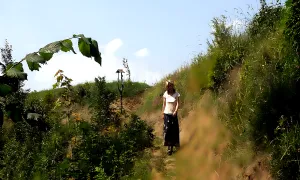
Located on Židovské Street, the synagogue is surrounded by other historical structures such as a winery (čp. 138) and a hospital with baths (čp. 128), along with a Jewish cemetery.
Accommodation nearby
Trips and activities nearby
Guided tours, tickets and activities nearby from GetYourGuide
Affiliate link: if you buy from the partner, we may receive a commission. The price for you does not change.
Search tours and activities →Themed route
Thematic Walking Tour: Historical and Cultural Journey through Police
1. Synagogue (Synagoga v Polici)
Type: Religious Building
The Synagogue, located on Židovské Street, is a significant historical monument that offers insight into the Jewish heritage of the region. Visitors are drawn to its architectural beauty and the stories it holds about the community's past.
2. Winery (čp. 138)
Type: Historical Structure
Just a short walk from the Synagogue, this winery is an intriguing site that reflects the area's rich tradition in wine production. Exploring this location provides a glimpse into historical agricultural practices and local craftsmanship.
3. Hospital with Baths (čp. 128)
Type: Historical Building
Nearby the synagogue, this historic hospital offers a unique perspective on past medical practices and community care. The presence of baths highlights traditional health and wellness methods, making it an interesting stop for those curious about historical healthcare facilities.
4. Jewish Cemetery
Type: Cultural Site
Completing the tour is the Jewish cemetery, which serves as a poignant reminder of the enduring legacy and history of the Jewish community in Police. It offers visitors a moment to reflect on cultural heritage and continuity through its well-preserved gravestones and memorials.
This thematic route provides a comprehensive exploration of historical and cultural landmarks surrounding the Synagogue in Police, offering insights into the region's rich past.
Seasonal recommendations
Spring: Visiting the Synagogue in Police during spring offers a unique experience as nature awakens around this historic site. The surrounding greenery is lush and vibrant, with cherry blossoms and other early-blooming flowers adding a picturesque backdrop to your visit. This season often brings mild weather, making it ideal for walking tours or enjoying outdoor events nearby. However, be prepared for occasional rain showers that can enhance the spring atmosphere but may also affect accessibility. It's recommended to wear comfortable layers and carry an umbrella. Spring tends to attract fewer visitors compared to summer, so you'll likely enjoy a more peaceful exploration of the synagogue.
Summer: The summer months bring long days and warm weather, perfect for exploring the Synagogue in Police under bright sunlight. This is the peak tourist season, so expect larger crowds and potentially longer wait times at popular sites. To make the most of your visit, consider arriving early to avoid the midday heat and enjoy a more serene experience. Light clothing and sunscreen are essential due to increased sun exposure, and staying hydrated is crucial. The lively summer atmosphere often includes outdoor concerts or cultural events in the vicinity, enhancing the vibrant local culture.
Autumn: Autumn at the Synagogue in Police offers a stunning display of colors as the leaves turn golden and red, creating a serene and picturesque setting. This season provides a balance between pleasant weather and fewer crowds compared to summer, making it an ideal time for those who appreciate nature's beauty. The cooler temperatures allow for comfortable exploration without the need for heavy clothing. It’s advisable to bring a light jacket in case of chilly evenings. The atmospheric change during autumn often brings about a quiet charm that enhances the historical ambiance of the synagogue.
Winter: Winter transforms the Synagogue in Police into a magical, snow-covered landmark, offering a unique and tranquil experience. Dress warmly with layers, including hats and gloves, to comfortably enjoy your visit despite the chill. Winter is generally less crowded, providing an opportunity for a more intimate exploration of the site. The subdued lighting and quiet atmosphere during this season can make your experience particularly memorable and reflective.
Visualizations and artistic views


The visualisations are generated by artificial intelligence and serve as inspiration.
Photos from the area
Real photos taken near the monument


Zdroj a licence jsou uvedeny u každého snímku.
Tips from visitors
No tips yet. Be the first!
Log in and add your tip.
Sources and literature
Photos: Jiří Sedláček / CC BY-SA 4.0 — Wikimedia Commons. The author and licence also appear when you hover over the image.
Faktickým podkladem tohoto textu byl článek na Wikipedii, jehož autory jsou přispěvatelé Wikipedie. Článek je dostupný pod licencí CC BY-SA 4.0.
Location on the map


Příběhy a pověsti
Legendy, pověsti a příběhy spjaté s touto památkou
Fotografie návštěvníků
Zatím žádné fotografie. Buďte první, kdo přidá fotografii z návštěvy!
Log in a přidejte svou fotografii nebo hodnoťte.
Za ověřenou návštěvu v aplikaci získáte víc bodů — poznáme podle GPS, že jste na místě.
Reviews and comments