






Synagoga v Polné Synagogue
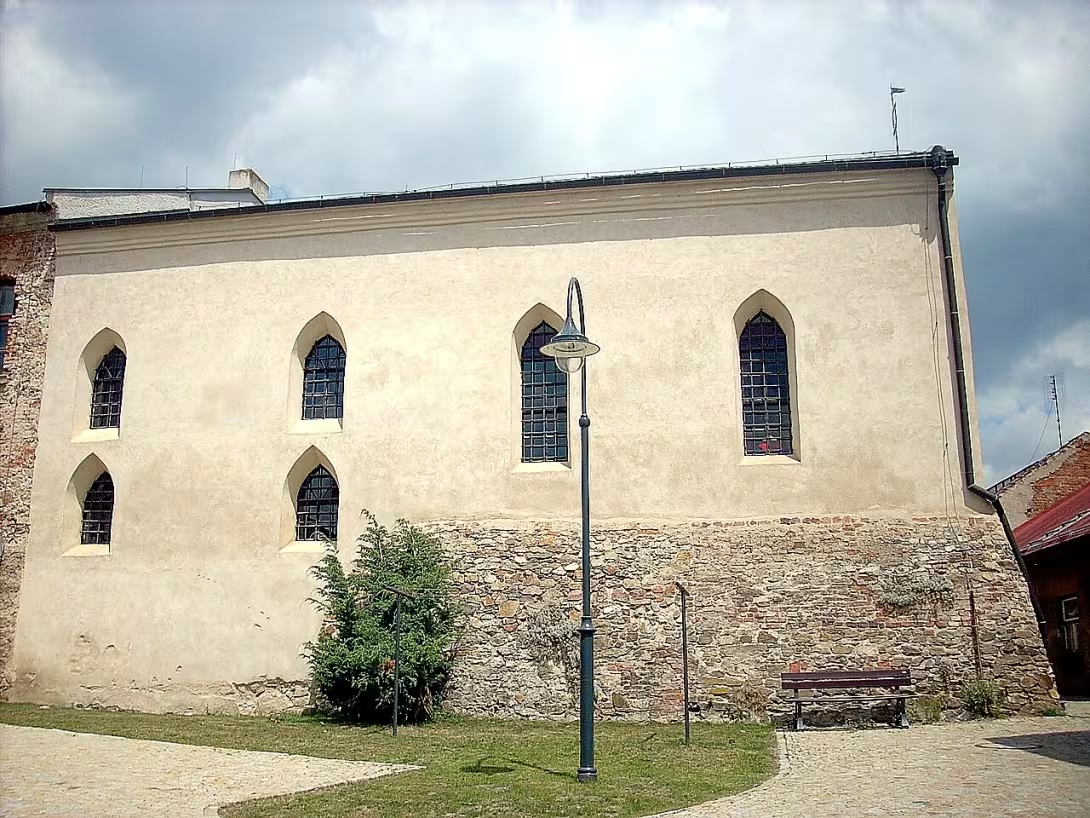
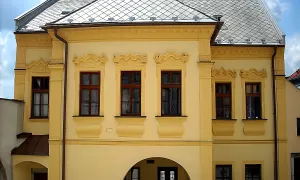
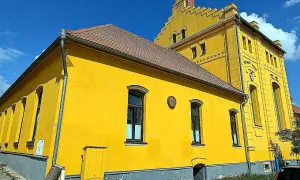
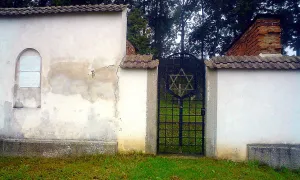
The synagogue in Polna is located on Charles Square and is protected as a cultural monument of the Czech Republic. This Baroque building has a rich history and an important place in the history of the Jewish community. It was established on the basis of a contract of 14 August 1684 between the Polish Jewish village and the owners of the estate, which enabled the construction of a wall synagogue with ritual spa. Today in the building there is a Regional Jewish Museum presenting the history and culture of Jews in Poland.
The history of the synagogue dates back to the 17th century, when local Jews prayed in alternating spaces, for example in a wooden shed or in the house of the Jew Samuel. After the conclusion of the contract for the construction of the new building, the funds of 474 gold and 41,5 krejcar started to be collected. Part of the cost was paid in cash, the rest in instalments with interest of 10 gold per year. In 1861- 1864 repairs were carried out in which the Jewish community was supported by owners of the estate.
The construction is on a rectangular plan with round reinforcement on the east side. The main hall was 7.5 × 12.8 meters. After the fires, the synagogue was rebuilt several times into a neo-gothic style. The original Baroque character resembles four typically elongated windows with a broken arch. During the reconstruction in 1996- 2000, the remains of the original Baroque paintings were discovered.
The building has undergone several changes in ownership and purpose. After 1943, when the Nazis set up a warehouse in it, the church institutions bought it, but they didn't use it for worship. After 1989, the Club was responsible for maintaining the synagogue before demolition and its subsequent restoration as a historic Polna. On 19 July 1994 the building was returned to the Jewish village in Prague, which allowed it to be converted into a museum.
Today the synagogue is publicly accessible and offers an exhibition about the history of the Jewish community in Polna. The main exhibition is located in the male part of the building. A gallery for women who had a separate entrance is dedicated to the Leopold Hillner Story. The synagogue thus represents an important witness to the history and culture of the Jewish community in the region.
Visiting this place offers a unique view of rich history and architecture, which has preserved its importance over time. It is a place where the past and present meet and offers valuable knowledge of the life and traditions of local Jews. For those who wish to explore the history of the region further, the synagogue is a necessary stop in Poland.
Then and now
Drag the slider to compare how the landmark may have looked when it was built with the view today.
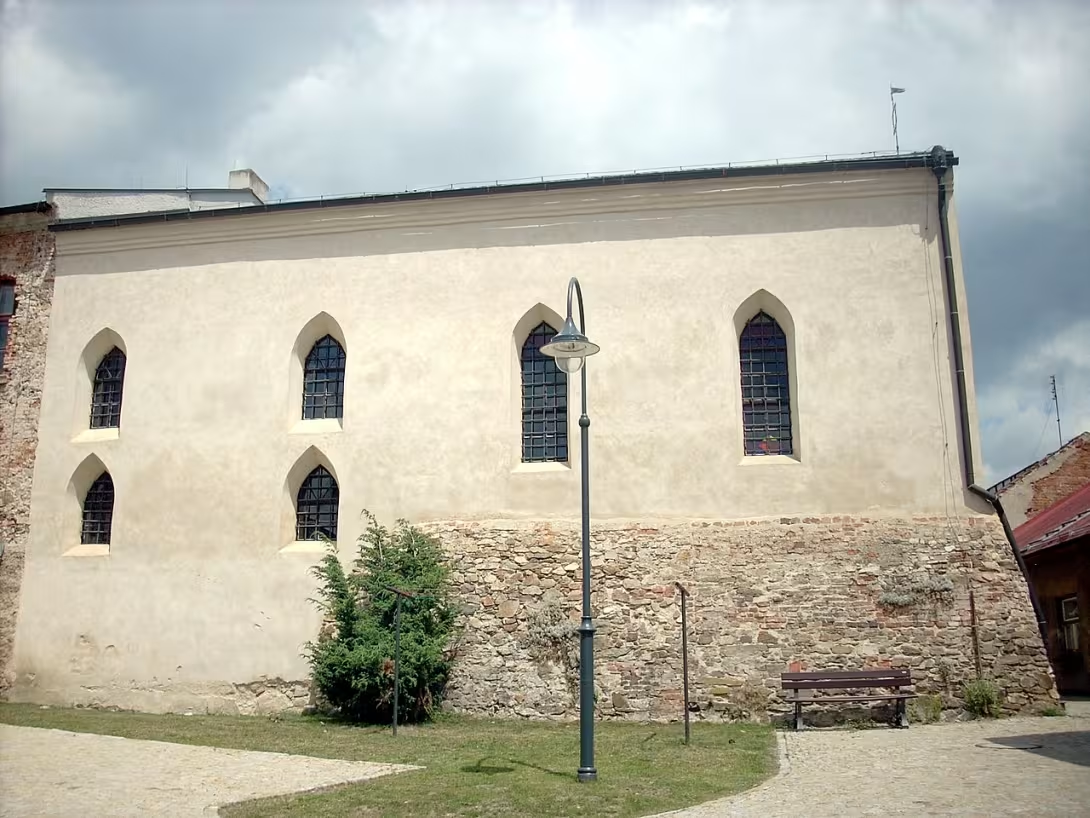
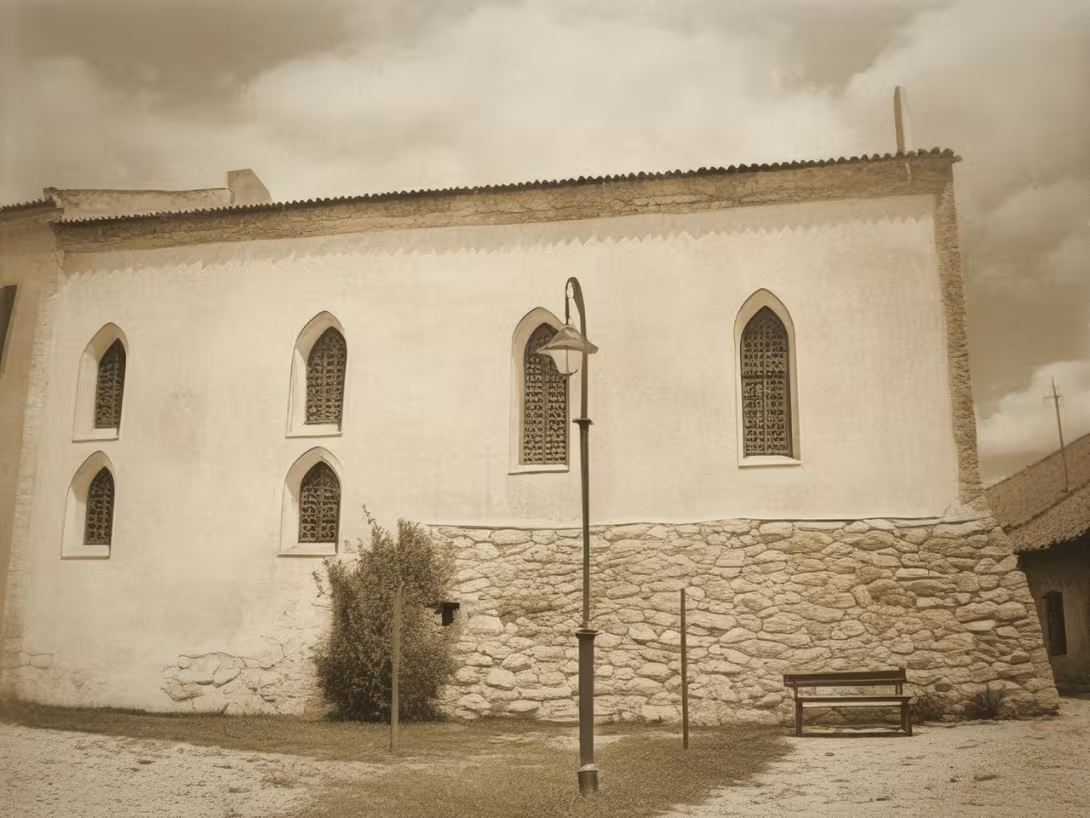
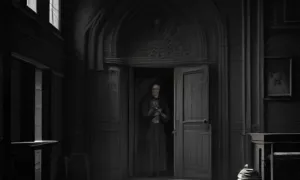
The historical appearance on the left is an AI-generated visualisation and serves as inspiration only.
Historical milestones
- 1684
- conclusion of a contract for building a wall synagogue with ritual spa
- 1943
- building a nazi warehouse
- 1951
- purchase of the church building czechoslovak hussite
- 1994
- return of synagogue with rabbi house Jewish village in Prague
- 2000
- establishment of the seat of the Regional Jewish Museum
Architectural development
The original Baroque building on a rectangular plan was converted into a neo-gothic style after the fires. During reconstruction in the years 1996- 2000 the remains of the original painting were discovered. The main hall measures 7.5 × 12.8 meters.
Historical events
1684: conclusion of a contract on synagogue construction; 1943: using the Nazis as a warehouse; 1994: return of the building to the Jewish village in Prague; 2000: opening of the Regional Jewish Museum.
Owners
Owners of the Polen estate (until 1951), the Czechoslovak Hussite Church (1951-1994), the Jewish Community in Prague (from 1994), the Federation of Jewish Communities in the Czech Republic (present).
Points of interest
It was created on the basis of the contract of August 14, 1684. Its construction cost 474 gold and 41.5 tailor. - Before the building of the wall, the local Jews prayed, for example, in a wooden shed or in the house of the Jew Samuel. The building was rebuilt into a neo-gothic style after the fires, but it kept four baroque long windows. The remains of the original Baroque painting were found during reconstruction. After 1943, the Nazis set up a warehouse in it. - The building houses the Regional Jewish Museum. The Women's Gallery is dedicated to Leopold Hillner's Story.
Guide
Show guide text
This text was created by artificial intelligence and has not been editorially reviewed. It may contain inaccuracies.
Welcome to Polna. Stop for a moment, take a breath and look around you. You are standing right in Charles Square, in the heart of the city, and right in front of you is a building that holds within itself centuries of faith, hope, and deep sadness. It's a synagogue, one of the most important cultural monuments in the region. If you look at her now, you may see her calm and dignified presence, but behind these walls there is a story that is much more dynamic and more complex than it might seem. This building is not just an ordinary building of stone and mortar, it is a living testament to Jewish history that left deep traces in Polna.
Let us return together in time, deep into the seventeenth century. Imagine Polna at the time. The Jewish community has already existed and sought a place to perform its religious ceremonies with dignity and in accordance with its traditions. Before this walled-up structure, which you see before you, the situation was much more modest. Members of the local Jewish community had to pray in temporary areas. Some of them met in a simple box, others in a local Jewish house called Samuel. Imagine those narrow streets and silent prayers in private spaces that accompanied the everyday life of the people of the time. The desire for her own permanent house of prayer was strong, and it was she who led to a major step.
The key moment was August 14th, 1684. It was on this very day that a contract was concluded that enabled the construction of the masonry synagogue. It was not just an administrative act, but a symbol of the recognition and stability of the community in Polna. The synagogue building was connected to a ritual spa, which was necessary for Jewish religious life. At the time, the whole building was seen as the peak of the ambitions of the local population. If you're interested in the financial side of things, history has kept us surprisingly accurate. The construction of the synagogue cost exactly four hundred seventy-four gold and forty-one-five-tenth of the tailor. It is fascinating how such a precise number has survived for centuries and today allows us to touch the concrete reality of that time.
Now pay attention to the architecture of the building you are facing. Look at her facade and see her general appearance. Synagoga v Polné has undergone several changes during its existence. Since the city and the construction itself were hit by fires in the past, the building had to be repaired and rebuilt several times. It was these interventions that led to the synagogue gaining its current neo-gothic style. But take a closer look. Despite the neo-gothic elements, there were traces of the old days hidden in it. Notice the four baroque portals, which are silent witnesses to the original era of the construction, and remind us that history was not rewritten here, but layered each other. It is this contrast between Baroque details and the neo-gothic form that makes the building a unique architectural entity.
But if we go further in time, we will encounter darker chapters. The history of this synagogue reflects the tragic fate of Jewish communities throughout Europe. The darkest period came in 1943. At the time of the Nazi occupation, the synagogue lost its sacral function. Instead of prayers and spiritual peace, she became a warehouse. Imagine the painful contrast where space for the highest spiritual values was used to store things at a time when the people who built this house were being persecuted and slaughtered. This stage was deeply traumatic for the building and for the memory of the city.
Even after the war, things didn't return to normal immediately. In 1951, the building was purchased by the Czechoslovak Hussite Church. Even in this period, the synagogue served purposes other than those for which it was originally created, and gradually began to suffer neglect. A building that was once worth hundreds of gold began to rely on time and oblivion. It seemed that her original identity could be lost forever under a cloud of dust and misunderstanding.
The break came only in 1994, when the synagogue and the rabbi house were returned to the Jewish village in Prague. That was the moment of rebirth. Thanks to the tireless work and the rescue will of the locals who refused to let this monument die, the building was restored. The people of Polna understand that the synagogue is not just a building for one particular group of people, but it is an integral part of the identity of the entire city. In 2000 the seat of the Regional Jewish Museum was established, which is still in the building today. This step has made the synagogue a bridge between the past and the present, a place where history is studied and tolerance and respect for difference are taught.
Polna and her Jewish community are associated with Leopold Hillner's name. It is a figure of controversy and tragedy whose story deeply affected the local population and caused great social tension at that time. Although his fate took place in the broader context of the then society, the shadow of this story also hit the Jewish community in Polna and reminded how fragile coexistence could be in times of prejudice and hatred.
Now that you're standing in front of this building, maybe you're wondering how you feel about it. Is it a feeling of victory over oblivion? Or is it rather a silent sadness over what was lost? Synagoga v Polné is a fascinating place precisely because it carries both. It's a survival mystery. How did a building that was a warehouse and later neglected house become the center of a regional museum? The answer lies in people who believe that memory is more important than material gain.
Take one last look at her facade, feel the atmosphere of Charles Square and realize that every brick of this house tells its own story. From the first prayers in Samuel's house to the investment of hundreds of gold in 1684, to today's role as a museum. This synagogue is an important testimony that even when times change and dark periods come, truth and history tend to return to the surface.
Now I invite you to further explore. If you have the chance, enter the premises of the Regional Jewish Museum. Let yourself be carried out by exhibitions that will give you a more detailed picture of the life of Jewish families in this region, their craft, traditions and fates. Go through the rooms where there used to be prayers, and try to imagine people walking around hundreds of years ago.
Thank you for accompanying me on this short journey through the history of the synagogue in Polna. I hope this view helped you see more than just the architectural element of the square in this building. I wish you a pleasant rest of the tour of the city Polná and inspirational experiences in discovering its hidden treasures. Goodbye.
Tips for visitors
The best time to visit the synagogue in Polna is autumn and spring, when the weather is pleasantly warm and sunny. This time of year offers ideal light for shooting architectural details of the synagogue.
Parking in Polná can be found near the center where there are public parking. For those travelling by public transport, it is possible to come to the place by bus or tram; Check the current connection and times in the local search engine.
When visiting the synagogue, we recommend taking with you protective sunglasses to ensure comfort in browsing and watching information tables. If you plan to take pictures, a charged camera or a mobile phone can also be useful.
For families with children, the synagogue in Polna is a suitable stop on the road. Children can be interested in the history and architecture of the building, which can be supported by visiting the surrounding park, where children can enjoy leisure time.
If you have enough time, we recommend visiting Charles Square in Polná. This place offers a beautiful view of the historical architecture of the city and is an ideal place to relax after a tour of the synagogue.
Businesses nearby
Do you run a restaurant, accommodation, shop, museum, rental, wellness or other visitor service near this monument? Show yourself directly to the people heading to it — this is how they will see you in the app and on the web:
Nearby
🏰 Historic sites (69)
- Bedřiška Kratočílová 0.1 km
- Emma Poláčková 0.1 km
- Otto Poláče 0.1 km
- František Aufrecht 0.1 km
- Gertrude Poláčkov 0.1 km
- Moral column 0.2 km
- _ 0.3 km
- Bozena 0.6 km
- Castle Polná 0.6 km
- Symbolic Grave of Anezka Hordiová 1.3 km
- Uranium mine Brzkov 5.8 km
- Victims of World War I 8.7 km
- Josef Toufar 9.0 km
- páter Josef Toufar 9.0 km
- Castle Htoky 9.8 km
- Memorial of the fallen 9.8 km
- Jan Žižka 9.9 km
- Falling Soviet Soldiers 9.9 km
- Karel Havlicek Borovský 10.0 km
- sv Jan Nepomucký 10.0 km
🍽️ Restaurants and dining (200)
- Guesthouse U Hillsnerax 0.1 km
- Urban brewery Polná 0.2 km web
- Castle restaurant 0.6 km
- Manor Prison 3.9 km
- Brzkov, cultural house 4.6 km
- On the turn 5.0 km
- Café Na statku 5.6 km U Old School 201 / 1 737 772 751
- U Víte 6.0 km
- Na Rampí 6.0 km
- U Janekka 6.2 km
- Hotel Knights 6.5 km * + 420 567 277599 web
- Hostinec 7.4 km
- Tahoda U pímpís 8.6 km
- Restaurant near Jan Žižky 9.7 km + 420569484297
- Restaurant Fireworks hotel 9.7 km Husova 385 + 420775150650 web
- Refreshments at Trati 9.8 km
- Old management 9.8 km
- Pivnice - vinarna 9.8 km
- U Pekovi 9.9 km
- Myslivna Htoky 10.2 km
🏨 Accommodation (27)
- Sepan and Misha home 5.8 km
- Three Towers 8.6 km
- ATC Páve 9.8 km
- Guesthouse 324 9.8 km
- B4 9.9 km
- B3 9.9 km
- B2 9.9 km
- B1 9.9 km
- B5 9.9 km
- Motel Pavov 10.2 km + 420 773 555 911 web
- Hanes Mill 11.5 km web
- Pension Šacberk 11.6 km + 420 777 192525
- Atlet 13.0 km
- Alzheimer centrum 13.3 km web
- Gustav Mahler 13.6 km
- camp Swimming pool Saza 13.6 km web
- Guesthouse Jostovka 13.7 km
- Na Hradbás 13.7 km
- Savorsky 13.7 km Komenské 11
- Grandhotel Garni 13.7 km Husova 1 + 420 567 121 011 web
🚲 Rentals and sport (24)
- Swimming pool Accessible 10.5 km
- Swimming pool Luka nad Jihlava 11.7 km web
- Swimming pool Luka nad Jihlava 11.7 km web
- TJ Sokol Bedřichov 11.9 km
- Pinecklub 12.3 km + 420 606 729 304 web
- Cyklo Point 12.7 km
- Decathlon 12.8 km Brno 4971 / 74 + 420 561 114 001
- Kastar 13.0 km + 420 566624336 web
- Sportisimo 13.4 km
- SH Teniscentrum 13.5 km
- SH Teniscentrum 13.5 km
- Sport relaxation centre Český Mlýn 13.7 km web
- Sport 2000 13.8 km Masaryk Square 49
- Hervis 13.8 km web
- Adidas 13.8 km
- Velosport HB 13.9 km Benešova 14 + 420567301296 web
- Moravia 13.9 km Jiráskova 2430 / 94 + 420 567 308 924 web
- COLOFIX 14.0 km Brtnický 2531 8000101 web
- Hipp cycles 14.0 km
- School playground 14.2 km
🥾 Hiking and nature (162)
- Homole 1.1 km
- Prašive 2.5 km
- Eternal Top 3.8 km
- studánka Na Kralovice 4.3 km
- Diesel well 4.7 km
- Data studia 5.4 km web
- Peter well 5.4 km
- Žižkova kopec 5.9 km
- Fort well 6.0 km
- Gardener's kopec 6.3 km
- March height 6.8 km
- Skalek 7.5 km
- Blazkov 7.8 km
- Black well 8.0 km
- Sádek 8.2 km
- PP Fast fish pond 8.4 km
- Earth border 8.9 km
- Karlswald 9.0 km
- Zmoliška 9.0 km
- pramen Balinky 9.2 km
Accommodation nearby
Themed route
1. Synagoga v Polné (monument) - The main objective of the tour, which represents unique architecture and testimonies about the history of the local Jewish community. 2. Synagogue tank (area) - The space right next to the building, which allows you to observe the details of the facade and feel the atmosphere of the historic place. 3. Exposure in synagogue (exhibition) - The interior premises of the building where you can see historical artifacts and learn more about the past of this place.
Seasonal recommendations
Spring: In the spring season, the Synagoga v Polné opens in a wonderful green, where flowering shrubs and trees add colour and sweet fragrance to the atmosphere. Sun rays illuminate architectural details of the monument, making it an ideal place for photography. Visitors should prepare for sudden weather and choose clothes suitable for mild temperature. The best time to visit is in the afternoon when the crowds are usually smaller.
Summer: In the summer season Synagoga v Polné is the most popular visitors due to warm days and long sunny afternoons. The atmosphere is full of life, which may be associated with a higher frequency of visitors in the main summer season. Early arrival is recommended for visitors to enjoy a quieter moment and full illumination of the synagogue. Hot clothes and sun protection are essential for a comfortable experience.
Autumn: Autumn brings the Synagogue in the Field Melancholic Beauty, when tree leaves turn into hot colors and the sun illuminates the memory with fine rays. This season is ideal for quiet moments in a quiet atmosphere when crowds are decreasing. Visitors should choose warm clothes and bring an umbrella with them for unexpected rain. The best time to visit is usually in the afternoon when the temperature is moderate.
Winter: In winter, Synagoga v Polné offers a unique atmosphere where its architecture is illuminated by the shadow and the surrounding landscape is covered by snow. This season is ideal for those who seek the peace and quiet beauty of the sights. The opening hours may be more limited, so visitors should be informed of the current closing time. It is important to prepare warm clothes and suitable shoes in order to fully understand this cold but engaging season.
Visualizations and artistic views


The visualisations are generated by artificial intelligence and serve as inspiration.
Photos from the area
Real photos taken near the monument


Zdroj a licence jsou uvedeny u každého snímku.
Tips from visitors
No tips yet. Be the first!
Log in and add your tip.
Sources and literature
Photos: Schuminka janička / CC BY 3.0 — Wikimedia Commons. The author and licence also appear when you hover over the image.
Faktickým podkladem tohoto textu byl článek na Wikipedii, jehož autory jsou přispěvatelé Wikipedie. Článek je dostupný pod licencí CC BY-SA 4.0.
Location on the map
Příběhy a pověsti
Legendy, pověsti a příběhy spjaté s touto památkou
Fotografie návštěvníků
Zatím žádné fotografie. Buďte první, kdo přidá fotografii z návštěvy!
Log in a přidejte svou fotografii nebo hodnoťte.
Za ověřenou návštěvu v aplikaci získáte víc bodů — poznáme podle GPS, že jste na místě.
Reviews and comments