






Židovský hřbitov v Polné Jewish cemetery
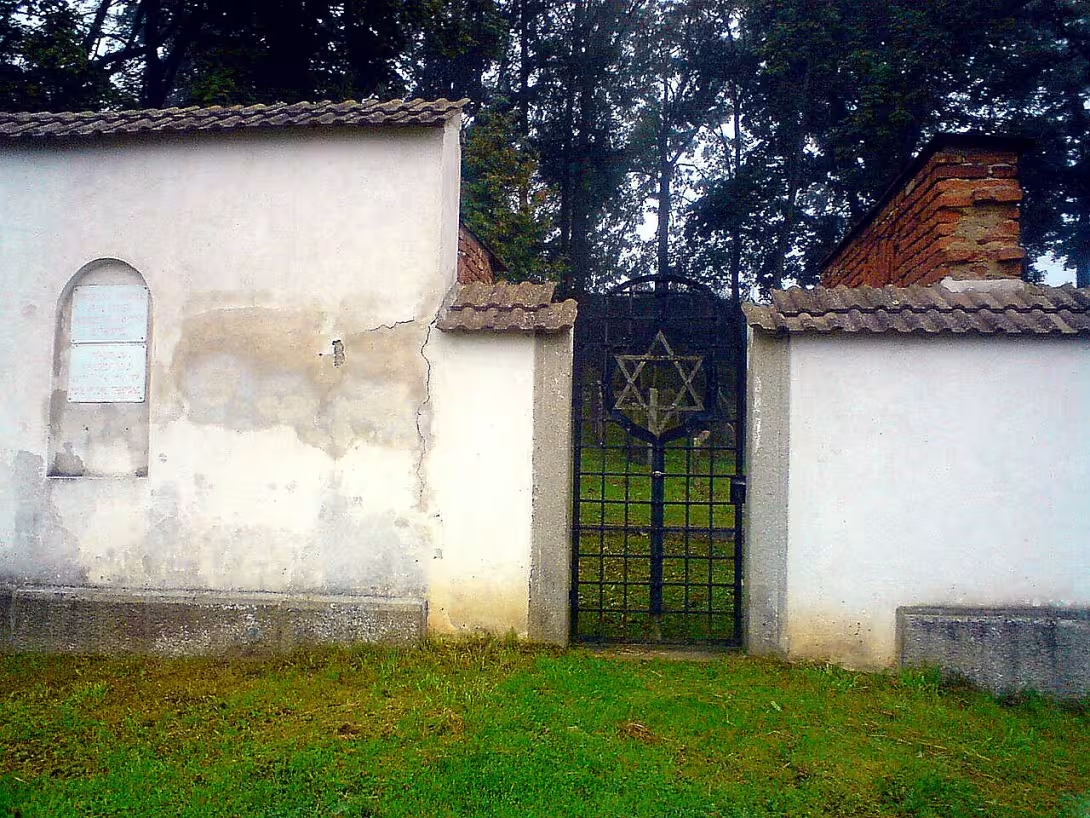
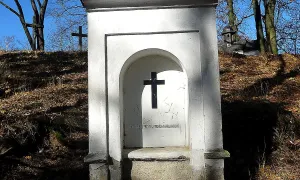
Židovský hřbitov v Polné is a historic burial ground founded in 1597, located on the northwest edge of the town near the river Šlapanka. The area is protected as a cultural monument of the Czech Republic and stands out with a high number of Baroque and Classicist tombstones.
The cemetery is 700 metres northwest of Husova Square, in the part of Lower Town - Pod Calvary. In this location lived several Jewish families until the second half of the 17th century. Written sources confirm the foundation of the cemetery in 1597.
The entire complex occupies an area of 3 540 square meters and contains approximately 1 300 tombstones, which are divided into 32 irregular rows. The typology of tombstones includes Baroque, classical and modern styles. The oldest preserved stone dates back to 1683, while the youngest was located in 1940. During the 18th and 19th centuries, the cemetery was extended several times.
The cemetery is currently owned by the Jewish National Museum in Prague. Since 1996, the Jewish Monument Rescue Association has been working with local enthusiasts.
In the right part of the cemetery is the tombstone of Rosalie Muller, born of Hitler. According to the 1990's, it was Grandma Adolf Hitler. During the protectorate, members of Hitler Youth tried to destroy the tombstone, which led to the slaving of the plate and its covering with the soil. In the past, this was the focus of Czech media, Nova Television and the Argentine Gazeta Illustrada.
The cemetery is accessible by road diverting from the street Pod Calvary, which leads through the stream and the river Šlapanku. This monument represents an important document of Jewish settlement in Polná. Visiting this place allows you to perceive the continuity of local history through stone monuments.
Then and now
Drag the slider to compare how the landmark may have looked when it was built with the view today.
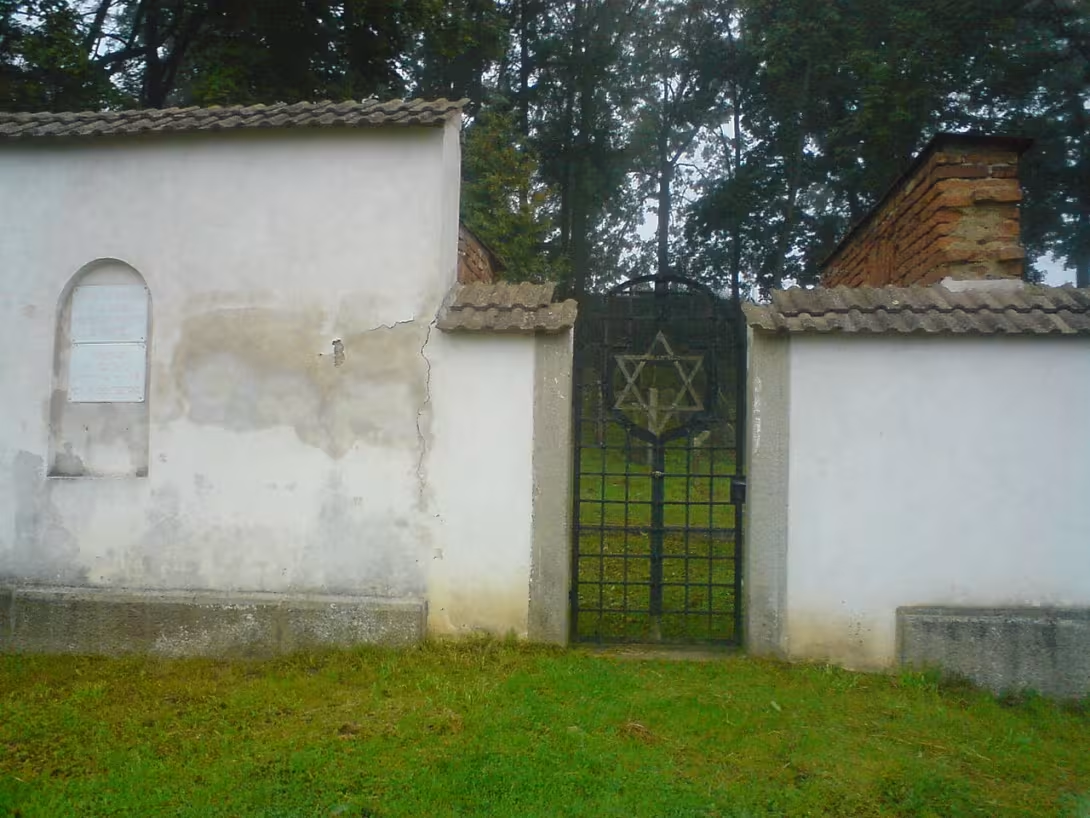
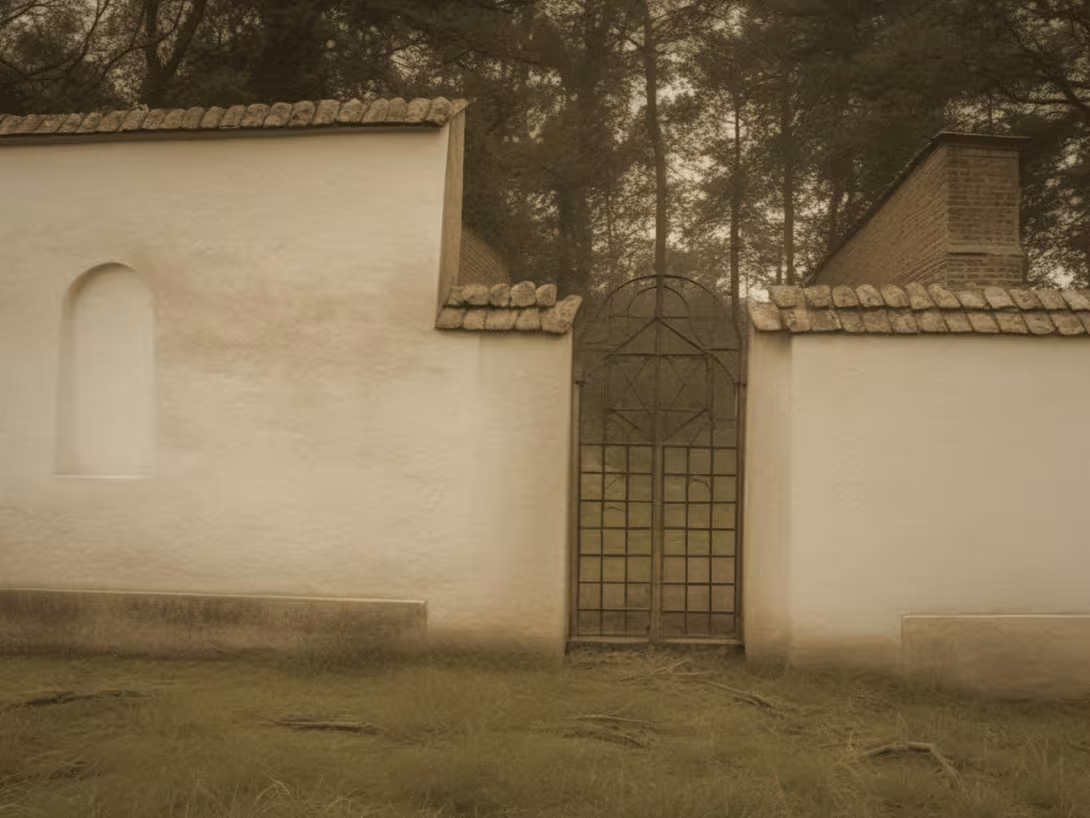
The historical appearance on the left is an AI-generated visualisation and serves as inspiration only.
Historical milestones
- 1597
- Written proof of the existence of the cemetery
- 1683
- The creation of the oldest tombstone
- 1940
- The creation of the youngest tombstone
- 1996
- Start of activity of the association in the maintenance of the site
Architectural development
The cemetery was expanded several times in the 18th and 19th centuries. The tombstones are styled in Baroque, classical and modern concepts.
Historical events
1597: Written proof of the existence of the cemetery. 1683: The creation of the oldest tombstone. 1940: The creation of the youngest tombstone. 1996: Start of activity of the association in the maintenance of the premises.
Owners
ZNO Praha
Points of interest
- Židovský hřbitov v Polné was founded in 1597.
- The cemetery is protected as a cultural monument of the Czech Republic and has a high number of baroque and classical tombstones.
- The oldest preserved tombstone dates back to 1683, the youngest was located in 1940.
- The gravestone of Rosalie Müller, born of Hitler, is the subject of historical interest as Grandma Adolf Hitler. During the protectorate, members of Hitler Youth attempted to destroy the tombstone.
- The cemetery is in the possession of the Jewish National Museum in Prague and since 1996 the Association for the Rescue of Jewish Monuments has been engaged in its maintenance.
Guide
Show guide text
This text was created by artificial intelligence and has not been editorially reviewed. It may contain inaccuracies.
Welcome to the place where time stopped and where every gesture of history finds its silent reflection. You are standing right outside the gate to a world that is deeply rooted in the history of the city of Polná. In front of your eyes is a Jewish cemetery, a place of peace, memories and relentless traces of the past. Notice how this area is located on the northwest edge of the city. There is a strange sense of calm that amplifies the proximity of the river Šlapka. The water that keeps flowing here reminds of the constant movement of time while you stand in the space that tries to preserve that time.
Let's go back deep into the past together to understand why this place is so special. The existence of this cemetery is not only a narrative, but it is firmly documented by written records dating back to 1597. Imagine how many events, ups and downs the city of Polná has experienced since then. This area was never static. During the eighteenth and nineteenth centuries it was extended several times as the local Jewish community grew and the needs of people who were looking for their last resting place changed. This growth dynamic has left a trail in the area that you can perceive right now when you're looking around.
Now pay attention to what you see right in front of you. The whole area, spread over three thousand pięć hundreds of square meters, is an incredible witness to human life. Your eyes may soon lose the number of the thousand three hundred tombstones that are placed here. But each is a unique story. Look at the diversity of these monuments. Here you will see works that radiate baroque richness and dynamism, and next to them you may see calmer, more balanced shapes of classical tombstones. Gradually your journey can also touch the modern elements that show how aesthetics and perception of the monument have changed to recent history. This mixture of styles creates fascinating visual continuity that will guide you through centuries.
When you walk between these stones, try to perceive their texture and how light affects them. Although these monuments are part of the protected cultural monument of the Czech Republic, each of them retains its own personal quite. Among these rows of tombstones are the names of the people who were part of this town's fabric. One of those whose name deserves your attention is Rosallie Müllerová. Her tombstone is one of many that makes us stop and think about an individual within a great history. Every name engraved here is a reminder of a particular fate that was part of this place.
It's fascinating to see how the old meet the new ones here. If you look at the chronology of this place, you'll encounter an incredible time variance. The oldest preserved tombstone you can see here dates back to 1683. It is a stone that has survived centuries, storms and changes in political regimes. On the opposite side of this time axis stands the youngest tombstone, which was placed here in 1940. This time gap, spread out over 300 years, shows us the incredible persistence of this place as a memory center. It's like reading a book where every chapter has its own aesthetics, but the story remains connected.
You may now wonder who is taking care of this vast and historically valuable site so as not to get lost in oblivion. It is important to know that care for this place is not only a matter of state but also of human commitment. Since 1996, a local association has been active in the maintenance and preservation of this cemetery. Thanks to their activities, you can walk through this area today and perceive its dignity. What you see is not just a random cluster of old stones, but a carefully maintained inheritance that requires constant attention.
While you continue your search, try to recognize the strange atmosphere that exists here. It's a space where history doesn't happen in textbooks, but right under your feet and around your eyes. There is something mysterious about how the baroque curves mix with the rigour of classicism and how all this silence breaks only the distant noise of the river Šlapka. Every step can lead you to a new discovery, a new detail on the tombstone, which tells you something about how people in Polna perceived eternity.
Now I beg you to continue this quiet journey. Take a walk between the tombstones, let yourself be carried away by their silence and pay attention to the details that will address you. Just let yourself be a part of this place and its history. Thank you for choosing to visit this area and devote your time to it. We wish you a peaceful and inspiring tour of this important place.
Tips for visitors
The best time to visit the Jewish cemetery in Polná is autumn or spring, when vegetation is less dense and ensures better visibility of old graves. This area offers a peaceful atmosphere for reflective moments in the historical environment.
Parking can be found on the surrounding streets, especially near Hus Square. For those travelling by public transport, it is advisable to use bus or tram connections to Polna and then continue on foot to the northwest edge of the city.
When visiting, bring your protective shoes because the terrain of the cemetery is decrepit. It is also important to have a map with you or to use GPS on your phone so that you can easily orient between old hills.
Photography at the Jewish cemetery offers beautiful places overlooking the river Šlapance. The best light is usually in the early morning or late afternoon, allowing you to capture the atmosphere and details of the graves.
In the vicinity of the cemetery there is Říčka Šlapanka, which can be passed in a quiet circle. In addition, Husovo Square offers an opportunity to explore other historical monuments and restaurants for an afternoon cup of tea or coffee.
Businesses nearby
Do you run a restaurant, accommodation, shop, museum, rental, wellness or other visitor service near this monument? Show yourself directly to the people heading to it — this is how they will see you in the app and on the web:
Nearby
The river Šnapanka, the Hus Square in Polna.
Accommodation nearby
Themed route
1. Hus Square in Polná Type: Square Why is it worth a visit: It serves as a central location of the village and an ideal introduction to the tour area.
2. The Claw River Type: Water flow Why is it worth a visit: It offers a quiet environment and a pleasant walk in nature.
3.Židovský hřbitov v Polné Type: Cemetery Why is it worth a visit: It is the main destination of the route, which represents an important historical monument.
Seasonal recommendations
In spring the cemetery comes alive with the arrival of the first green, which gently covers old tombstones. The atmosphere is full of hope and fresh air, while the morning sun creates fine shadows. We recommend to dress more layers of clothing because the weather is variable, and visit the place in the morning before the main tourist stream starts.
The summer season brings rich green vegetation and sharp light that highlights the details of the engraving in the stone. The environment is peaceful and warm, but in hot days it can be stuffy in the cemetery. It is advisable to come first thing in the morning to avoid the biggest crowds and burning sun, and not forget light clothes and plenty of fluids.
Autumn is a period of melancholy, when colored leaves fall on old Jewish graves and create nostalgic images. Foggy wounds give the place mystery and special depth. It is practical to choose waterproof shoes because of wet roads and a warm sweater, while the best time to visit is late afternoon, when the light most highlights the golden tones of nature.
In winter there is absolute silence and freezing calm, which underlines the death seriousness of the monument. The snow often covers the stones, which creates a minimalist and clean appearance of the entire complex. Due to the shorter day and limited hours of opening, we recommend planning a visit in the morning, dress very warm and watch out for slippery surfaces.
Visualizations and artistic views


The visualisations are generated by artificial intelligence and serve as inspiration.
Photos from the area
Real photos taken near the monument


Zdroj a licence jsou uvedeny u každého snímku.
Tips from visitors
No tips yet. Be the first!
Log in and add your tip.
Sources and literature
Photos: H.Seldon / Public domain — Wikimedia Commons. The author and licence also appear when you hover over the image.
Faktickým podkladem tohoto textu byl článek na Wikipedii, jehož autory jsou přispěvatelé Wikipedie. Článek je dostupný pod licencí CC BY-SA 4.0.
Location on the map
Příběhy a pověsti
Legendy, pověsti a příběhy spjaté s touto památkou

Fotografie návštěvníků
Zatím žádné fotografie. Buďte první, kdo přidá fotografii z návštěvy!
Log in a přidejte svou fotografii nebo hodnoťte.
Za ověřenou návštěvu v aplikaci získáte víc bodů — poznáme podle GPS, že jste na místě.
Reviews and comments