






Synagoga ve Slatině Synagogue
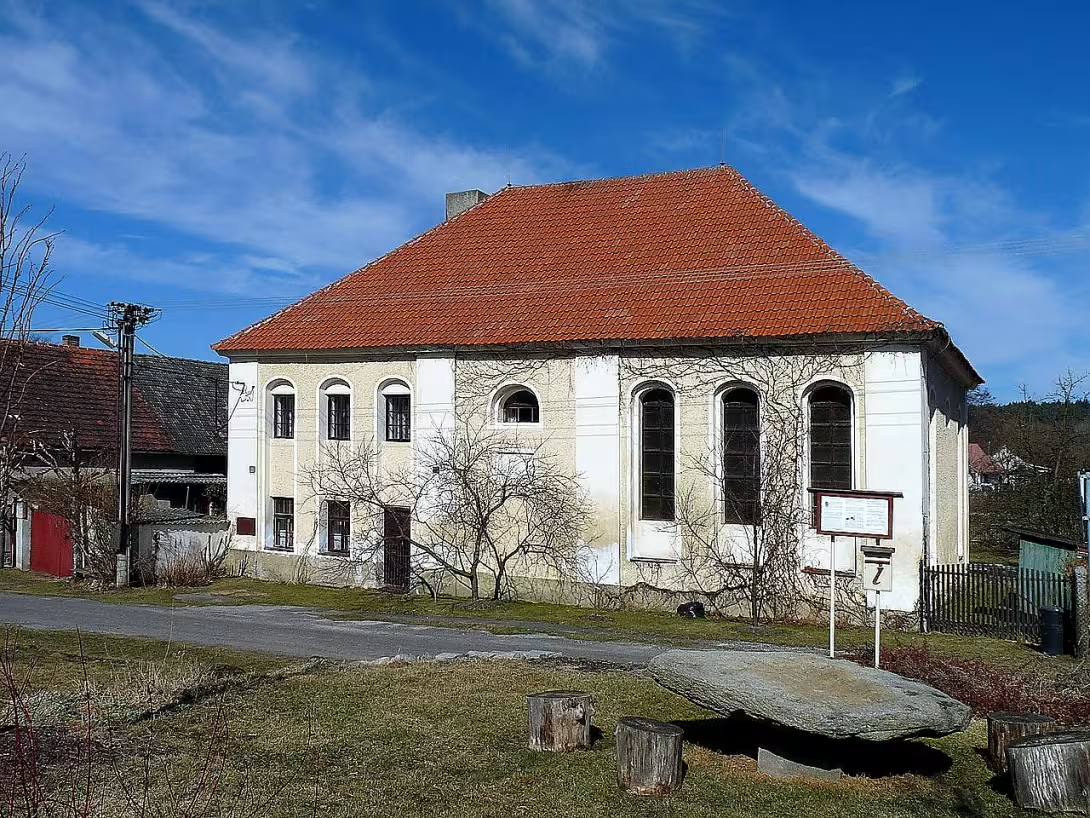
Synagoga ve Slatině is a former Jewish prayer house built in 1868 in a classical style. Today it stands as no. 58 approximately 50 metres north of the municipal office. This monument-protected building was created on the site of an older defunct wooden shrine and, apart from the prayer hall itself, it also hid a school and a rabbinical apartment. The object is an important reminder of the Jewish community in the region.
Construction of the new wall synagogue took place in 1868 on the site of the older wooden prayer house. This took place in the second half of the 19th century, when rural settlements and emancipation of the Jewish population developed in Czech countries. At the time, social changes were manifested by the construction of new solid halibut instead of older wooden objects and the gradual modernization of rural buildings.
The building was erected in a classical style and its interior arrangements at the time of its creation included a prayer house, a Jewish school and an apartment for a rabbi. From an external and internal perspective, the construction underwent significant changes during the 20th century due to insensitive reconstructions for economic purposes, but was later successfully restored to its original form.
After the last Jewish resident left, the synagogue was bought into private ownership and turned into a shopping mall with a barn. In the next phase, the building served as a warehouse for the agricultural cooperative. Subsequently, it was bought by new owners from Prague in order to restore and restore it to its former appearance.
The fact that the building was not exclusively used for religious purposes, but also performed educational and residential functions through the school and the rabbinical apartment is associated with historical attractions. To date, only houses 19, 29 and 31 have been preserved from the former Jewish ghetto, which today serve recreational purposes.
Today, this monument-protected building is restored to its original state. In addition to the synagogue itself, there is also a historical Jewish cemetery and remains of the former ghetto.
Visiting this place offers a direct view of the material documents of the former rural Jewish settlement in the region. It is worth going to Slatina and taking a closer look at this sensitively restored monument along with the nearby cemetery and the remains of the ghetto.
Then and now
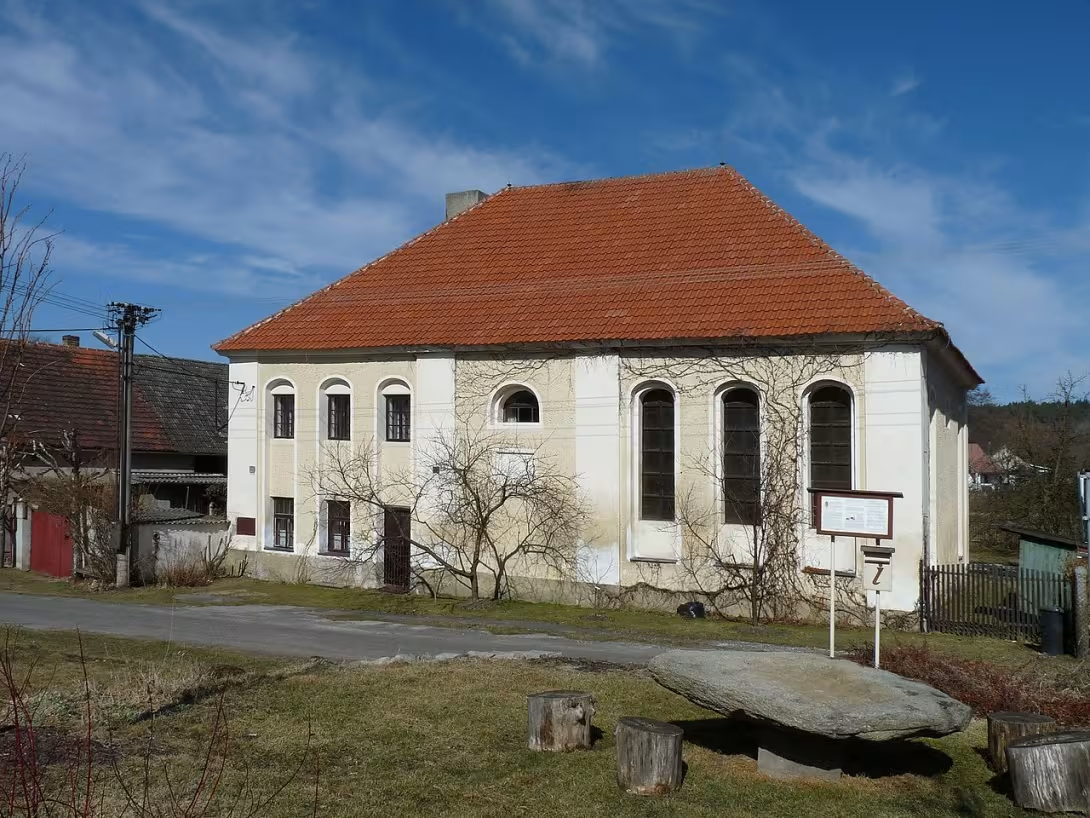
Drag the slider to compare how the landmark may have looked when it was built with the view today.
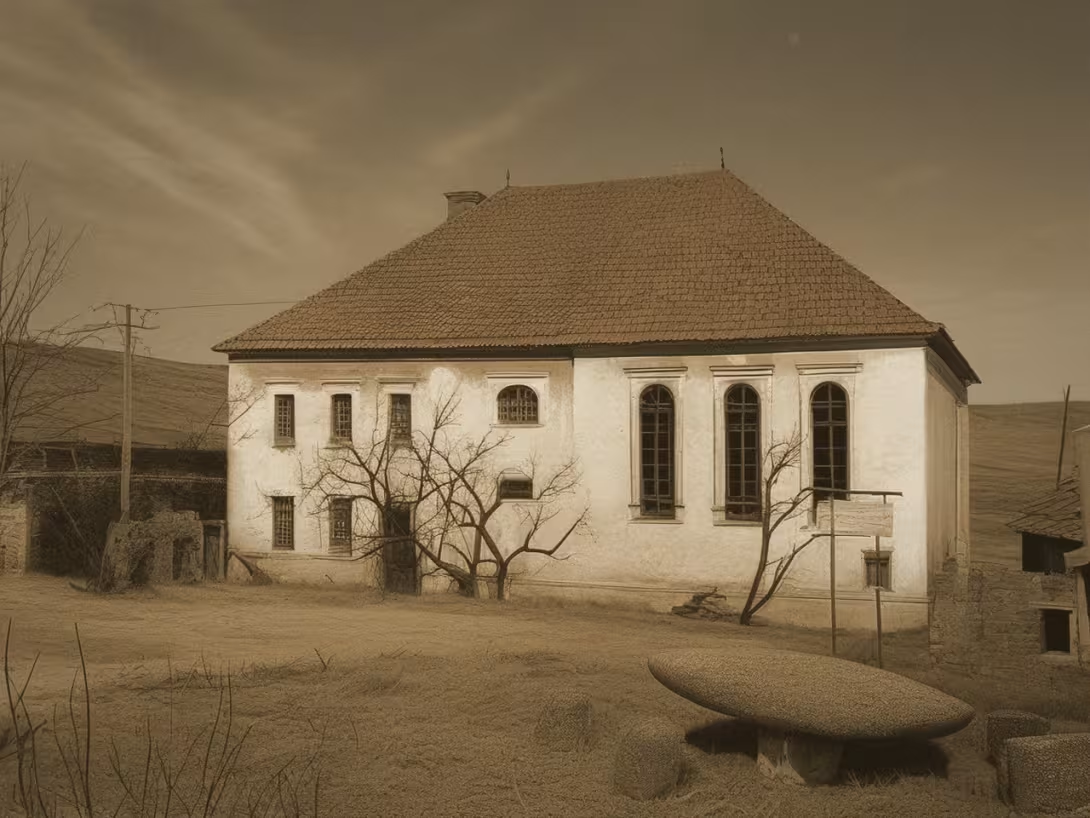
The historical appearance on the left is an AI-generated visualisation and serves as inspiration only.
Historical milestones
- 1868
- Construction of a new classical synagogue on the site of an older wooden prayer house.
Architectural development
The building was built in a classical style on the site of the older wooden synagogue. Its internal arrangements included a prayer house, a school and a rabbi apartment. During the 20th century, it was insensitively converted into a shopping shop, barn and warehouse for the agricultural cooperative, but was later successfully restored to its original form.
Historical events
In 1868 a new classicist synagogue was built on the site of an older wooden prayer house. Later, the building was purchased into private property after the removal of the last Jew and converted into a shopping shop and barn. In the next phase, the building served the agricultural cooperative, from which it was bought by new owners from Prague for restoration purposes.
Owners
Private owners, then shopping shop and barn, agricultural cooperative and then new owners from Prague
Points of interest
- The synagogue was built in 1868 in a classical style on the site of an old defunct wooden sanctuary. - The interior layout of the building at the time of creation included a school and a rabbinical apartment in addition to the prayer hall. - During the twentieth century, the construction undergone significant changes due to insensitive reconstructions for economic purposes, but was later restored to its original form. - After the last Jewish resident left, the synagogue was turned into a shop with a barn and later served as a warehouse for the agricultural cooperative. - From the former Jewish ghetto, only houses 19, 29 and 31 have been preserved in rebuilt form.
Guide
Show guide text
This text was created by artificial intelligence and has not been editorially reviewed. It may contain inaccuracies.
Welcome. Stop for a moment and feel the atmosphere of the place where you are now. You're standing right in front of a synagogue in Slatina, a building that carries deep traces of the ancient past and the silent story of the community that once lived here, believed and created its world. Although this construction may seem like a common part of the local python, its presence here is not random. He is a witness of time who survived the intervention of history and the relentless transformation of human destiny. Please feel this moment of peace while we look together at what this building wants to tell us.
Let us now return together to the deep past, to the year one thousand eight hundred sixty-eight. This was a crucial moment for the whole area. This year, the construction of this current building was completed, which was to be a symbol of stability and a new era for the local Jewish community. However, it is important to note that this building was not created in an empty place. There was a different, much older prayer room before her. It was built of wood, which, while giving it its own fragile beauty, made it susceptible to time and elements. So when it decided to build a new building, it was not just the construction of a new house for prayer, but the expression of an effort for endurance and strength. This new synagogue was supposed to stand as a fixed point, a place that resists generations.
Now pay attention to the very appearance of the building that is in front of your eyes right now. Notice her character. The synagogue was built in a classical style. Although we don't know the name of the particular architect who designed these lines, his vision was clear. Classicism is a style that seeks order, harmony and dignity. Looking at the building, you should perceive these qualities. It is not an unnecessary decorating, but a balance and peace that radiates from its shapes. This architecture was meant to create a sense of grandeur and at the same time inspire trust. It is a style that in the mid-nineteenth century expressed an effort to unify tradition with the modern order of the world. Please look at its facade and see the geometric purity that is so typical of this style.
Imagine, however, that this building was much more than just a space for religious ceremonies. She was the heart of the community at the time of her creation. If you look at the overall scope of the construction now, you can easily imagine how complicated life has been here. The synagogue was not just a prayer hall. It was a living institution. There was a school where children were taught, where knowledge was passed on and where future generations were formed. Right next door, within the same complex, was also a rabbi. This means that in this building, the sacred was linked to the most common, everyday life. It was a place of meeting, education and spiritual guidance. It was the real center of local society.
But there is a period that is very sad and enlightening for the history of this place. Once the last Jewish people left, the synagogue lost its original meaning and its soul. The building that once formed the centre of the village became a lonely monument. In the course of the twentieth century, there were a number of fundamental changes that changed her face significantly. But it wasn't the changes that were meant to preserve her nobility. On the contrary, the building was gradually transformed for completely different economic purposes. Imagine the contrast - instead of silent prayers, songs and learning, work and agriculture activities began to take place here. But these insensitive reconstructions, which were intended to help the building survive in a new age, also took away its original character and beauty. So what you see now is the result of a long adaptation process, where sacred spaces had to be subjected to practical utility needs.
Although today we do not have the names of specific personalities to make this building famous, we can, in our mind, imagine the thousands of people here in every day of their lives looking for meaning, learning or praying. Every wall, every corner of this building is a space filled with human life, joy and sadness. This synagogue is not just stone and mortar, it is a record of human efforts to create a home and a place for faith.
While you continue your journey, try to look at this building again, but this time with another eye. Try not only to see the old house in it, but try to see the invisible power of history floating around. There's something mysterious about it that despite all the reconstructions and changes in purpose, it still stands here as a silent guardian of the memory of the people who were once here.
Thank you for spending this moment with us and for choosing to pay attention to this place. We hope that this brief insight into the past has helped you better understand the richness and tragedy of history that took place here. Please continue to explore the surrounding area and enjoy the beauty of the surrounding countryside and other secrets that this journey offers. Goodbye.
Tips for visitors
To visit the synagogue in Slatina, choose the ideal morning clock, when the sun lights up beautifully the classical front of the building with a descriptive number of fifty-eight. You can easily reach the village of Slatina by car and public transport, and check the current connection in the local search engine and choose a suitable location in the village near the municipal office. Take your comfortable shoes for walking around, camera and drinking bottle, as there may be no shops in the immediate vicinity of the monument. For photography is the best morning light that highlights the details of the building standing approximately 50 meters north of the municipal office. In the immediate surroundings of the village of Slatina, do not miss a visit to the Jewish cemetery and the remains of the former Jewish ghetto in the form of houses with numbers of 19, 29 and 31. The trip to this location is quiet and undemanding, which will be appreciated by families with children when exploring local history.
Businesses nearby
Do you run a restaurant, accommodation, shop, museum, rental, wellness or other visitor service near this monument? Show yourself directly to the people heading to it — this is how they will see you in the app and on the web:
Nearby
In the village of Slatina there is a Jewish cemetery and remains of the former Jewish ghetto in the form of houses no. 19, 29 and 31.
Accommodation nearby
Themed route
1.Synagoga ve Slatině Type: Religious monument Why: The main destination of the route, which represents the spiritual center of the former Jewish community.
2. Former Jewish ghetto Type: Historical residential district Why: Houses No 19, 29 and 31 show the remains of the old settlement and everyday life.
3. Jewish Cemetery Type: Funeral place Why: This location offers a view of historical tombstones and a reminder of the ancient history of the village.
Seasonal recommendations
Spring: The May visit offers a pleasant atmosphere thanks to the awakening nature in the surroundings and soft sunlight, which beautifully highlights the details of the building. In this period the air is fresh and the surrounding landscape is beginning to color. We recommend wearing layered clothes because the wounds can still be cold. It is the perfect time for a quiet observation, as the crowds of visitors are not as significant as in the summer months.
Summer: In the summer months, the synagogue is an intense light, creating interesting shadows in space. Due to the higher temperatures and the main summer season we recommend a visit in the early morning, when the least people and air is still pleasant. Remember enough fluid and protective headgear if you move around the sights.
Autumn: Autumn season brings a melancholy and calm mood to the surroundings, complemented by golden leaves and morning fog. The light is low at this time and very photogenic, which is great for lovers of history. Prepare waterproof shoes and warmer clothing for a comfortable tour, as humidity may be higher. The number of people gradually decreases, which guarantees a more intimate experience.
Winter: Winter visit is characterized by silence and sobriety, especially in advent time or during freezing days. The light is weak and the days are short, so it is necessary to plan a visit around the noon hours to make the monument sufficiently illuminated. Prepare very warm clothes and take into account the possible limited operation or shorter opening times that are common during this period.
Visualizations and artistic views


The visualisations are generated by artificial intelligence and serve as inspiration.
Tips from visitors
No tips yet. Be the first!
Log in and add your tip.
Sources and literature
Fotografie: Czeva / CC BY-SA 3.0 — Wikimedia Commons. The author and licence also appear when you hover over the image.
Faktickým podkladem tohoto textu byl článek na Wikipedii, jehož autory jsou přispěvatelé Wikipedie. Článek je dostupný pod licencí CC BY-SA 4.0.
Location on the map
Příběhy a pověsti
Legendy, pověsti a příběhy spjaté s touto památkou
Fotografie návštěvníků
Zatím žádné fotografie. Buďte první, kdo přidá fotografii z návštěvy!
Přihlaste se a přidejte svou fotografii nebo hodnoťte.
Za ověřenou návštěvu v aplikaci získáte víc bodů — poznáme podle GPS, že jste na místě.
Reviews and comments